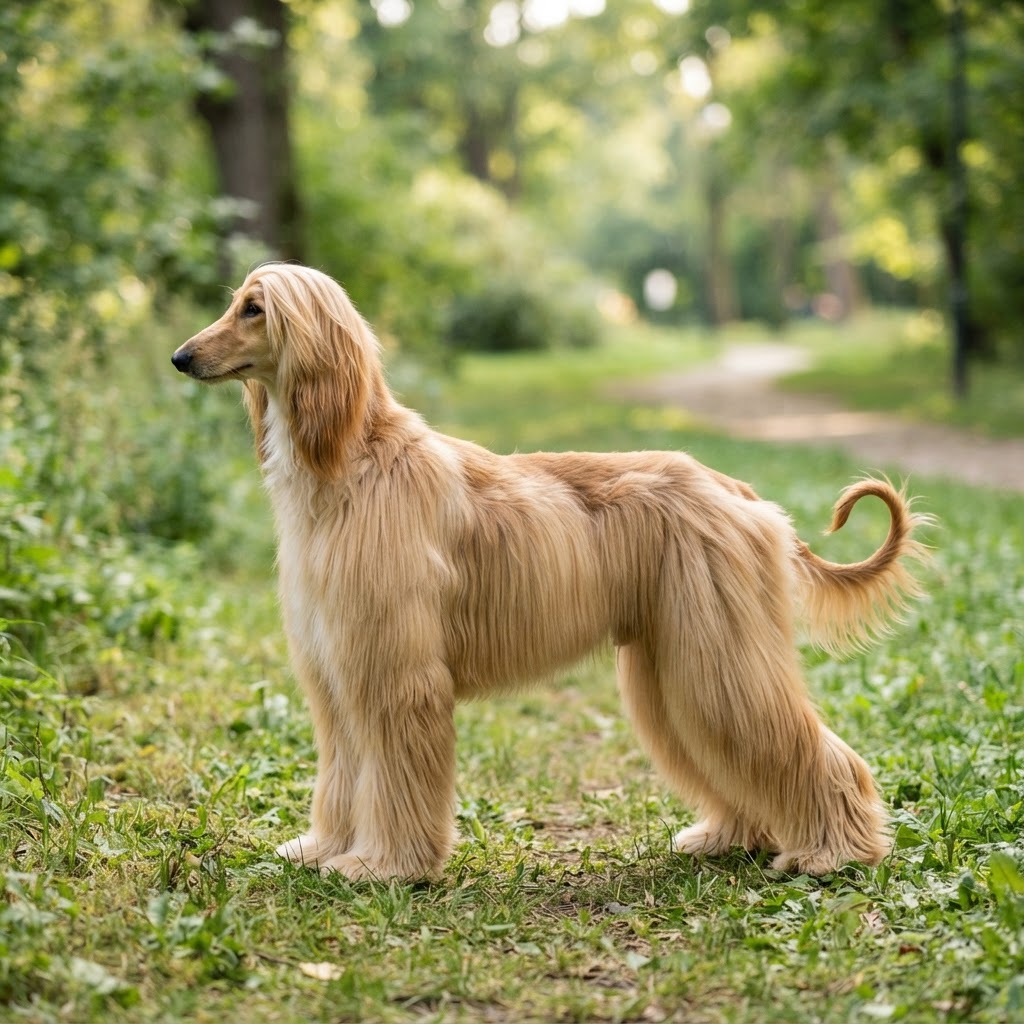
Afghan Hound
Male: 26-30 kg; Female: 20-25 kg
Dogs: 68-74 cm; Bitches: 63-69 cm
12-14 years
Afghanistan
About the Afghan Hound
The Afghan Hound is the epitome of canine elegance and ancient mystery. Often referred to as the 'King of Dogs,' this breed possesses a unique, aristocratic silhouette characterized by its tall stature, high-carried head, and spectacular, flowing coat. Originally developed to navigate the treacherous mountains of Afghanistan, their physical build—including high hip bones and large paws—allows them to turn with incredible agility and speed on uneven ground. In the home, the Afghan is a creature of contrasts. While they are fiercely independent and may appear indifferent to strangers, they form profound, almost telepathic bonds with their owners. They are not typical 'fetch' dogs; they retain a level of feline-like autonomy and intelligence that requires a patient, respectful owner. For those living in South Australia, providing these majestic hounds with space to move is vital, as they are athletes by design and require mental stimulation as much as physical activity.
Breed Standard
Key characteristics from the breed standard
In the show ring, the Afghan Hound is a master of presence, exhibiting an 'Eastern' expression that is both piercing and far-seeing. Their movement is a hallmark of the breed—a smooth, springy gait that covers ground with effortless grace, showing high head carriage and a tail that ends in a characteristic ring. They possess a structural honesty that is often hidden beneath their coat; when they move, the transition of power from the rear to the front is seamless, creating a visual of floating rather than walking. Their haughty, regal attitude in the ring ensures they are never overlooked, standing as a living piece of ancient history.
In Australia
In 1935 and 1936, Mrs. Olive Macdougall imported a male and two bitches from the UK, and one of the resulting litters produced the first Afghan Hound Champion in Australia, according to the Afghan Hound Club of NSW.
Bred For
Sighthound used for hunting large prey such as deer, gazelle, and mountain leopards in the rugged terrain of Afghanistan.
Temperament
Dignified, aloof, independent, and courageous, yet deeply loyal and affectionate with their families.
Health Conditions Reported in the Breed
, , Afghan Hound Myelopathy (a hereditary respiratory/spinal condition), laryngeal paralysis, and (). They are also notoriously sensitive to anesthesia.
Exercise Needs
High exercise needs. They require a minimum of 60-90 minutes of daily activity, including opportunities to run at full speed in a safely enclosed, large area to satisfy their sighthound instincts.
Grooming Needs
Very High. The long, fine coat requires daily brushing to prevent matting and regular professional grooming. Maintenance of the 'top knot' and ear feathering is essential.
Living Suitability
Not suited for apartment living. They require a large, securely fenced yard or acreage. They are quiet indoors but need significant space to stretch their long limbs and a soft place to rest.
Good with Kids
Good with older, respectful children. They may find the loud noises and sudden movements of toddlers overwhelming or startling.
Good with Other Pets
Generally good with other large dogs, but possess a very high prey drive; they are typically not safe around cats, small dogs, or pocket pets unless raised with them under strict supervision.
Trainability
Low to Moderate; they are highly intelligent but famously independent and stubborn. They respond best to positive reinforcement and short, engaging sessions rather than repetitive drills.
Coat & Colours
Very long, fine, and silky hair; texture is similar to human hair rather than typical canine fur.. All colours are acceptable within the breed standard, including black, cream, red, silver, and domino patterns, often with a dark facial mask.
Exercise needs vary by age, fitness, health, weather and individual temperament. Consult your veterinarian for an exercise plan appropriate for your dog.
Things to Consider
Every breed has its quirks — here's what to know
Prospective owners should be aware of the Afghan Hound's significant grooming demands; skipping even a few days of brushing can lead to painful matting that may require the coat to be shaved. Their independent nature means they can be 'selective' with their hearing, and their high prey drive makes off-leash exercise in unfenced areas dangerous, as they will chase anything that moves. Like many deep-chested breeds, they are more likely to experience Gastric Dilatation-Volvulus (Bloat), a life-threatening emergency; feeding smaller, frequent meals and avoiding exercise around feeding times is a necessary precaution. They are also prone to 'sighthound sensitivity' to touch and medical treatments, often requiring specialized veterinary care. While they can be stubborn, this independence is balanced by their quiet, cat-like presence indoors—they are exceptionally clean and generally not prone to typical doggy odors.
Feeding Guide for Your Afghan Hound
Healthy Weight
20-30 kg
Daily Feeding Amount (general starting estimate)
500-900 grams of fresh raw food per day
For an adult Afghan Hound, feed approximately 2-3% of their ideal body weight daily in high-quality fresh or raw food. Some owners use smaller divided meals and avoid strenuous activity immediately around feeding. These steps cannot guarantee prevention of gastric dilatation-volvulus. Seek urgent veterinary care if bloat is suspected. Focus on lean proteins like kangaroo or beef and ensure adequate raw bone content for dental health.
Feeding quantities are general starting estimates only. Individual needs vary with body condition, weight trends, age, health and activity. Ingredient percentages alone do not guarantee complete and balanced nutrition — consult a veterinarian for individualised dietary guidance.
Ingredient percentages alone do not guarantee complete and balanced nutrition. Seek veterinary or qualified canine nutrition guidance for individualised dietary advice. Raw feeding, specific proteins or fresh foods should not be presented as preventing, treating or managing breed health conditions without veterinary diagnosis and supervision.
Majestik's Recommended Feeding Approach
Breed Diet Notes
High-protein diet rich in healthy fats (Omega-3 and Omega-6) to maintain the integrity of their long, silky coat. They benefit significantly from fresh, raw diets that avoid fillers and artificial preservatives.
A balanced raw diet for an Afghan Hound should focus on lean, high-quality proteins available from Majestik Pet Food, such as Kangaroo, Beef, or Chicken. Given their coat requirements, adding fish oils or whole sardines is highly recommended. Portion sizes should be monitored closely to maintain a lean, athletic frame, as excess weight puts strain on their joints.
These are general breed-level notes only. The appropriate food and serving amount depend on the individual dog's age, health, body condition, activity and tolerance.
Majestik Recommendation
Majestik BARF meals follow our practical 70/10/10/10 approach: approximately 70% quality meat and protein ingredients, 10% edible bone, 10% vegetables and 10% offal. This gives customers a convenient fresh-food option without needing to source and portion every ingredient themselves.
Our Beef, Lamb and Roo BARF meals provide convenient fresh-food options, with suitable proteins chosen or rotated according to the individual dog.
Suitable for different needs
- Healthy adult: Majestik adult Beef, Lamb or Roo BARF meal.
- Puppy: Majestik Premium Puppy.
- Senior: Majestik Senior Blend.
- Working or highly active dog: Suitable Majestik adult meal with quantity adjusted to workload and body condition.
- Protein trial: One Majestik protein at a time.
Recommended Majestik BARF Meals


This is a practical starting recommendation for healthy dogs. Individual needs vary with age, health, body condition and activity.
Afghan Hound Feeding Calculator
Personalised raw and cooked feeding recommendations based on your dog's profile
Ideal — Ribs palpable without excess fat. Visible waist. Abdominal tuck present.
Have a question about your Afghan Hound? Dog Health AI
Why Majestik?
Fresh, raw pet food made with integrity in South Australia
Australian Made
Made in Two Wells, South Australia
Freshly Prepared
Real meat, organs, bone & wholefood ingredients
No Fillers
No cheap fillers or artificial preservatives
Family Owned
Locally owned and operated
Local Delivery
Delivery across Adelaide & selected areas
Secure Checkout
Secure payment via Shopify checkout
Subscribe & Save on Afghan Hound Meals
Get your Afghan Hound's fresh and raw meals delivered every two or four weeks. Small subscriptions are combined into a four-week box. Pause, skip or cancel anytime.
Breed Records & Facts
Average Litter Size
6-8 puppies
Afghan Hound Owner Feedback
Real experiences and tips from Afghan Hound owners
No reviews yet
Be the first to share your experience with this breed
Other Large Breeds
References & Sources
Breed information verified against recognised breed authorities and veterinary evidence.