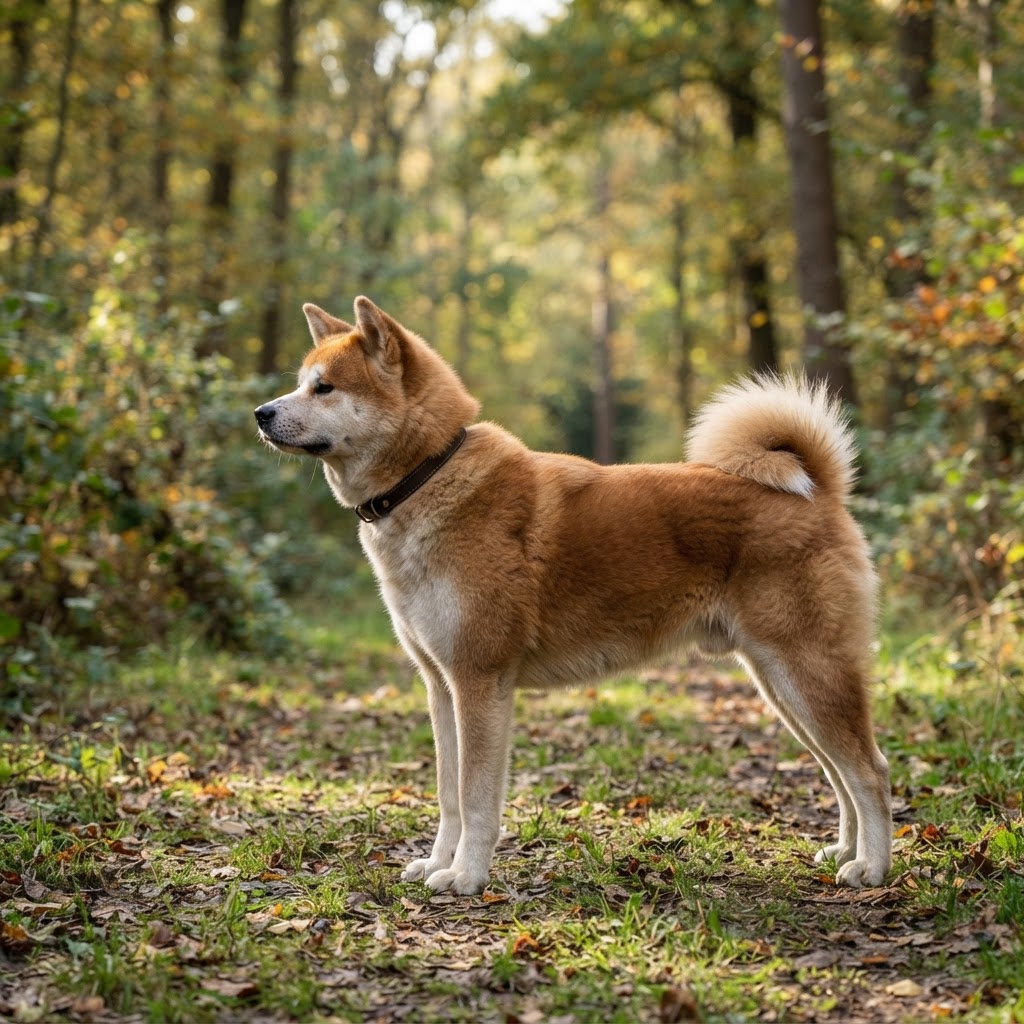
Akita
Male: 34-54 kg, Female: 32-45 kg
Dogs: 66-71 cm; Bitches: 61-66 cm at the shoulder.
10-12 years
Japan (Odate region, Akita Prefecture)
About the Akita
The Akita is a powerful, heavy-boned dog of imposing stature, originating from the mountainous regions of northern Japan. Known for their unwavering loyalty—immortalised by the famous Hachikō—they possess a reserved and dignified presence. As a member of the Spitz family, they feature small, erect ears, dark triangular eyes, and a plush tail that curls over the back. Their temperament is markedly different from many other breeds; they are typically quiet, clean, and fastidious in the home, often described as 'cat-like' in their grooming habits. Historically used as versatile hunters capable of tracking and baying Yezo bear, the Akita is naturally protective and courageous. While they are deeply devoted to their family, they tend to be wary of strangers and can be dominant with other dogs. This breed requires a confident owner who understands pack leadership and positive reinforcement training. They are not suited to the chaotic environment of a dog park but thrive as a singular, watchful companion within a dedicated household. Their thick double coat allows them to thrive in cooler climates, though they require careful monitoring in the Australian summer heat.
Breed Standard
Key characteristics from the breed standard
The Akita in the show ring is a study in power and balance, moving with a brisk and powerful gait that covers ground effortlessly. A correct Akita must possess the 'kumi-uchi' or bear-like head, with a broad skull, a deep muzzle, and a distinct stop. The ears should be small, thick, and tilted forward over the eyes, following the line of the neck.
In Australia
Reliable Australian historical records for this breed’s introduction were not located.
Bred For
Large game hunting (bear, wild boar, and Yezo deer), guarding, and formerly dog fighting.
Temperament
Dignified, courageous, aloof with strangers, profoundly loyal, and independent.
Health Conditions Reported in the Breed
(), (), , Uveodermatologic Syndrome (VKH-like), , and ().
Exercise Needs
Moderate to High. Requires daily long walks and mental stimulation. They are not high-intensity sprinters but possess great stamina for hiking.
Grooming Needs
High during shedding seasons. They possess a thick double coat that requires weekly brushing, increasing to daily during the biannual 'blow-out' of the undercoat.
Living Suitability
Best suited to a home with a secure, medium-to-large yard. Not recommended for apartments unless the owner is extremely active. They are relatively quiet indoors but need space to patrol.
Good with Kids
Generally good with their own family's children if raised with them, but supervision is mandatory due to their size and strength. May not tolerate rough play from visiting children.
Good with Other Pets
Often intolerant of other dogs, particularly those of the same sex. High prey drive means they may not be suitable for homes with cats or small pocket pets unless socialised from a very young age.
Trainability
Highly intelligent but independent and stubborn. They require firm, consistent, and creative training. They may tire of repetitive tasks and will often question the necessity of a command.
Coat & Colours
Double coat with a straight, harsh outer coat and a thick, soft, dense undercoat.. Red fawn, sesame, brindle, and white. American Akitas may include black masks and pinto markings.
Exercise needs vary by age, fitness, health, weather and individual temperament. Consult your veterinarian for an exercise plan appropriate for your dog.
Things to Consider
Every breed has its quirks — here's what to know
The Akita is a magnificent companion but comes with specific traits for owners to manage. They are prone to Gastric Dilatation-Volvulus (Bloat), a life-threatening condition where the stomach twists; owners should use slow-feeders and avoid exercise immediately after meals. They are also predisposed to Sebaceous Adenitis (SA), an autoimmune skin condition that can cause hair loss and skin infections—regular grooming and a high-quality fresh diet can help manage skin health, but vet intervention is sometimes needed. Akitas are heavy shedders, especially during their twice-yearly 'coat blow,' which results in significant amounts of fur around the home. They are famously independent and can be stubborn, which means they are best suited to owners who enjoy the challenge of working with a dog that thinks for itself. Their high prey drive and potential for same-sex dog aggression mean they are often best as the only pet in the home, though they will reward their owners with a depth of loyalty and protection that few other breeds can match.
Feeding Guide for Your Akita
Healthy Weight
32-54 kg
Daily Feeding Amount (general starting estimate)
900-1350 grams
For an adult Akita, aim for 2-3% of their ideal body weight in fresh food daily. Some owners use smaller divided meals and avoid strenuous activity immediately around feeding. These steps cannot guarantee prevention of gastric dilatation-volvulus. Seek urgent veterinary care if bloat is suspected. Majestik's fresh kangaroo or beef options are excellent for providing the lean protein necessary for maintaining muscle mass without excessive weight gain.
Feeding quantities are general starting estimates only. Individual needs vary with body condition, weight trends, age, health and activity. Ingredient percentages alone do not guarantee complete and balanced nutrition — consult a veterinarian for individualised dietary guidance.
Ingredient percentages alone do not guarantee complete and balanced nutrition. Seek veterinary or qualified canine nutrition guidance for individualised dietary advice. Raw feeding, specific proteins or fresh foods should not be presented as preventing, treating or managing breed health conditions without veterinary diagnosis and supervision.
Majestik's Recommended Feeding Approach
Breed Diet Notes
Supplement suitability and dosage depend on the individual dog’s diet and health. Discuss targeted supplementation with your veterinarian or qualified canine nutrition professional. Deep-chested breeds benefit from smaller, frequent meals.
An ideal Majestik raw diet for an Akita centers on high-quality proteins like Beef and Kangaroo to support their heavy bone structure. Given the breed's predisposition to Sebaceous Adenitis (SA), supplementing with fish oil or Majestik’s fish-based proteins provides essential fatty acids for skin barrier health. Some owners use smaller divided meals and avoid strenuous activity immediately around feeding. These steps cannot guarantee prevention of gastric dilatation-volvulus. Seek urgent veterinary care if bloat is suspected.
These are general breed-level notes only. The appropriate food and serving amount depend on the individual dog's age, health, body condition, activity and tolerance.
Majestik Recommendation
Majestik BARF meals follow our practical 70/10/10/10 approach: approximately 70% quality meat and protein ingredients, 10% edible bone, 10% vegetables and 10% offal. This gives customers a convenient fresh-food option without needing to source and portion every ingredient themselves.
Our Beef, Lamb and Roo BARF meals provide convenient fresh-food options, with suitable proteins chosen or rotated according to the individual dog.
Suitable for different needs
- Healthy adult: Majestik adult Beef, Lamb or Roo BARF meal.
- Puppy: Majestik Premium Puppy.
- Senior: Majestik Senior Blend.
- Working or highly active dog: Suitable Majestik adult meal with quantity adjusted to workload and body condition.
- Protein trial: One Majestik protein at a time.
This is a practical starting recommendation for healthy dogs. Individual needs vary with age, health, body condition and activity.
Akita Feeding Calculator
Personalised raw and cooked feeding recommendations based on your dog's profile
Ideal — Ribs palpable without excess fat. Visible waist. Abdominal tuck present.
Have a question about your Akita? Dog Health AI
Why Majestik?
Fresh, raw pet food made with integrity in South Australia
Australian Made
Made in Two Wells, South Australia
Freshly Prepared
Real meat, organs, bone & wholefood ingredients
No Fillers
No cheap fillers or artificial preservatives
Family Owned
Locally owned and operated
Local Delivery
Delivery across Adelaide & selected areas
Secure Checkout
Secure payment via Shopify checkout
Subscribe & Save on Akita Meals
Get your Akita's fresh and raw meals delivered every two or four weeks. Small subscriptions are combined into a four-week box. Pause, skip or cancel anytime.
Breed Records & Facts
Average Litter Size
6-8 puppies
Akita Owner Feedback
Real experiences and tips from Akita owners
Other Large Breeds
References & Sources
Breed information verified against recognised breed authorities and veterinary evidence.
