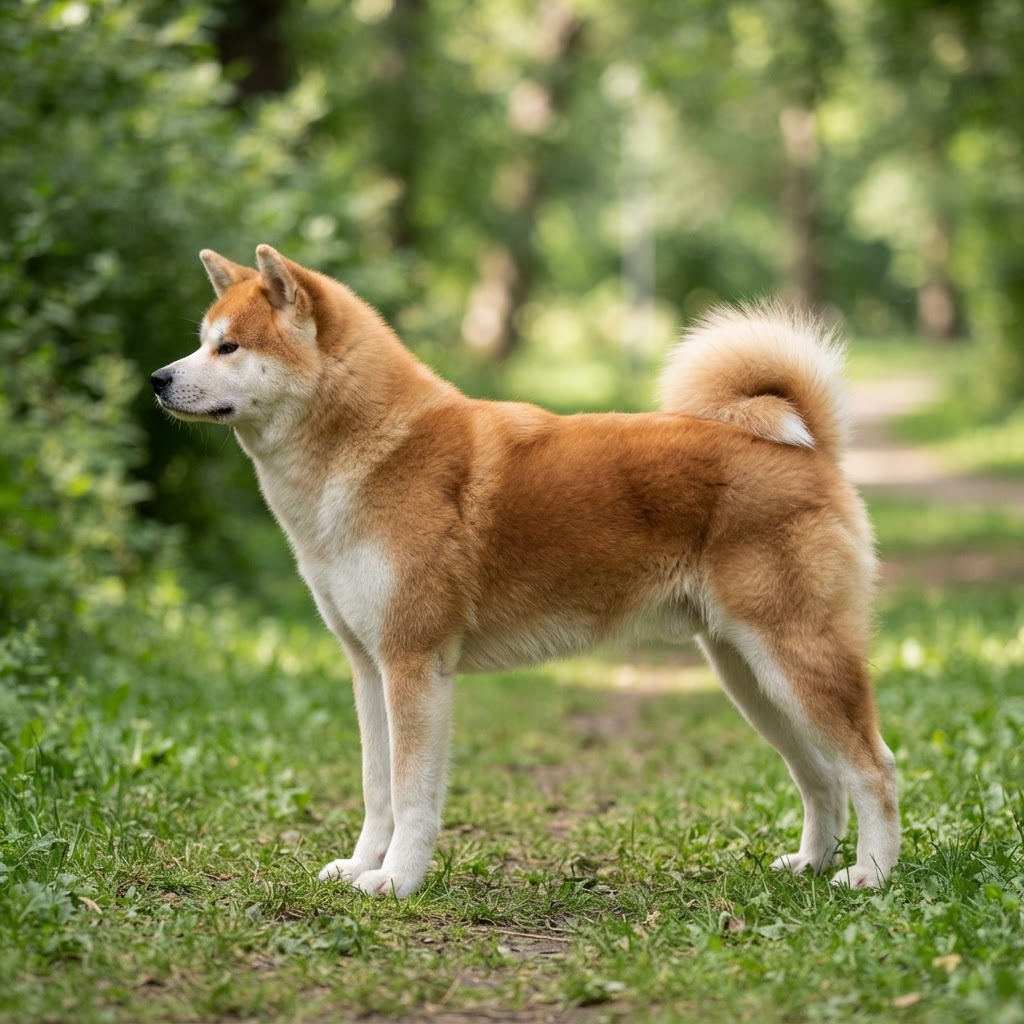
Akita (Japanese)
Male: 32-54 kg, Female: 23-45 kg
Male: 64-70 cm, Female: 58-64 cm
10-12 years
Japan
About the Akita (Japanese)
The Akita (Japanese), often referred to as the Akita Inu, is a powerful, large-boned spitz-type dog with a presence that commands immediate respect. Originally hailing from the mountainous regions of northern Japan, they were revered as versatile hunters and steadfast guardians. Their physical appearance is characterized by a broad head, small triangular eyes, and a plush tail that curls over the back in a distinct 'wheel' or 'sickle' shape. In the home, the Akita is a quiet and composed companion, often described as 'feline' in its cleanliness and reserved nature. While they are intensely devoted to their primary handlers, they remain naturally suspicious of strangers and possess a strong territorial instinct. They are not 'dog park' dogs and typically prefer the company of their human family over other canines, requiring an owner who understands their independent spirit and provides firm, consistent leadership.
Breed Standard
Key characteristics from the breed standard
In the ring, the Akita (Japanese) must exude 'Kan-i' (bravery and composure) and 'Ryosei' (good nature with intelligence). The breed standard emphasises a perfectly balanced silhouette with a precise 10:11 height-to-length ratio. Their movement should be brisk and powerful with a moderate stride, reflecting their heritage as mountain hunters. The defining 'urajiro' markings must be clear and symmetrical, providing a sharp contrast that highlights the breed's unique facial structure.
In Australia
The Japanese Akita was first introduced to Australia in 1982, with early specimens arriving from the United Kingdom to establish the breed locally, according to the Akita Club of Victoria.
Bred For
Large game hunting (including bear, wild boar, and Yezo deer) and later as a loyal guardian and status symbol.
Temperament
Dignified, courageous, aloof with strangers, and profoundly loyal to its family; known for being quiet but powerful.
Health Conditions Reported in the Breed
, (), Vogt-Koyanagi-Harada (VKH) syndrome, (), , and ().
Exercise Needs
Moderate to High; requires daily long walks or vigorous play sessions totaling at least 60-90 minutes, combined with mental stimulation.
Grooming Needs
Moderate daily maintenance; heavy brushing required during seasonal 'blow outs' (twice a year) to manage the thick undercoat.
Good with Kids
Best suited for families with older, dog-savvy children who respect boundaries; can be overly protective or sensitive to high-pitched play.
Good with Other Pets
Often exhibits same-sex dog aggression and a high prey drive toward cats and small animals; best as an only pet or with very careful socialisation.
Trainability
Highly intelligent but independent and easily bored; requires a patient trainer who uses positive reinforcement and avoids repetitive drills.
Coat & Colours
Double coat: outer coat is coarse and straight; undercoat is soft and dense.. Red fawn, sesame (red fawn with black tips), brindle, and white. All (except white) must feature 'urajiro' (whitish coat on the sides of the muzzle, cheeks, underside of jaw, neck, chest, body, and tail).
Exercise needs vary by age, fitness, health, weather and individual temperament. Consult your veterinarian for an exercise plan appropriate for your dog.
Things to Consider
Every breed has its quirks — here's what to know
The Akita is a noble but complex breed. They are more likely to experience Sebaceous Adenitis (SA), an autoimmune condition that attacks oil glands, leading to hair loss and skin crusting—regular high-quality raw fats and oils can help support the skin barrier. As a deep-chested breed, they are predisposed to Bloat (GDV), which is life-threatening; feeding two smaller meals rather than one large one and avoiding exercise after eating is a vital precaution. Prospective owners must be prepared for 'the blow'—twice a year, the Akita loses its entire undercoat in clumps, requiring daily vacuuming and heavy grooming. They also possess a very strong-willed, independent streak; they will often 'negotiate' commands rather than obey blindly. Their natural prey drive means they may never be fully trustworthy off-lead in areas with wildlife or small pets. However, for a dedicated owner, their unmatched loyalty and quiet, clean indoor manners make them a deeply rewarding companion.
Feeding Guide for Your Akita (Japanese)
Healthy Weight
30-50 kg
Daily Feeding Amount (general starting estimate)
750-1250 grams
Akitas thrive on a fresh, species-appropriate raw diet. Some owners use smaller divided meals and avoid strenuous activity immediately around feeding. These steps cannot guarantee prevention of gastric dilatation-volvulus. Seek urgent veterinary care if bloat is suspected. For a typical 35kg adult, this equates to roughly 875-1050g of fresh food per day. Include a variety of high-quality proteins (70-80%), organ meats (10%), and edible bone (10%) to ensure balanced mineral intake.
Feeding quantities are general starting estimates only. Individual needs vary with body condition, weight trends, age, health and activity. Ingredient percentages alone do not guarantee complete and balanced nutrition — consult a veterinarian for individualised dietary guidance.
Ingredient percentages alone do not guarantee complete and balanced nutrition. Seek veterinary or qualified canine nutrition guidance for individualised dietary advice. Raw feeding, specific proteins or fresh foods should not be presented as preventing, treating or managing breed health conditions without veterinary diagnosis and supervision.
Majestik's Recommended Feeding Approach
Breed Diet Notes
A high-protein, nutrient-dense diet rich in Omega fatty acids to support skin health, with restricted carbohydrates to mitigate bloat risk.
A rotating selection of high-quality Australian proteins such as Majestik's Beef, Lamb, and Kangaroo. Given their susceptibility to skin conditions like Sebaceous Adenitis, a high concentration of Omega-3 from fish or ocean oils is essential. Incorporating leafy greens and antioxidant-rich berries can further support their immune health and provide necessary phytonutrients.
These are general breed-level notes only. The appropriate food and serving amount depend on the individual dog's age, health, body condition, activity and tolerance.
Majestik Recommendation
Majestik BARF meals follow our practical 70/10/10/10 approach: approximately 70% quality meat and protein ingredients, 10% edible bone, 10% vegetables and 10% offal. This gives customers a convenient fresh-food option without needing to source and portion every ingredient themselves.
Our Beef, Lamb and Roo BARF meals provide convenient fresh-food options, with suitable proteins chosen or rotated according to the individual dog.
Suitable for different needs
- Healthy adult: Majestik adult Beef, Lamb or Roo BARF meal.
- Puppy: Majestik Premium Puppy.
- Senior: Majestik Senior Blend.
- Working or highly active dog: Suitable Majestik adult meal with quantity adjusted to workload and body condition.
- Protein trial: One Majestik protein at a time.
This is a practical starting recommendation for healthy dogs. Individual needs vary with age, health, body condition and activity.
Akita (Japanese) Feeding Calculator
Personalised raw and cooked feeding recommendations based on your dog's profile
Ideal — Ribs palpable without excess fat. Visible waist. Abdominal tuck present.
Have a question about your Akita (Japanese)? Dog Health AI
Why Majestik?
Fresh, raw pet food made with integrity in South Australia
Australian Made
Made in Two Wells, South Australia
Freshly Prepared
Real meat, organs, bone & wholefood ingredients
No Fillers
No cheap fillers or artificial preservatives
Family Owned
Locally owned and operated
Local Delivery
Delivery across Adelaide & selected areas
Secure Checkout
Secure payment via Shopify checkout
Subscribe & Save on Akita (Japanese) Meals
Get your Akita (Japanese)'s fresh and raw meals delivered every two or four weeks. Small subscriptions are combined into a four-week box. Pause, skip or cancel anytime.
Breed Records & Facts
Average Litter Size
6-8 puppies
Akita (Japanese) Owner Feedback
Real experiences and tips from Akita (Japanese) owners
No reviews yet
Be the first to share your experience with this breed
Other Large Breeds
References & Sources
Breed information verified against recognised breed authorities and veterinary evidence.
