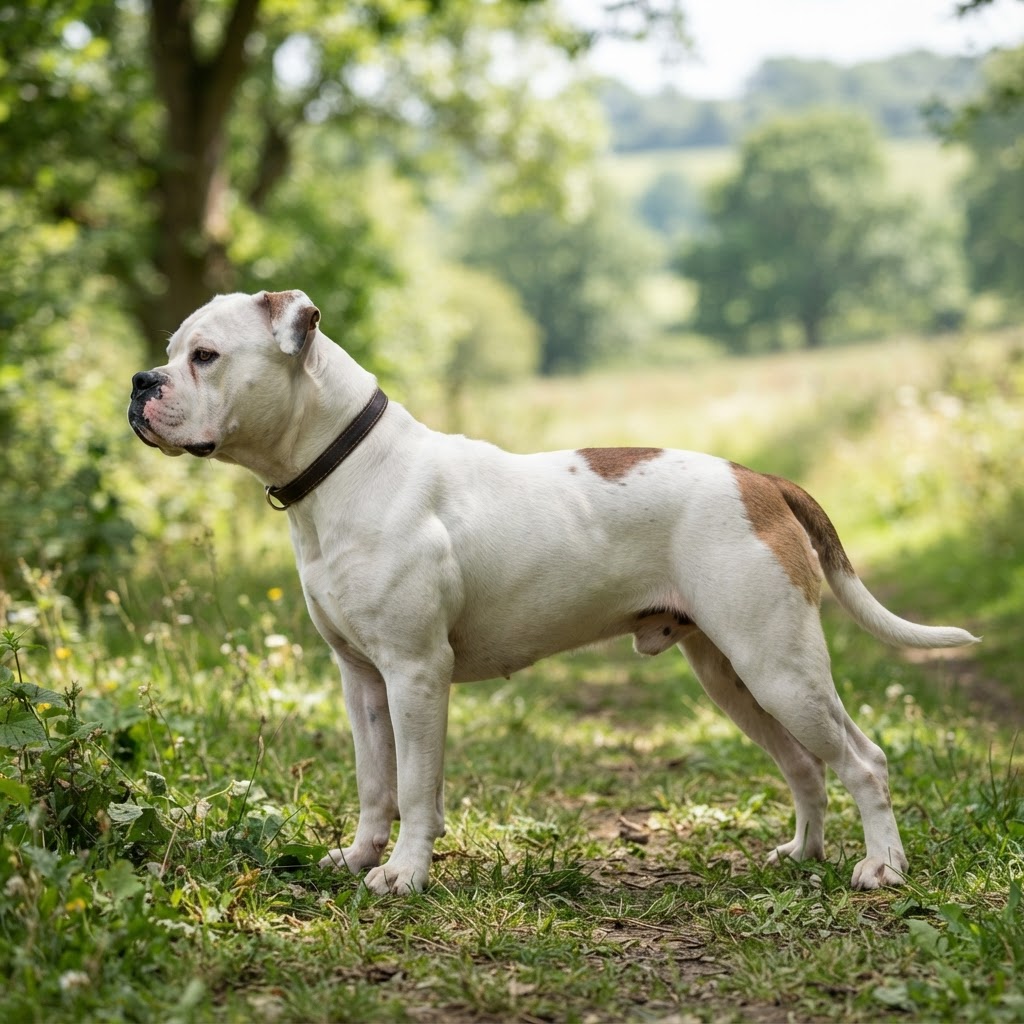
American Bulldog
Male: 34-54 kg, Female: 27-41 kg
Male: 56-71 cm, Female: 51-66 cm
10-14 years
United States (Deep South)
About the American Bulldog
The American Bulldog is a powerful, athletic, and hardy working breed that descended from the now-extinct Old English Bulldog. Unlike their smaller British cousins, the American Bulldog was developed in the American South as a versatile utility dog capable of managing livestock and hunting large game. They are characterized by their immense strength, agility, and a deep devotion to their family. They generally come in two main types: the 'Scott' or Standard type, which is leaner and more athletic, and the 'Johnson' or Bully type, which is heavier-boned and more muscular. In the home, the American Bulldog is known for being a 'gentle giant' with its immediate family, often displaying a playful and affectionate nature. However, their size and strength necessitate consistent leadership and early socialization. They are deeply sensitive to their owners' emotions and thrive when integrated into daily family life rather than being left alone for long periods. For the active owner who can provide structured training and plenty of physical outlets, they are unparalleled companions.
Breed Standard
Key characteristics from the breed standard
The American Bulldog in the ring should exude a sense of immense power tempered by surprising agility. Judges look for a rectangular silhouette with a deep chest and a well-muscled neck. Their movement must be effortless and powerful, showing significant reach and drive without clumsiness. They command the ring with a stoic, alert presence that speaks to their history as a fearless guardian, yet they must remain stable and discerning under scrutiny.
In Australia
Reliable Australian historical records for this breed’s introduction were not located.
Bred For
All-purpose farm dog, hunting (catch dog), and livestock guardian.
Temperament
Confident, loyal, socially active, and courageous with a strong protective instinct.
Health Conditions Reported in the Breed
Hip and , Neuronal Ceroid Lipofuscinosis (NCL), Ichthyosis (genetic skin disorder), ACL tears, and .
Grooming Needs
Minimal; weekly brushing with a rubber curry brush and occasional baths. Require regular ear cleaning and nail trimming.
Living Suitability
Best suited for a home with a secure, medium-to-large yard.
Good with Kids
Generally good with children in their own family, especially when raised with them; supervision is required due to their size and strength.
Good with Other Pets
Can be assertive with other dogs and may possess a high prey drive toward smaller animals; early and ongoing socialization is critical.
Trainability
Highly intelligent and capable but can be strong-willed; requires a firm, consistent, and positive training approach.
Coat & Colours
Short, harsh, and close-fitting.. White with various patches of brindle, fawn, red, or black; solid white is also common.
Exercise needs vary by age, fitness, health, weather and individual temperament. Consult your veterinarian for an exercise plan appropriate for your dog.
Things to Consider
Every breed has its quirks — here's what to know
American Bulldogs are predisposed to certain conditions like hip and elbow dysplasia, so keeping them lean is vital to protect their joints. They can be prone to skin allergies and Ichthyosis—a condition causing flakey skin—meaning they often thrive on a fresh, hypoallergenic raw diet rather than commercial kibbles. This breed is more likely to experience flatulence and can be moderate slobberers, particularly after drinking or eating. Because they were bred as 'catch dogs,' they may have a high prey drive, which means they need secure fencing and mindful supervision around smaller pets. Some individuals, particularly those with shorter muzzles, can be sensitive to extreme heat; it is best to exercise them during the cooler parts of the day. They are also deeply loyal and can develop separation anxiety if not taught to spend time alone from a young age. While they are incredibly devoted, their strength and independent streak mean they are best suited for owners who are committed to lifelong training.
Feeding Guide for Your American Bulldog
Healthy Weight
27-54 kg
Daily Feeding Amount (general starting estimate)
540-1620 grams
A fresh, raw diet is highly recommended to maintain lean muscle mass and support joint health. Feed approximately 2-3% of their ideal adult body weight daily. For an average 40kg adult, this equates to roughly 800g to 1200g per day, adjusted for activity level.
Feeding quantities are general starting estimates only. Individual needs vary with body condition, weight trends, age, health and activity. Ingredient percentages alone do not guarantee complete and balanced nutrition — consult a veterinarian for individualised dietary guidance.
Ingredient percentages alone do not guarantee complete and balanced nutrition. Seek veterinary or qualified canine nutrition guidance for individualised dietary advice. Raw feeding, specific proteins or fresh foods should not be presented as preventing, treating or managing breed health conditions without veterinary diagnosis and supervision.
Majestik's Recommended Feeding Approach
Breed Diet Notes
High-protein, moderate-fat diet focusing on high-quality muscle meats, organ meats, and raw bone. Probiotics and Omega-3 fatty acids are beneficial for skin health.
An ideal diet for an American Bulldog should focus on varied proteins like beef, lamb, and kangaroo—all available from Majestik Pet Food. Due to their predisposition for joint issues, include raw meaty bones (like turkey necks or kangaroo tails) for natural calcium and glucosamine. Organ meats (liver, kidney, heart) should comprise 10% of the diet. For those prone to skin issues, wild-caught fish or Omega-3 supplements are essential. Avoid high-carb fillers to prevent weight gain, which puts undue stress on their joints.
These are general breed-level notes only. The appropriate food and serving amount depend on the individual dog's age, health, body condition, activity and tolerance.
Majestik Recommendation
Majestik BARF meals follow our practical 70/10/10/10 approach: approximately 70% quality meat and protein ingredients, 10% edible bone, 10% vegetables and 10% offal. This gives customers a convenient fresh-food option without needing to source and portion every ingredient themselves.
Our Beef, Lamb and Roo BARF meals provide convenient fresh-food options, with suitable proteins chosen or rotated according to the individual dog.
Suitable for different needs
- Healthy adult: Majestik adult Beef, Lamb or Roo BARF meal.
- Puppy: Majestik Premium Puppy.
- Senior: Majestik Senior Blend.
- Working or highly active dog: Suitable Majestik adult meal with quantity adjusted to workload and body condition.
- Protein trial: One Majestik protein at a time.
Recommended Majestik BARF Meals


This is a practical starting recommendation for healthy dogs. Individual needs vary with age, health, body condition and activity.
American Bulldog Feeding Calculator
Personalised raw and cooked feeding recommendations based on your dog's profile
Ideal — Ribs palpable without excess fat. Visible waist. Abdominal tuck present.
Have a question about your American Bulldog? Dog Health AI
Why Majestik?
Fresh, raw pet food made with integrity in South Australia
Australian Made
Made in Two Wells, South Australia
Freshly Prepared
Real meat, organs, bone & wholefood ingredients
No Fillers
No cheap fillers or artificial preservatives
Family Owned
Locally owned and operated
Local Delivery
Delivery across Adelaide & selected areas
Secure Checkout
Secure payment via Shopify checkout
Subscribe & Save on American Bulldog Meals
Get your American Bulldog's fresh and raw meals delivered every two or four weeks. Small subscriptions are combined into a four-week box. Pause, skip or cancel anytime.
Breed Records & Facts
Average Litter Size
7-11 puppies
American Bulldog Owner Feedback
Real experiences and tips from American Bulldog owners
No reviews yet
Be the first to share your experience with this breed
Other Large Breeds
References & Sources
Breed information verified against recognised breed authorities and veterinary evidence.