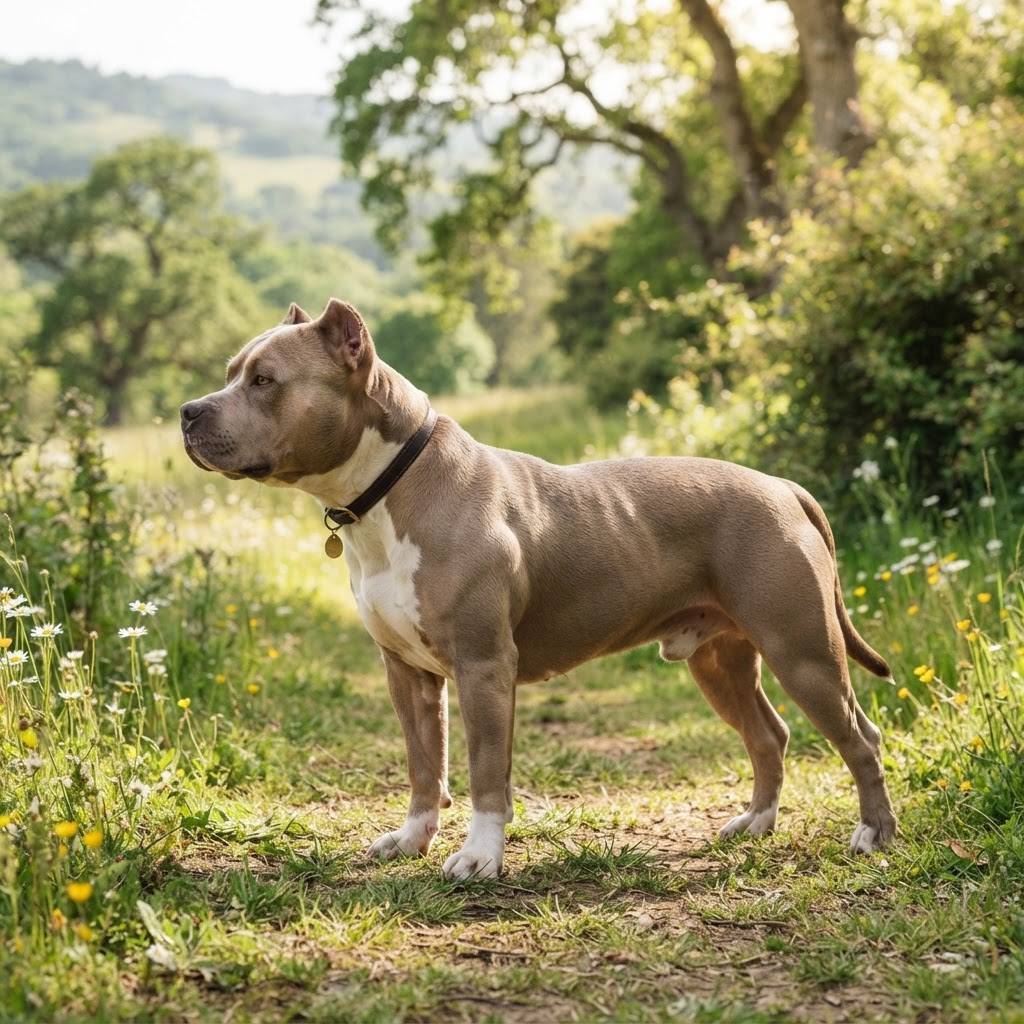
American Bully
Male: 30-50 kg, Female: 25-40 kg
Standard Males: 43-51 cm; Standard Females: 40-48 cm.
8-12 years
United States
About the American Bully
The American Bully was developed in the 1980s and 90s in the United States, primarily using a foundation of American Pit Bull Terriers and American Staffordshire Terriers, influenced by various bulldog breeds. Unlike its ancestors, the American Bully was selectively bred for a companion-focused temperament, resulting in a dog that is remarkably gentle and devoted to its family while maintaining a powerful, muscular appearance. It is a compact, bulky dog with a heavy bone structure and a signature blocky head. Physically, the breed is defined by its impressive mass and strength, but it should never appear clumsy or hindered in movement. Despite their formidable looks, they are known for their 'zest for life' and a high tolerance for children, often referred to as 'nanny dogs' in modern households. They are adaptable to various living situations as long as they receive adequate human interaction and moderate physical activity. Their popularity stems from this unique combination of a 'tough' aesthetic and a soft, reliable personality.
Breed Standard
Key characteristics from the breed standard
In the show ring, the American Bully is a spectacle of power and poise, exhibiting a heavy-boned, blocky silhouette that remains balanced and agile. Judges look for a large, broad head with well-defined stop and high-set ears, paired with a short, muscular back and a deep, wide chest that denotes immense lung capacity. Their movement is effortless yet powerful, showing a reach and drive that contradicts their heavy mass.
Bred For
Companion dog
Temperament
Confident, social, loyal, stable, and affectionate.
Health Conditions Reported in the Breed
Hip and , heart disease (specifically ), skin allergies, , , and () in more extreme phenotypes.
Exercise Needs
Moderate daily exercise including 45-60 minutes of walking combined with mental stimulation and play. Avoid over-exertion in high temperatures.
Grooming Needs
Minimal; weekly brushing and regular cleaning of facial folds and ears.
Living Suitability
Suitable for both apartments and houses with yards, provided they receive daily walks. They are sensitive to extreme heat and should live indoors.
Good with Kids
Generally excellent with children, known for a high tolerance and gentle nature.
Good with Other Pets
Usually social with other dogs if socialised early; may exhibit prey drive toward smaller animals if not trained.
Trainability
Intelligent and eager to please, though they can be stubborn; responds best to positive reinforcement and firm, consistent leadership.
Coat & Colours
Short, close, stiff to the touch, and glossy.. All colors and patterns are accepted except merle.
Exercise needs vary by age, fitness, health, weather and individual temperament. Consult your veterinarian for an exercise plan appropriate for your dog.
Things to Consider
Every breed has its quirks — here's what to know
The American Bully is a powerhouse of affection, but their unique build brings specific needs. Because of their broad heads and shorter muzzles, they are more likely to experience heat intolerance and breathing difficulties (BOAS); owners should avoid heavy exercise in the Australian summer heat and be prepared for some snoring. They are also predisposed to skin allergies and sensitivities, which may lead to 'hot spots' or paw licking; a clean Majestik fresh diet can significantly help manage this. Many Bullies are 'heavy leaners' and may accidentally knock over small children, so supervision is key. Their flatulence can be legendary—often a sign of dietary sensitivity to fillers—but is usually managed with high-digestibility raw food. Some may develop 'cherry eye' or joint stiffness, so regular vet check-ups are important. While generally quiet, their sheer strength means they need early leash training to ensure they don't pull you down the street. They are sensitive souls who thrive on companionship and can be prone to separation anxiety if left alone for very long periods, but their devotion makes every accommodation worth it.
Feeding Guide for Your American Bully
Healthy Weight
30-50 kg (Standard variety)
Daily Feeding Amount (general starting estimate)
700-1250 grams
Adult American Bullies should be fed 2-3% of their ideal body weight daily in high-quality fresh or raw food. For a standard adult dog weighing 35kg, this equates to roughly 700g to 1,050g per day, split into two meals. Puppies and highly active adults may require higher intake.
Feeding quantities are general starting estimates only. Individual needs vary with body condition, weight trends, age, health and activity. Ingredient percentages alone do not guarantee complete and balanced nutrition — consult a veterinarian for individualised dietary guidance.
Ingredient percentages alone do not guarantee complete and balanced nutrition. Seek veterinary or qualified canine nutrition guidance for individualised dietary advice. Raw feeding, specific proteins or fresh foods should not be presented as preventing, treating or managing breed health conditions without veterinary diagnosis and supervision.
Majestik's Recommended Feeding Approach
Breed Diet Notes
A high-protein, nutrient-dense diet rich in Omega-3 fatty acids to support skin health and joint integrity. Fresh or raw diets are highly suitable to avoid fillers that may trigger allergies.
An ideal Majestik raw diet for an American Bully should focus on high-quality proteins like Beef, Lamb, and Kangaroo to maintain muscle mass without excessive weight gain. Majestik’s Kangaroo range is particularly beneficial for those prone to skin sensitivities due to its novel protein status. Inclusion of oily fish or Majestik's fish supplements can support their skin and coat, while glucosamine-rich additions like duck feet or trachea support their heavy joints. Portion control is vital to prevent obesity, which places undue stress on their frame.
These are general breed-level notes only. The appropriate food and serving amount depend on the individual dog's age, health, body condition, activity and tolerance.
Majestik Recommendation
Majestik BARF meals follow our practical 70/10/10/10 approach: approximately 70% quality meat and protein ingredients, 10% edible bone, 10% vegetables and 10% offal. This gives customers a convenient fresh-food option without needing to source and portion every ingredient themselves.
Our Beef, Lamb and Roo BARF meals provide convenient fresh-food options, with suitable proteins chosen or rotated according to the individual dog.
Suitable for different needs
- Healthy adult: Majestik adult Beef, Lamb or Roo BARF meal.
- Puppy: Majestik Premium Puppy.
- Senior: Majestik Senior Blend.
- Working or highly active dog: Suitable Majestik adult meal with quantity adjusted to workload and body condition.
- Protein trial: One Majestik protein at a time.
This is a practical starting recommendation for healthy dogs. Individual needs vary with age, health, body condition and activity.
American Bully Feeding Calculator
Personalised raw and cooked feeding recommendations based on your dog's profile
Ideal — Ribs palpable without excess fat. Visible waist. Abdominal tuck present.
Have a question about your American Bully? Dog Health AI
Why Majestik?
Fresh, raw pet food made with integrity in South Australia
Australian Made
Made in Two Wells, South Australia
Freshly Prepared
Real meat, organs, bone & wholefood ingredients
No Fillers
No cheap fillers or artificial preservatives
Family Owned
Locally owned and operated
Local Delivery
Delivery across Adelaide & selected areas
Secure Checkout
Secure payment via Shopify checkout
Subscribe & Save on American Bully Meals
Get your American Bully's fresh and raw meals delivered every two or four weeks. Small subscriptions are combined into a four-week box. Pause, skip or cancel anytime.
Breed Records & Facts
Average Litter Size
4-8 puppies
American Bully Owner Feedback
Real experiences and tips from American Bully owners
Other Large Breeds
References & Sources
Breed information verified against recognised breed authorities and veterinary evidence.