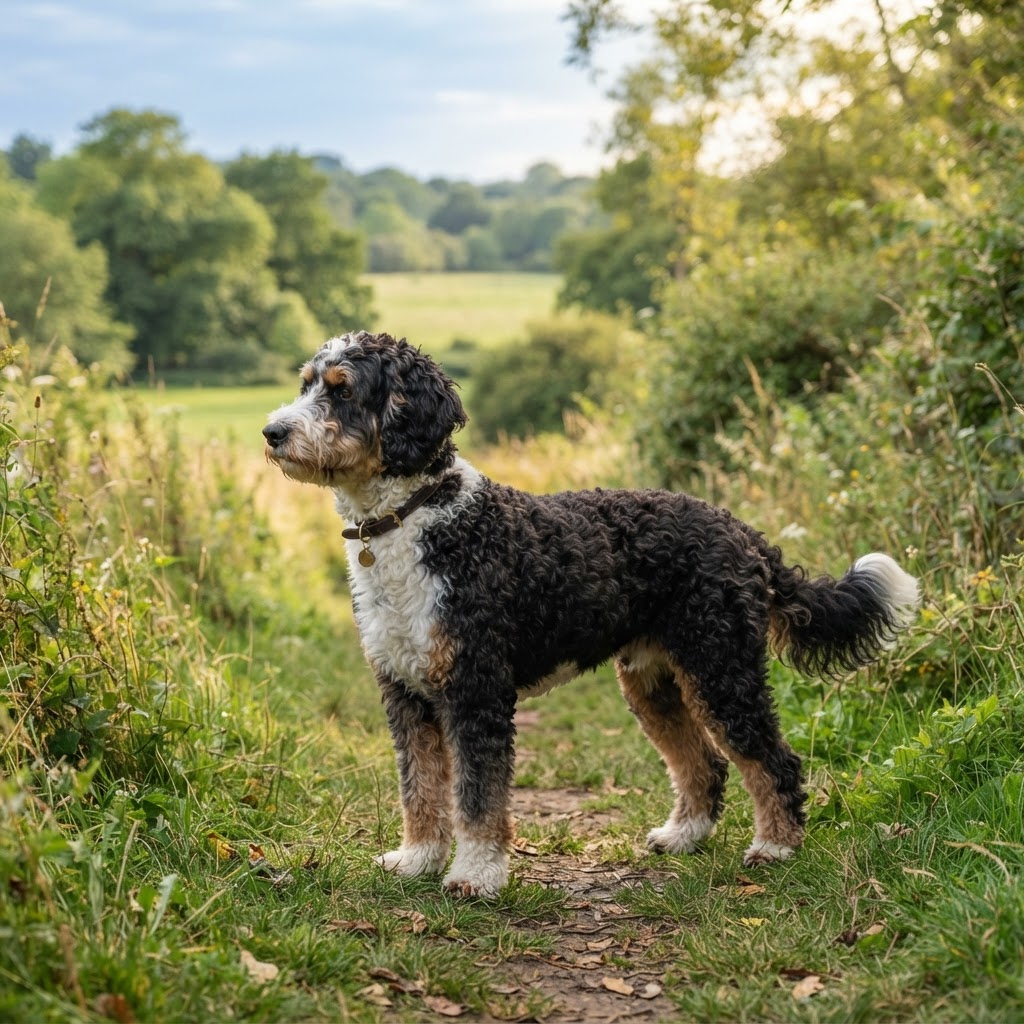
Bernedoodle
Male: 32-41 kg, Female: 23-36 kg (Standard size)
58-74 cm at the shoulder (Standard size)
12-15 years
Canada
About the Bernedoodle
The Bernedoodle is a purposeful crossbreed combining the majestic, calm loyalty of the Bernese Mountain Dog with the high intelligence and low-shedding coat of the Poodle. Emerging in the early 2000s, this hybrid was designed to be the ultimate companion, blending the 'work hard, nap harder' ethic of the Swiss draft dog with the athletic versatility of the Poodle. They are often referred to as 'velcro dogs' due to their intense desire to be near their human counterparts. Characteristically, Bernedoodles are known for their 'Silly' or 'Goofy' personality, often inheriting the Bernese tendency to lean against their owners for affection. While they vary in size from Tiny to Standard, the Standard Bernedoodle is a robust, sturdy dog with a heart of gold. They are exceptionally well-suited to active families who can provide the mental engagement these intelligent dogs crave, as a bored Bernedoodle can quickly become a mischievous one.
Breed Standard
Key characteristics from the breed standard
While not recognized for ANKC conformation shows, the Bernedoodle possesses a unique 'homestead' elegance. A high-quality specimen displays a sturdy, well-boned frame reminiscent of the Bernese, but with a more athletic, tucked-up loin from the Poodle lineage. Their movement is fluid and effortless, covering ground with a rhythmic, springy gait. What truly sets them apart is their expressive, soulful 'human' eyes and a coat that, when properly maintained, creates a striking, plush silhouette that demands attention in any setting.
Bred For
Companion animal, therapy work, and low-shedding family pet
Temperament
Affectionate, intelligent, goofy, loyal, and social
Health Conditions Reported in the Breed
Hip and , Von Willebrand’s Disease (), , (), and ()
Exercise Needs
60-90 minutes of daily activity including walks, swimming, and mental stimulation through training or puzzle toys
Grooming Needs
High; requires daily brushing to prevent matting and professional grooming every 6-8 weeks
Living Suitability
Suited to houses with a medium to large backyard; not ideal for small apartments unless very high exercise needs are met daily.
Good with Kids
Excellent with children of all ages; known for being gentle, patient, and 'nanny-like' with younger family members.
Good with Other Pets
Generally very social and peaceful with other dogs and household pets, though early socialization is key.
Trainability
Highly intelligent and generally eager to please, though they can inherit a 'stubborn streak' from the Bernese side.
Coat & Colours
Variable: Curly (Poodle-like), Wavy (fleece), or Straight (hair). Tricolor (Black, White, and Rust), Black and White, Black and Gold, Sable, Merlot, or Phantom
Exercise needs vary by age, fitness, health, weather and individual temperament. Consult your veterinarian for an exercise plan appropriate for your dog.
Things to Consider
Every breed has its quirks — here's what to know
Bernedoodles are more likely to experience 'matting' if their coat is not brushed daily; the combination of Poodle curls and Bernese undercoat can create tight knots quickly. They are predisposed to ear infections due to hair growth inside the ear canal and heavy, floppy ears that trap moisture—regular cleaning is essential. Like many deep-chested breeds, they are at a higher risk for Bloat (GDV), so feeding smaller meals and avoiding vigorous exercise immediately after eating is a wise precaution. They can be prone to separation anxiety, as they form incredibly strong bonds with their owners; they thrive best when someone is home most of the day. Some individuals may develop a 'Bernese stubbornness' during adolescence, requiring patient, positive-reinforcement training. Additionally, while many are hypoallergenic, some 'F1' crosses (50/50) may still shed lightly, which is a consideration for severe allergy sufferers. Many Bernedoodles have sensitive digestive systems and may experience gas or soft stools on standard commercial kibble; they often thrive significantly better on a species-appropriate fresh or raw diet.
Feeding Guide for Your Bernedoodle
Healthy Weight
25-38 kg
Daily Feeding Amount (general starting estimate)
625-950 grams
For a Standard Bernedoodle, a raw diet should focus on high-quality proteins to maintain lean muscle mass without adding unnecessary weight, which can stress their joints. Owners should aim for 2-3% of their ideal adult body weight daily. For a 30 kg dog, this equates to approximately 600-900 grams of fresh food per day, divided into two meals. Puppies and highly active young adults may require the higher end of this range (3%), while older, more sedentary dogs should stay closer to 2%.
Feeding quantities are general starting estimates only. Individual needs vary with body condition, weight trends, age, health and activity. Ingredient percentages alone do not guarantee complete and balanced nutrition — consult a veterinarian for individualised dietary guidance.
Ingredient percentages alone do not guarantee complete and balanced nutrition. Seek veterinary or qualified canine nutrition guidance for individualised dietary advice. Raw feeding, specific proteins or fresh foods should not be presented as preventing, treating or managing breed health conditions without veterinary diagnosis and supervision.
Majestik's Recommended Feeding Approach
Breed Diet Notes
High-quality, nutrient-dense fresh or raw diet rich in lean proteins, healthy fats, and joint-supporting compounds like glucosamine and chondroitin
The ideal raw diet for a Bernedoodle includes a variety of Australian proteins such as Kangaroo (excellent for weight management), Beef, and Lamb. Inclusion of Omega-3 fatty acids from fish or green-lipped mussel is vital for joint health and coat lustre. Leafy greens and blueberries provide essential antioxidants. Avoid high-filler diets as this breed is prone to weight gain and sensitive digestion.
These are general breed-level notes only. The appropriate food and serving amount depend on the individual dog's age, health, body condition, activity and tolerance.
Majestik Recommendation
Majestik BARF meals follow our practical 70/10/10/10 approach: approximately 70% quality meat and protein ingredients, 10% edible bone, 10% vegetables and 10% offal. This gives customers a convenient fresh-food option without needing to source and portion every ingredient themselves.
Our Beef, Lamb and Roo BARF meals provide convenient fresh-food options, with suitable proteins chosen or rotated according to the individual dog.
Suitable for different needs
- Healthy adult: Majestik adult Beef, Lamb or Roo BARF meal.
- Puppy: Majestik Premium Puppy.
- Senior: Majestik Senior Blend.
- Working or highly active dog: Suitable Majestik adult meal with quantity adjusted to workload and body condition.
- Protein trial: One Majestik protein at a time.
Recommended Majestik BARF Meals


This is a practical starting recommendation for healthy dogs. Individual needs vary with age, health, body condition and activity.
Bernedoodle Feeding Calculator
Personalised raw and cooked feeding recommendations based on your dog's profile
Ideal — Ribs palpable without excess fat. Visible waist. Abdominal tuck present.
Have a question about your Bernedoodle? Dog Health AI
Why Majestik?
Fresh, raw pet food made with integrity in South Australia
Australian Made
Made in Two Wells, South Australia
Freshly Prepared
Real meat, organs, bone & wholefood ingredients
No Fillers
No cheap fillers or artificial preservatives
Family Owned
Locally owned and operated
Local Delivery
Delivery across Adelaide & selected areas
Secure Checkout
Secure payment via Shopify checkout
Subscribe & Save on Bernedoodle Meals
Get your Bernedoodle's fresh and raw meals delivered every two or four weeks. Small subscriptions are combined into a four-week box. Pause, skip or cancel anytime.
Breed Records & Facts
Average Litter Size
6-8 puppies
Bernedoodle Owner Feedback
Real experiences and tips from Bernedoodle owners
No reviews yet
Be the first to share your experience with this breed
Other Large Breeds
References & Sources
Breed information verified against recognised breed authorities and veterinary evidence.