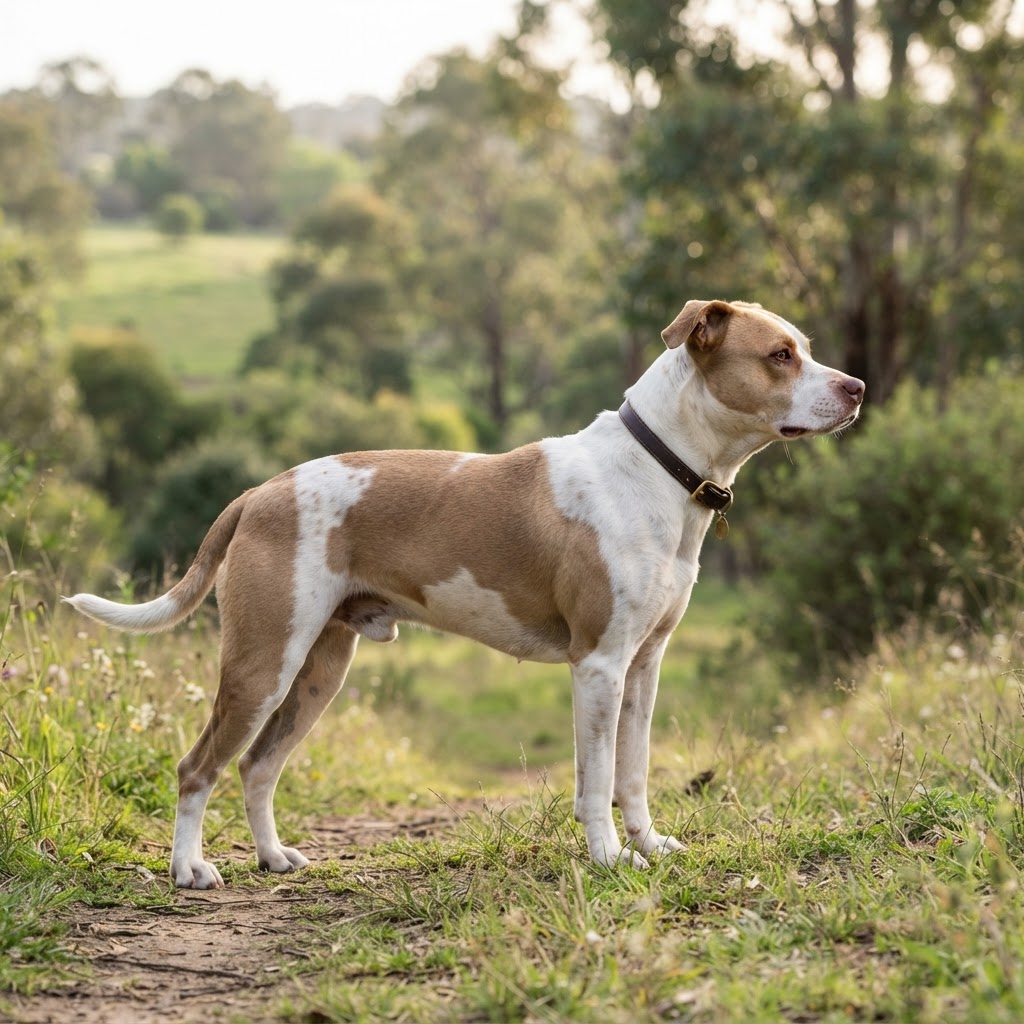
Bull Arab
Male: 35-45 kg, Female: 30-40 kg
61-69 cm at the shoulder
10-14 years
Australia (Central and North Queensland)
About the Bull Arab
The Bull Arab is a uniquely Australian breed, meticulously developed for the demanding task of hunting feral pigs in the outback. Created from a cross-section of Bull Terrier, Greyhound, and Pointer, with later infusions of Great Dane, the breed was engineered for an exceptional sense of smell, the speed to track game, and the strength to hold it. While their origins are rooted in work, they have gained a significant following as devoted family companions due to their remarkably gentle and quiet nature when indoors. Physically, the Bull Arab is a powerful, athletic dog with a deep chest and a robust frame. They are highly adaptable to the Australian climate but are not suited to confined living. Because they are not currently recognized by Dogs Australia (ANKC), they are maintained by dedicated registries like the Bull Arab Breed Registry and Association (BABRA), which focuses on preserving their working utility, health, and reliable temperament.
Breed Standard
Key characteristics from the breed standard
The Bull Arab is defined by a 'utility-first' conformation, showcasing a powerful, symmetrical frame that balances the speed of a sighthound with the substance of a terrier. In the ring, they should move with an effortless, ground-covering gait that suggests great endurance and agility. What truly elevates this breed is their 'quiet power'—a calm, observant presence and a noble head carriage that reflects their high intelligence and unwavering confidence.
In Australia
The Bull Arab was developed in the early 1970s by Mike Hodgens. According to the Australian Bull Arab Registry (ABAR) and the Bull Arab Breed Registry and Association (BABRA), the breed was developed primarily as a specialist feral pig hunting dog.
Bred For
Finding, baying, and catching (lugging) feral pigs in rugged Australian terrain.
Temperament
Loyal, calm, highly intelligent, and courageous. They are known for being affectionate with their families and having a steady, balanced temperament despite their working background.
Health Conditions Reported in the Breed
Hip and , (), , and skin-related issues including Squamous Cell Carcinoma (SCC) due to light pigmentation.
Exercise Needs
High.
Grooming Needs
Minimal. A weekly brush to remove loose hair and occasional baths are sufficient for their short coats.
Living Suitability
Suited to large suburban yards, rural properties, or acreage.
Good with Kids
Generally very good with children, often displaying a patient and protective nature; however, their size and strength mean supervision is necessary with smaller children.
Good with Other Pets
Can be social with other dogs if introduced early, but often possess a high prey drive toward smaller animals; best supervised in multi-pet households.
Trainability
Highly intelligent and eager to please, though they can possess an independent streak. They respond best to consistent, reward-based training and clear leadership.
Coat & Colours
Short, smooth, and dense; designed to provide protection in scrub without holding heat.. Predominantly white with patches of liver, black, tan, or brindle; ticking (flecking) is also common.
Exercise needs vary by age, fitness, health, weather and individual temperament. Consult your veterinarian for an exercise plan appropriate for your dog.
Things to Consider
Every breed has its quirks — here's what to know
Bull Arabs are predisposed to certain health conditions that owners should be mindful of. Hip and elbow dysplasia can occur in larger individuals; while not every Bull Arab is affected, keeping them at a lean weight and providing joint-supportive fresh food can help. Because of their deep chests, they are more likely to experience bloat (GDV), so feeding smaller meals and avoiding vigorous exercise after eating is recommended. Their white or light-pigmented coats, especially on the ears and nose, make them susceptible to sunburn and skin cancers like SCC; applying dog-safe sunblock during peak UV times is a practical necessity. Some individuals can develop skin allergies or sensitivities when fed standard commercial kibble containing fillers—many thrive and see skin improvements when switched to a clean, fresh-food diet like Majestik. They also possess a natural prey drive and high energy levels; providing them with a 'job' or regular mental stimulation ensures they remain happy and well-behaved family members.
Feeding Guide for Your Bull Arab
Healthy Weight
30-45 kg
Daily Feeding Amount (general starting estimate)
600-1350 grams
Bull Arabs should be fed approximately 2-3% of their ideal body weight in fresh, raw food daily. Some owners use smaller divided meals and avoid strenuous activity immediately around feeding. These steps cannot guarantee prevention of gastric dilatation-volvulus. Seek urgent veterinary care if bloat is suspected.
Feeding quantities are general starting estimates only. Individual needs vary with body condition, weight trends, age, health and activity. Ingredient percentages alone do not guarantee complete and balanced nutrition — consult a veterinarian for individualised dietary guidance.
Ingredient percentages alone do not guarantee complete and balanced nutrition. Seek veterinary or qualified canine nutrition guidance for individualised dietary advice. Raw feeding, specific proteins or fresh foods should not be presented as preventing, treating or managing breed health conditions without veterinary diagnosis and supervision.
Majestik's Recommended Feeding Approach
Breed Diet Notes
High-protein, high-quality fat diet suited for active working breeds. They benefit significantly from fresh, raw diets that support lean muscle maintenance and joint health.
A foundation of lean Australian proteins such as kangaroo, beef, and lamb from Majestik Pet Food. Inclusion of omega-3 fatty acids via fish or green-lipped mussel is vital for joint support, alongside pureed leafy greens for essential micronutrients. Portions should be adjusted based on the dog's activity level to prevent obesity.
These are general breed-level notes only. The appropriate food and serving amount depend on the individual dog's age, health, body condition, activity and tolerance.
Majestik Recommendation
Majestik BARF meals follow our practical 70/10/10/10 approach: approximately 70% quality meat and protein ingredients, 10% edible bone, 10% vegetables and 10% offal. This gives customers a convenient fresh-food option without needing to source and portion every ingredient themselves.
Our Beef, Lamb and Roo BARF meals provide convenient fresh-food options, with suitable proteins chosen or rotated according to the individual dog.
Suitable for different needs
- Healthy adult: Majestik adult Beef, Lamb or Roo BARF meal.
- Puppy: Majestik Premium Puppy.
- Senior: Majestik Senior Blend.
- Working or highly active dog: Suitable Majestik adult meal with quantity adjusted to workload and body condition.
- Protein trial: One Majestik protein at a time.
This is a practical starting recommendation for healthy dogs. Individual needs vary with age, health, body condition and activity.
Bull Arab Feeding Calculator
Personalised raw and cooked feeding recommendations based on your dog's profile
Ideal — Ribs palpable without excess fat. Visible waist. Abdominal tuck present.
Have a question about your Bull Arab? Dog Health AI
Why Majestik?
Fresh, raw pet food made with integrity in South Australia
Australian Made
Made in Two Wells, South Australia
Freshly Prepared
Real meat, organs, bone & wholefood ingredients
No Fillers
No cheap fillers or artificial preservatives
Family Owned
Locally owned and operated
Local Delivery
Delivery across Adelaide & selected areas
Secure Checkout
Secure payment via Shopify checkout
Subscribe & Save on Bull Arab Meals
Get your Bull Arab's fresh and raw meals delivered every two or four weeks. Small subscriptions are combined into a four-week box. Pause, skip or cancel anytime.
Breed Records & Facts
Average Litter Size
6-10 puppies
Bull Arab Owner Feedback
Real experiences and tips from Bull Arab owners
Other Large Breeds
References & Sources
Breed information verified against recognised breed authorities and veterinary evidence.
