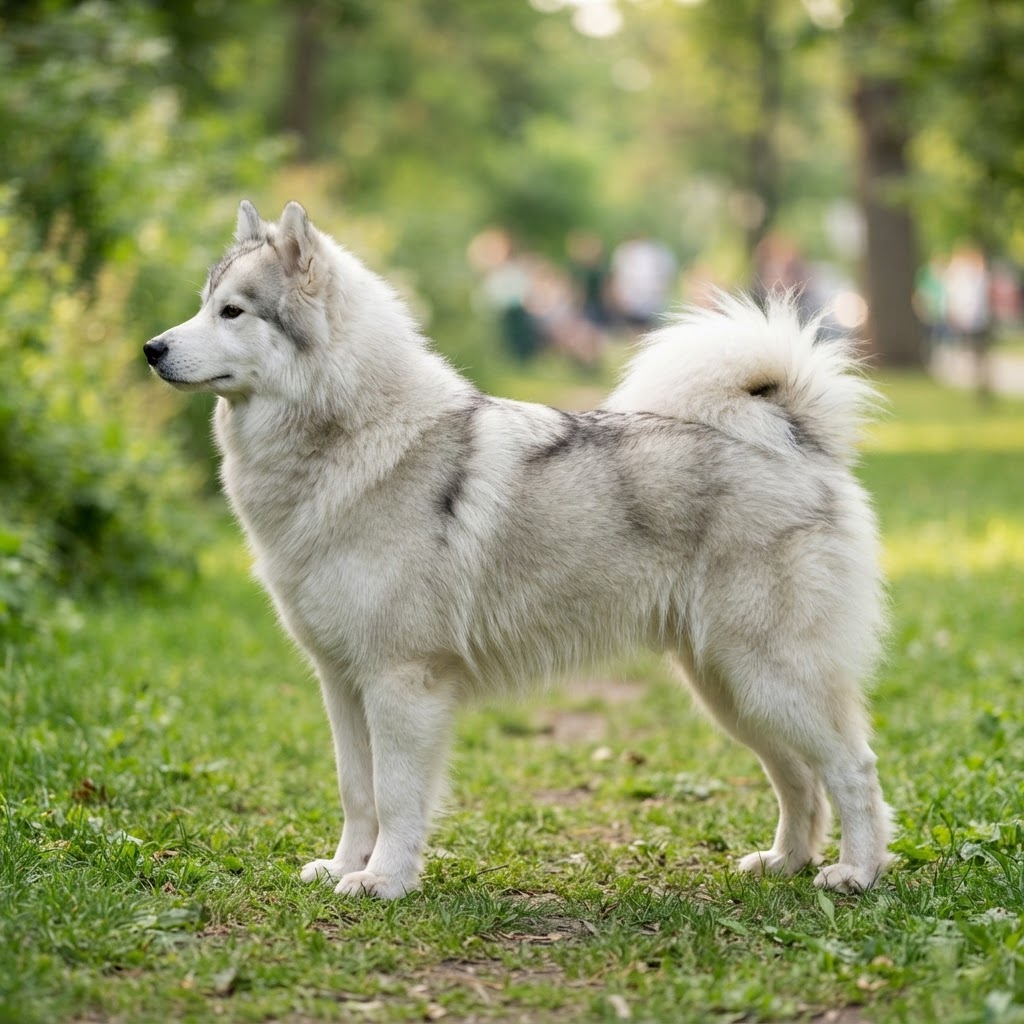
Canadian Eskimo Dog
Male: 30-40 kg, Female: 18-30 kg
50-70 cm (Males: 58-70 cm, Females: 50-60 cm)
10-15 years
Canada (Arctic region)
About the Canadian Eskimo Dog
The Canadian Eskimo Dog, also known as the Qimmiq, is a powerful, primitive working breed that has been the essential partner of the Inuit people for over 4,000 years. Built for stamina and strength rather than speed, they possess a thick-set, athletic frame designed to haul heavy loads across the harshest terrain on Earth. Their appearance is quintessentially 'spitz-type,' featuring a bushy tail curled over the back, erect ears, and a dense, weather-resistant double coat that protects them from sub-zero temperatures. In a domestic setting, they are deeply devoted to their 'pack' but retain a high degree of independence and a formidable prey drive. They are not a breed for the casual owner; they require a leader who understands their working heritage and provides them with a clear purpose. Despite their rugged exterior, they are known for their vocal communication and a surprisingly playful, affectionate side with their immediate family, though they can be wary of strangers.
Breed Standard
Key characteristics from the breed standard
In the show ring, the Canadian Eskimo Dog should exude power and endurance. Judges look for a powerful, square-set frame with a deep chest and a thick, well-muscled neck. Their movement must be steady and tireless, showing great reach and drive. The 'primitive' head shape with its wide-set ears and alert expression is a hallmark of the breed.
Bred For
Arctic sled pulling and hunting assistance, specifically for tracking seal breathing holes and baying polar bears.
Temperament
Intelligent, brave, intensely loyal, and alert. They possess a primitive and powerful nature, often showing great affection toward their owners while maintaining a tough, working-dog stoicism.
Health Conditions Reported in the Breed
(), , and (). Like many Arctic breeds, they may also be predisposed to Zinc-Responsive Dermatosis.
Exercise Needs
Extremely high. These dogs require vigorous daily activity, ideally involving pulling or hiking. Mental stimulation is equally vital to prevent boredom-driven destructive behavior.
Grooming Needs
Moderate most of the year, but intensive during seasonal 'coat blows' (twice yearly). They require regular brushing to remove dead undercoat and prevent matting.
Living Suitability
Not suited for apartment living or small suburban backyards. They require a large, secure yard and ideally acreage where they can work. They are highly sensitive to heat and require climate-controlled environments in Australian summers.
Good with Kids
Generally good with older children in their own family if raised with them, but their size and strength make them less suitable for toddlers. Always supervise interactions.
Good with Other Pets
Can be assertive with other dogs, especially of the same sex. Due to a very high prey drive, they are generally not recommended for households with cats or small animals.
Trainability
Highly intelligent but independent and 'primitive' in their thinking. They respond well to consistent, firm, and fair leadership but are not traditionally 'eager to please' like a Retriever.
Coat & Colours
Thick double coat with a dense, woolly undercoat and a hard, straight outer coat (up to 15cm long).. All colors and patterns are permitted, including white, grey, red, buff, and black, often with various markings.
Exercise needs vary by age, fitness, health, weather and individual temperament. Consult your veterinarian for an exercise plan appropriate for your dog.
Things to Consider
Every breed has its quirks — here's what to know
Prospective owners must consider the Canadian Eskimo Dog's high sensitivity to heat. In Australia, particularly in South Australia, these dogs are prone to heatstroke and must have access to air-conditioning and shade during the day. This doesn't mean they cannot live here, but their environment must be managed carefully. They are also heavy shedders, particularly when they 'blow' their coat, which can result in significant amounts of fur around the home. Like many deep-chested breeds, they are predisposed to Bloat (GDV), a life-threatening condition; feeding smaller, frequent meals and avoiding exercise immediately after eating can help manage this risk. They are also more likely to develop Hip Dysplasia, so keeping them at a lean, healthy weight is vital for joint longevity. Vocalization is another trait—they don't bark so much as 'howl' or 'talk,' which can be loud for neighbors. Finally, their incredibly high prey drive means they are prone to chasing anything that runs; they must be kept in highly secure fencing as they are known escape artists when a scent is picked up.
Feeding Guide for Your Canadian Eskimo Dog
Healthy Weight
18-40 kg (depending on sex and frame)
Daily Feeding Amount (general starting estimate)
600-900 grams (based on a 30kg average)
For an adult Canadian Eskimo Dog, we recommend a raw diet comprising approximately 2-3% of their ideal body weight daily. For a 30kg dog, this equates to 600g to 900g of fresh food, split into two meals. Because of their Arctic metabolism, they benefit from higher fat content during winter months or high-activity periods. Majestik's Beef, Lamb, and Kangaroo blends are excellent protein bases, providing the high-quality amino acids required for muscle maintenance.
Feeding quantities are general starting estimates only. Individual needs vary with body condition, weight trends, age, health and activity. Ingredient percentages alone do not guarantee complete and balanced nutrition — consult a veterinarian for individualised dietary guidance.
Ingredient percentages alone do not guarantee complete and balanced nutrition. Seek veterinary or qualified canine nutrition guidance for individualised dietary advice. Raw feeding, specific proteins or fresh foods should not be presented as preventing, treating or managing breed health conditions without veterinary diagnosis and supervision.
Majestik's Recommended Feeding Approach
Breed Diet Notes
High-protein, moderate-to-high-fat diet reflecting their Arctic heritage. They thrive on fresh, raw diets rich in animal fats and high-quality proteins to maintain coat health and energy levels.
High-energy proteins like Beef and Lamb from Majestik are perfect for their caloric needs. Kangaroo offers a lean, novel protein for those with sensitivities. We recommend including oily fish (like sardines) twice weekly for Omega-3 fatty acids to support their dense double coat and joint health. Avoid high-carbohydrate fillers which can lead to unnecessary weight gain.
These are general breed-level notes only. The appropriate food and serving amount depend on the individual dog's age, health, body condition, activity and tolerance.
Majestik Recommendation
Majestik BARF meals follow our practical 70/10/10/10 approach: approximately 70% quality meat and protein ingredients, 10% edible bone, 10% vegetables and 10% offal. This gives customers a convenient fresh-food option without needing to source and portion every ingredient themselves.
Our Beef, Lamb and Roo BARF meals provide convenient fresh-food options, with suitable proteins chosen or rotated according to the individual dog.
Suitable for different needs
- Healthy adult: Majestik adult Beef, Lamb or Roo BARF meal.
- Puppy: Majestik Premium Puppy.
- Senior: Majestik Senior Blend.
- Working or highly active dog: Suitable Majestik adult meal with quantity adjusted to workload and body condition.
- Protein trial: One Majestik protein at a time.
This is a practical starting recommendation for healthy dogs. Individual needs vary with age, health, body condition and activity.
Canadian Eskimo Dog Feeding Calculator
Personalised raw and cooked feeding recommendations based on your dog's profile
Ideal — Ribs palpable without excess fat. Visible waist. Abdominal tuck present.
Have a question about your Canadian Eskimo Dog? Dog Health AI
Why Majestik?
Fresh, raw pet food made with integrity in South Australia
Australian Made
Made in Two Wells, South Australia
Freshly Prepared
Real meat, organs, bone & wholefood ingredients
No Fillers
No cheap fillers or artificial preservatives
Family Owned
Locally owned and operated
Local Delivery
Delivery across Adelaide & selected areas
Secure Checkout
Secure payment via Shopify checkout
Subscribe & Save on Canadian Eskimo Dog Meals
Get your Canadian Eskimo Dog's fresh and raw meals delivered every two or four weeks. Small subscriptions are combined into a four-week box. Pause, skip or cancel anytime.
Breed Records & Facts
Average Litter Size
3-8 puppies
Canadian Eskimo Dog Owner Feedback
Real experiences and tips from Canadian Eskimo Dog owners
Other Large Breeds
References & Sources
Breed information verified against recognised breed authorities and veterinary evidence.
