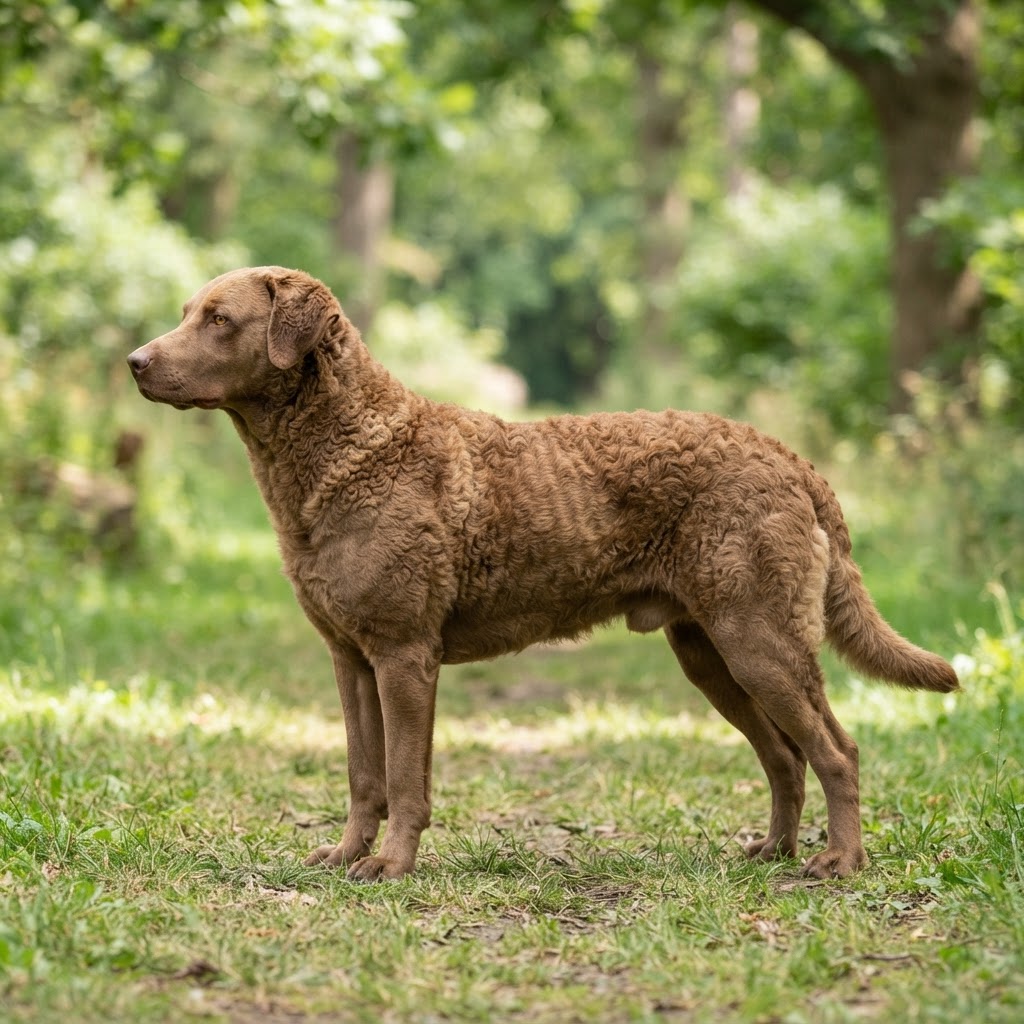
Chesapeake Bay Retriever
Male: 29.5-36.5 kg, Female: 25-32 kg
Male: 58-66 cm, Female: 53-61 cm
10-13 years
United States (Maryland, Chesapeake Bay region)
About the Chesapeake Bay Retriever
The Chesapeake Bay Retriever is the rugged powerhouse of the gundog world, developed specifically to endure the freezing temperatures and rough waters of the American Mid-Atlantic. Distinguished by its unique, oily, and wavy coat, the 'Chessie' is built for endurance and strength. Unlike many other retrievers, they possess a keen, alert expression and a deeply loyal, sometimes protective, temperament that makes them both a dedicated hunter and a steadfast home guardian. Physically, they are characterized by a powerful, well-balanced frame where the hindquarters are as high or slightly higher than the shoulders. Their webbed feet and immense lung capacity make them unparalleled swimmers. In the home, they are sensible and affectionate but require an owner who understands their independent streak and high intelligence. They are a breed of substance, requiring consistent leadership and meaningful work to truly thrive.
Breed Standard
Key characteristics from the breed standard
In the show ring, the Chesapeake Bay Retriever is judged on its ability to perform its original function. The hallmark of the breed is a coat that feels oily and features a distinct wave on the shoulders, neck, back, and loins. Judges look for a powerful, athletic build with a deep chest and well-sprung ribs. What truly sets the Chesapeake apart from other retrievers is its unique 'Chessie' silhouette—a topline that shows the hindquarters equal to or slightly higher than the shoulders, providing the leverage needed for swimming through heavy surf. They possess an aura of quiet confidence and a steady, efficient gait that covers ground with minimal effort, embodying the essence of a tireless water-worker.
In Australia
The first Chesapeake Bay Retriever arrived in Australia in 1969, although it is believed that the breed arrived in Australia in the early 1970s. The breed was imported by Mrs. J. S. H. 'Topsie' Crawford, who was associated with the 'Chesara' kennel prefix as documented by the Chesapeake Bay Retriever Club of Victoria.
Bred For
Waterfowl retrieval in the harsh, icy, and turbulent conditions of the Chesapeake Bay.
Temperament
Bright, happy, courageous, and willing to work. They are known for their intelligence, quiet good sense, and an affectionate, protective nature toward their family.
Health Conditions Reported in the Breed
, , (), Von Willebrand’s Disease (), (), Exercise-Induced Collapse (EIC), and ().
Grooming Needs
Low to Moderate; requires weekly brushing to manage shedding and distribute natural oils. Over-bathing should be avoided to prevent stripping the essential protective coat oils.
Living Suitability
Not suited for apartments. They thrive in homes with a large, secure yard or acreage, ideally with regular access to water for swimming.
Good with Kids
Good with children when raised with them; their protective nature makes them devoted family pets, though they are large and may be boisterous for toddlers.
Good with Other Pets
Generally good with other dogs but can be assertive; may have a high prey drive toward small pets or waterfowl.
Trainability
Highly intelligent but independent; they require firm, consistent, and positive reinforcement training. They are 'thinkers' who may question repetitive tasks.
Coat & Colours
Short, thick, and harsh outer coat with a dense, fine, woolly undercoat; the outer coat contains a high amount of natural oil.. Brown, Sedge, or Deadgrass (ranging from tan to dull straw).
Exercise needs vary by age, fitness, health, weather and individual temperament. Consult your veterinarian for an exercise plan appropriate for your dog.
Things to Consider
Every breed has its quirks — here's what to know
Chesapeake Bay Retrievers are prone to joint issues such as hip and elbow dysplasia—while not every dog will be affected, maintaining a lean weight and using joint supplements can help. They are deep-chested and can be susceptible to bloat (GDV), which is a life-threatening emergency; feeding smaller, frequent meals and avoiding vigorous exercise immediately after eating is a wise precaution. A unique trait of the breed is their oily coat, which carries a distinct 'musky' or doggy odor and can leave an oily residue on furniture—this is a functional waterproofing feature that owners should embrace. They can be more independent and territorial than other retriever breeds, meaning early and ongoing socialization is key to ensuring they are well-adjusted. Shedding is moderate but can become heavy during seasonal 'blow outs,' requiring more frequent brushing. They also have a tendency toward ear infections due to their love of water; drying their ears thoroughly after every swim is a necessary routine. Lastly, like many highly motivated retrievers, they can be predisposed to dietary sensitivities on standard commercial kibbles, often showing skin irritation or digestive upset—many owners find they thrive on a fresh, limited-ingredient raw diet that avoids common fillers.
Feeding Guide for Your Chesapeake Bay Retriever
Healthy Weight
25-36.5 kg
Daily Feeding Amount (general starting estimate)
600-900 grams
For an adult Chesapeake Bay Retriever, a fresh or raw diet should focus on high-quality animal proteins and healthy fats. Based on an average adult weight of 30 kg, they should consume between 600g and 900g of fresh food daily, split into two meals. This amount should be adjusted based on the dog's activity level—active working dogs may require the higher end (3%) of their body weight.
Feeding quantities are general starting estimates only. Individual needs vary with body condition, weight trends, age, health and activity. Ingredient percentages alone do not guarantee complete and balanced nutrition — consult a veterinarian for individualised dietary guidance.
Ingredient percentages alone do not guarantee complete and balanced nutrition. Seek veterinary or qualified canine nutrition guidance for individualised dietary advice. Raw feeding, specific proteins or fresh foods should not be presented as preventing, treating or managing breed health conditions without veterinary diagnosis and supervision.
Majestik's Recommended Feeding Approach
Breed Diet Notes
A high-protein, nutrient-dense diet rich in Omega-3 and Omega-6 fatty acids to support their dense, oily, water-resistant coat and high energy demands.
An ideal Majestik raw diet for a Chesapeake should feature a base of Beef or Kangaroo for lean muscle maintenance, supplemented with Fish (such as Salmon or Sardines) to support their oily coat and joint health. Including green-lipped mussel or turmeric can further support their joints given their high activity levels.
These are general breed-level notes only. The appropriate food and serving amount depend on the individual dog's age, health, body condition, activity and tolerance.
Majestik Recommendation
Majestik BARF meals follow our practical 70/10/10/10 approach: approximately 70% quality meat and protein ingredients, 10% edible bone, 10% vegetables and 10% offal. This gives customers a convenient fresh-food option without needing to source and portion every ingredient themselves.
Our Beef, Lamb and Roo BARF meals provide convenient fresh-food options, with suitable proteins chosen or rotated according to the individual dog.
Suitable for different needs
- Healthy adult: Majestik adult Beef, Lamb or Roo BARF meal.
- Puppy: Majestik Premium Puppy.
- Senior: Majestik Senior Blend.
- Working or highly active dog: Suitable Majestik adult meal with quantity adjusted to workload and body condition.
- Protein trial: One Majestik protein at a time.
Recommended Majestik BARF Meals


This is a practical starting recommendation for healthy dogs. Individual needs vary with age, health, body condition and activity.
Chesapeake Bay Retriever Feeding Calculator
Personalised raw and cooked feeding recommendations based on your dog's profile
Ideal — Ribs palpable without excess fat. Visible waist. Abdominal tuck present.
Have a question about your Chesapeake Bay Retriever? Dog Health AI
Why Majestik?
Fresh, raw pet food made with integrity in South Australia
Australian Made
Made in Two Wells, South Australia
Freshly Prepared
Real meat, organs, bone & wholefood ingredients
No Fillers
No cheap fillers or artificial preservatives
Family Owned
Locally owned and operated
Local Delivery
Delivery across Adelaide & selected areas
Secure Checkout
Secure payment via Shopify checkout
Subscribe & Save on Chesapeake Bay Retriever Meals
Get your Chesapeake Bay Retriever's fresh and raw meals delivered every two or four weeks. Small subscriptions are combined into a four-week box. Pause, skip or cancel anytime.
Breed Records & Facts
Average Litter Size
7-9 puppies
Chesapeake Bay Retriever Owner Feedback
Real experiences and tips from Chesapeake Bay Retriever owners
No reviews yet
Be the first to share your experience with this breed
Other Large Breeds
References & Sources
Breed information verified against recognised breed authorities and veterinary evidence.