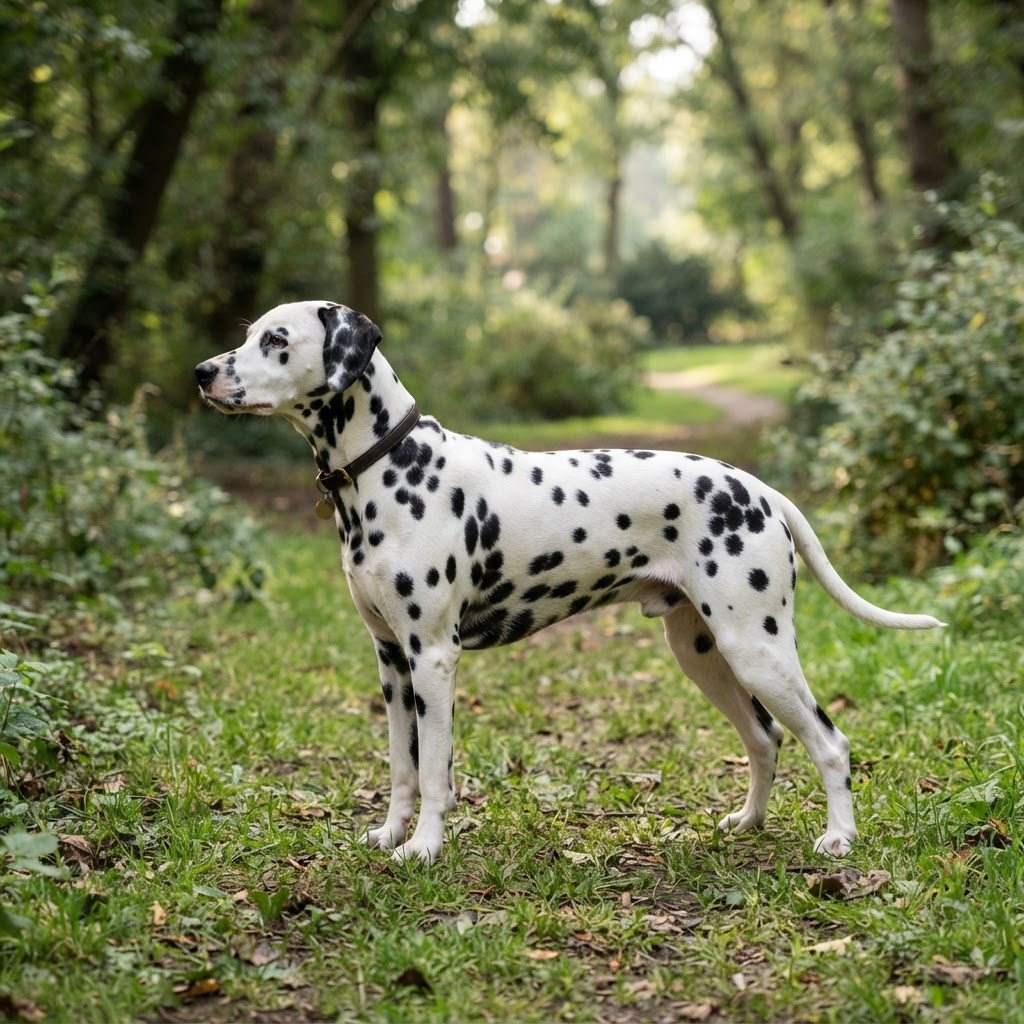
Dalmatian
Male: 27-32 kg, Female: 24-29 kg
54-61 cm at the shoulder
10-13 years
Croatia
About the Dalmatian
The Dalmatian is one of the most recognizable breeds in the world, distinguished by its unique spotted coat and athletic, carriage-dog silhouette. Originating in the historical region of Dalmatia in modern-day Croatia, these dogs were historically utilized as 'coach dogs,' running alongside horse-drawn carriages to provide protection and prestige. This heritage is reflected in their remarkable stamina and affinity for equine companions. They are muscular, medium-to-large dogs with a balanced, clean-cut appearance. In a home environment, Dalmatians are loyal, high-energy companions that thrive on human interaction. They are often described as 'Velcro' dogs, preferring to be in the same room as their owners. Their intelligence makes them highly capable of complex training, though their independent streak requires consistent, positive reinforcement. Prospective owners should be prepared for a dog that is both a sophisticated athlete and a devoted family protector.
Breed Standard
Key characteristics from the breed standard
A symphony of monochrome precision, the Dalmatian in the show ring is defined by the stark clarity of its spotting against a porcelain-white canvas. Their movement is a masterclass in endurance, exhibiting a powerful, smooth reach and drive that echoes their heritage as carriage guardians. The breed's silhouette is one of clean, athletic lines—never coarse, yet never fragile.
In Australia
Dalmatians were originally brought to Australia by early settlers, and although the exact date of arrival for the first Dalmatians in Australia is unknown, official breed club records from the Dalmatian Club of NSW indicate that the breed has been present in Australia since the early 1800s. Furthermore, records from the Dalmatian Club of NSW confirm that Dalmatians were utilized by Australian fire brigades during the late 19th century.
Bred For
Carriage dog (escorting horse-drawn carriages and protecting the horses)
Temperament
Outgoing, energetic, dignified, intelligent, and highly athletic.
Health Conditions Reported in the Breed
(BAER testing required), Hyperuricosuria (HUA/urate bladder stones), , Skin Allergies, and Iris Sphincter Dysplasia (light sensitivity).
Grooming Needs
Moderate; despite a short coat, they shed year-round and require frequent brushing to manage loose hair.
Living Suitability
Not ideally suited to apartment living; they require a secure, medium-to-large backyard and thrive in environments where they have room to run and engage in daily high-impact exercise.
Good with Kids
Good with children, particularly older children who can respect their size and energy; they are playful but can be boisterous for toddlers.
Good with Other Pets
Generally good with other dogs if socialized early; they have a historical affinity for horses but may show prey drive toward small pets.
Trainability
Highly intelligent and capable but can be independent and headstrong; they respond best to consistent, reward-based training and early socialization.
Coat & Colours
Short, hard, dense, and sleek.. Pure white ground color with distinct black or liver (brown) spots.
Exercise needs vary by age, fitness, health, weather and individual temperament. Consult your veterinarian for an exercise plan appropriate for your dog.
Things to Consider
Every breed has its quirks — here's what to know
Prospective owners should be aware that Dalmatians are more likely to experience Hyperuricosuria (HUA), a genetic predisposition that makes them prone to forming urate bladder stones. This means they are frequently sensitive to high-purine commercial diets and often thrive on fresh, low-purine foods tailored to their needs. Their shedding is also a consideration; they possess 'Dalmatian glitter' (stiff, short hairs that embed in fabric), meaning they are more likely to leave hair on furniture year-round. While they are wonderfully devoted, they can be predisposed to separation anxiety if left alone for long periods without mental stimulation. Additionally, around 10-12% of the breed can be susceptible to congenital deafness, so ensuring your puppy is BAER tested is vital for a happy life together. These traits make them a unique and rewarding challenge for an active, engaged owner.
Feeding Guide for Your Dalmatian
Healthy Weight
24-32 kg
Daily Feeding Amount (general starting estimate)
480-960 grams
For a healthy adult Dalmatian, feed 2-3% of their ideal body weight daily in fresh or raw food. For an average 25kg dog, this is approximately 500g to 750g per day, split into two meals. Because of their purine sensitivity, owners must focus on low-purine fresh proteins like chicken, turkey, and eggs, while strictly limiting organ meats like liver and kidney.
Feeding quantities are general starting estimates only. Individual needs vary with body condition, weight trends, age, health and activity. Ingredient percentages alone do not guarantee complete and balanced nutrition — consult a veterinarian for individualised dietary guidance.
Ingredient percentages alone do not guarantee complete and balanced nutrition. Seek veterinary or qualified canine nutrition guidance for individualised dietary advice. Raw feeding, specific proteins or fresh foods should not be presented as preventing, treating or managing breed health conditions without veterinary diagnosis and supervision.
Majestik's Recommended Feeding Approach
Breed Diet Notes
Low-purine diet to manage uric acid levels; high-quality proteins such as chicken and turkey are preferred over high-purine organ meats and certain seafood.
A tailored low-purine raw diet is essential for Dalmatians. Focus on high-quality white meats available from Majestik Pet Food, such as Chicken and Turkey, which are naturally lower in purines than beef or venison. Include moderate amounts of bone (10%) and a significant portion of moisture-rich vegetables (15-20%) like zucchini and pumpkin. Avoid high-purine organ meats (liver, kidney) unless strictly balanced under veterinary guidance; instead, use heart or tripe in limited amounts. Ensure constant access to fresh, filtered water to help flush the urinary system and prevent stone formation.
These are general breed-level notes only. The appropriate food and serving amount depend on the individual dog's age, health, body condition, activity and tolerance.
Majestik Recommendation
Majestik BARF meals follow our practical 70/10/10/10 approach: approximately 70% quality meat and protein ingredients, 10% edible bone, 10% vegetables and 10% offal. This gives customers a convenient fresh-food option without needing to source and portion every ingredient themselves.
Our Beef, Lamb and Roo BARF meals provide convenient fresh-food options, with suitable proteins chosen or rotated according to the individual dog.
Suitable for different needs
- Healthy adult: Majestik adult Beef, Lamb or Roo BARF meal.
- Puppy: Majestik Premium Puppy.
- Senior: Majestik Senior Blend.
- Working or highly active dog: Suitable Majestik adult meal with quantity adjusted to workload and body condition.
- Protein trial: One Majestik protein at a time.
Recommended Majestik BARF Meals


This is a practical starting recommendation for healthy dogs. Individual needs vary with age, health, body condition and activity.
Dalmatian Feeding Calculator
Personalised raw and cooked feeding recommendations based on your dog's profile
Ideal — Ribs palpable without excess fat. Visible waist. Abdominal tuck present.
Have a question about your Dalmatian? Dog Health AI
Why Majestik?
Fresh, raw pet food made with integrity in South Australia
Australian Made
Made in Two Wells, South Australia
Freshly Prepared
Real meat, organs, bone & wholefood ingredients
No Fillers
No cheap fillers or artificial preservatives
Family Owned
Locally owned and operated
Local Delivery
Delivery across Adelaide & selected areas
Secure Checkout
Secure payment via Shopify checkout
Subscribe & Save on Dalmatian Meals
Get your Dalmatian's fresh and raw meals delivered every two or four weeks. Small subscriptions are combined into a four-week box. Pause, skip or cancel anytime.
Breed Records & Facts
Average Litter Size
6-9 puppies
Dalmatian Owner Feedback
Real experiences and tips from Dalmatian owners
No reviews yet
Be the first to share your experience with this breed
Other Large Breeds
References & Sources
Breed information verified against recognised breed authorities and veterinary evidence.