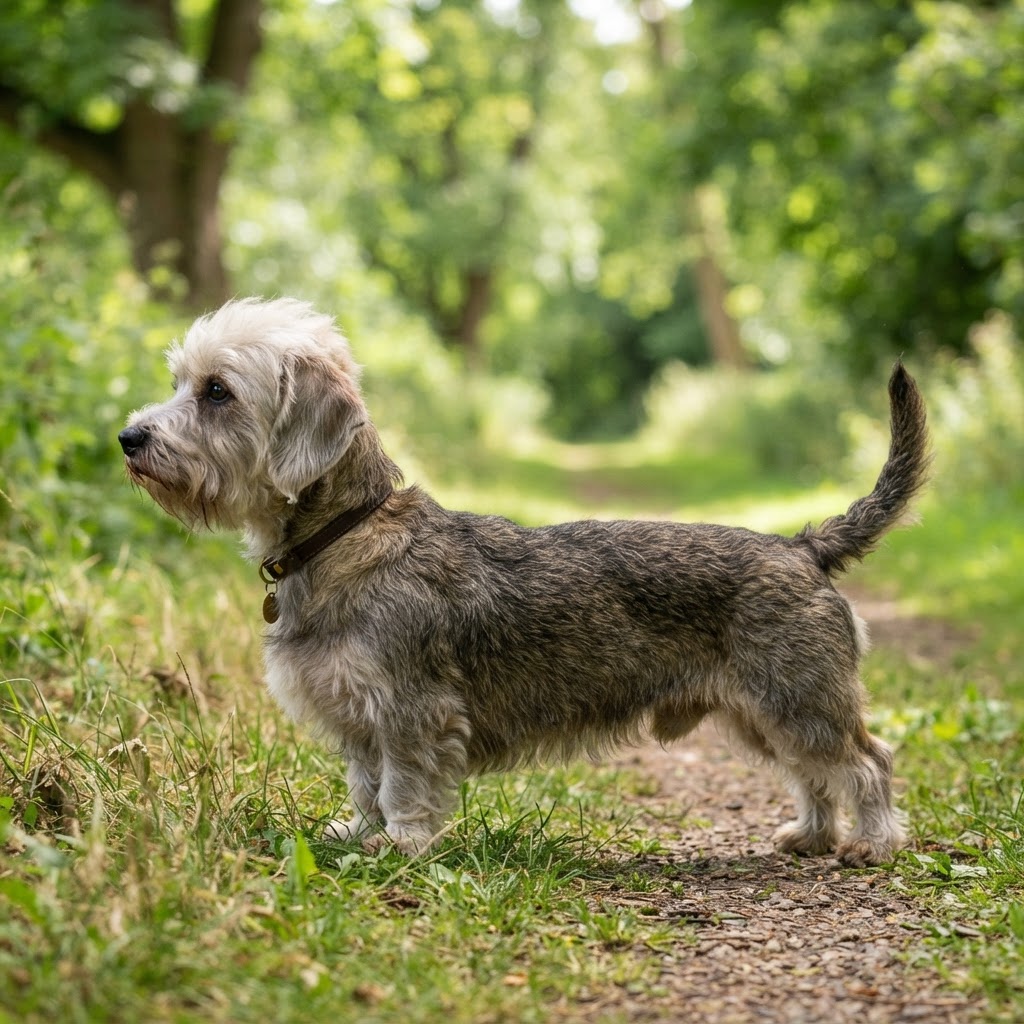
Dandie Dinmont Terrier
Male: 8-11 kg, Female: 8-11 kg
20-28 cm at the shoulder
12-15 years
Scotland (Borders region)
About the Dandie Dinmont Terrier
The Dandie Dinmont Terrier is a distinctive and ancient breed of Scottish terrier, immediately recognisable by its elongated 'weasel-like' body, short legs, and the silky 'topknot' of hair on its head. Unlike the many square-proportioned terriers, the Dandie is built with a series of curves, including a slight arch over the loins and a scimitar-shaped tail. Originally developed by border farmers and gypsies for the arduous task of hunting badgers and otters, they possess a legendary tenacity and 'game' nature that belies their somewhat whimsical appearance. In the home, the Dandie is often described as the 'gentleman of the terrier group.' While they retain the independence and courage of their ancestors, they are generally less frantic and more sensitive than many of their cousins. They are deeply loyal to their owners and possess a deep, baritone bark that sounds like it belongs to a much larger dog. Their unique history—being the only breed named after a fictional character in Sir Walter Scott's novel 'Guy Mannering'—adds to their eccentric and storied charm.
Breed Standard
Key characteristics from the breed standard
In the show ring, the Dandie Dinmont stands out for its 'weaselly' silhouette and fluid, easy movement. The breed standard emphasises the large, expressive eyes that glow with intelligence, and the unique 'topknot' which should be soft and silky. A quality specimen displays a distinctive curve over the loins and a crisp coat texture that is neither wiry nor silky. What truly sets the Dandie apart is its 'dignified persistence'—they carry themselves with a quiet confidence and a level of poise that distinguishes them from the more excitable terrier breeds, showing a blend of Scottish grit and aristocratic charm.
In Australia
The Dandie Dinmont Terrier has been established in Australian show rings since at least the late 19th century, with several imports recorded by 1897. While the exact year of the first Dandie Dinmont Terrier's arrival in Australia is not definitively recorded, historical accounts from 1897 identify Mr. Robert McCracken as the earliest importer to Victoria, according to Walter Beilby in The Dog in Australasia, 1897. The breed has been recognized by Dogs Australia (formerly the ANKC) and its predecessor state bodies for many decades, currently classified within Group 2 (Terriers).
Bred For
Hunting badgers, otters, and foxes; specifically developed to go to ground in the rough terrain of the Scottish Borders.
Temperament
Independent, determined, and intelligent yet surprisingly dignified and calm for a terrier. They are deeply affectionate with family but often display a reserved, non-fawning attitude toward strangers.
Health Conditions Reported in the Breed
() due to their elongated spine, Primary (a hereditary eye condition), (), and .
Exercise Needs
Moderate daily exercise consisting of a 30-45 minute walk and mental stimulation. They enjoy exploring but do not require the high-intensity activity levels of other working terriers.
Grooming Needs
Regular brushing is required to prevent matting, but the coat must be 'plucked' or hand-stripped twice a year to maintain its texture. The distinctive 'topknot' on the head requires careful trimming.
Living Suitability
Well-suited to apartment living or small houses with a yard, provided they receive daily walks. They are relatively calm indoors compared to other terriers.
Good with Kids
Generally good with older, respectful children. Due to their long backs, they should be supervised to ensure children do not climb on them or pick them up incorrectly.
Good with Other Pets
Usually peaceful with other dogs, though they can be scrappy if challenged. Their high prey drive means caution is needed around small pets like rabbits or rodents.
Trainability
Highly intelligent but notoriously independent. They respond best to consistent, positive reinforcement rather than heavy-handed methods, as they can be quite sensitive.
Coat & Colours
A unique double coat consisting of a mix of hard (crisp) hair and soft hair, providing a 'pencilled' appearance.. Pepper (ranging from dark bluish-black to silvery grey) or Mustard (ranging from reddish-brown to pale fawn), both with a light-coloured topknot.
Exercise needs vary by age, fitness, health, weather and individual temperament. Consult your veterinarian for an exercise plan appropriate for your dog.
Things to Consider
Every breed has its quirks — here's what to know
Prospective owners should be aware that Dandie Dinmont Terriers are more likely to experience Intervertebral Disc Disease (IVDD); this doesn't mean every dog will, but it is important to prevent them from jumping off high furniture or using steep stairs to protect their long spines. They can be predisposed to Glaucoma, so regular eye screening by a veterinary ophthalmologist is recommended. Owners may find their independent streak a challenge during training; they are thinkers who occasionally decide they have better things to do than follow a command, though this is easily managed with patience and treats. Like many terriers, they have a notable prey drive and may be inclined to dig if left bored in a garden. Additionally, they are more likely to develop skin irritations if their coat is not regularly stripped, as the dead hair needs manual removal to allow the skin to breathe. Many Dandies thrive on a fresh, raw diet, as they can sometimes be sensitive to the fillers and artificial additives found in standard commercial kibble, which may lead to digestive upset or skin flare-ups.
Feeding Guide for Your Dandie Dinmont Terrier
Healthy Weight
8-11 kg
Daily Feeding Amount (general starting estimate)
200-330 grams
For an adult Dandie Dinmont Terrier, we recommend a fresh or raw diet focusing on high-quality proteins like kangaroo or beef to maintain lean muscle without excess weight. As a general guide, feed 2-3% of their ideal body weight daily. For a 10 kg dog, this equates to 200–300 grams per day, split into two meals. Supplement suitability and dosage depend on the individual dog’s diet and health. Discuss targeted supplementation with your veterinarian or qualified canine nutrition professional.
Feeding quantities are general starting estimates only. Individual needs vary with body condition, weight trends, age, health and activity. Ingredient percentages alone do not guarantee complete and balanced nutrition — consult a veterinarian for individualised dietary guidance.
Ingredient percentages alone do not guarantee complete and balanced nutrition. Seek veterinary or qualified canine nutrition guidance for individualised dietary advice. Raw feeding, specific proteins or fresh foods should not be presented as preventing, treating or managing breed health conditions without veterinary diagnosis and supervision.
Majestik's Recommended Feeding Approach
Breed Diet Notes
A high-quality, nutrient-dense diet that supports spinal health and maintains a lean body condition to prevent unnecessary strain on the back. Fresh or raw diets are excellent for weight management and coat health.
A balanced raw diet for a Dandie should include 80% lean muscle meat (such as Majestik’s Premium Beef or Kangaroo), 10% edible bone, and 10% organ meats (liver and kidney). Given their predisposition to IVDD, maintaining a lean weight is critical; kangaroo is an excellent low-fat protein choice available from Majestik. Supplementing with Omega-3 fatty acids (fish oil) can help maintain their unique coat texture and support joint health. Avoid high-carb fillers to prevent weight gain.
These are general breed-level notes only. The appropriate food and serving amount depend on the individual dog's age, health, body condition, activity and tolerance.
Majestik Recommendation
Majestik BARF meals follow our practical 70/10/10/10 approach: approximately 70% quality meat and protein ingredients, 10% edible bone, 10% vegetables and 10% offal. This gives customers a convenient fresh-food option without needing to source and portion every ingredient themselves.
Our Beef, Lamb and Roo BARF meals provide convenient fresh-food options, with suitable proteins chosen or rotated according to the individual dog.
Suitable for different needs
- Healthy adult: Majestik adult Beef, Lamb or Roo BARF meal.
- Puppy: Majestik Premium Puppy.
- Senior: Majestik Senior Blend.
- Working or highly active dog: Suitable Majestik adult meal with quantity adjusted to workload and body condition.
- Protein trial: One Majestik protein at a time.
Recommended Majestik BARF Meals


This is a practical starting recommendation for healthy dogs. Individual needs vary with age, health, body condition and activity.
Dandie Dinmont Terrier Feeding Calculator
Personalised raw and cooked feeding recommendations based on your dog's profile
Ideal — Ribs palpable without excess fat. Visible waist. Abdominal tuck present.
Have a question about your Dandie Dinmont Terrier? Dog Health AI
Why Majestik?
Fresh, raw pet food made with integrity in South Australia
Australian Made
Made in Two Wells, South Australia
Freshly Prepared
Real meat, organs, bone & wholefood ingredients
No Fillers
No cheap fillers or artificial preservatives
Family Owned
Locally owned and operated
Local Delivery
Delivery across Adelaide & selected areas
Secure Checkout
Secure payment via Shopify checkout
Subscribe & Save on Dandie Dinmont Terrier Meals
Get your Dandie Dinmont Terrier's fresh and raw meals delivered every two or four weeks. Small subscriptions are combined into a four-week box. Pause, skip or cancel anytime.
Breed Records & Facts
Average Litter Size
3-5 puppies
Dandie Dinmont Terrier Owner Feedback
Real experiences and tips from Dandie Dinmont Terrier owners
No reviews yet
Be the first to share your experience with this breed
Other Small Breeds
References & Sources
Breed information verified against recognised breed authorities and veterinary evidence.