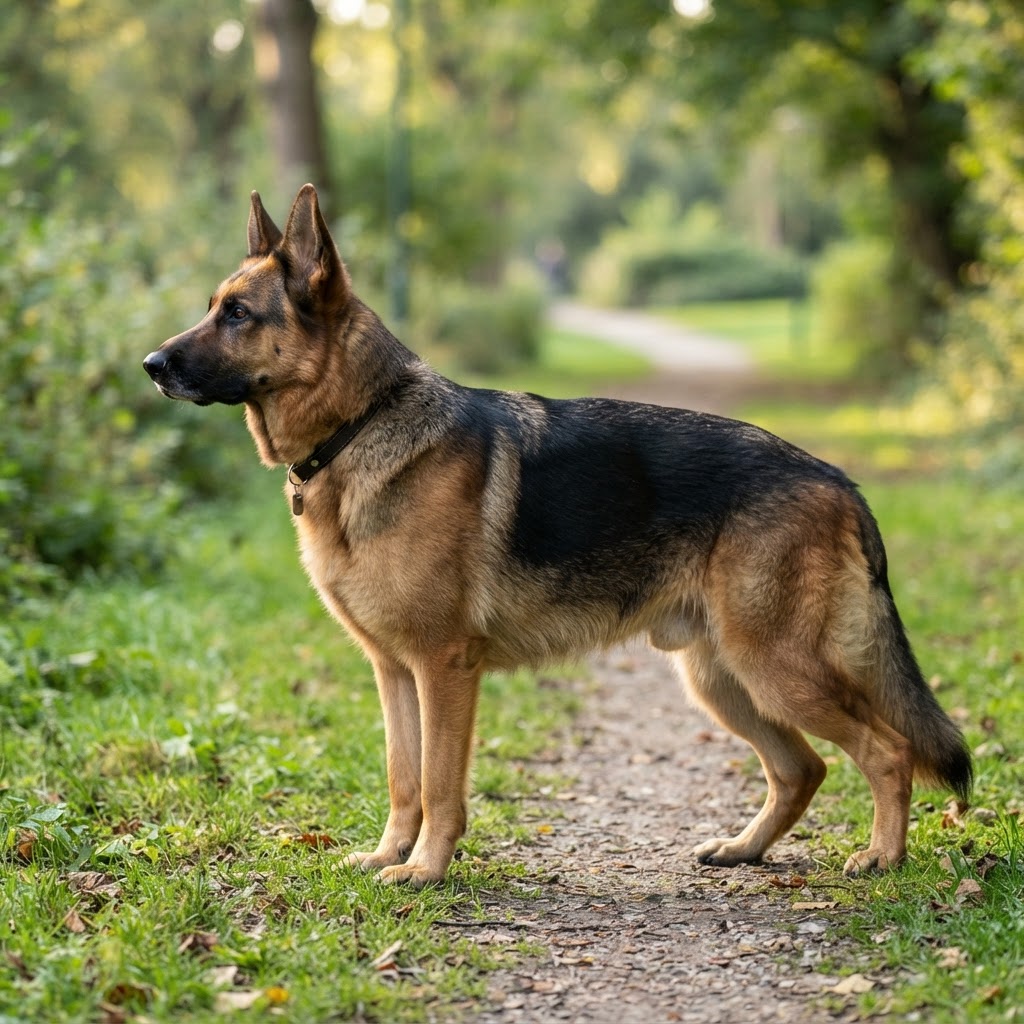
German Shepherd Dog
Male: 30-40 kg; Female: 22-32 kg.
Male: 60-65 cm at the shoulder; Female: 55-60 cm at the shoulder.
9-13 years
Germany
About the German Shepherd Dog
The German Shepherd Dog is the quintessential working breed, celebrated globally for its unparalleled versatility and devotion. Characterized by a strong, muscular frame and a noble, wolf-like expression, they possess an intellect that ranks among the highest in the canine world. This is a dog that thrives on purpose; whether they are serving in the line of duty or acting as a family guardian, they require a clear bond with their handler and a structured environment to truly flourish. In a home setting, the GSD is a 'velcro' dog that deeply integrates into the family unit. While they may be aloof with strangers, they are profoundly affectionate with their inner circle. Their protective instincts are matched by a keen discernment, allowing them to be watchful without being unnecessarily aggressive. Owners must be prepared for a dog that needs both a physical outlet for their energy and a mental outlet for their busy minds, making them best suited for active households committed to ongoing training and companionship.
Breed Standard
Key characteristics from the breed standard
In the show ring, the German Shepherd is defined by its smooth, ground-covering 'flying trot,' a gait so effortless it appears as if the dog is gliding. The standard calls for a harmonious silhouette where the topline flows from the ears, down the neck, and over a gently sloping back into the croup without interruption.
In Australia
The first German Shepherd Dogs were imported into Australia around 1925, with 'Asta of Franconia' being the first of the breed officially registered in the country. Following this introduction, a federal ban on the importation of the breed was in place between 1928 and 1972, as mandated by The German Shepherd Dog Council of Australia (GSDCA). This ban was due to unfounded fears regarding their potential to crossbreed with dingoes as well as concerns regarding their potential to threaten livestock.
Bred For
Originally developed for herding and guarding sheep, the breed was refined by Captain Max von Stephanitz for versatility, leading to roles in police work, military service, and search and rescue.
Temperament
Confident, courageous, highly intelligent, and deeply loyal. They are naturally protective and alert, possessing a steady-of-nerve disposition that makes them adaptable to both work and family life.
Health Conditions Reported in the Breed
Hip and , (), (), and Exocrine Pancreatic Insufficiency (EPI).
Grooming Needs
High; they are nicknamed 'German Shedders' for a reason. Frequent brushing (2-3 times weekly) is required, increasing to daily during seasonal coat 'blows' to manage the dense undercoat.
Living Suitability
Suited to homes with a medium to large secure yard.
Good with Kids
Excellent with children when raised with them and properly socialized. They are patient and protective, though their size and energy mean supervision is always required with younger children.
Good with Other Pets
Usually good with other family pets if introduced early. They can display a high prey drive toward strange animals and may be selective with other dogs if not socialized extensively from puppyhood.
Trainability
Exceptional; they are world-renowned for their ability to learn complex tasks quickly and their intense desire to work alongside their human partner.
Coat & Colours
Double coat, consisting of a thick, straight, and harsh outer coat with a soft, dense undercoat.. Black and tan, sable, solid black, and bi-colour (black with tan or gold markings).
Exercise needs vary by age, fitness, health, weather and individual temperament. Consult your veterinarian for an exercise plan appropriate for your dog.
Things to Consider
Every breed has its quirks — here's what to know
German Shepherds are more likely to experience certain health and lifestyle quirks that prospective owners should be prepared for. They are predisposed to hip and elbow dysplasia, which can lead to mobility issues later in life—maintaining a lean weight and using joint supplements early on is a great proactive step. They are also prone to Gastric Dilatation-Volvulus (Bloat), a serious condition where the stomach twists; feeding two smaller meals a day rather than one large one can help mitigate this risk. In terms of daily life, they are heavy shedders, often jokingly said to shed twice a year for six months at a time, so a high-quality vacuum and regular brushing are essentials. They can also be susceptible to separation anxiety because they bond so intensely with their humans; teaching them independence early on ensures they remain calm when you aren't home. Some GSDs have very sensitive digestive systems and may develop Exocrine Pancreatic Insufficiency (EPI) or food sensitivities—many owners find that moving away from processed kibble to a highly digestible fresh diet like Majestik's helps maintain firm stools and a shiny coat. Lastly, they can be vocal 'talkers' and alert barkers; while this makes them great watchdogs, consistent training helps ensure they only bark when truly necessary. These traits are simply part of the GSD's devoted nature, and for the right owner, their loyalty far outweighs the extra vacuuming.
Feeding Guide for Your German Shepherd Dog
Healthy Weight
22-40 kg
Daily Feeding Amount (general starting estimate)
660-1200 grams
For an adult German Shepherd, we recommend feeding approximately 2-3% of their ideal body weight daily in fresh or raw food. Some owners use smaller divided meals and avoid strenuous activity immediately around feeding. These steps cannot guarantee prevention of gastric dilatation-volvulus. Seek urgent veterinary care if bloat is suspected. For a typical 35kg adult, this means a daily intake of approximately 700g to 1050g of fresh food.
Feeding quantities are general starting estimates only. Individual needs vary with body condition, weight trends, age, health and activity. Ingredient percentages alone do not guarantee complete and balanced nutrition — consult a veterinarian for individualised dietary guidance.
Ingredient percentages alone do not guarantee complete and balanced nutrition. Seek veterinary or qualified canine nutrition guidance for individualised dietary advice. Raw feeding, specific proteins or fresh foods should not be presented as preventing, treating or managing breed health conditions without veterinary diagnosis and supervision.
Majestik's Recommended Feeding Approach
Breed Diet Notes
A high-protein, nutrient-dense diet rich in Omega-3 fatty acids for joint support and skin health, ideally composed of highly digestible fresh ingredients to accommodate their sensitive digestive tracts.
A balanced raw diet for a German Shepherd should focus on lean, high-quality proteins such as Majestik's Kangaroo or Beef, which support lean muscle mass. Given their susceptibility to joint issues, the inclusion of whole sardines or green-lipped mussel powder for Omega-3s is highly beneficial. For those with sensitive stomachs, Majestik's Single Protein options can help identify and avoid digestive triggers.
These are general breed-level notes only. The appropriate food and serving amount depend on the individual dog's age, health, body condition, activity and tolerance.
Majestik Recommendation
Majestik BARF meals follow our practical 70/10/10/10 approach: approximately 70% quality meat and protein ingredients, 10% edible bone, 10% vegetables and 10% offal. This gives customers a convenient fresh-food option without needing to source and portion every ingredient themselves.
Our Beef, Lamb and Roo BARF meals provide convenient fresh-food options, with suitable proteins chosen or rotated according to the individual dog.
Suitable for different needs
- Healthy adult: Majestik adult Beef, Lamb or Roo BARF meal.
- Puppy: Majestik Premium Puppy.
- Senior: Majestik Senior Blend.
- Working or highly active dog: Suitable Majestik adult meal with quantity adjusted to workload and body condition.
- Protein trial: One Majestik protein at a time.
This is a practical starting recommendation for healthy dogs. Individual needs vary with age, health, body condition and activity.
German Shepherd Dog Feeding Calculator
Personalised raw and cooked feeding recommendations based on your dog's profile
Ideal — Ribs palpable without excess fat. Visible waist. Abdominal tuck present.
Have a question about your German Shepherd Dog? Dog Health AI
Why Majestik?
Fresh, raw pet food made with integrity in South Australia
Australian Made
Made in Two Wells, South Australia
Freshly Prepared
Real meat, organs, bone & wholefood ingredients
No Fillers
No cheap fillers or artificial preservatives
Family Owned
Locally owned and operated
Local Delivery
Delivery across Adelaide & selected areas
Secure Checkout
Secure payment via Shopify checkout
Subscribe & Save on German Shepherd Dog Meals
Get your German Shepherd Dog's fresh and raw meals delivered every two or four weeks. Small subscriptions are combined into a four-week box. Pause, skip or cancel anytime.
Breed Records & Facts
Average Litter Size
8 puppies
German Shepherd Dog Owner Feedback
Real experiences and tips from German Shepherd Dog owners
No reviews yet
Be the first to share your experience with this breed
Other Large Breeds
References & Sources
Breed information verified against recognised breed authorities and veterinary evidence.