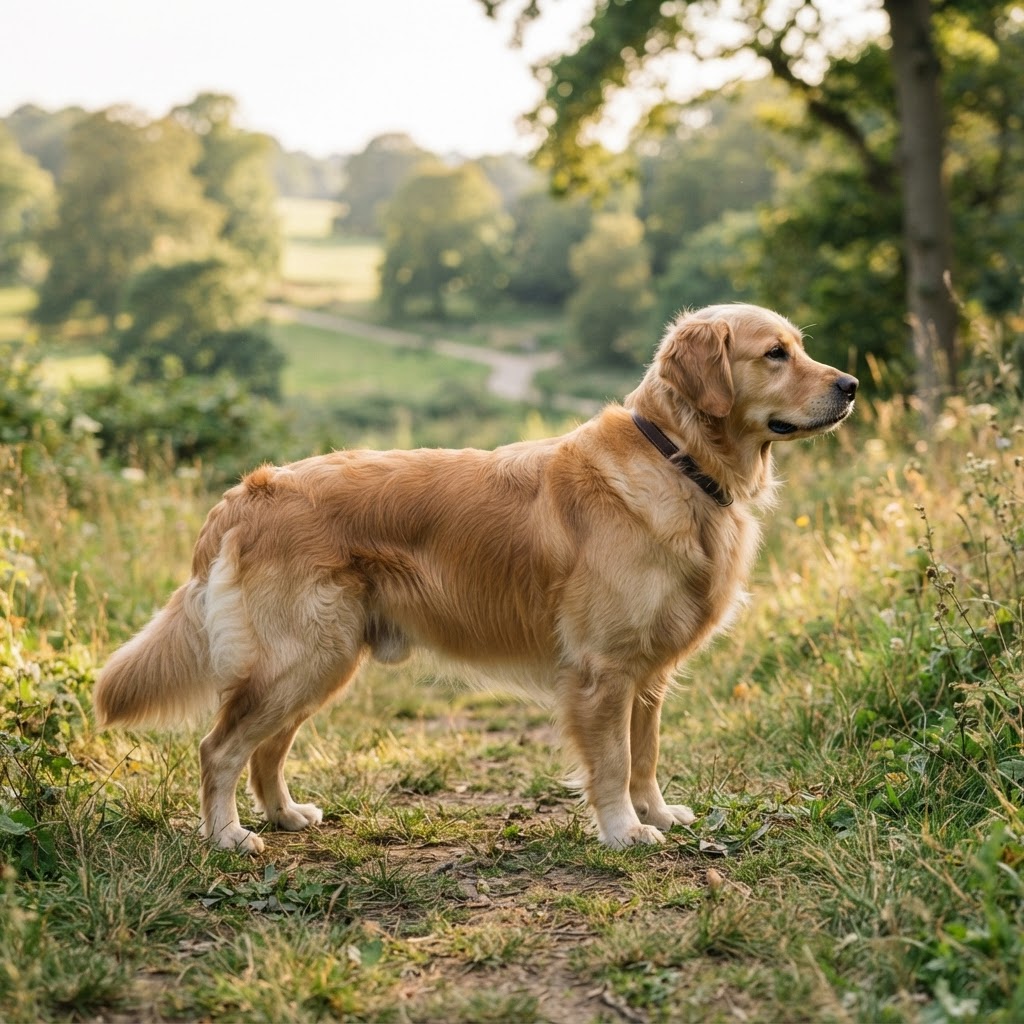
Golden Retriever
Male: 30-34 kg, Female: 25-32 kg
Male: 56-61 cm, Female: 51-56 cm
10-12 years
Scotland
About the Golden Retriever
The Golden Retriever is the quintessential family companion, renowned for its lustrous coat and perpetually friendly expression. Originating in the Scottish Highlands in the mid-19th century, the breed was developed by Dudley Marjoribanks, the first Lord Tweedmouth, who crossed a 'Yellow Retriever' with the now-extinct Tweed Water Spaniel to create a dog capable of navigating rugged terrain and icy waters. Today, they are celebrated not just as exceptional gundogs, but as versatile service animals, search and rescue workers, and devoted household pets. Physically, the Golden Retriever is a symmetrical, powerful, and active dog, showing a kindly expression and possessing a personality that is eager to please. Their intelligence and trainability make them one of the most popular breeds globally. In Australia, they are particularly cherished for their affinity for outdoor activities and their gentle nature with children, though their high energy levels and need for human interaction mean they thrive best when treated as integral members of the family.
Breed Standard
Key characteristics from the breed standard
In the show ring, the Golden Retriever is a study in balance and fluid motion. The breed standard emphasizes a powerful, level topline and a deep, well-sprung chest that facilitates endurance. Their movement is characterized by a free, easy stride with good reach and drive, maintaining a true path without crossing or weaving. Their presence is one of quiet confidence and unshakeable joy, projecting a harmonious blend of rugged athleticism and refined beauty that is unique in the Gundog group.
In Australia
The Golden Retriever was first introduced to Australia in 1937. The breed was imported by Mr. L.S.K. Cunningham. The first Golden Retriever imported to Australia was a bitch named Gilda of Gilder.
Bred For
Retrieving downed game (waterfowl and upland game) during hunting expeditions.
Temperament
Intelligent, kind, friendly, confident, and reliable.
Health Conditions Reported in the Breed
Hip and , (), (), Hemangiorcoma, Lymphoma, Osteorcoma, and Ichthyosis.
Grooming Needs
Moderate to High; requires brushing at least twice weekly and daily during shedding seasons.
Living Suitability
Suited to houses with a medium to large yard; not ideal for apartment living due to size and energy requirements.
Good with Kids
Excellent; known for patience and gentleness with children of all ages.
Good with Other Pets
Very good; typically highly sociable with other dogs and household pets like cats.
Trainability
Highly trainable; intelligent, eager to please, and responds exceptionally well to positive reinforcement.
Coat & Colours
Dense, water-repellent double coat; flat or wavy with good feathering.. Any shade of gold or cream; neither red nor mahogany.
Exercise needs vary by age, fitness, health, weather and individual temperament. Consult your veterinarian for an exercise plan appropriate for your dog.
Things to Consider
Every breed has its quirks — here's what to know
Golden Retrievers are more likely to experience weight management challenges; their love for food can quickly lead to obesity if calories are not strictly monitored, which puts significant pressure on their joints. This doesn't mean every Golden will become overweight, but a fresh, low-carb diet is highly beneficial. They are also prone to heavy shedding—often referred to as 'golden glitter'—which requires consistent grooming to manage. Because of their floppy ears and affinity for water, they can be susceptible to ear infections and 'hot spots' (acute moist dermatitis), so drying them thoroughly after a swim is essential. Furthermore, the breed is predisposed to certain cancers, such as hemangiosarcoma, and joint issues like hip dysplasia; while these are serious considerations, choosing a reputable breeder who performs health screening can mitigate risks. They are highly social and can develop separation anxiety if left alone for extended periods, but they are incredibly rewarding companions for active families who can include them in daily life. Golden Retrievers are also more likely to develop skin and digestive sensitivities on standard commercial diets, often thriving on the fresh, high-quality proteins found in raw feeding plans.
Feeding Guide for Your Golden Retriever
Healthy Weight
25-34 kg
Daily Feeding Amount (general starting estimate)
600-900 grams
For an adult Golden Retriever, a fresh or raw diet should focus on high-quality lean proteins to support joint health and weight management. Feeding roughly 2-3% of their ideal body weight daily is recommended, divided into two meals. For a 30 kg dog, this equates to approximately 600-900 grams of fresh food per day.
Feeding quantities are general starting estimates only. Individual needs vary with body condition, weight trends, age, health and activity. Ingredient percentages alone do not guarantee complete and balanced nutrition — consult a veterinarian for individualised dietary guidance.
Ingredient percentages alone do not guarantee complete and balanced nutrition. Seek veterinary or qualified canine nutrition guidance for individualised dietary advice. Raw feeding, specific proteins or fresh foods should not be presented as preventing, treating or managing breed health conditions without veterinary diagnosis and supervision.
Majestik's Recommended Feeding Approach
Breed Diet Notes
High-quality protein sources with balanced fats and minimal carbohydrates to maintain lean muscle mass and prevent weight gain.
Recommended Majestik Pet Food proteins include Kangaroo for its low-fat profile to manage weight, and Beef or Lamb for muscle maintenance. Incorporating fish like sardines provides essential Omega-3 fatty acids to support their dense double coat and joint health. Avoid high-carbohydrate fillers to prevent obesity-related strain on joints.
These are general breed-level notes only. The appropriate food and serving amount depend on the individual dog's age, health, body condition, activity and tolerance.
Majestik Recommendation
Majestik BARF meals follow our practical 70/10/10/10 approach: approximately 70% quality meat and protein ingredients, 10% edible bone, 10% vegetables and 10% offal. This gives customers a convenient fresh-food option without needing to source and portion every ingredient themselves.
Our Beef, Lamb and Roo BARF meals provide convenient fresh-food options, with suitable proteins chosen or rotated according to the individual dog.
Suitable for different needs
- Healthy adult: Majestik adult Beef, Lamb or Roo BARF meal.
- Puppy: Majestik Premium Puppy.
- Senior: Majestik Senior Blend.
- Working or highly active dog: Suitable Majestik adult meal with quantity adjusted to workload and body condition.
- Protein trial: One Majestik protein at a time.
Recommended Majestik BARF Meals


This is a practical starting recommendation for healthy dogs. Individual needs vary with age, health, body condition and activity.
Golden Retriever Feeding Calculator
Personalised raw and cooked feeding recommendations based on your dog's profile
Ideal — Ribs palpable without excess fat. Visible waist. Abdominal tuck present.
Have a question about your Golden Retriever? Dog Health AI
Why Majestik?
Fresh, raw pet food made with integrity in South Australia
Australian Made
Made in Two Wells, South Australia
Freshly Prepared
Real meat, organs, bone & wholefood ingredients
No Fillers
No cheap fillers or artificial preservatives
Family Owned
Locally owned and operated
Local Delivery
Delivery across Adelaide & selected areas
Secure Checkout
Secure payment via Shopify checkout
Subscribe & Save on Golden Retriever Meals
Get your Golden Retriever's fresh and raw meals delivered every two or four weeks. Small subscriptions are combined into a four-week box. Pause, skip or cancel anytime.
Breed Records & Facts
Oldest Recorded
Augie, 20 years and 11 months
Average Litter Size
8 puppies
Golden Retriever Owner Feedback
Real experiences and tips from Golden Retriever owners
No reviews yet
Be the first to share your experience with this breed
Other Large Breeds
References & Sources
Breed information verified against recognised breed authorities and veterinary evidence.