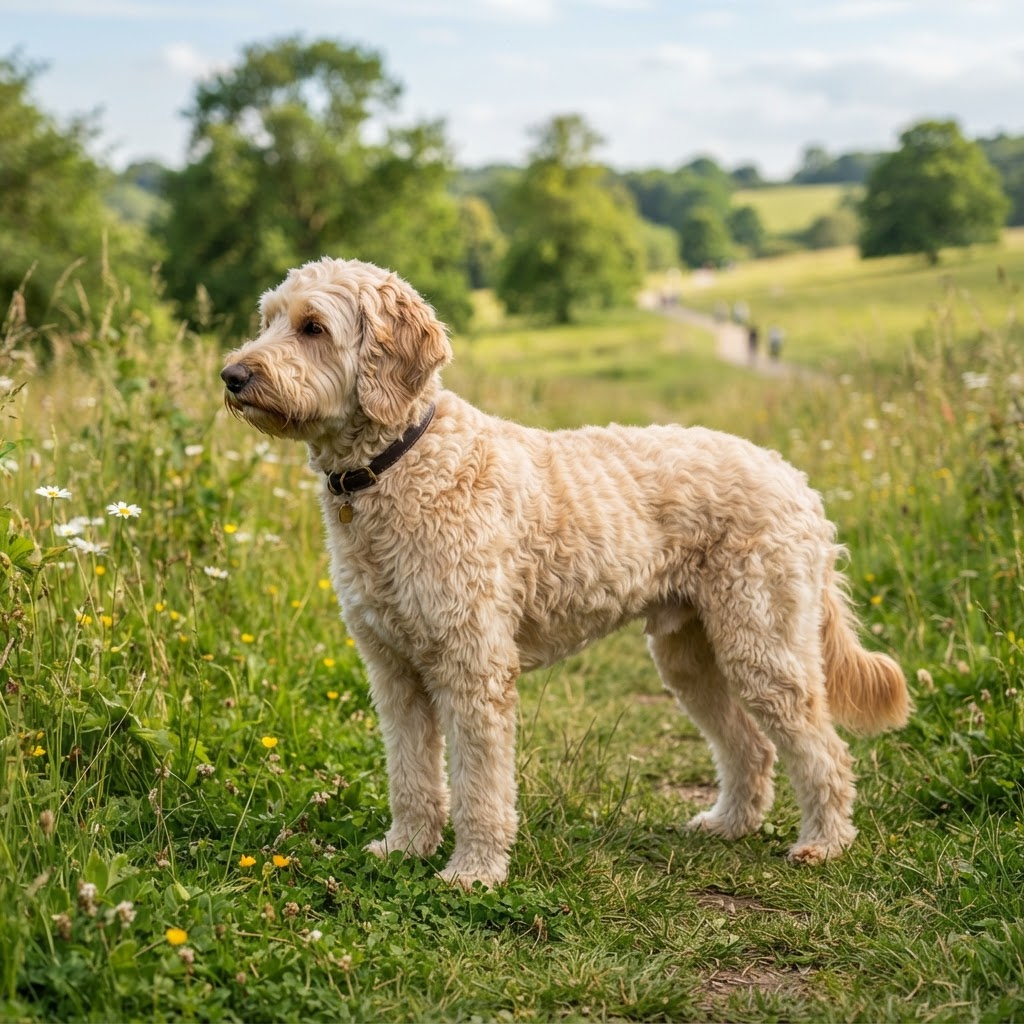
Goldendoodle (Groodle)
Male: 23-35 kg, Female: 20-30 kg
50-66 cm at the shoulder
10-15 years
United States and Australia
About the Goldendoodle (Groodle)
The Groodle, or Goldendoodle, is a purposeful cross between the Poodle and the Golden Retriever, designed to combine the Poodle's low-shedding coat and high intelligence with the Golden Retriever's legendary affability. Originally developed in the late 20th century, the breed gained rapid popularity for its suitability as a service and therapy dog, particularly for individuals with mild allergies who require a stable and intuitive working companion. Physically, the Groodle is a well-balanced dog with a sturdy, athletic frame and a distinctive 'teddy bear' appearance. They are celebrated for their exceptional social intelligence and emotional attunement, often seeking to be in close proximity to their human family. While they are highly adaptable to various lifestyles, they thrive best when integrated into daily activities and provided with consistent mental and physical outlets.
Breed Standard
Key characteristics from the breed standard
In registries that recognize the breed for conformation, the Groodle is judged on its harmonious balance and fluid, effortless movement that covers ground efficiently. Their structure should reflect the athletic capability of both parent breeds, featuring a level topline and well-angulated hindquarters.
Bred For
Service work, therapy assistance, and allergy-friendly companionship
Temperament
Affectionate, intelligent, social, and highly gentle
Health Conditions Reported in the Breed
Hip and , (), Von Willebrand’s disease, , and
Exercise Needs
60-90 minutes of daily activity including walking, swimming, and mental stimulation.
Grooming Needs
High; requires daily brushing to prevent matting and professional grooming every 6-8 weeks.
Living Suitability
Suited to houses with a medium to large yard; not ideal for small apartments unless significant daily exercise is provided.
Good with Kids
Excellent; known for patience and a gentle nature with children of all ages.
Good with Other Pets
Very good; typically highly social and peaceful with other dogs and household pets.
Trainability
Highly trainable; they are exceptionally intelligent and eager to please, responding best to positive reinforcement.
Coat & Colours
Varied: Wavy (fleece), Curly (wool), or Straight (hair). Gold, cream, red, apricot, chocolate, black, and particolour
Exercise needs vary by age, fitness, health, weather and individual temperament. Consult your veterinarian for an exercise plan appropriate for your dog.
Things to Consider
Every breed has its quirks — here's what to know
The Groodle's beautiful coat is a significant commitment; they are prone to severe matting if not brushed daily down to the skin, which can cause discomfort and skin infections. Like many floppy-eared breeds, they are more likely to experience ear infections due to moisture and hair growth inside the canal—regular cleaning is a must. Standard-sized Groodles are deep-chested and can be susceptible to bloat (GDV), so feeding multiple smaller meals and avoiding vigorous exercise immediately after eating is advised. They are highly social and can be predisposed to separation anxiety if left alone for extended periods; they thrive best when they are part of the daily household action. Furthermore, while often considered 'hypoallergenic,' no dog is completely allergen-free, and their shedding levels can vary depending on their generation (F1 vs F1b). Being a cross-breed, they are prone to the joint issues of both parents, specifically hip and elbow dysplasia—keeping them at a lean, healthy weight is the best way to support their long-term mobility. Many Groodles also have sensitive digestive systems and are more likely to develop food sensitivities on standard commercial kibble; they often thrive on a biologically appropriate fresh or raw diet tailored to their needs. These traits are breed predispositions, not certainties, and most Groodles are exceptionally healthy, happy companions when these needs are met.
Feeding Guide for Your Goldendoodle (Groodle)
Healthy Weight
20-35 kg
Daily Feeding Amount (general starting estimate)
500-875 grams
Adult Groodles should be fed a high-quality fresh or raw diet at approximately 2-3% of their ideal body weight daily. For a standard Groodle weighing 25kg, this equates to 500g-750g per day, split into two meals. Puppies and highly active working Groodles may require a higher percentage (up to 4-5%) during growth phases or periods of intense activity.
Feeding quantities are general starting estimates only. Individual needs vary with body condition, weight trends, age, health and activity. Ingredient percentages alone do not guarantee complete and balanced nutrition — consult a veterinarian for individualised dietary guidance.
Ingredient percentages alone do not guarantee complete and balanced nutrition. Seek veterinary or qualified canine nutrition guidance for individualised dietary advice. Raw feeding, specific proteins or fresh foods should not be presented as preventing, treating or managing breed health conditions without veterinary diagnosis and supervision.
Majestik's Recommended Feeding Approach
Breed Diet Notes
High-protein, moderate-fat fresh or raw diet rich in Omega-3 fatty acids to support coat health and joint function.
A balanced raw diet for a Groodle should focus on lean proteins such as Kangaroo, Beef, and Lamb available from Majestik Pet Food. The ratio should consist of approximately 70% muscle meat, 10% edible bone, 10% organ meat (liver and kidney), and 10% seasonal vegetables and fruits. Inclusion of oily fish (sardines) is recommended to support their complex coat and joint health. Due to their predisposition for joint issues, maintaining a lean body condition through controlled portions is essential.
These are general breed-level notes only. The appropriate food and serving amount depend on the individual dog's age, health, body condition, activity and tolerance.
Majestik Recommendation
Majestik BARF meals follow our practical 70/10/10/10 approach: approximately 70% quality meat and protein ingredients, 10% edible bone, 10% vegetables and 10% offal. This gives customers a convenient fresh-food option without needing to source and portion every ingredient themselves.
Our Beef, Lamb and Roo BARF meals provide convenient fresh-food options, with suitable proteins chosen or rotated according to the individual dog.
Suitable for different needs
- Healthy adult: Majestik adult Beef, Lamb or Roo BARF meal.
- Puppy: Majestik Premium Puppy.
- Senior: Majestik Senior Blend.
- Working or highly active dog: Suitable Majestik adult meal with quantity adjusted to workload and body condition.
- Protein trial: One Majestik protein at a time.
Recommended Majestik BARF Meals


This is a practical starting recommendation for healthy dogs. Individual needs vary with age, health, body condition and activity.
Goldendoodle (Groodle) Feeding Calculator
Personalised raw and cooked feeding recommendations based on your dog's profile
Ideal — Ribs palpable without excess fat. Visible waist. Abdominal tuck present.
Have a question about your Goldendoodle (Groodle)? Dog Health AI
Why Majestik?
Fresh, raw pet food made with integrity in South Australia
Australian Made
Made in Two Wells, South Australia
Freshly Prepared
Real meat, organs, bone & wholefood ingredients
No Fillers
No cheap fillers or artificial preservatives
Family Owned
Locally owned and operated
Local Delivery
Delivery across Adelaide & selected areas
Secure Checkout
Secure payment via Shopify checkout
Subscribe & Save on Goldendoodle (Groodle) Meals
Get your Goldendoodle (Groodle)'s fresh and raw meals delivered every two or four weeks. Small subscriptions are combined into a four-week box. Pause, skip or cancel anytime.
Breed Records & Facts
Average Litter Size
7-9 puppies
Goldendoodle (Groodle) Owner Feedback
Real experiences and tips from Goldendoodle (Groodle) owners
No reviews yet
Be the first to share your experience with this breed
Other Large Breeds
References & Sources
Breed information verified against recognised breed authorities and veterinary evidence.