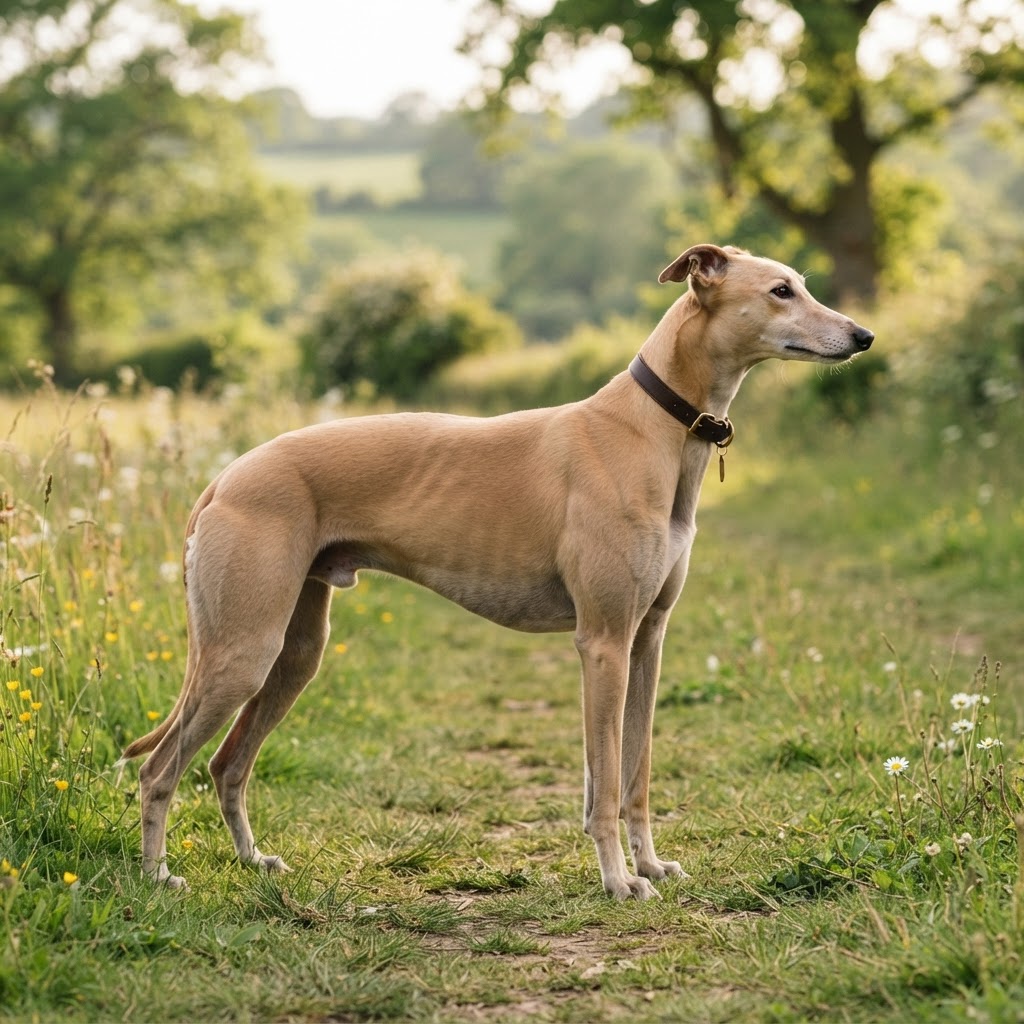
Greyhound
Male: 27-40 kg, Female: 26-34 kg
68-76 cm at the shoulder
10-14 years
Ancient Egypt / Middle East / Eastern Europe
About the Greyhound
The Greyhound is the quintessential sighthound, a masterpiece of canine evolution designed for high-speed pursuit. Characterised by its aerodynamic 'S' curve profile, deep chest, and powerful hindquarters, this breed is the fastest dog in the world. Despite their athletic prowess, they are famously docile and spend the vast majority of their day sleeping, earning them the nickname '45mph couch potatoes.' Their temperament is soft and sensitive, often forming deep bonds with their families while remaining polite but aloof with strangers. In the home, Greyhounds are surprisingly low-impact. They rarely bark and have a very low-odour coat. Because of their lack of body fat and thin skin, they are indoor dogs who require soft bedding and protection from extreme temperatures. They are uniquely suited to owners who appreciate a calm, dignified companion that is as graceful in the living room as it is on the field. Their gentle nature makes them excellent house pets, provided their specific needs regarding prey drive and physical protection are understood.
Breed Standard
Key characteristics from the breed standard
In the show ring, the Greyhound is a symphony of curves and functional elegance. The breed standard calls for a long neck, well-slanted shoulders, and a deep chest providing ample heart room. What sets them apart is their incredible 'S' silhouette, where the topline flows from the ears to the tail in a continuous, graceful arc that signifies both speed and power.
In Australia
Greyhounds were recorded arriving with the First Fleet in 1788 to assist in hunting and providing fresh meat for the colony.
Bred For
Sighthound for coursing game, specifically hares and deer.
Temperament
Gentle, quiet, affectionate, and independent with a distinct 'couch potato' nature indoors.
Health Conditions Reported in the Breed
(), Osteorcoma (bone cancer), Greyhound Polyneuropathy, Corns (in paw pads), Pannus (eye condition), and extreme sensitivity to barbiturate anaesthetics.
Exercise Needs
Moderate. While capable of extreme speed, they require two 20-30 minute walks per day and short bursts of sprinting in a fenced area.
Grooming Needs
Minimal. Occasional brushing with a rubber mitt and regular nail clipping are sufficient.
Living Suitability
Excellent for both apartments and houses with yards, provided they have a soft place to sleep and a secure area for occasional sprints. They do not require a large yard if walked regularly.
Good with Kids
Generally good with older children who respect their space. Their thin skin and sensitive nature make them less suitable for very boisterous toddlers.
Good with Other Pets
Good with other medium-to-large dogs. Due to high prey drive, caution is required with small dogs and they are often not suited to homes with cats or rabbits unless raised with them.
Trainability
Moderate intelligence; they are independent thinkers rather than eager-to-please workers. They respond best to positive reinforcement and gentle handling.
Coat & Colours
Fine, short, and close-pressed coat.. Black, white, red, blue, fawn, fallow, brindle, or any of these colours broken with white.
Exercise needs vary by age, fitness, health, weather and individual temperament. Consult your veterinarian for an exercise plan appropriate for your dog.
Things to Consider
Every breed has its quirks — here's what to know
Greyhounds are predisposed to Bloat (GDV) due to their deep-chested anatomy; owners should feed smaller, frequent meals and avoid vigorous exercise near meal times. Their high prey drive is a significant trait, meaning they should generally be kept on a lead in unenclosed areas as they may bolt after small animals. They are more likely to experience skin tears due to their thin skin and lack of protective fur, and their low body fat makes them highly sensitive to cold—a winter coat is a must in South Australia. Many Greyhounds are prone to dental disease and plaque buildup, so regular dental care or raw meaty bones are essential. They are also predisposed to corn development in their paw pads, which can cause lameness. While they are independent, some can experience separation anxiety if not transitioned into home life carefully. These traits are part of their unique charm, and most Greyhound owners find that a warm coat and a secure leash are small trade-offs for such a devoted, quiet companion.
Feeding Guide for Your Greyhound
Healthy Weight
27-35 kg
Daily Feeding Amount (general starting estimate)
600-900g
Greyhounds thrive on a raw diet that prioritises lean proteins. Some owners use smaller divided meals and avoid strenuous activity immediately around feeding. These steps cannot guarantee prevention of gastric dilatation-volvulus. Seek urgent veterinary care if bloat is suspected. Avoid heavy exercise one hour before and after feeding.
Feeding quantities are general starting estimates only. Individual needs vary with body condition, weight trends, age, health and activity. Ingredient percentages alone do not guarantee complete and balanced nutrition — consult a veterinarian for individualised dietary guidance.
Ingredient percentages alone do not guarantee complete and balanced nutrition. Seek veterinary or qualified canine nutrition guidance for individualised dietary advice. Raw feeding, specific proteins or fresh foods should not be presented as preventing, treating or managing breed health conditions without veterinary diagnosis and supervision.
Majestik's Recommended Feeding Approach
Breed Diet Notes
High-protein, moderate-fat diets focusing on lean meats. Sighthounds benefit from highly digestible diets due to their deep chests and risk of digestive upset.
A high-protein Majestik raw diet featuring Kangaroo is ideal due to its lean nature, which suits the Greyhound’s metabolism perfectly. Add steamed leafy greens for antioxidants. Avoid high-carb fillers that can lead to unnecessary weight gain and gas.
These are general breed-level notes only. The appropriate food and serving amount depend on the individual dog's age, health, body condition, activity and tolerance.
Majestik Recommendation
Majestik BARF meals follow our practical 70/10/10/10 approach: approximately 70% quality meat and protein ingredients, 10% edible bone, 10% vegetables and 10% offal. This gives customers a convenient fresh-food option without needing to source and portion every ingredient themselves.
Our Beef, Lamb and Roo BARF meals provide convenient fresh-food options, with suitable proteins chosen or rotated according to the individual dog.
Suitable for different needs
- Healthy adult: Majestik adult Beef, Lamb or Roo BARF meal.
- Puppy: Majestik Premium Puppy.
- Senior: Majestik Senior Blend.
- Working or highly active dog: Suitable Majestik adult meal with quantity adjusted to workload and body condition.
- Protein trial: One Majestik protein at a time.
Recommended Majestik BARF Meals


This is a practical starting recommendation for healthy dogs. Individual needs vary with age, health, body condition and activity.
Greyhound Feeding Calculator
Personalised raw and cooked feeding recommendations based on your dog's profile
Ideal — Ribs palpable without excess fat. Visible waist. Abdominal tuck present.
Have a question about your Greyhound? Dog Health AI
Why Majestik?
Fresh, raw pet food made with integrity in South Australia
Australian Made
Made in Two Wells, South Australia
Freshly Prepared
Real meat, organs, bone & wholefood ingredients
No Fillers
No cheap fillers or artificial preservatives
Family Owned
Locally owned and operated
Local Delivery
Delivery across Adelaide & selected areas
Secure Checkout
Secure payment via Shopify checkout
Subscribe & Save on Greyhound Meals
Get your Greyhound's fresh and raw meals delivered every two or four weeks. Small subscriptions are combined into a four-week box. Pause, skip or cancel anytime.
Breed Records & Facts
Average Litter Size
6-8 puppies
Greyhound Owner Feedback
Real experiences and tips from Greyhound owners
No reviews yet
Be the first to share your experience with this breed
Other Large Breeds
References & Sources
Breed information verified against recognised breed authorities and veterinary evidence.