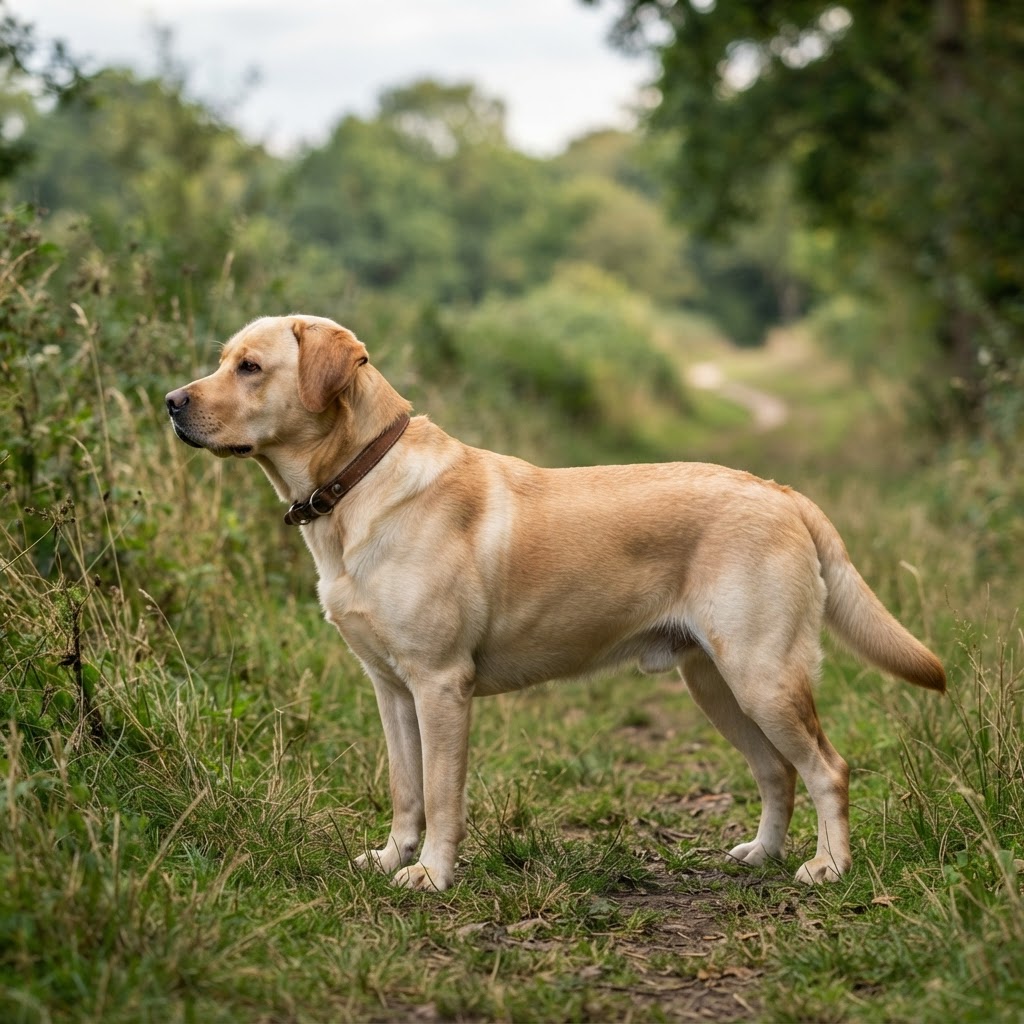
Labrador Retriever
Male: 29-36 kg, Female: 25-32 kg
56-57 cm for males; 54-56 cm for females
10-12 years
Newfoundland (Canada), further developed in the United Kingdom
About the Labrador Retriever
The Labrador Retriever is a strongly built, short-coupled, and very active dog, characterized by its broad skull and powerful hindquarters. Its most distinctive features are its 'otter' tail—thick at the base and tapering toward the tip—and its dense, weather-resistant double coat, which were historically essential for working in icy Canadian waters. They are the quintessential all-purpose dog, serving as devoted family companions, elite sporting partners, and highly capable service animals. In the Australian climate, Labradors are celebrated for their adaptability, though they require careful management in heat due to their thick coats. Their legendary 'will to please' makes them exceptionally trainable, while their gentle disposition makes them one of the most reliable breeds for households with children. As a breed that lives for human interaction, they are happiest when integrated fully into daily family life, whether that involves a trip to the beach or a quiet evening at home.
Breed Standard
Key characteristics from the breed standard
In the ring, the Labrador is defined by its balanced, athletic symmetry and effortless, ground-covering movement. Key attributes include the 'otter tail' used as a rudder, a broad head with a clean-cut brow, and an expression that radiates kindness and intelligence. Their physical robustness is matched only by their emotional resilience, making them the gold standard for canine temperament.
In Australia
The first registered Labradors arrived in Australia in 1929 from the United Kingdom. These dogs, which included Liddly Apple Blossom and Liddly Jonquil, were imported by Mr. Robert McCutcheon, as documented by the Labrador Retriever Club of Victoria.
Bred For
Originally bred as a working retriever to assist fishermen in Newfoundland with hauling nets and retrieving escaping fish, later refined in England as a premier gundog for retrieving waterfowl and upland game.
Temperament
Intelligent, keen, and obedient, with a strong desire to please. They are famously friendly, outgoing, and kind-natured, showing no trace of aggression or undue shyness.
Health Conditions Reported in the Breed
Hip and , (), Hereditary Nal Parakeratosis (HNPK), Exercise Induced Collapse (EIC), and ().
Grooming Needs
Moderate; despite the short hair, they have a dense double coat that requires weekly brushing to manage shedding, increasing to daily during seasonal 'blow outs'. Regular ear cleaning is essential.
Living Suitability
Suited to homes with a medium to large yard. While they can adapt to smaller spaces if exercise needs are met, their size and energy levels make a secure outdoor area preferable for daily play.
Good with Kids
Excellent; known for their patience and gentle nature, making them highly suitable for families with children of all ages.
Good with Other Pets
Generally very social and peaceful with other dogs and household pets, though early socialization is recommended to manage their enthusiastic greeting style.
Trainability
Highly trainable; they are exceptionally intelligent, food-motivated, and eager to please, making them suitable for everything from basic obedience to complex service work.
Coat & Colours
Short, dense, and without wave or feathering, giving a fairly hard feel to the hand; features a weather-resistant undercoat.. Black, Yellow (ranging from light cream to fox-red), and Liver/Chocolate.
Exercise needs vary by age, fitness, health, weather and individual temperament. Consult your veterinarian for an exercise plan appropriate for your dog.
Things to Consider
Every breed has its quirks — here's what to know
Labradors are famously 'food-obsessed' due to a common genetic mutation (POMC gene) that affects satiety, meaning they are more likely to become obese—this doesn't mean every Labrador will, but it requires strict portion control and limited treats. They are predisposed to 'Pica' or eating non-food items (like socks or stones), so keeping a tidy environment is vital. Their thick double coats lead to heavy seasonal shedding, which can be managed with a consistent grooming routine. They are more likely to experience ear infections due to their floppy ear shape trapping moisture, especially after swimming. Joint issues like hip and elbow dysplasia are breed predispositions; maintaining a lean weight and using fresh foods rich in Omega-3s can significantly support their long-term mobility. Finally, their high energy and 'velcro' personality mean they may develop separation anxiety if left alone for long periods without mental stimulation.
Feeding Guide for Your Labrador Retriever
Healthy Weight
25-36 kg
Daily Feeding Amount (general starting estimate)
600-900 grams
For an adult Labrador, feed a high-quality fresh or raw diet at approximately 2-3% of their ideal body weight daily. For an average 30kg Labrador, this equates to 600-900g per day, split into two meals. Individual dogs may tolerate proteins differently, but a specific protein should not be presented as preventing or treating allergies, skin disease or digestive disease. Discuss persistent symptoms with your veterinarian.
Feeding quantities are general starting estimates only. Individual needs vary with body condition, weight trends, age, health and activity. Ingredient percentages alone do not guarantee complete and balanced nutrition — consult a veterinarian for individualised dietary guidance.
Ingredient percentages alone do not guarantee complete and balanced nutrition. Seek veterinary or qualified canine nutrition guidance for individualised dietary advice. Raw feeding, specific proteins or fresh foods should not be presented as preventing, treating or managing breed health conditions without veterinary diagnosis and supervision.
Majestik's Recommended Feeding Approach
Breed Diet Notes
A high-protein, nutrient-dense diet with controlled fat levels to manage weight. They thrive on fresh, whole-food diets rich in Omega-3 fatty acids to support joint health and skin condition.
A balanced raw diet for a Labrador should focus on lean proteins such as Kangaroo and Beef to prevent weight gain, which is a major concern for this breed. Adding locally sourced seasonal vegetables and kelp can provide necessary antioxidants and iodine. Portions should be strictly monitored using a kitchen scale to ensure caloric intake matches activity levels.
These are general breed-level notes only. The appropriate food and serving amount depend on the individual dog's age, health, body condition, activity and tolerance.
Majestik Recommendation
Majestik BARF meals follow our practical 70/10/10/10 approach: approximately 70% quality meat and protein ingredients, 10% edible bone, 10% vegetables and 10% offal. This gives customers a convenient fresh-food option without needing to source and portion every ingredient themselves.
Our Beef, Lamb and Roo BARF meals provide convenient fresh-food options, with suitable proteins chosen or rotated according to the individual dog.
Suitable for different needs
- Healthy adult: Majestik adult Beef, Lamb or Roo BARF meal.
- Puppy: Majestik Premium Puppy.
- Senior: Majestik Senior Blend.
- Working or highly active dog: Suitable Majestik adult meal with quantity adjusted to workload and body condition.
- Protein trial: One Majestik protein at a time.
Recommended Majestik BARF Meals


This is a practical starting recommendation for healthy dogs. Individual needs vary with age, health, body condition and activity.
Labrador Retriever Feeding Calculator
Personalised raw and cooked feeding recommendations based on your dog's profile
Ideal — Ribs palpable without excess fat. Visible waist. Abdominal tuck present.
Have a question about your Labrador Retriever? Dog Health AI
Why Majestik?
Fresh, raw pet food made with integrity in South Australia
Australian Made
Made in Two Wells, South Australia
Freshly Prepared
Real meat, organs, bone & wholefood ingredients
No Fillers
No cheap fillers or artificial preservatives
Family Owned
Locally owned and operated
Local Delivery
Delivery across Adelaide & selected areas
Secure Checkout
Secure payment via Shopify checkout
Subscribe & Save on Labrador Retriever Meals
Get your Labrador Retriever's fresh and raw meals delivered every two or four weeks. Small subscriptions are combined into a four-week box. Pause, skip or cancel anytime.
Breed Records & Facts
Oldest Recorded
Adjutant, who lived to the age of 27 years and 3 months (1936-1963).
Average Litter Size
6-8 puppies
Labrador Retriever Owner Feedback
Real experiences and tips from Labrador Retriever owners
No reviews yet
Be the first to share your experience with this breed
Other Large Breeds
References & Sources
Breed information verified against recognised breed authorities and veterinary evidence.