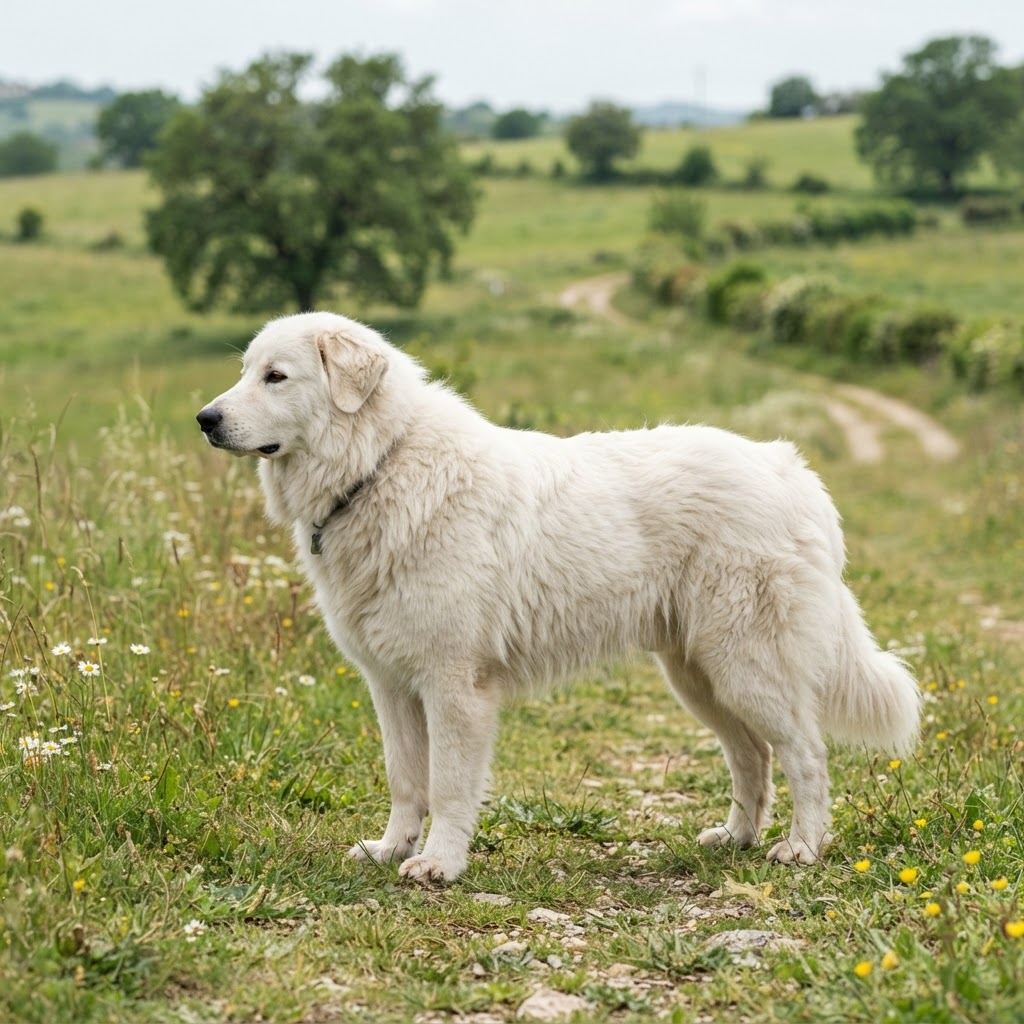
Maremma Sheepdog
Males: 35-45 kg; Females: 30-40 kg.
Males: 65-73 cm; Females: 60-68 cm at the shoulder.
11-13 years
Central Italy (Maremma and Abruzzo regions)
About the Maremma Sheepdog
The Maremma Sheepdog is a majestic and imposing livestock guardian hailing from the rugged landscapes of Italy. Traditionally used to protect sheep from wolves in the Maremmano and Abruzzese regions, this breed is defined by its stunning white double coat and a temperament that is both stoic and fiercely loyal. Unlike herding breeds that move stock, the Maremma lives among the flock, acting as a deterrent to predators through its sheer presence and deep, resonant bark. In Australia, the Maremma has earned legendary status not just on farms, but as a conservation hero, protecting penguin colonies and other endangered wildlife from foxes. They are not 'pets' in the conventional sense; they are partners that require a job to do and a large territory to oversee. They are highly intelligent but possess an independent streak that demands a handler who understands the nuances of working guardian breeds.
Breed Standard
Key characteristics from the breed standard
In the show ring, the Maremma should exude an air of quiet power and rustic elegance. They are distinguished by a large, bear-like head and a thick, harsh coat that should never appear soft or silky. Their movement is a hallmark of the breed—an effortless, rhythmic trot that suggests they could cover vast distances of mountainous terrain without fatigue. What truly sets them apart is their 'sovereign' expression; a Maremma looks through you, not at you, possessing a dignified detachment that reflects centuries of solo decision-making in the Italian highlands.
In Australia
The Maremma Sheepdog was introduced to Australia in 1982 primarily for livestock protection, particularly for sheep and goat flocks. The breed was later famously used for the Middle Island Maremma Project to protect the Little Penguin colony in Warrnambool, as noted by The Maremma Sheepdog Club of Victoria.
Bred For
Livestock Guardian Dog (LGD) tasked with protecting flocks from wolves and other predators.
Temperament
Independent, loyal, dignified, courageous, and intelligent. They are naturally protective and often aloof with strangers, displaying a calm but watchful presence.
Health Conditions Reported in the Breed
, , (), and (eyelid abnormality).
Exercise Needs
Moderate daily exercise. They require space to patrol rather than high-intensity play; long walks and mental stimulation through 'guarding' roles are ideal.
Grooming Needs
Moderate to high. The double coat is 'self-cleaning' to an extent but requires thorough brushing at least twice a week, increasing to daily during seasonal shedding periods.
Living Suitability
Not suited for apartments or small suburban yards. They require large acreage or very large, securely fenced properties where they can perform their natural 'patrolling' behaviors.
Good with Kids
Generally good with children in their own family if raised with them, though they can be overly protective of 'their' children when visitors are present.
Good with Other Pets
Excellent with livestock and usually good with other dogs if properly socialized; may view strange small animals as intruders unless introduced early.
Trainability
Highly intelligent but independent and not typically 'eager to please.' They respond best to fair, consistent leadership and may ignore commands if they feel their 'guarding' duties are more pressing.
Coat & Colours
Thick, long, harsh double coat; slightly wavy; neck hair forms a ruff.. Solid white; shades of ivory, pale orange, or lemon are tolerated in the breed standard.
Exercise needs vary by age, fitness, health, weather and individual temperament. Consult your veterinarian for an exercise plan appropriate for your dog.
Things to Consider
Every breed has its quirks — here's what to know
Prospective owners should be aware that Maremmas are predisposed to certain conditions. Like many deep-chested breeds, they are more likely to experience Gastric Dilatation-Volvulus (Bloat), so smaller, frequent meals are recommended. They are also prone to hip and elbow dysplasia, making weight management and controlled growth in puppyhood essential. Practically, their nocturnal guarding instinct means they are very vocal at night, often barking at any perceived threat, which may not suit close-knit neighborhoods. They are heavy shedders, particularly during 'coat blows' twice a year, which requires significant grooming time. Their independent nature can be perceived as stubbornness; they are more likely to treat you as a colleague than a master. Additionally, Maremmas may develop skin irritations or 'hot spots' if their thick undercoat is not properly dried after rain or swimming. While they are incredibly loyal, their protective drive is high, meaning they require careful management when guests visit the home.
Feeding Guide for Your Maremma Sheepdog
Healthy Weight
30-45 kg
Daily Feeding Amount (general starting estimate)
800-1350 grams
For an adult Maremma, we recommend a fresh or raw diet consisting of approximately 2-3% of their ideal body weight daily. For a standard 40 kg adult, this equates to roughly 800-1200 grams of food per day. Some owners use smaller divided meals and avoid strenuous activity immediately around feeding. These steps cannot guarantee prevention of gastric dilatation-volvulus. Seek urgent veterinary care if bloat is suspected. High-quality animal proteins should be the foundation, supplemented with crushed bone and organ meats to support their large skeletal structure.
Feeding quantities are general starting estimates only. Individual needs vary with body condition, weight trends, age, health and activity. Ingredient percentages alone do not guarantee complete and balanced nutrition — consult a veterinarian for individualised dietary guidance.
Ingredient percentages alone do not guarantee complete and balanced nutrition. Seek veterinary or qualified canine nutrition guidance for individualised dietary advice. Raw feeding, specific proteins or fresh foods should not be presented as preventing, treating or managing breed health conditions without veterinary diagnosis and supervision.
Majestik's Recommended Feeding Approach
Breed Diet Notes
A high-quality, protein-rich diet suitable for giant working breeds, focusing on moderate fat levels and controlled calcium/phosphorus ratios for joint health.
A Maremma thrives on a diverse raw diet featuring Australian-sourced proteins. At Majestik Pet Food, we recommend starting with a base of lean Kangaroo or Beef to maintain muscle mass without excess weight. Inclusion of Lamb or Beef ribs provides the necessary calcium for joint support, while 10% organ meats (liver/kidney) provides essential fat-soluble vitamins. Given their large size and susceptibility to joint issues, adding oily fish like sardines or salmon for Omega-3 fatty acids is highly beneficial. Avoid high-filler diets which can lead to unnecessary weight gain and gas.
These are general breed-level notes only. The appropriate food and serving amount depend on the individual dog's age, health, body condition, activity and tolerance.
Majestik Recommendation
Majestik BARF meals follow our practical 70/10/10/10 approach: approximately 70% quality meat and protein ingredients, 10% edible bone, 10% vegetables and 10% offal. This gives customers a convenient fresh-food option without needing to source and portion every ingredient themselves.
Our Beef, Lamb and Roo BARF meals provide convenient fresh-food options, with suitable proteins chosen or rotated according to the individual dog.
Suitable for different needs
- Healthy adult: Majestik adult Beef, Lamb or Roo BARF meal.
- Puppy: Majestik Premium Puppy.
- Senior: Majestik Senior Blend.
- Working or highly active dog: Suitable Majestik adult meal with quantity adjusted to workload and body condition.
- Protein trial: One Majestik protein at a time.
This is a practical starting recommendation for healthy dogs. Individual needs vary with age, health, body condition and activity.
Maremma Sheepdog Feeding Calculator
Personalised raw and cooked feeding recommendations based on your dog's profile
Ideal — Ribs palpable without excess fat. Visible waist. Abdominal tuck present.
Have a question about your Maremma Sheepdog? Dog Health AI
Why Majestik?
Fresh, raw pet food made with integrity in South Australia
Australian Made
Made in Two Wells, South Australia
Freshly Prepared
Real meat, organs, bone & wholefood ingredients
No Fillers
No cheap fillers or artificial preservatives
Family Owned
Locally owned and operated
Local Delivery
Delivery across Adelaide & selected areas
Secure Checkout
Secure payment via Shopify checkout
Subscribe & Save on Maremma Sheepdog Meals
Get your Maremma Sheepdog's fresh and raw meals delivered every two or four weeks. Small subscriptions are combined into a four-week box. Pause, skip or cancel anytime.
Breed Records & Facts
Average Litter Size
6-9 puppies
Maremma Sheepdog Owner Feedback
Real experiences and tips from Maremma Sheepdog owners
Other Large Breeds
References & Sources
Breed information verified against recognised breed authorities and veterinary evidence.
