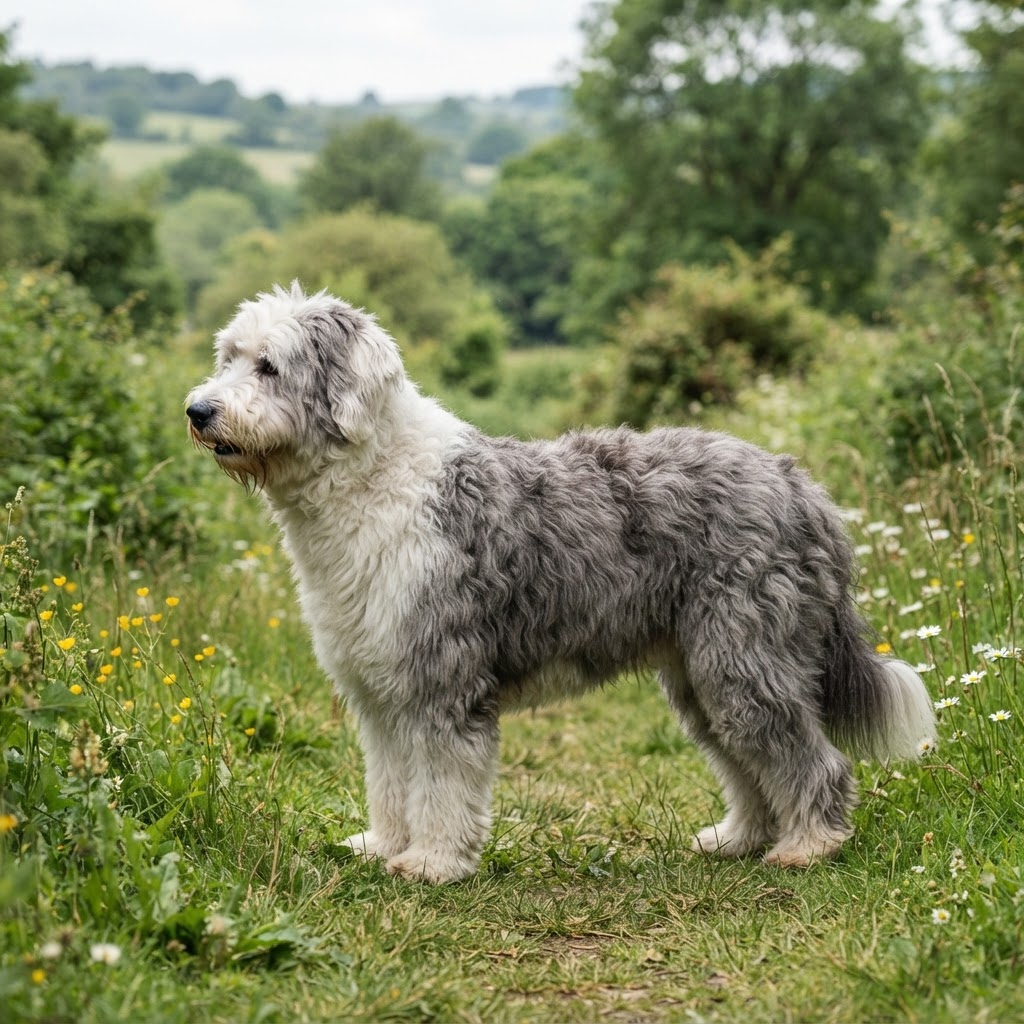
Old English Sheepdog
Male: 32-45 kg; Female: 27-36 kg
Male: 61 cm and upwards; Female: 56 cm and upwards
10-12 years
England
About the Old English Sheepdog
The Old English Sheepdog (OES) is an iconic, large-statured breed instantly recognisable by its profuse, shaggy coat and unique 'pot-cassey' bark. Historically known as the 'Bobtail' due to the practice of docking tails to identify them as tax-exempt working drovers, they are robust, square-proportioned dogs built for endurance and agility. Despite their bulky appearance under the fur, they are surprisingly athletic and move with a distinctive 'bear-like' roll or amble. In a home environment, the OES is a devoted companion that thrives on human interaction. They are known for their sense of humour and steady, reliable nature. While they were originally bred for the rigours of herding in the English countryside, they have transitioned beautifully into family life, provided their significant grooming and mental stimulation needs are met. They remain a popular choice for those who can commit to the intensive maintenance required to keep their magnificent coats healthy.
Breed Standard
Key characteristics from the breed standard
In the show ring, the OES is judged on its square symmetry and 'profuse but not excessive' coat texture. A defining characteristic is the 'rise over the loin,' where the dog is slightly higher at the rump than at the shoulder, creating a unique silhouette. Their movement is a distinctive amble or shuffle at a walk, which transitions into a powerful, ground-covering gallop.
In Australia
In 1908, the first Old English Sheepdog was entered in the Melbourne Royal Show. Later, the first formal breed club, the Old English Sheepdog Club of Victoria, was established in 1968.
Bred For
Droving cattle and sheep over long distances from the farm to the London markets.
Temperament
Adaptable, intelligent, gentle, and often described as 'clownish' or 'the big brother' of the dog world. They are famously loyal and protective without being aggressive.
Health Conditions Reported in the Breed
, , (), Hereditary , Primary Ciliary Dyskinesia (PCD), , and Multi-Drug Resistance 1 (MDR1) gene mutation.
Exercise Needs
Moderate to high.
Grooming Needs
Extremely high. Requires daily brushing to prevent matting and professional grooming every 6-8 weeks. The 'beard' needs cleaning after every meal.
Living Suitability
Not suited for apartment living. They require a home with a medium to large fenced yard. They are sensitive to heat due to their thick coats and must have access to climate-controlled indoor spaces in Australian summers.
Good with Kids
Excellent with children of all ages; they are often called 'nanny dogs' due to their gentle and patient nature.
Good with Other Pets
Generally good with other dogs and can live harmoniously with cats if socialised early, though their herding instinct may lead them to 'bump' or nudge other pets.
Trainability
Highly intelligent but can be independent. They respond best to positive reinforcement and variety in training to prevent boredom.
Coat & Colours
Profuse, shaggy, and hard-textured double coat with a waterproof undercoat.. Any shade of grey, grizzle, or blue. Body and hindquarters of solid colour with or without white 'socks'.
Exercise needs vary by age, fitness, health, weather and individual temperament. Consult your veterinarian for an exercise plan appropriate for your dog.
Things to Consider
Every breed has its quirks — here's what to know
The most significant commitment is grooming; the OES coat is prone to severe matting if neglected, which can lead to painful skin infections or 'hot spots.' They are more likely to experience Gastric Dilatation-Volvulus (Bloat) due to their deep-chested conformation; owners should be aware of the signs of this life-threatening emergency. Heat sensitivity is a major factor in the Australian climate—this breed can overheat quickly in temperatures exceeding 25°C. Their 'beard' acts like a sponge, often leaving trails of water or food (slobber) around the house, which requires frequent cleaning. Like many herding breeds, they can be prone to separation anxiety if left alone for long periods without mental engagement. Some individuals may be predisposed to MDR1 sensitivity, meaning they can have adverse reactions to certain common veterinary medications—this is manageable through DNA testing and informed veterinary care.
Feeding Guide for Your Old English Sheepdog
Healthy Weight
27-45 kg
Daily Feeding Amount (general starting estimate)
700-1100 grams
For an adult OES, a fresh or raw diet should be calculated at approximately 2-3% of their ideal body weight daily. Some owners use smaller divided meals and avoid strenuous activity immediately around feeding. These steps cannot guarantee prevention of gastric dilatation-volvulus. Seek urgent veterinary care if bloat is suspected. Focus on high-quality proteins such as Beef or Kangaroo, which are excellent for maintaining lean muscle mass in large breeds.
Feeding quantities are general starting estimates only. Individual needs vary with body condition, weight trends, age, health and activity. Ingredient percentages alone do not guarantee complete and balanced nutrition — consult a veterinarian for individualised dietary guidance.
Ingredient percentages alone do not guarantee complete and balanced nutrition. Seek veterinary or qualified canine nutrition guidance for individualised dietary advice. Raw feeding, specific proteins or fresh foods should not be presented as preventing, treating or managing breed health conditions without veterinary diagnosis and supervision.
Majestik's Recommended Feeding Approach
Breed Diet Notes
A high-quality diet rich in lean proteins and essential fatty acids to support coat health. They benefit from highly digestible fresh foods to manage weight and prevent digestive upset.
Including Omega-3 fatty acids via fish or flaxseed oil is vital for skin and coat health. Given their deep chests, feeding from a slightly raised bowl and avoiding exercise an hour before and after meals is recommended.
These are general breed-level notes only. The appropriate food and serving amount depend on the individual dog's age, health, body condition, activity and tolerance.
Majestik Recommendation
Majestik BARF meals follow our practical 70/10/10/10 approach: approximately 70% quality meat and protein ingredients, 10% edible bone, 10% vegetables and 10% offal. This gives customers a convenient fresh-food option without needing to source and portion every ingredient themselves.
Our Beef, Lamb and Roo BARF meals provide convenient fresh-food options, with suitable proteins chosen or rotated according to the individual dog.
Suitable for different needs
- Healthy adult: Majestik adult Beef, Lamb or Roo BARF meal.
- Puppy: Majestik Premium Puppy.
- Senior: Majestik Senior Blend.
- Working or highly active dog: Suitable Majestik adult meal with quantity adjusted to workload and body condition.
- Protein trial: One Majestik protein at a time.
Recommended Majestik BARF Meals


This is a practical starting recommendation for healthy dogs. Individual needs vary with age, health, body condition and activity.
Old English Sheepdog Feeding Calculator
Personalised raw and cooked feeding recommendations based on your dog's profile
Ideal — Ribs palpable without excess fat. Visible waist. Abdominal tuck present.
Have a question about your Old English Sheepdog? Dog Health AI
Why Majestik?
Fresh, raw pet food made with integrity in South Australia
Australian Made
Made in Two Wells, South Australia
Freshly Prepared
Real meat, organs, bone & wholefood ingredients
No Fillers
No cheap fillers or artificial preservatives
Family Owned
Locally owned and operated
Local Delivery
Delivery across Adelaide & selected areas
Secure Checkout
Secure payment via Shopify checkout
Subscribe & Save on Old English Sheepdog Meals
Get your Old English Sheepdog's fresh and raw meals delivered every two or four weeks. Small subscriptions are combined into a four-week box. Pause, skip or cancel anytime.
Breed Records & Facts
Average Litter Size
5-8 puppies
Old English Sheepdog Owner Feedback
Real experiences and tips from Old English Sheepdog owners
No reviews yet
Be the first to share your experience with this breed
Other Large Breeds
References & Sources
Breed information verified against recognised breed authorities and veterinary evidence.