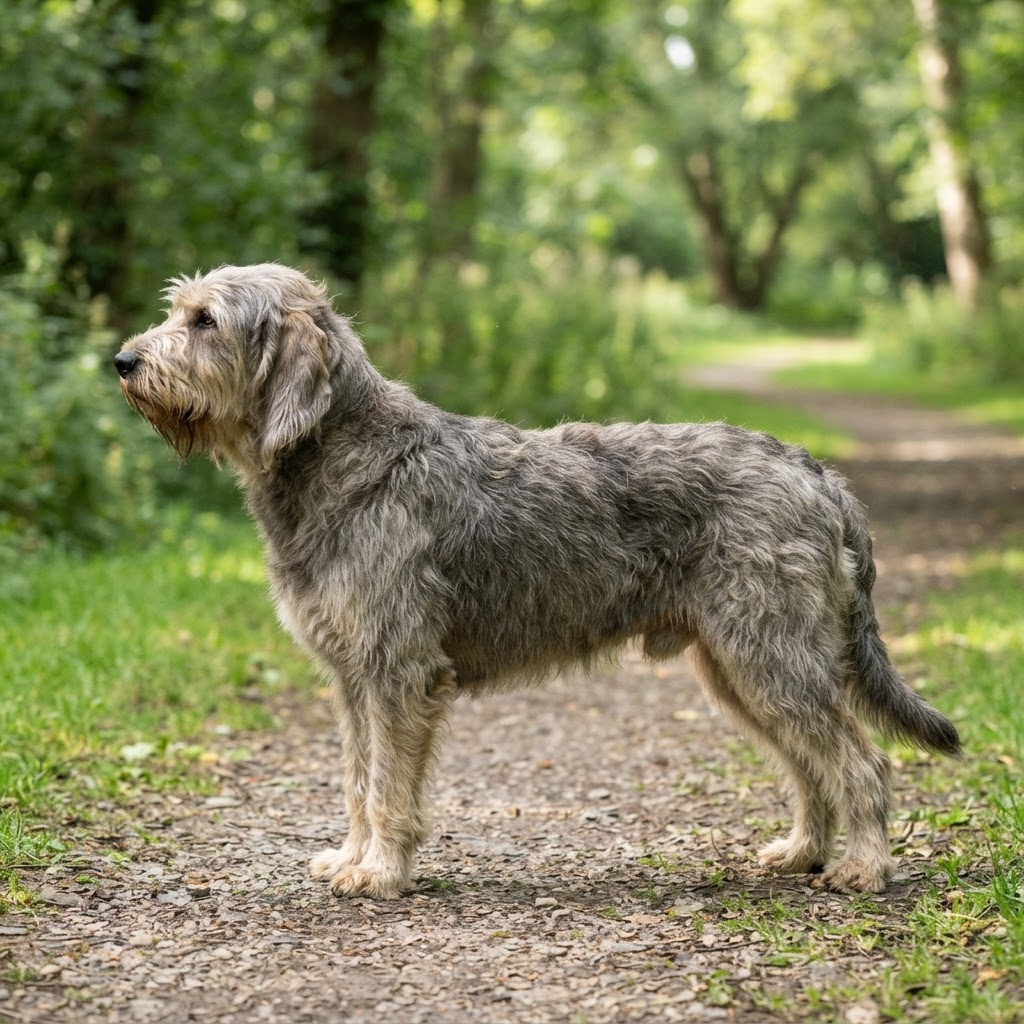
Otterhound
Male: 34-52 kg, Female: 29-45 kg
Approximately 61-69 cm at the shoulder
10-13 years
United Kingdom
About the Otterhound
The Otterhound is a majestic and ancient British breed, distinguished by its shaggy coat, large head, and unique webbed feet. Historically developed to protect the fish populations in English rivers, they are supreme swimmers with a powerful sense of smell that rivals the Bloodhound. Their physical build is one of great strength and endurance, designed for a day's work in challenging aquatic terrain. In a domestic setting, Otterhounds are known for their big-hearted nature and 'musical' voices. While they are affectionate and loyal companions, they retain a strong independent streak typical of scent hounds. They are currently recognized as a vulnerable native breed due to their low registration numbers, making them a rare and special sight in the canine world.
Breed Standard
Key characteristics from the breed standard
In the ring, the Otterhound is a picture of rugged power, moving with a free-striding, active gait that covers ground effortlessly. Their large, well-modeled head with its characteristic 'beard' and pendulous ears creates a noble expression.
In Australia
Reliable Australian historical records for this breed’s introduction were not located.
Bred For
Originally bred to hunt otters in packs, requiring the ability to track scent both on land and in water for extended periods.
Temperament
Amiable, boisterous, and independent with a distinctively 'clown-like' and friendly personality.
Health Conditions Reported in the Breed
Hip and , (), and Otterhound Thrombasthenia (a breed-specific hereditary blood clotting disorder).
Grooming Needs
Moderate; weekly brushing of the shaggy coat is essential to prevent matting, along with regular cleaning of the beard and ears.
Living Suitability
can adapt to apartment living living; requires a large, securely fenced yard or acreage. They thrive in environments where they have space to roam and sniff.
Good with Kids
Generally good with children due to their easy-going nature, though their large size and boisterousness mean they are best suited to families with older children.
Good with Other Pets
Usually good with other dogs; however, they have a high prey drive and may chase smaller household pets unless raised with them.
Trainability
Moderate; they are intelligent but independent and can be stubborn. They require patient, reward-based training and consistent leadership.
Coat & Colours
Double coat featuring a dense, oily, water-resistant undercoat and a rough, shaggy, wiry outer coat.. All recognized hound colors are permissible, including grizzle, sandy, red, wheaten, and blue, often with white markings.
Exercise needs vary by age, fitness, health, weather and individual temperament. Consult your veterinarian for an exercise plan appropriate for your dog.
Things to Consider
Every breed has its quirks — here's what to know
Otterhounds are predisposed to Gastric Dilatation-Volvulus (bloat) due to their deep chests; it is recommended to use slow-feeders and avoid exercise immediately after eating. They are also prone to Otterhound Thrombasthenia, a blood clotting disorder—this doesn't mean every dog will have it, but DNA testing for breeding stock is essential. Owners should be prepared for 'hound music,' as they are very vocal and possess a deep, melodic bay. Their shaggy beards act like sponges, often trailing water and food through the house, which can be managed with a quick wipe after meals. Their oily, weather-resistant coat has a distinct 'hound scent' that may be more noticeable than in other breeds, but this natural oil is vital for skin health. Finally, their independent nature means they may follow their nose over a fence, so secure containment is a must.
Feeding Guide for Your Otterhound
Healthy Weight
34-50 kg
Daily Feeding Amount (general starting estimate)
850-1500 grams
For an adult Otterhound, we recommend a fresh, raw diet consisting of 2-3% of their ideal body weight daily. Some owners use smaller divided meals and avoid strenuous activity immediately around feeding. These steps cannot guarantee prevention of gastric dilatation-volvulus. Seek urgent veterinary care if bloat is suspected. This should include a balance of muscle meat, edible bone, and organ meats.
Feeding quantities are general starting estimates only. Individual needs vary with body condition, weight trends, age, health and activity. Ingredient percentages alone do not guarantee complete and balanced nutrition — consult a veterinarian for individualised dietary guidance.
Ingredient percentages alone do not guarantee complete and balanced nutrition. Seek veterinary or qualified canine nutrition guidance for individualised dietary advice. Raw feeding, specific proteins or fresh foods should not be presented as preventing, treating or managing breed health conditions without veterinary diagnosis and supervision.
Majestik's Recommended Feeding Approach
Breed Diet Notes
A high-quality, protein-rich diet focusing on joint support and weight management, ideally formulated for large, deep-chested breeds to mitigate bloat risks.
A balanced raw diet for an Otterhound should prioritize high-quality proteins like Majestik beef, kangaroo, and lamb. Inclusion of glucosamine-rich sources like raw chicken feet or kangaroo tails is vital for joint health. We recommend a 70:10:10:10 ratio (muscle meat, edible bone, liver, and other secreting organs), supplemented with leafy greens for fiber. Given their deep chests, avoid feeding large amounts of carbohydrates which can ferment and contribute to gas.
These are general breed-level notes only. The appropriate food and serving amount depend on the individual dog's age, health, body condition, activity and tolerance.
Majestik Recommendation
Majestik BARF meals follow our practical 70/10/10/10 approach: approximately 70% quality meat and protein ingredients, 10% edible bone, 10% vegetables and 10% offal. This gives customers a convenient fresh-food option without needing to source and portion every ingredient themselves.
Our Beef, Lamb and Roo BARF meals provide convenient fresh-food options, with suitable proteins chosen or rotated according to the individual dog.
Suitable for different needs
- Healthy adult: Majestik adult Beef, Lamb or Roo BARF meal.
- Puppy: Majestik Premium Puppy.
- Senior: Majestik Senior Blend.
- Working or highly active dog: Suitable Majestik adult meal with quantity adjusted to workload and body condition.
- Protein trial: One Majestik protein at a time.
Recommended Majestik BARF Meals


This is a practical starting recommendation for healthy dogs. Individual needs vary with age, health, body condition and activity.
Otterhound Feeding Calculator
Personalised raw and cooked feeding recommendations based on your dog's profile
Ideal — Ribs palpable without excess fat. Visible waist. Abdominal tuck present.
Have a question about your Otterhound? Dog Health AI
Why Majestik?
Fresh, raw pet food made with integrity in South Australia
Australian Made
Made in Two Wells, South Australia
Freshly Prepared
Real meat, organs, bone & wholefood ingredients
No Fillers
No cheap fillers or artificial preservatives
Family Owned
Locally owned and operated
Local Delivery
Delivery across Adelaide & selected areas
Secure Checkout
Secure payment via Shopify checkout
Subscribe & Save on Otterhound Meals
Get your Otterhound's fresh and raw meals delivered every two or four weeks. Small subscriptions are combined into a four-week box. Pause, skip or cancel anytime.
Breed Records & Facts
Average Litter Size
6-10 puppies
Otterhound Owner Feedback
Real experiences and tips from Otterhound owners
No reviews yet
Be the first to share your experience with this breed
Other Large Breeds
References & Sources
Breed information verified against recognised breed authorities and veterinary evidence.