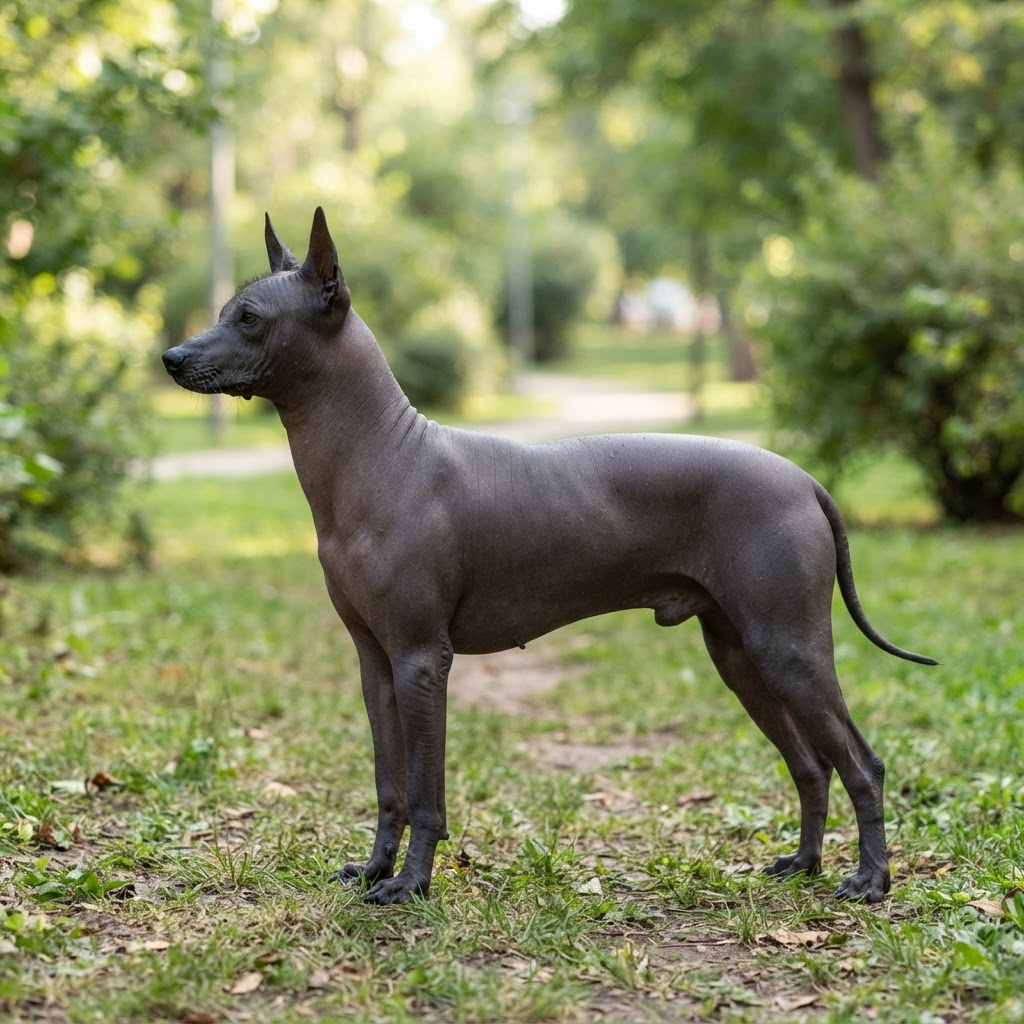
Peruvian Hairless Dog (Large)
Male: 12-25 kg, Female: 12-25 kg
50-65 cm at the shoulder
12-15 years
Peru
About the Peruvian Hairless Dog (Large)
The Peruvian Hairless Dog (Large), also known as the Perro Sin Pelo del Perú, is an elegant and slender sighthound-type dog defined by its lack of a coat. This ancient breed, depicted in pottery from the Moche, Chimu, and Incan civilisations, was historically revered as a mystical companion capable of absorbing aches and pains from its owners through its high body heat. They are built for speed and agility, possessing a deep chest and tucked-up waist characteristic of primitive hunting breeds. Despite their somewhat austere appearance, they are profoundly loyal and affectionate companions. They are known for being exceptionally clean and lack the 'doggy odour' common in coated breeds. Because they lack the protection of fur, they are highly sensitive to their environment, requiring clothing in winter and careful sun protection in summer. They serve as excellent watchdogs, remaining naturally suspicious of intruders while being quietly devoted to their immediate family circle.
Breed Standard
Key characteristics from the breed standard
In the ring, the Peruvian Hairless Dog is distinguished by its smooth, supple skin and harmonious sighthound silhouette. Judges look for a lack of premolars—a trait genetically linked to hairlessness that is accepted in the standard—and a clean, rhythmic reach and drive that denotes agility.
Bred For
Companion, mystical healer, and guardian
Temperament
Noble, affectionate with family, alert, and wary of strangers
Health Conditions Reported in the Breed
Hypodontia (missing teeth), skin issues including solar dermatitis (sunburn), acne, blackheads, and extreme sensitivity to temperature (hypothermia and heatstroke). Like many large breeds, they can be predisposed to .
Exercise Needs
Moderate to high; requires a brisk daily walk and opportunities for free running in a secure area.
Grooming Needs
Specialised skin care: regular bathing with pH-balanced cleansers, moisturising with non-comedogenic oils/lotions, and mandatory sunscreen application for outdoor activity.
Living Suitability
Highly adaptable to indoor living; they are sensitive to the elements and should live primarily indoors. A secure yard is required for exercise, provided climate-appropriate protection is used.
Good with Kids
Generally good with older, respectful children who understand their physical vulnerability.
Good with Other Pets
Can be reserved; usually compatible with other dogs if socialised early. May possess a high prey drive toward small pets.
Trainability
Highly intelligent but independent; requires positive reinforcement and a patient, consistent approach.
Coat & Colours
Hairless (small tufts of hair may appear on the head, feet, and tail tip). Black, slate, elephant grey, blue-black, charcoal, dark brown, or blonde; may have pinkish mottling.
Exercise needs vary by age, fitness, health, weather and individual temperament. Consult your veterinarian for an exercise plan appropriate for your dog.
Things to Consider
Every breed has its quirks — here's what to know
Prospective owners must be prepared for intensive skin management; the Peruvian Hairless is more likely to experience sunburn and blackheads, requiring daily care and sunblock. They are also prone to hypodontia (missing teeth), which is genetically linked to the hairless gene; this doesn't usually impact health but may require a software/ground raw diet if many teeth are absent. Because they lack fur, they are highly susceptible to cold and may shiver easily; they require coats or jumpers for most of the Australian winter. While they are noble and quiet, they can be quite independent or 'primitive' in their thinking, meaning they need a patient leader. Like many sighthounds, they may have a high prey drive—this doesn't mean they cannot live with other pets, but it's something to manage with training. Some lines can be prone to hip dysplasia, so keeping them at a lean, healthy weight is vital to protect their joints.
Feeding Guide for Your Peruvian Hairless Dog (Large)
Healthy Weight
12-25 kg
Daily Feeding Amount (general starting estimate)
240-750 grams
Adult Peruvian Hairless Dogs should be fed approximately 2-3% of their ideal body weight in fresh, high-quality raw food daily. For a standard 20 kg adult, this equates to roughly 500 grams per day, split into two meals. Adjust portions based on activity level and skin health requirements.
Feeding quantities are general starting estimates only. Individual needs vary with body condition, weight trends, age, health and activity. Ingredient percentages alone do not guarantee complete and balanced nutrition — consult a veterinarian for individualised dietary guidance.
Ingredient percentages alone do not guarantee complete and balanced nutrition. Seek veterinary or qualified canine nutrition guidance for individualised dietary advice. Raw feeding, specific proteins or fresh foods should not be presented as preventing, treating or managing breed health conditions without veterinary diagnosis and supervision.
Majestik's Recommended Feeding Approach
Breed Diet Notes
A high-quality fresh or raw diet rich in Omega-3 and Omega-6 fatty acids to support skin barrier health, with easily digestible proteins and minimal fillers.
A balanced raw diet for this breed should focus on skin-supportive nutrients. Recommended protein sources from Majestik include Kangaroo (lean and hypoallergenic) and Salmon or Sardines for essential fatty acids. The diet should consist of approximately 70% muscle meat, 10% edible bone (noting that some individuals with missing teeth may require ground bone), 10% organ meat (liver and kidney), and 10% pureed seasonal vegetables like spinach and carrots. Added Zinc is often beneficial for skin repair in this breed.
These are general breed-level notes only. The appropriate food and serving amount depend on the individual dog's age, health, body condition, activity and tolerance.
Majestik Recommendation
Majestik BARF meals follow our practical 70/10/10/10 approach: approximately 70% quality meat and protein ingredients, 10% edible bone, 10% vegetables and 10% offal. This gives customers a convenient fresh-food option without needing to source and portion every ingredient themselves.
Our Beef, Lamb and Roo BARF meals provide convenient fresh-food options, with suitable proteins chosen or rotated according to the individual dog.
Suitable for different needs
- Healthy adult: Majestik adult Beef, Lamb or Roo BARF meal.
- Puppy: Majestik Premium Puppy.
- Senior: Majestik Senior Blend.
- Working or highly active dog: Suitable Majestik adult meal with quantity adjusted to workload and body condition.
- Protein trial: One Majestik protein at a time.
Recommended Majestik BARF Meals


This is a practical starting recommendation for healthy dogs. Individual needs vary with age, health, body condition and activity.
Peruvian Hairless Dog (Large) Feeding Calculator
Personalised raw and cooked feeding recommendations based on your dog's profile
Ideal — Ribs palpable without excess fat. Visible waist. Abdominal tuck present.
Have a question about your Peruvian Hairless Dog (Large)? Dog Health AI
Why Majestik?
Fresh, raw pet food made with integrity in South Australia
Australian Made
Made in Two Wells, South Australia
Freshly Prepared
Real meat, organs, bone & wholefood ingredients
No Fillers
No cheap fillers or artificial preservatives
Family Owned
Locally owned and operated
Local Delivery
Delivery across Adelaide & selected areas
Secure Checkout
Secure payment via Shopify checkout
Subscribe & Save on Peruvian Hairless Dog (Large) Meals
Get your Peruvian Hairless Dog (Large)'s fresh and raw meals delivered every two or four weeks. Small subscriptions are combined into a four-week box. Pause, skip or cancel anytime.
Breed Records & Facts
Average Litter Size
4-8 puppies
Peruvian Hairless Dog (Large) Owner Feedback
Real experiences and tips from Peruvian Hairless Dog (Large) owners
No reviews yet
Be the first to share your experience with this breed
Other Large Breeds
References & Sources
Breed information verified against recognised breed authorities and veterinary evidence.