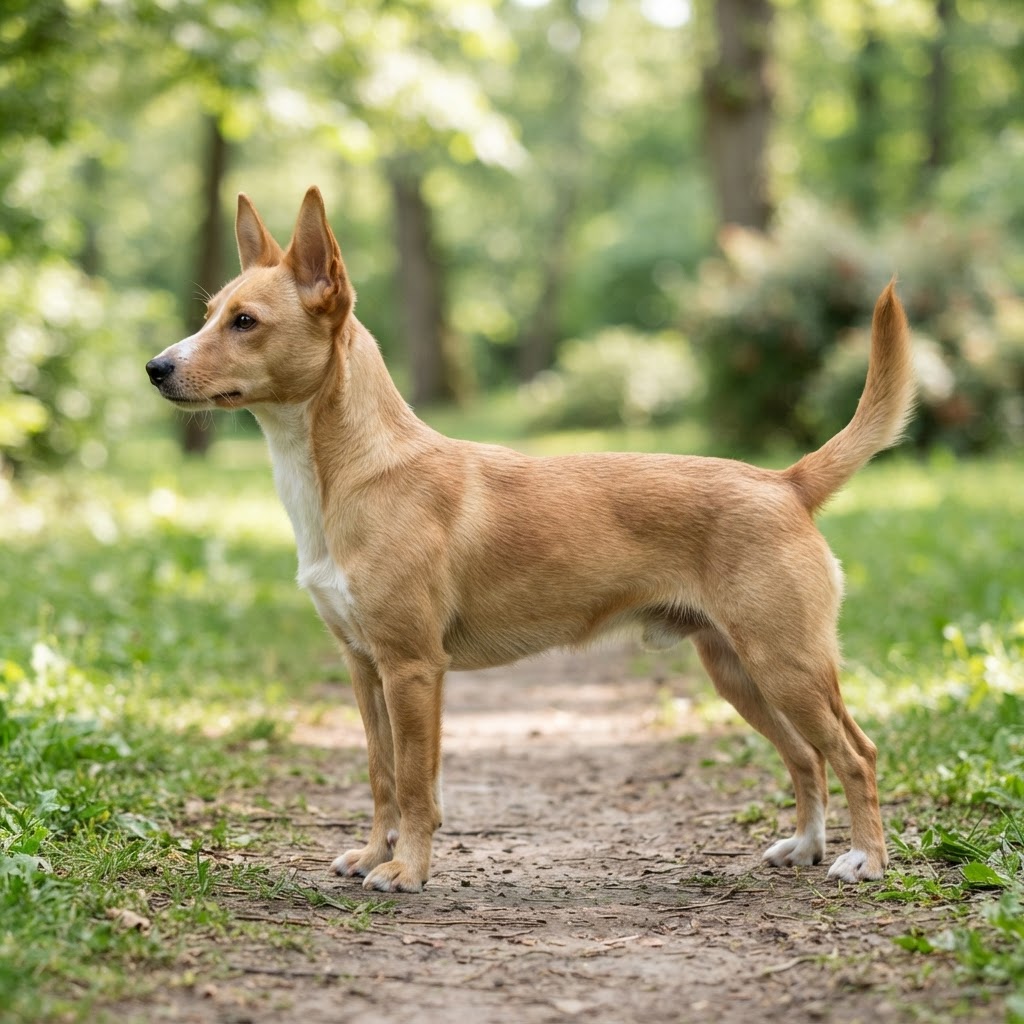
Portuguese Podengo
Pequeno: 4-6 kg; Médio: 16-20 kg; Grande: 20-30 kg.
Pequeno: 20-30 cm; Médio: 40-54 cm; Grande: 55-70 cm at the shoulder.
12-15 years
Portugal
About the Portuguese Podengo
The Portuguese Podengo is a primitive-type hunting breed from Portugal, existing in three sizes and two coat types, which evolved to suit the varied terrain and game of the Iberian Peninsula. As one of the oldest dog breeds in existence, they possess a sharp, wedge-shaped head, erect prick ears, and a lean, muscular build designed for agility and endurance. They are essentially 'natural' dogs, having undergone very little manipulation by modern breeding standards, which contributes to their robust health and keen survival instincts. In the home, Podengos are spirited and affectionate companions who often act as alert watchdogs. While the Pequeno is increasingly popular as a companion animal in Australia, the Médio and Grande varieties remain focused on their working capabilities. They are highly intelligent but possess a 'what's in it for me?' attitude, requiring patient, reward-based training. Their primitive nature means they are highly attuned to their environment, making them fascinating, albeit sometimes independent, household members.
Breed Standard
Key characteristics from the breed standard
In the show ring, the Portuguese Podengo should exude a rustic, unrefined elegance characterized by a quadrangular silhouette and a keen, lively expression. The move is light and agile, with the Pequeno displaying a distinctive 'rabbit-like' trot that is efficient and brisk. Judges look for the 'prick' ears which are highly mobile, reflecting the breed's alertness.
In Australia
The Portuguese Podengo Pequeno (Smooth Haired) variety was first introduced to Australia in 2003, followed by the first Australian litter of the breed which was born in 2004, according to the Portuguese Podengo Club of NSW.
Bred For
Multi-purpose hunting: Pequenos hunt rabbits in crevices; Médios hunt rabbits in pack; Grandes hunt wild boar and deer.
Temperament
Hardy, intelligent, lively, and extremely observant. They are loyal to their families but maintain a primitive, independent streak.
Health Conditions Reported in the Breed
(primarily in Pequenos), , (primarily in the Grande variety), and occasional allergies.
Exercise Needs
High.
Grooming Needs
Minimal to Moderate. Smooth coats need weekly brushing; wire coats require occasional stripping to remove dead hair and prevent matting.
Living Suitability
Pequenos can adapt to apartments if exercised heavily, but Médio and Grande varieties require large, securely fenced yards due to their athleticism and high prey drive.
Good with Kids
Good with older children who respect their space; their primitive play style can be too intense for toddlers.
Good with Other Pets
Generally good with other dogs; however, they have an extremely high prey drive and are often unsafe with cats, rabbits, or pocket pets.
Trainability
Moderate; highly intelligent but independent and easily distracted by scents and movement.
Coat & Colours
Two varieties: Smooth (short and dense) and Wire (long and rough). Neither has an undercoat.. Yellow and Fawn in all shades from light to dark, with or without white markings, or White with patches of these colors.
Exercise needs vary by age, fitness, health, weather and individual temperament. Consult your veterinarian for an exercise plan appropriate for your dog.
Things to Consider
Every breed has its quirks — here's what to know
The Portuguese Podengo is a primitive hunter, which means a high prey drive is hard-wired into their DNA; they may never be reliable off-leash in open areas as a scent or sight will trigger a chase. They are also exceptional jumpers and climbers, often nicknamed 'the Houdini of dogs,' so your fences in Two Wells or elsewhere must be high and secure. While they are very healthy, the Pequeno variety is more likely to experience Legg-Calvé-Perthes disease (a hip joint condition) or patellar luxation—this doesn't mean every dog will have these, but purchasing from health-tested lines is essential. They are vocal alert dogs who will let you know when anyone approaches the home, which is a great security feature but requires management in suburban areas. Their independent streak means they may ignore commands if they find something more interesting, but their quirky, humorous personality and deep loyalty make the training journey incredibly rewarding for a patient owner.
Feeding Guide for Your Portuguese Podengo
Healthy Weight
Pequeno: 4-6 kg; Médio: 16-20 kg; Grande: 20-30 kg
Daily Feeding Amount (general starting estimate)
125g to 750g (depending on variety and individual weight, calculated at 2.5% of body weight)
Feed a variety of lean raw proteins. Based on an average adult Pequeno (5kg), feed approximately 125-150g per day; for a Médio (18kg), feed 450-540g; for a Grande (25kg), feed 625-750g. Adjust based on activity level.
Feeding quantities are general starting estimates only. Individual needs vary with body condition, weight trends, age, health and activity. Ingredient percentages alone do not guarantee complete and balanced nutrition — consult a veterinarian for individualised dietary guidance.
Ingredient percentages alone do not guarantee complete and balanced nutrition. Seek veterinary or qualified canine nutrition guidance for individualised dietary advice. Raw feeding, specific proteins or fresh foods should not be presented as preventing, treating or managing breed health conditions without veterinary diagnosis and supervision.
Majestik's Recommended Feeding Approach
Breed Diet Notes
A high-protein, lean diet that mimics their ancestral intake. They thrive on fresh, raw diets rich in varied proteins and low in starchy fillers.
A balanced raw diet for a Podengo should focus on lean proteins available from Majestik, such as Kangaroo and Beef. Inclusion of small amounts of leafy greens can mimic the stomach contents of wild prey. Avoid high-fat diets as they can lead to digestive upset in this lean breed.
These are general breed-level notes only. The appropriate food and serving amount depend on the individual dog's age, health, body condition, activity and tolerance.
Majestik Recommendation
Majestik BARF meals follow our practical 70/10/10/10 approach: approximately 70% quality meat and protein ingredients, 10% edible bone, 10% vegetables and 10% offal. This gives customers a convenient fresh-food option without needing to source and portion every ingredient themselves.
Our Beef, Lamb and Roo BARF meals provide convenient fresh-food options, with suitable proteins chosen or rotated according to the individual dog.
Suitable for different needs
- Healthy adult: Majestik adult Beef, Lamb or Roo BARF meal.
- Puppy: Majestik Premium Puppy.
- Senior: Majestik Senior Blend.
- Working or highly active dog: Suitable Majestik adult meal with quantity adjusted to workload and body condition.
- Protein trial: One Majestik protein at a time.
This is a practical starting recommendation for healthy dogs. Individual needs vary with age, health, body condition and activity.
Portuguese Podengo Feeding Calculator
Personalised raw and cooked feeding recommendations based on your dog's profile
Ideal — Ribs palpable without excess fat. Visible waist. Abdominal tuck present.
Have a question about your Portuguese Podengo? Dog Health AI
Why Majestik?
Fresh, raw pet food made with integrity in South Australia
Australian Made
Made in Two Wells, South Australia
Freshly Prepared
Real meat, organs, bone & wholefood ingredients
No Fillers
No cheap fillers or artificial preservatives
Family Owned
Locally owned and operated
Local Delivery
Delivery across Adelaide & selected areas
Secure Checkout
Secure payment via Shopify checkout
Subscribe & Save on Portuguese Podengo Meals
Get your Portuguese Podengo's fresh and raw meals delivered every two or four weeks. Small subscriptions are combined into a four-week box. Pause, skip or cancel anytime.
Breed Records & Facts
Average Litter Size
3 to 6 puppies
Portuguese Podengo Owner Feedback
Real experiences and tips from Portuguese Podengo owners
References & Sources
Breed information verified against recognised breed authorities and veterinary evidence.
