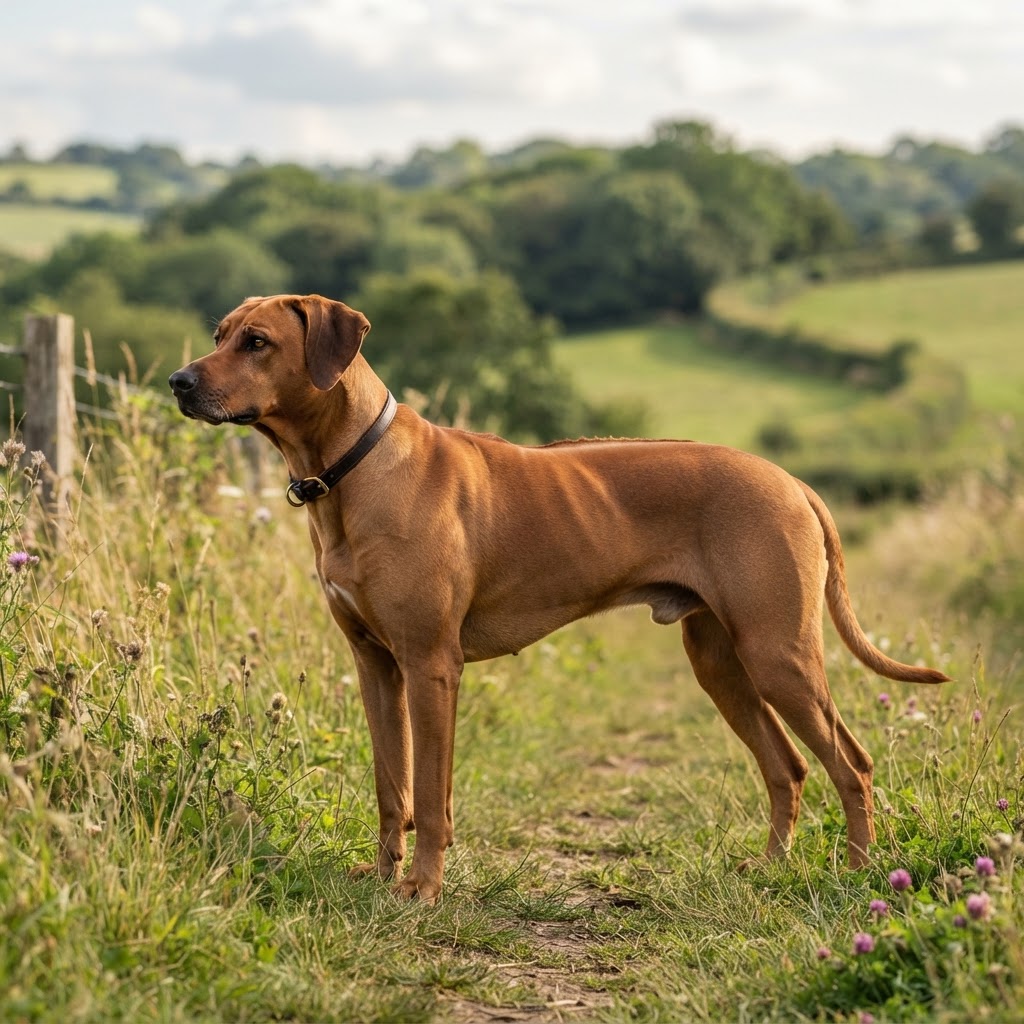
Rhodesian Ridgeback
Male: approx 36.5 kg, Female: approx 32 kg
Males: 63-69 cm at the shoulder; Females: 61-66 cm at the shoulder
10-12 years
Southern Africa (Zimbabwe/South Africa)
About the Rhodesian Ridgeback
The Rhodesian Ridgeback is a powerful, athletic hound originally developed in Southern Africa by crossing the semi-wild Khoikhoi ridged dogs with European breeds like Mastiffs, Greyhounds, and Bloodhounds. Known as the 'African Lion Dog,' they were prized for their remarkable ability to track lions and keep them at bay with agility and courage rather than brute force. They are distinguished by the clearly defined ridge on their back, which is the breed's hallmark and a symbol of their heritage. In a domestic setting, the Ridgeback is a quiet, sensitive, and deeply loyal companion that tends to be protective of its family. While they are famously laid-back indoors once matured, they possess a formidable prey drive and an independent streak that requires consistent, positive-reinforcement training. They are not typically 'pestering' dogs, preferring to observe from a distance before deciding to engage, making them excellent, albeit discerning, family guardians.
Breed Standard
Key characteristics from the breed standard
The Ridgeback in the show ring should exhibit a masterclass in athletic equipoise, displaying a clean-cut, muscular silhouette devoid of any coarseness. The ridge must be clearly defined, tapering from the shoulders toward the hips, featuring two identical crowns directly opposite one another. Their movement is a spectacle of rhythmic efficiency—a ground-covering, easy stride that suggests the endurance required for the African veldt.
In Australia
The breed was introduced to Australia with the arrival of a single male in 1966, followed by the first registered breeding pair in 1967. According to the Rhodesian Ridgeback Club of Victoria, 1966 marked the registration of the first litter in Australia, which was bred by Mrs. E.C. (Betty) Murphy, who had previously imported the foundation pair. This litter featured the foundation sire Ch. Glenaholm Straat of Lionsriver. The foundation pair is believed to have been imported from Tanzania in 1966 and England in 1967, as noted by the National Rhodesian Ridgeback Council (Australia) regarding 1966.
Bred For
Tracking large game (notably lions) and holding them at bay for the hunter, as well as protecting farmsteads from predators.
Temperament
Dignified, intelligent, aloof with strangers, loyal, and strong-willed.
Health Conditions Reported in the Breed
Dermoid Sinus (a congenital neural tube defect), Hip and , (), , and certain cancers such as Mast Cell Tumours.
Grooming Needs
Low; their short coat requires only weekly brushing with a rubber mitt and occasional bathing.
Living Suitability
can adapt to apartment living living; they require a medium to large, securely fenced yard to accommodate their size and need for daily movement.
Good with Kids
Good with older children; their large size and boisterous nature as puppies may be overwhelming for toddlers.
Good with Other Pets
Generally good with other dogs if socialized early, but can have a high prey drive toward small pets like cats or rabbits.
Trainability
Highly intelligent but independent and easily bored; they require a confident owner and firm, reward-based training.
Coat & Colours
Short, dense, sleek, and glossy; characterized by a unique ridge of hair growing in the opposite direction along the spine.. Light wheaten to red wheaten; a little white on chest and toes is permissible.
Exercise needs vary by age, fitness, health, weather and individual temperament. Consult your veterinarian for an exercise plan appropriate for your dog.
Things to Consider
Every breed has its quirks — here's what to know
Prospective owners should be aware that Rhodesian Ridgebacks are predisposed to Dermoid Sinus; while reputable breeders screen for this, it is a condition that requires surgical attention if present. As a deep-chested breed, they are more likely to experience Gastric Dilatation-Volvulus (bloat), so it is vital to avoid vigorous exercise immediately after meals and consider slow-feeding bowls. Their high prey drive means they can be 'selective' with recall if they spot a bird or rabbit, requiring a patient owner who enjoys the challenge of training a sighthound. While they are low-shedding, they do moult consistently, and their short hairs can be difficult to remove from upholstery. Many Ridgebacks are also 'counter-surfers' with a legendary appetite—this greediness makes them prone to weight gain on high-carb commercial diets, but it also makes them very food-motivated for training. They are sensitive souls who thrive on companionship and may struggle with long periods of isolation, potentially leading to destructive digging if bored.
Feeding Guide for Your Rhodesian Ridgeback
Healthy Weight
32-40 kg
Daily Feeding Amount (general starting estimate)
700-1050 grams
For an adult Rhodesian Ridgeback, we recommend a fresh, raw diet of 2-3% of their ideal body weight daily. For a standard 35kg adult, this equates to approximately 700g to 1050g per day, split into two meals. To support their large frame and deep chest, avoid heavy carbohydrates and focus on high-quality proteins available from Majestik Pet Food, such as Kangaroo or Beef.
Feeding quantities are general starting estimates only. Individual needs vary with body condition, weight trends, age, health and activity. Ingredient percentages alone do not guarantee complete and balanced nutrition — consult a veterinarian for individualised dietary guidance.
Ingredient percentages alone do not guarantee complete and balanced nutrition. Seek veterinary or qualified canine nutrition guidance for individualised dietary advice. Raw feeding, specific proteins or fresh foods should not be presented as preventing, treating or managing breed health conditions without veterinary diagnosis and supervision.
Majestik's Recommended Feeding Approach
Breed Diet Notes
A high-protein, nutrient-dense diet focusing on lean meats to maintain muscle mass while strictly controlling caloric intake to prevent obesity.
Given their predisposition to bloat, small, frequent meals are preferred over one large serving. Include antioxidant-rich vegetables like spinach or blueberries to support immune health and omega-3 fatty acids for coat shine.
These are general breed-level notes only. The appropriate food and serving amount depend on the individual dog's age, health, body condition, activity and tolerance.
Majestik Recommendation
Majestik BARF meals follow our practical 70/10/10/10 approach: approximately 70% quality meat and protein ingredients, 10% edible bone, 10% vegetables and 10% offal. This gives customers a convenient fresh-food option without needing to source and portion every ingredient themselves.
Our Beef, Lamb and Roo BARF meals provide convenient fresh-food options, with suitable proteins chosen or rotated according to the individual dog.
Suitable for different needs
- Healthy adult: Majestik adult Beef, Lamb or Roo BARF meal.
- Puppy: Majestik Premium Puppy.
- Senior: Majestik Senior Blend.
- Working or highly active dog: Suitable Majestik adult meal with quantity adjusted to workload and body condition.
- Protein trial: One Majestik protein at a time.
Recommended Majestik BARF Meals


This is a practical starting recommendation for healthy dogs. Individual needs vary with age, health, body condition and activity.
Rhodesian Ridgeback Feeding Calculator
Personalised raw and cooked feeding recommendations based on your dog's profile
Ideal — Ribs palpable without excess fat. Visible waist. Abdominal tuck present.
Have a question about your Rhodesian Ridgeback? Dog Health AI
Why Majestik?
Fresh, raw pet food made with integrity in South Australia
Australian Made
Made in Two Wells, South Australia
Freshly Prepared
Real meat, organs, bone & wholefood ingredients
No Fillers
No cheap fillers or artificial preservatives
Family Owned
Locally owned and operated
Local Delivery
Delivery across Adelaide & selected areas
Secure Checkout
Secure payment via Shopify checkout
Subscribe & Save on Rhodesian Ridgeback Meals
Get your Rhodesian Ridgeback's fresh and raw meals delivered every two or four weeks. Small subscriptions are combined into a four-week box. Pause, skip or cancel anytime.
Breed Records & Facts
Average Litter Size
8-10 puppies
Rhodesian Ridgeback Owner Feedback
Real experiences and tips from Rhodesian Ridgeback owners
No reviews yet
Be the first to share your experience with this breed
Other Large Breeds
References & Sources
Breed information verified against recognised breed authorities and veterinary evidence.