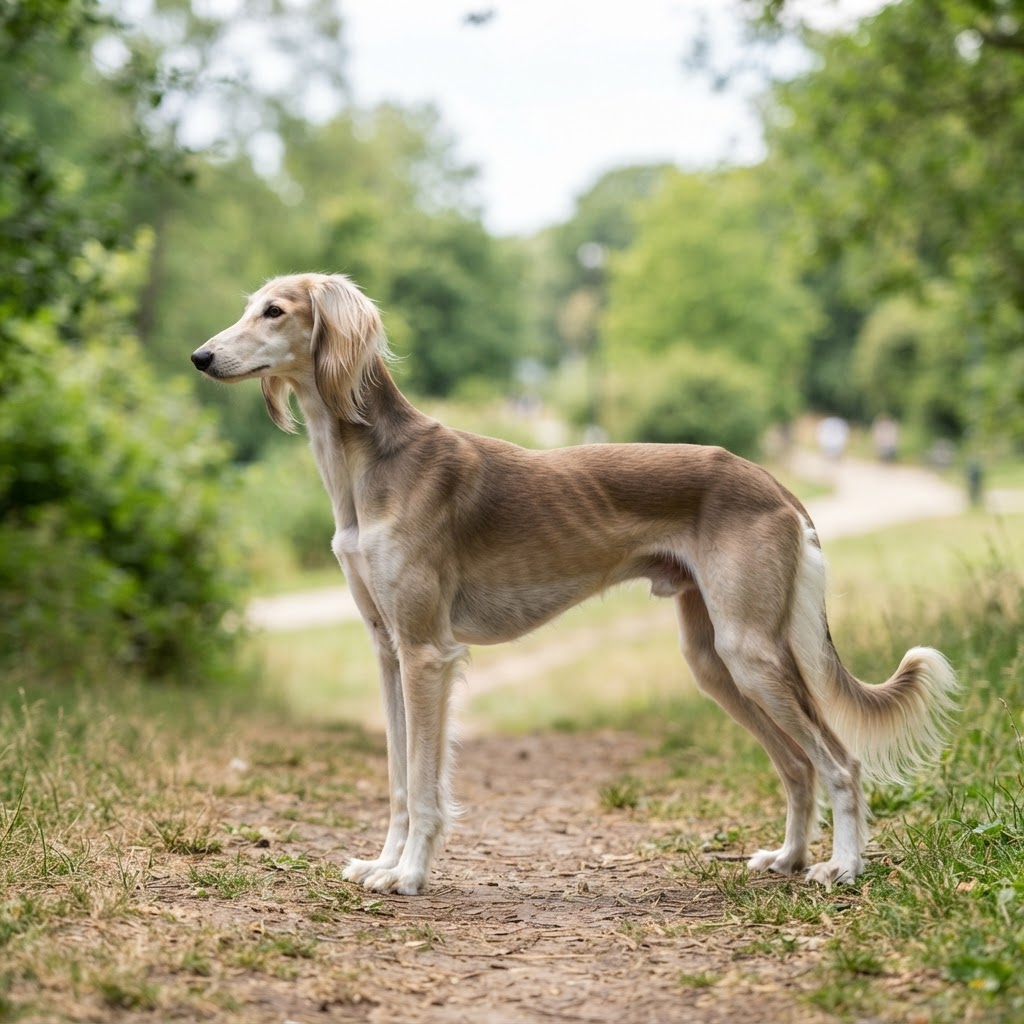
Saluki
Male: 18-27 kg, Female: 16-23 kg
58-71 cm at the shoulder
12-14 years
Middle East (Fertile Crescent/Egypt)
About the Saluki
The Saluki is one of the world's oldest dog breeds, traditionally known as the Royal Dog of Egypt. They are the quintessential sighthound—built for speed, endurance, and grace. Their physique is remarkably lithe and aerodynamic, characterized by long, slender legs, a deep chest, and a narrow waist. Despite their athletic prowess, they are famously quiet and 'cat-like' indoors, preferring soft surfaces and a peaceful environment. In a domestic setting, the Saluki is a devoted but non-intrusive companion. They do not demand attention like many other breeds and can remain somewhat detached with strangers. Their history as independent hunters means they possess a sharp intelligence and a strong instinct to chase, which remains a primary consideration for owners today. They are highly sensitive to their owner's emotions and respond best to gentle, positive reinforcement.
Breed Standard
Key characteristics from the breed standard
In the ring, the Saluki presents an image of ethereal grace and symmetry. The breed standard emphasizes a lithe, narrow frame that never appears fragile. Their movement should be light and lifting, showing both speed and endurance without any sign of coarseness. The 'feathering' on the ears and tail should be silky and flow with the dog's movement, creating a distinctively aristocratic silhouette. What sets the Saluki apart is their 'far-away' expression—a look of timelessness and dignity that suggests they are looking through you to a distant horizon.
In Australia
In 1960, the first Salukis were imported from the United Kingdom by Lulu Brander and Ken Brander, as recorded by the Saluki Club of Victoria.
Bred For
Sighthound used for hunting gazelle, hare, and fox in desert terrain.
Temperament
Dignified, independent, aloof with strangers, gentle, and highly sensitive.
Health Conditions Reported in the Breed
Hemangiorcoma, , , anesthesia sensitivity (typical of sighthounds), and ().
Exercise Needs
High; requires daily opportunities for long walks and, crucially, safe opportunities to run at full speed in a securely fenced area.
Grooming Needs
Moderate; feathered variety requires regular brushing of the ears, tail, and legs to prevent matting, while the smooth variety needs minimal care.
Living Suitability
Suited to homes with large, securely fenced yards; while they are calm indoors and can adapt to smaller spaces, they must have access to a safe sprinting area to remain physically and mentally healthy.
Good with Kids
Good with older, respectful children; their sensitive nature means they may find very young, boisterous children overwhelming.
Good with Other Pets
Generally good with other large dogs, but possesses a very high prey drive; they are often not suitable for homes with cats, rabbits, or other small pets unless raised with them under constant supervision.
Trainability
Moderate; they are intelligent but independent and easily bored by repetitive tasks. They require patience and a gentle touch rather than forceful training methods.
Coat & Colours
Smooth or feathered (silky hair on the ears, tail, and backs of legs).. White, cream, fawn, golden, red, grizzle and tan, tricolour, and black and tan.
Exercise needs vary by age, fitness, health, weather and individual temperament. Consult your veterinarian for an exercise plan appropriate for your dog.
Things to Consider
Every breed has its quirks — here's what to know
Prospective owners should be aware of the Saluki's extreme prey drive; they will chase anything that moves and often lose all recall when on a scent, so they must be kept on a lead in unfenced areas. They are more likely to experience anesthesia sensitivity due to their low body fat, which is a critical consideration for any surgery. Like many deep-chested breeds, they are predisposed to Bloat (GDV), so monitoring feeding habits is essential. While they are very clean and have little 'doggy odour,' their thin skin makes them more likely to feel the cold, requiring coats in Australian winters. They are also prone to independence and can be stubborn if they feel a request is beneath them, but this is balanced by their incredibly gentle, quiet presence in the home. Some Salukis may be predisposed to sensitive digestion on standard commercial diets, often thriving on a fresh, species-appropriate diet that avoids fillers and low-quality fats.
Feeding Guide for Your Saluki
Healthy Weight
18-27 kg
Daily Feeding Amount (general starting estimate)
440-660 grams
Salukis thrive on a lean, high-protein fresh food diet. Given their deep chests, feeding two smaller meals a day rather than one large one is recommended. For an average 22kg adult, aim for approximately 440g to 660g of fresh food daily, ensuring the protein is high-quality and lean to maintain their athletic silhouette.
Feeding quantities are general starting estimates only. Individual needs vary with body condition, weight trends, age, health and activity. Ingredient percentages alone do not guarantee complete and balanced nutrition — consult a veterinarian for individualised dietary guidance.
Ingredient percentages alone do not guarantee complete and balanced nutrition. Seek veterinary or qualified canine nutrition guidance for individualised dietary advice. Raw feeding, specific proteins or fresh foods should not be presented as preventing, treating or managing breed health conditions without veterinary diagnosis and supervision.
Majestik's Recommended Feeding Approach
Breed Diet Notes
High-quality protein sources with moderate fat; particularly responsive to fresh, lean diets that support lean muscle mass without excessive weight gain.
A diet focused on lean proteins like kangaroo (a Majestik specialty), beef, or white fish. Include approximately 10% organ meats (heart, liver) and 10% edible bone (such as poultry necks). Incorporate a small amount of blended leafy greens and berries for antioxidants. Avoid high-fat diets, as Salukis are naturally lean and excessive fat can lead to digestive upset.
These are general breed-level notes only. The appropriate food and serving amount depend on the individual dog's age, health, body condition, activity and tolerance.
Majestik Recommendation
Majestik BARF meals follow our practical 70/10/10/10 approach: approximately 70% quality meat and protein ingredients, 10% edible bone, 10% vegetables and 10% offal. This gives customers a convenient fresh-food option without needing to source and portion every ingredient themselves.
Our Beef, Lamb and Roo BARF meals provide convenient fresh-food options, with suitable proteins chosen or rotated according to the individual dog.
Suitable for different needs
- Healthy adult: Majestik adult Beef, Lamb or Roo BARF meal.
- Puppy: Majestik Premium Puppy.
- Senior: Majestik Senior Blend.
- Working or highly active dog: Suitable Majestik adult meal with quantity adjusted to workload and body condition.
- Protein trial: One Majestik protein at a time.
This is a practical starting recommendation for healthy dogs. Individual needs vary with age, health, body condition and activity.
Saluki Feeding Calculator
Personalised raw and cooked feeding recommendations based on your dog's profile
Ideal — Ribs palpable without excess fat. Visible waist. Abdominal tuck present.
Have a question about your Saluki? Dog Health AI
Why Majestik?
Fresh, raw pet food made with integrity in South Australia
Australian Made
Made in Two Wells, South Australia
Freshly Prepared
Real meat, organs, bone & wholefood ingredients
No Fillers
No cheap fillers or artificial preservatives
Family Owned
Locally owned and operated
Local Delivery
Delivery across Adelaide & selected areas
Secure Checkout
Secure payment via Shopify checkout
Subscribe & Save on Saluki Meals
Get your Saluki's fresh and raw meals delivered every two or four weeks. Small subscriptions are combined into a four-week box. Pause, skip or cancel anytime.
Breed Records & Facts
Average Litter Size
4-8 puppies
Saluki Owner Feedback
Real experiences and tips from Saluki owners
Other Large Breeds
References & Sources
Breed information verified against recognised breed authorities and veterinary evidence.
