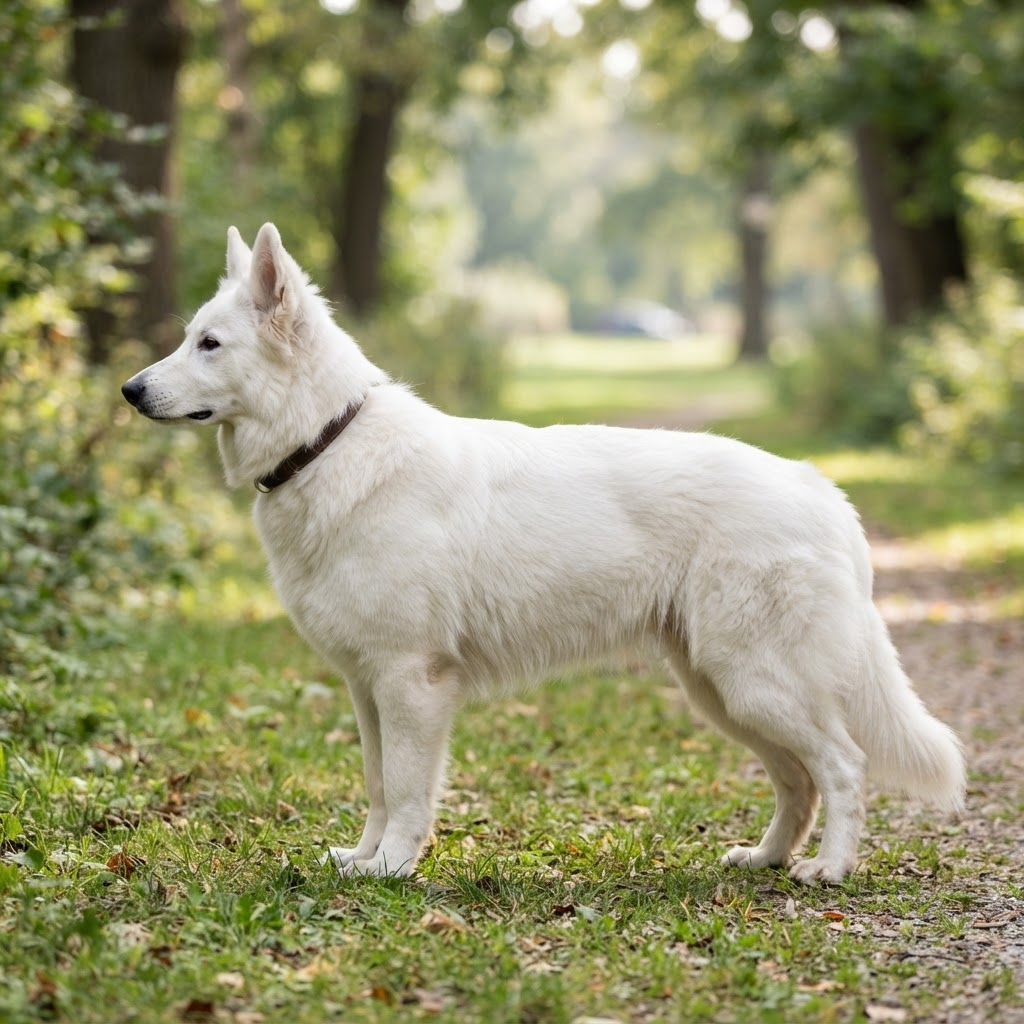
White Swiss Shepherd Dog
Male: 30-40 kg, Female: 25-35 kg
Male: 58-66 cm, Female: 53-61 cm
10-14 years
Switzerland
About the White Swiss Shepherd Dog
The White Swiss Shepherd Dog, or Berger Blanc Suisse, is a powerful and well-muscled herding dog that exudes elegance and capability. Characterized by its striking snow-white double coat and erect ears, this breed possesses a harmonious silhouette that is slightly longer than it is tall. Unlike its German Shepherd relatives, the White Swiss Shepherd is often noted for a slightly more mellow and social disposition, making it a versatile family companion and capable working dog. Intellectually sharp and deeply loyal, these dogs form intense bonds with their families. They are highly responsive to training and thrive when given a job to do. Their watchful nature makes them excellent natural guardians of the home, yet they remain approachable and friendly toward guests when properly socialized. Their physical stamina and mental acuity require an active lifestyle to ensure they remain balanced and content.
Breed Standard
Key characteristics from the breed standard
In the show ring, the White Swiss Shepherd is a picture of luminous elegance, characterized by a medium-sized, powerful frame that maintains a rectangular silhouette. Judges look for a firm, level topline and a fluid, rhythmic gait that covers ground with ease and efficiency. Their pigment—black on the nose, eye rims, and lips—must provide a sharp, clean contrast against the pure white coat, which should be dense and well-textured.
In Australia
Following its provisional recognition by the FCI in 2002, the White Swiss Shepherd Dog was officially recognized by Dogs Australia (ANKC) in 2009.
Bred For
Companion and working dog with a lineage rooted in herding and guarding.
Temperament
Attentive, lively, friendly, intelligent, and social without being aggressive or overly shy.
Health Conditions Reported in the Breed
Hip and , (), Multidrug Sensitivity (MDR1 gene mutation), and Malignant Hyperthermia.
Exercise Needs
High; requires daily long walks, jogging, or hiking combined with mental stimulation such as scent work or agility.
Grooming Needs
Moderate to High; requires regular brushing to manage the thick undercoat, especially during seasonal shedding cycles.
Living Suitability
Best suited to a home with a medium to large yard; not recommended for small apartments unless very high daily activity is provided.
Good with Kids
Excellent with children, often showing a gentle and protective nature; supervision is recommended with very small children due to size.
Good with Other Pets
Generally good with other dogs and pets, especially when raised with them, though they may display herding instincts.
Trainability
Very high; they are eager to please, quick learners, and excel in obedience, agility, and tracking.
Coat & Colours
Double coat, medium or long, with a dense, profuse undercoat and smooth, harsh guard hairs.. White
Exercise needs vary by age, fitness, health, weather and individual temperament. Consult your veterinarian for an exercise plan appropriate for your dog.
Things to Consider
Every breed has its quirks — here's what to know
Prospective owners should be prepared for the 'white cloud' of shedding; this breed is a heavy shedder, particularly during the change of seasons, requiring frequent vacuuming and brushing. While they are loyal, they are often prone to separation anxiety if left alone for long periods, as they truly thrive on being part of the 'family pack.' Like many large, deep-chested breeds, they can be predisposed to Gastric Dilatation-Volvulus (bloat), so feeding smaller, frequent meals and avoiding vigorous exercise immediately after eating is a wise precaution. Some individuals are prone to digestive sensitivities or food allergies, often reacting to fillers or low-quality proteins in commercial kibble—many thrive significantly better on a clean, fresh raw diet. There is also a breed predisposition to the MDR1 gene mutation, which makes them sensitive to certain medications; while this sounds daunting, it is easily managed through genetic testing and vet awareness. Lastly, their intelligence means if they aren't given a job, they might 'invent' one, such as digging or redecorating your garden, but this is easily channeled through consistent training and play.
Feeding Guide for Your White Swiss Shepherd Dog
Healthy Weight
25-40 kg
Daily Feeding Amount (general starting estimate)
600-1000 grams
For an adult White Swiss Shepherd, a fresh or raw diet should be calculated at approximately 2-3% of their ideal body weight daily. For a 30 kg dog, this equates to roughly 600g to 900g per day, split into two meals. Puppies and highly active working dogs may require up to 4-5% of their body weight.
Feeding quantities are general starting estimates only. Individual needs vary with body condition, weight trends, age, health and activity. Ingredient percentages alone do not guarantee complete and balanced nutrition — consult a veterinarian for individualised dietary guidance.
Ingredient percentages alone do not guarantee complete and balanced nutrition. Seek veterinary or qualified canine nutrition guidance for individualised dietary advice. Raw feeding, specific proteins or fresh foods should not be presented as preventing, treating or managing breed health conditions without veterinary diagnosis and supervision.
Majestik's Recommended Feeding Approach
Breed Diet Notes
Highly digestible, protein-rich diets with moderate fat levels and controlled calcium/phosphorus ratios for joint health.
A balanced raw diet for this breed should focus on high-quality proteins such as Australian Beef, Lamb, and Kangaroo, which are staples of the Majestik Pet Food range. Adding leafy greens and fish like sardines provides essential Omega-3 fatty acids for coat luster and joint support. Given their predisposition to sensitive stomachs, single-protein diets using Kangaroo are often highly beneficial.
These are general breed-level notes only. The appropriate food and serving amount depend on the individual dog's age, health, body condition, activity and tolerance.
Majestik Recommendation
Majestik BARF meals follow our practical 70/10/10/10 approach: approximately 70% quality meat and protein ingredients, 10% edible bone, 10% vegetables and 10% offal. This gives customers a convenient fresh-food option without needing to source and portion every ingredient themselves.
Our Beef, Lamb and Roo BARF meals provide convenient fresh-food options, with suitable proteins chosen or rotated according to the individual dog.
Suitable for different needs
- Healthy adult: Majestik adult Beef, Lamb or Roo BARF meal.
- Puppy: Majestik Premium Puppy.
- Senior: Majestik Senior Blend.
- Working or highly active dog: Suitable Majestik adult meal with quantity adjusted to workload and body condition.
- Protein trial: One Majestik protein at a time.
This is a practical starting recommendation for healthy dogs. Individual needs vary with age, health, body condition and activity.
White Swiss Shepherd Dog Feeding Calculator
Personalised raw and cooked feeding recommendations based on your dog's profile
Ideal — Ribs palpable without excess fat. Visible waist. Abdominal tuck present.
Have a question about your White Swiss Shepherd Dog? Dog Health AI
Why Majestik?
Fresh, raw pet food made with integrity in South Australia
Australian Made
Made in Two Wells, South Australia
Freshly Prepared
Real meat, organs, bone & wholefood ingredients
No Fillers
No cheap fillers or artificial preservatives
Family Owned
Locally owned and operated
Local Delivery
Delivery across Adelaide & selected areas
Secure Checkout
Secure payment via Shopify checkout
Subscribe & Save on White Swiss Shepherd Dog Meals
Get your White Swiss Shepherd Dog's fresh and raw meals delivered every two or four weeks. Small subscriptions are combined into a four-week box. Pause, skip or cancel anytime.
Breed Records & Facts
Average Litter Size
6-8 puppies
White Swiss Shepherd Dog Owner Feedback
Real experiences and tips from White Swiss Shepherd Dog owners
Other Large Breeds
References & Sources
Breed information verified against recognised breed authorities and veterinary evidence.