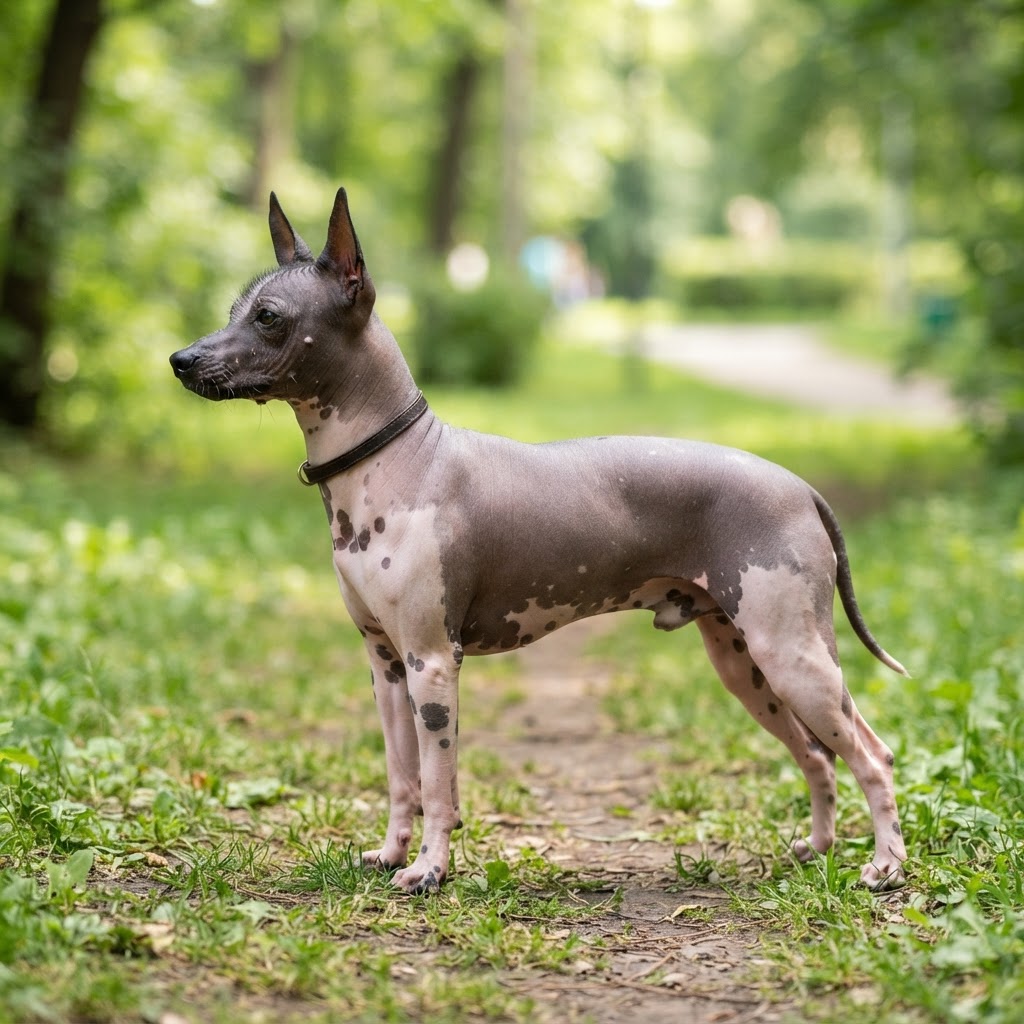
American Hairless Terrier
Male: 5.5-7.3 kg, Female: 5.5-7.3 kg
30.5-40.5 cm at the shoulder
12-16 years
United States (Louisiana)
About the American Hairless Terrier
The American Hairless Terrier (AHT) is a unique, mid-sized terrier that originated from a single hairless mutation in a Rat Terrier litter in 1972. They are distinctively athletic and well-muscled, possessing a smooth, warm-to-the-touch skin that makes them a popular choice for allergy sufferers. Despite their lack of fur, they retain the classic terrier silhouette with an alert expression and erect, V-shaped ears. In the home, the AHT is a devoted companion that thrives on human interaction. They are exceptionally intelligent and faster than they look, often excelling in agility and obedience trials. Because they lack a protective coat, they are strictly indoor dogs that require clothing in winter and sunscreen in summer, making them a high-maintenance breed in terms of environmental protection but low-maintenance in terms of shedding.
Breed Standard
Key characteristics from the breed standard
In the show ring, the AHT is judged on its smooth, supple skin and clean, wedge-shaped head. They should exhibit a reach and drive that denotes agility and speed.
In Australia
In July 2017, the American Hairless Terrier was officially recognised by Dogs Australia (ANKC).
Bred For
Developed from the Rat Terrier, they were originally bred for hunting vermin, though the hairless variety is primarily a companion and watch dog.
Temperament
Energetic, alert, curious, and highly affectionate. They possess the feisty 'terrier' spark but tend to be more social and less aggressive than some other terrier breeds.
Health Conditions Reported in the Breed
, , (), , and skin sensitivities including sun damage and comedones (blackheads).
Grooming Needs
Unique: While they require no brushing, they need regular baths to manage skin oils, weekly nail trimming, and daily application of dog-safe sunscreen and moisturisers.
Living Suitability
Highly suited to apartment living or small yards, provided they are kept indoors. They must not be left outside for long periods due to their skin's vulnerability to weather.
Good with Kids
Good with respectful children; their lack of fur makes them more susceptible to skin nicks from rough play, so supervision is recommended.
Good with Other Pets
Generally good with other dogs, though they may retain a high prey drive toward small animals like rodents due to their Rat Terrier heritage.
Trainability
High; they are intelligent, eager to please, and highly responsive to positive reinforcement and clicker training.
Coat & Colours
Hairless (completely lacks hair except for whiskers and guard hairs on the muzzle) or Coated (short, smooth, and dense).. A wide variety including Black, Blue, Chocolate, Apricot, and Lemon, often seen with various spotting patterns or piebald markings.
Exercise needs vary by age, fitness, health, weather and individual temperament. Consult your veterinarian for an exercise plan appropriate for your dog.
Things to Consider
Every breed has its quirks — here's what to know
The American Hairless Terrier is more likely to experience skin issues including sunburn, heat rash, and winter dryness; this doesn't mean every AHT will, but owners must be prepared with a wardrobe of coats and dog-safe sunblock. They are also predisposed to dental crowding and early tooth loss, common in small breeds, so regular dental checks are vital. Like many terriers, they may have a stubborn streak or a high prey drive that leads them to chase small animals. They can be prone to patellar luxation (kneecap dislocation), so maintaining a lean weight is crucial to reduce joint stress. Additionally, while often marketed as hypoallergenic, some individuals may still react to dog saliva or skin dander, so it's best for allergy sufferers to spend time with the breed first. Many AHTs are more likely to develop digestive sensitivities on high-carb commercial diets; they often thrive on a grain-free, fresh-food approach to maintain skin health and digestive regularity.
Feeding Guide for Your American Hairless Terrier
Healthy Weight
5.5-7.5 kg
Daily Feeding Amount (general starting estimate)
130-195 grams
For an adult American Hairless Terrier, a fresh or raw diet should be fed at approximately 2-3% of their ideal body weight daily. For a 6.5 kg dog, this equates to roughly 130-195 grams per day, split into two meals. Because they have a high metabolism to maintain body heat, they may require the higher end of this range during colder months.
Feeding quantities are general starting estimates only. Individual needs vary with body condition, weight trends, age, health and activity. Ingredient percentages alone do not guarantee complete and balanced nutrition — consult a veterinarian for individualised dietary guidance.
Ingredient percentages alone do not guarantee complete and balanced nutrition. Seek veterinary or qualified canine nutrition guidance for individualised dietary advice. Raw feeding, specific proteins or fresh foods should not be presented as preventing, treating or managing breed health conditions without veterinary diagnosis and supervision.
Majestik's Recommended Feeding Approach
Breed Diet Notes
A high-quality, nutrient-dense diet rich in Omega-3 and Omega-6 fatty acids to support skin health and elasticity, ideally focused on whole-food protein sources.
A balanced raw diet for an AHT should include lean proteins such as Kangaroo or Beef (available from Majestik Pet Food) to maintain muscle without excess weight. Include 10% secreting organ meats (liver/kidney) for essential vitamins, 10% edible bone for dental health, and a mix of leafy greens and berries for antioxidants. Adding fish oils or hemp seed oil is highly recommended to support their exposed skin barrier.
These are general breed-level notes only. The appropriate food and serving amount depend on the individual dog's age, health, body condition, activity and tolerance.
Majestik Recommendation
Majestik BARF meals follow our practical 70/10/10/10 approach: approximately 70% quality meat and protein ingredients, 10% edible bone, 10% vegetables and 10% offal. This gives customers a convenient fresh-food option without needing to source and portion every ingredient themselves.
Our Beef, Lamb and Roo BARF meals provide convenient fresh-food options, with suitable proteins chosen or rotated according to the individual dog.
Suitable for different needs
- Healthy adult: Majestik adult Beef, Lamb or Roo BARF meal.
- Puppy: Majestik Premium Puppy.
- Senior: Majestik Senior Blend.
- Working or highly active dog: Suitable Majestik adult meal with quantity adjusted to workload and body condition.
- Protein trial: One Majestik protein at a time.
Recommended Majestik BARF Meals


This is a practical starting recommendation for healthy dogs. Individual needs vary with age, health, body condition and activity.
American Hairless Terrier Feeding Calculator
Personalised raw and cooked feeding recommendations based on your dog's profile
Ideal — Ribs palpable without excess fat. Visible waist. Abdominal tuck present.
Have a question about your American Hairless Terrier? Dog Health AI
Why Majestik?
Fresh, raw pet food made with integrity in South Australia
Australian Made
Made in Two Wells, South Australia
Freshly Prepared
Real meat, organs, bone & wholefood ingredients
No Fillers
No cheap fillers or artificial preservatives
Family Owned
Locally owned and operated
Local Delivery
Delivery across Adelaide & selected areas
Secure Checkout
Secure payment via Shopify checkout
Subscribe & Save on American Hairless Terrier Meals
Get your American Hairless Terrier's fresh and raw meals delivered every two or four weeks. Small subscriptions are combined into a four-week box. Pause, skip or cancel anytime.
Breed Records & Facts
Average Litter Size
3-5 puppies
American Hairless Terrier Owner Feedback
Real experiences and tips from American Hairless Terrier owners
No reviews yet
Be the first to share your experience with this breed
Other Small Breeds
References & Sources
Breed information verified against recognised breed authorities and veterinary evidence.