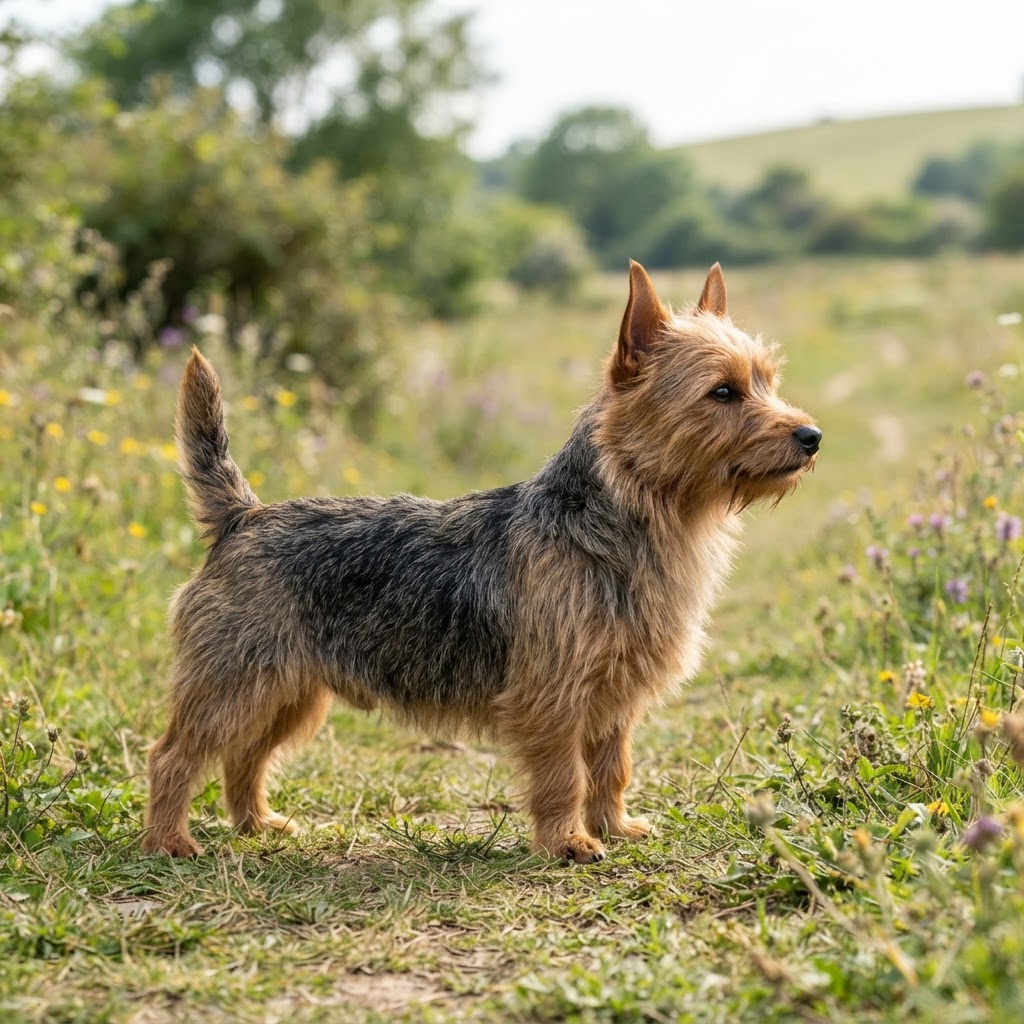
Australian Terrier
Male: 6.5 kg, Female: 6.5 kg (approximate averages)
Approximately 25 cm at the shoulder
12-15 years
Australia
About the Australian Terrier
The Australian Terrier is a true blue Aussie pioneer, recognized as the first breed developed in Australia. Small but incredibly sturdy, this 'big dog in a small body' was engineered to survive the harsh outback, hunting snakes and keeping homesteads free of vermin. They possess a distinctive ruff around the neck and a topknot of softer hair that gives them a uniquely rugged yet charismatic appearance. Their history is deeply intertwined with the development of the Australian colonies, making them a symbol of local resilience. In a home environment, the Aussie Terrier is a devoted companion that thrives on being part of the family action. Unlike some more independent terriers, they are known for being particularly attuned to human emotions and are often described as 'sensible' dogs. While they retain a high prey drive and a love for digging, they are equally happy curled up on the sofa after a day of patrolling the yard. They are adaptable, making them suitable for both rural properties and suburban life, provided their mental and physical energy is channeled correctly.
Australia’s own tough little terrier
The Australian Terrier was developed in Australia in the 19th century as a hardy, adaptable working terrier. Bred to control rodents and snakes on Australian properties and in mining settlements, it combined the toughness of its British terrier ancestors with the resilience needed for Australian conditions. The breed became valued both as a determined pest controller and as a loyal companion.
Recommended for: families, seniors, and active individuals in suburban or rural homes wanting an alert, loyal companion.
Not ideal for: owners wanting a purely passive lapdog, as the breed retains terrier energy and alertness.
Breed Standard
Key characteristics from the breed standard
In the show ring, the Australian Terrier is defined by its low-set, sturdy silhouette and its unique 'ruff' and 'topknot' which must be of a lighter color and softer texture than the rest of the body. Movement should be free, true, and forceful, showing great reach and drive for a dog of its size.
In Australia
The Australian Terrier was exhibited as early as 1868, and the Australian Terrier Club was formed in Melbourne in 1887.
Bred For
Vermin control, snake hunting, and farm guarding
Temperament
Spirited, alert, courageous, and affectionate with a keen intelligence
Health Conditions Reported in the Breed
, , , and (skin allergies)
Exercise Needs
Moderate daily activity including a 30-40 minute walk plus interactive play
Grooming Needs
Weekly brushing and occasional hand-stripping of the harsh coat; minimal bathing required
Living Suitability
Well-suited to both apartments and houses with small yards; needs secure fencing due to digging and chasing instincts
Good with Kids
Generally good with children, especially older children who understand how to handle small dogs respectfully
Good with Other Pets
Can be scrappy with other dogs and has a high prey drive toward small pets like rodents or cats unless raised with them
Trainability
Highly intelligent but independent; responds best to positive reinforcement and variety to prevent boredom
Coat & Colours
Double coat with a harsh, wiry outer layer and a short, soft undercoat. Blue and tan, solid sandy, or solid red
Exercise needs vary by age, fitness, health, weather and individual temperament. Consult your veterinarian for an exercise plan appropriate for your dog.
Things to Consider
Every breed has its quirks — here's what to know
While the Australian Terrier is a hardy breed, there are several quirks to keep in mind. They are predisposed to skin allergies (atopy), which means they are more likely to experience itchy skin or ear irritation if their environment or diet isn't managed—a fresh, low-allergen diet can often help support their skin barrier. Like many small breeds, they can be prone to luxating patellas (kneecaps that slip), so keeping them at a lean weight is essential for joint health. As natural hunters, they have a strong prey drive and a love for digging; providing a designated 'digging pit' can be a great way to save your garden while letting them express their instincts. They are also quite vocal and will alert you to every passerby, which makes them excellent watchdogs but may require training to manage in close-knit neighborhoods. These traits are simply part of their courageous, 'never-say-die' attitude that has made them beloved companions for over a century.
Feeding Guide for Your Australian Terrier
Healthy Weight
6-7 kg
Daily Feeding Amount (general starting estimate)
130-195 grams
For a healthy adult Australian Terrier weighing approximately 6.5kg, a fresh or raw diet should focus on lean proteins and essential fatty acids. We recommend feeding between 130g and 195g daily, split into two meals. Incorporating raw meaty bones like chicken necks can assist with dental hygiene, which is vital for smaller breeds prone to plaque buildup.
Feeding quantities are general starting estimates only. Individual needs vary with body condition, weight trends, age, health and activity. Ingredient percentages alone do not guarantee complete and balanced nutrition — consult a veterinarian for individualised dietary guidance.
Ingredient percentages alone do not guarantee complete and balanced nutrition. Seek veterinary or qualified canine nutrition guidance for individualised dietary advice. Raw feeding, specific proteins or fresh foods should not be presented as preventing, treating or managing breed health conditions without veterinary diagnosis and supervision.
Majestik's Recommended Feeding Approach
Breed Diet Notes
High-quality animal proteins with balanced fats and minimal fillers to support skin health
The ideal raw diet for an Aussie Terrier includes high-quality proteins such as Majestik's Kangaroo or Beef, which provide lean muscle support. Given their predisposition to skin issues, adding Omega-3 fatty acids from fish or hemp seed oil is beneficial. Small portions of mashed green vegetables like spinach or broccoli can provide necessary fiber and antioxidants.
These are general breed-level notes only. The appropriate food and serving amount depend on the individual dog's age, health, body condition, activity and tolerance.
Majestik Recommendation
Majestik BARF meals follow our practical 70/10/10/10 approach: approximately 70% quality meat and protein ingredients, 10% edible bone, 10% vegetables and 10% offal. This gives customers a convenient fresh-food option without needing to source and portion every ingredient themselves.
Our Beef, Lamb and Roo BARF meals provide convenient fresh-food options, with suitable proteins chosen or rotated according to the individual dog.
Suitable for different needs
- Healthy adult: Majestik adult Beef, Lamb or Roo BARF meal.
- Puppy: Majestik Premium Puppy.
- Senior: Majestik Senior Blend.
- Working or highly active dog: Suitable Majestik adult meal with quantity adjusted to workload and body condition.
- Protein trial: One Majestik protein at a time.
Recommended Majestik BARF Meals


This is a practical starting recommendation for healthy dogs. Individual needs vary with age, health, body condition and activity.
Australian Terrier Feeding Calculator
Personalised raw and cooked feeding recommendations based on your dog's profile
Ideal — Ribs palpable without excess fat. Visible waist. Abdominal tuck present.
Have a question about your Australian Terrier? Dog Health AI
Why Majestik?
Fresh, raw pet food made with integrity in South Australia
Australian Made
Made in Two Wells, South Australia
Freshly Prepared
Real meat, organs, bone & wholefood ingredients
No Fillers
No cheap fillers or artificial preservatives
Family Owned
Locally owned and operated
Local Delivery
Delivery across Adelaide & selected areas
Secure Checkout
Secure payment via Shopify checkout
Subscribe & Save on Australian Terrier Meals
Get your Australian Terrier's fresh and raw meals delivered every two or four weeks. Small subscriptions are combined into a four-week box. Pause, skip or cancel anytime.
Breed Records & Facts
Average Litter Size
3-5 puppies
Australian Terrier Owner Feedback
Real experiences and tips from Australian Terrier owners
No reviews yet
Be the first to share your experience with this breed
Other Small Breeds
References & Sources
Breed information verified against recognised breed authorities and veterinary evidence.