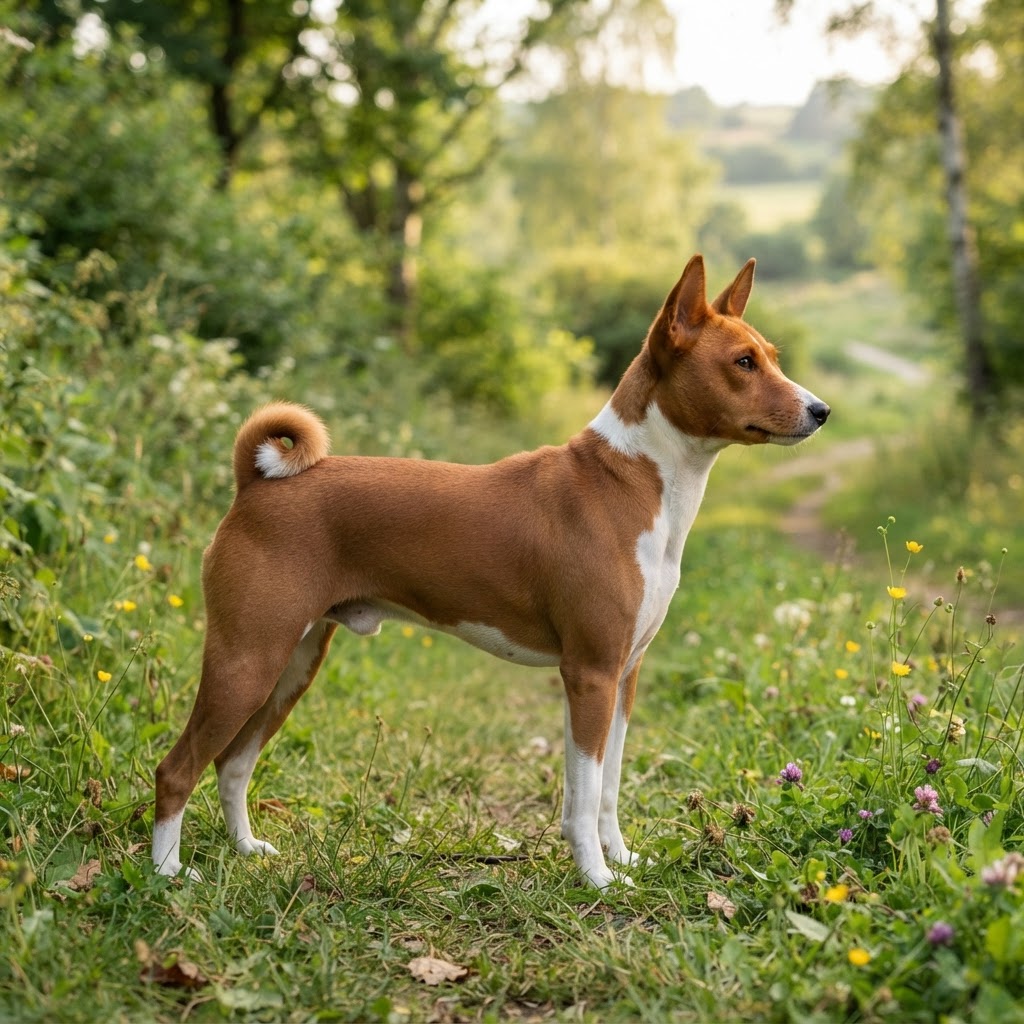
Basenji
Male: 11 kg, Female: 9.5 kg
Male: 43 cm, Female: 40 cm at the shoulder
12-16 years
Central Africa (Democratic Republic of Congo)
About the Basenji
The Basenji, often called the 'Barkless Dog' from Africa, is one of the world's most ancient and unique breeds. They are famous for their inability to bark, instead producing a unique yodel or 'baroo' sound due to their unusually shaped larynx. Physically, they are elegant and gazelle-like, characterized by a wrinkled forehead, erect ears, and a tightly curled tail set high over the back. Their movement is swift and effortless, reflecting their history as tireless hunters in the African Congo. Living with a Basenji is often compared to living with a cat; they are remarkably clean, occasionally groom themselves, and possess a strong streak of independence. While they are deeply loyal to their 'pack,' they are not typically clingy and may choose when they want affection. Their intelligence is high, but they use it to solve their own problems rather than to blindly obey commands, making them a fascinating but sometimes challenging companion for those unprepared for their inquisitive nature.
Breed Standard
Key characteristics from the breed standard
In the show ring, the Basenji is the epitome of refined elegance, presenting a balanced, lightly built frame that suggests speed and endurance. The breed standard calls for a distinctively wrinkled forehead when alert, which gives them a quizzical, intelligent expression that is entirely unique to the breed. Their movement is a standout feature—a long, swinging stride that is smooth and tireless, appearing as if they are floating across the grass.
In Australia
In 1948, the first Basenji was imported and registered with Dogs NSW.
Bred For
Flushing game into nets and tracking wounded prey in dense bushland.
Temperament
Independent, alert, intelligent, and cat-like; often aloof with strangers but affectionate with their family.
Health Conditions Reported in the Breed
Fanconi Syndrome (a kidney disorder), (), Immunoproliferative Small Intestinal Disease (IPSID), , and Persistent Pupillary Membranes (PPM).
Grooming Needs
Minimal; they are self-cleaning like cats and have very little 'doggy' odour. Weekly brushing is sufficient.
Living Suitability
Suited to both apartments and houses, provided they receive significant daily exercise. They must have a very secure yard, as they are renowned escape artists.
Good with Kids
Good with older, respectful children; may be less tolerant of the erratic movements of toddlers.
Good with Other Pets
Generally good with other dogs if socialised early, but possesses a very high prey drive; not recommended for homes with small animals or cats unless raised together.
Trainability
Moderate; highly intelligent but very independent and easily bored. They require creative, reward-based training and may ignore commands if they find something more interesting.
Coat & Colours
Short, fine, and sleek. Red and white, black and white, tricolour (black, tan, and white), and brindle.
Exercise needs vary by age, fitness, health, weather and individual temperament. Consult your veterinarian for an exercise plan appropriate for your dog.
Things to Consider
Every breed has its quirks — here's what to know
Basenjis are more likely to be predisposed to Fanconi Syndrome, a hereditary kidney condition where the tubules fail to reabsorb nutrients; while modern DNA testing has reduced its prevalence, prospective owners should always verify the status of the parents. They are also prone to dietary sensitivities and may experience digestive upset or flatulence on standard grain-heavy commercial kibbles, often thriving significantly better on a fresh, species-appropriate diet like Majestik. Owners should be prepared for their 'barkless' nature, which includes unique vocalizations like yodels, chortles, and a high-pitched scream when distressed. Their high prey drive and independent streak mean they can never be fully trusted off-lead in unenclosed areas, and they are notorious escape artists who can climb chain-link fences. However, for an active owner who appreciates a dog with a cat-like personality and a clean, quiet household presence, the Basenji is an unparalleled and fascinating companion.
Feeding Guide for Your Basenji
Healthy Weight
9-11 kg
Daily Feeding Amount (general starting estimate)
200-330 grams
For a healthy adult Basenji, a fresh or raw diet should consist of approximately 2-3% of their ideal body weight daily. For a 10kg dog, this is roughly 200-300g per day, split into two meals. Focus on lean proteins like kangaroo or beef, supplemented with organ meats and ground bone to support their high energy levels and maintain lean muscle mass.
Feeding quantities are general starting estimates only. Individual needs vary with body condition, weight trends, age, health and activity. Ingredient percentages alone do not guarantee complete and balanced nutrition — consult a veterinarian for individualised dietary guidance.
Ingredient percentages alone do not guarantee complete and balanced nutrition. Seek veterinary or qualified canine nutrition guidance for individualised dietary advice. Raw feeding, specific proteins or fresh foods should not be presented as preventing, treating or managing breed health conditions without veterinary diagnosis and supervision.
Majestik's Recommended Feeding Approach
Breed Diet Notes
High-quality, nutrient-dense diet with lean proteins; Basenjis are prone to obesity if overfed and thrive on fresh, low-carbohydrate meals.
An ideal Majestik raw diet for a Basenji focuses on lean, Australian-sourced proteins to prevent weight gain. We recommend Majestik Kangaroo or Lean Beef as the primary protein source. Basenjis can also benefit from small amounts of pureed leafy greens. Avoid high-fat trimmings, as Basenjis are prone to pancreatitis and obesity if their caloric intake is not strictly monitored.
These are general breed-level notes only. The appropriate food and serving amount depend on the individual dog's age, health, body condition, activity and tolerance.
Majestik Recommendation
Majestik BARF meals follow our practical 70/10/10/10 approach: approximately 70% quality meat and protein ingredients, 10% edible bone, 10% vegetables and 10% offal. This gives customers a convenient fresh-food option without needing to source and portion every ingredient themselves.
Our Beef, Lamb and Roo BARF meals provide convenient fresh-food options, with suitable proteins chosen or rotated according to the individual dog.
Suitable for different needs
- Healthy adult: Majestik adult Beef, Lamb or Roo BARF meal.
- Puppy: Majestik Premium Puppy.
- Senior: Majestik Senior Blend.
- Working or highly active dog: Suitable Majestik adult meal with quantity adjusted to workload and body condition.
- Protein trial: One Majestik protein at a time.
Recommended Majestik BARF Meals


This is a practical starting recommendation for healthy dogs. Individual needs vary with age, health, body condition and activity.
Basenji Feeding Calculator
Personalised raw and cooked feeding recommendations based on your dog's profile
Ideal — Ribs palpable without excess fat. Visible waist. Abdominal tuck present.
Have a question about your Basenji? Dog Health AI
Why Majestik?
Fresh, raw pet food made with integrity in South Australia
Australian Made
Made in Two Wells, South Australia
Freshly Prepared
Real meat, organs, bone & wholefood ingredients
No Fillers
No cheap fillers or artificial preservatives
Family Owned
Locally owned and operated
Local Delivery
Delivery across Adelaide & selected areas
Secure Checkout
Secure payment via Shopify checkout
Subscribe & Save on Basenji Meals
Get your Basenji's fresh and raw meals delivered every two or four weeks. Small subscriptions are combined into a four-week box. Pause, skip or cancel anytime.
Breed Records & Facts
Average Litter Size
4-6 puppies
Basenji Owner Feedback
Real experiences and tips from Basenji owners
No reviews yet
Be the first to share your experience with this breed
Other Medium Breeds
References & Sources
Breed information verified against recognised breed authorities and veterinary evidence.