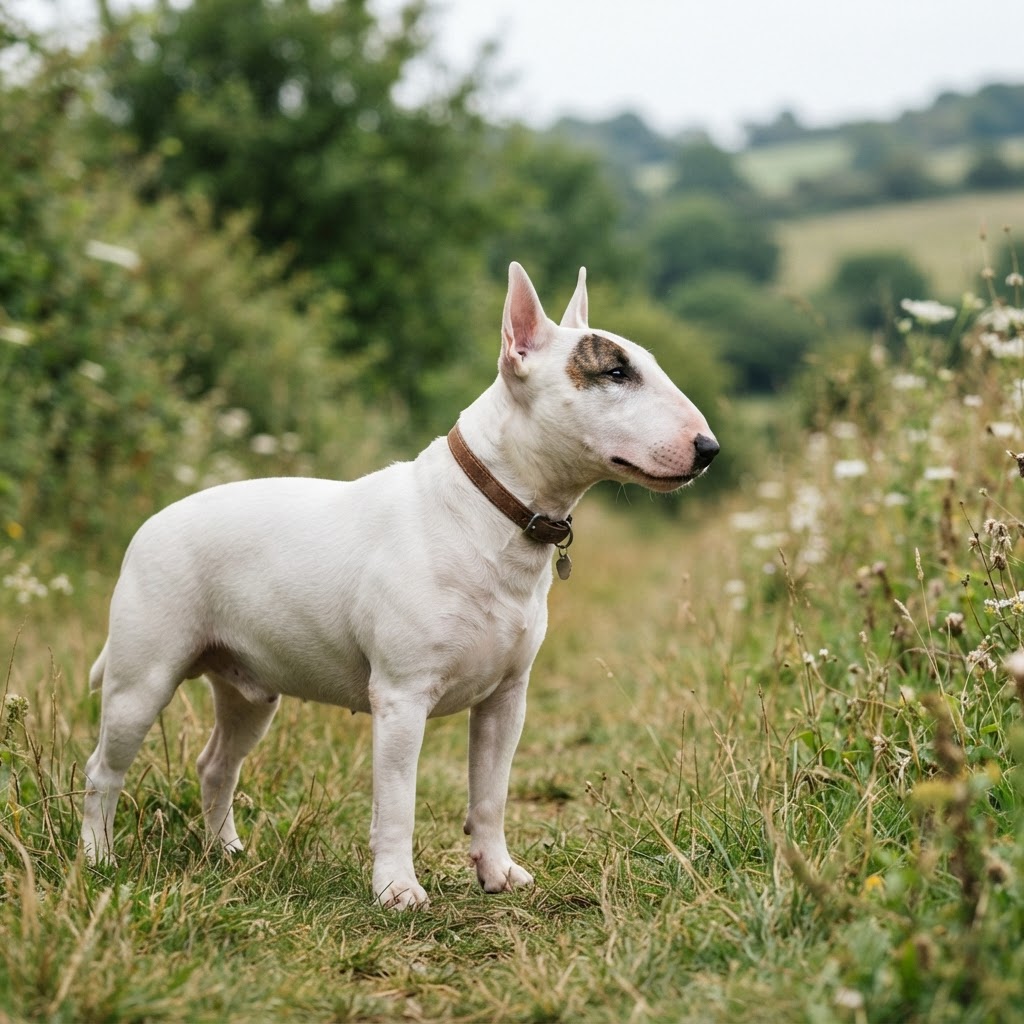
Bull Terrier
Male: 25-36 kg, Female: 22-30 kg
45-55 cm at the shoulder
10-14 years
England
About the Bull Terrier
The Bull Terrier is a unique and muscular powerhouse, immediately recognizable by its distinctive egg-shaped head and triangular eyes. Developed in 19th-century England by James Hinks, who crossed the Bulldog with the now-extinct White English Terrier and the Dalmatian, the breed transitioned from a rugged gladiator to a sophisticated companion. Known as the 'White Cavalier' for its polite yet courageous nature, the Bull Terrier is a blend of strength, agility, and a sense of humor that few other breeds can match. In the home, they are devoted 'people dogs' that thrive on interaction and can be quite clownish in their behavior. However, their terrier heritage remains strong, manifesting in a high prey drive and a determined, sometimes stubborn streak. They require consistent, positive reinforcement training and a clear understanding of leadership. For an active owner who can provide the necessary physical and mental outlets, the Bull Terrier is a loyal and endlessly entertaining partner.
Breed Standard
Key characteristics from the breed standard
The Bull Terrier's show presence is defined by its unique 'down-face' profile—a smooth, continuous curve from the top of the skull to the tip of the nose without a 'stop'. In the ring, judges look for a piercing, 'varminty' expression from small, dark, triangular eyes. Their movement is characterized by a jaunty, powerful gait that suggests great agility and strength.
In Australia
The Bull Terrier was established in Australia in the late 19th century, as recorded in Walter Beilby's 1897 publication 'The Dog in Australasia', although the Bull Terrier Club of Victoria was not founded until 1907.
Bred For
Originally developed for bull-baiting and pit fighting, later refined as a companion dog known as the 'White Cavalier'.
Temperament
Playful, energetic, courageous, stubborn, and deeply affectionate.
Health Conditions Reported in the Breed
Hereditary nephritis (), (particularly in white varieties), heart disease (mitral valve dysplasia), , and .
Exercise Needs
At least 60-90 minutes of vigorous daily activity, including high-intensity play and mental stimulation.
Grooming Needs
Minimal; weekly brushing and occasional bathing are sufficient due to their short coat.
Living Suitability
Requires a secure yard; while they can adapt to large apartments with significant exercise, a medium-to-large yard is ideal for their 'zoomies'.
Good with Kids
Good with older, active children; their boisterous nature may be too much for toddlers.
Good with Other Pets
Can be selective with other dogs; high prey drive means they may not be suitable for homes with cats or small animals.
Trainability
Highly intelligent but independent and stubborn; requires patience and creative, positive training methods.
Coat & Colours
Short, flat, harsh to the touch with a fine gloss.. White (with or without head markings) or Colored (brindle, red, fawn, or tricolor), where color predominates.
Exercise needs vary by age, fitness, health, weather and individual temperament. Consult your veterinarian for an exercise plan appropriate for your dog.
Things to Consider
Every breed has its quirks — here's what to know
Bull Terriers are predisposed to several health and behavioral quirks that owners should be prepared for. Skin sensitivities and atopic dermatitis are common; they are more likely to react to environmental allergens or fillers in commercial kibble, making a clean fresh-food diet like Majestik a proactive choice. White Bull Terriers have a higher probability of congenital deafness, so early BAER testing is essential. They are also prone to hereditary nephritis (kidney disease), so regular vet check-ups are a must. In terms of behavior, some individuals may display 'Bully spins'—an obsessive-compulsive tail-chasing behavior—which requires mental stimulation and sometimes professional management. They can be 'land sharks' during puppyhood, needing plenty of sturdy chew toys, and their high prey drive means they should always be leashed in unfenced areas. While their stubbornness is legendary, it is usually just a sign of their independent intelligence—once you find what motivates them, they are enthusiastic learners. Their thin coats also make them more likely to experience sunburn on their noses and ears in the Australian sun, so sun-safety measures are recommended.
Feeding Guide for Your Bull Terrier
Healthy Weight
22-38 kg
Daily Feeding Amount (general starting estimate)
440-1140 grams
A fresh or raw diet for an adult Bull Terrier should consist of roughly 2-3% of their ideal body weight daily. For an average 28kg dog, this equates to 560-840 grams of food. Focus on lean proteins like kangaroo or beef, complemented by bone, organ meat, and low-glycemic vegetables to support skin health and prevent weight gain.
Feeding quantities are general starting estimates only. Individual needs vary with body condition, weight trends, age, health and activity. Ingredient percentages alone do not guarantee complete and balanced nutrition — consult a veterinarian for individualised dietary guidance.
Ingredient percentages alone do not guarantee complete and balanced nutrition. Seek veterinary or qualified canine nutrition guidance for individualised dietary advice. Raw feeding, specific proteins or fresh foods should not be presented as preventing, treating or managing breed health conditions without veterinary diagnosis and supervision.
Majestik's Recommended Feeding Approach
Breed Diet Notes
High-quality, protein-rich diet focusing on weight management and skin health. Fresh, raw diets are often preferred to manage common skin sensitivities.
A Bull Terrier thrives on a balanced raw diet such as Majestik's Kangaroo or Beef varieties. Individual dogs may tolerate proteins differently, and some nutrients may support normal skin and coat condition. A specific protein should not be presented as treating or reducing allergies or skin disease. Discuss persistent symptoms with your veterinarian. Adding Majestik's fish-based supplements or oily fish can provide essential Omega-3 fatty acids to support their sensitive skin. Because Bull Terriers are prone to kidney issues, ensuring high-quality, non-processed proteins is vital to reduce metabolic stress.
These are general breed-level notes only. The appropriate food and serving amount depend on the individual dog's age, health, body condition, activity and tolerance.
Majestik Recommendation
Majestik BARF meals follow our practical 70/10/10/10 approach: approximately 70% quality meat and protein ingredients, 10% edible bone, 10% vegetables and 10% offal. This gives customers a convenient fresh-food option without needing to source and portion every ingredient themselves.
Our Beef, Lamb and Roo BARF meals provide convenient fresh-food options, with suitable proteins chosen or rotated according to the individual dog.
Suitable for different needs
- Healthy adult: Majestik adult Beef, Lamb or Roo BARF meal.
- Puppy: Majestik Premium Puppy.
- Senior: Majestik Senior Blend.
- Working or highly active dog: Suitable Majestik adult meal with quantity adjusted to workload and body condition.
- Protein trial: One Majestik protein at a time.
Recommended Majestik BARF Meals


This is a practical starting recommendation for healthy dogs. Individual needs vary with age, health, body condition and activity.
Bull Terrier Feeding Calculator
Personalised raw and cooked feeding recommendations based on your dog's profile
Ideal — Ribs palpable without excess fat. Visible waist. Abdominal tuck present.
Have a question about your Bull Terrier? Dog Health AI
Why Majestik?
Fresh, raw pet food made with integrity in South Australia
Australian Made
Made in Two Wells, South Australia
Freshly Prepared
Real meat, organs, bone & wholefood ingredients
No Fillers
No cheap fillers or artificial preservatives
Family Owned
Locally owned and operated
Local Delivery
Delivery across Adelaide & selected areas
Secure Checkout
Secure payment via Shopify checkout
Subscribe & Save on Bull Terrier Meals
Get your Bull Terrier's fresh and raw meals delivered every two or four weeks. Small subscriptions are combined into a four-week box. Pause, skip or cancel anytime.
Breed Records & Facts
Average Litter Size
5-8 puppies
Bull Terrier Owner Feedback
Real experiences and tips from Bull Terrier owners
No reviews yet
Be the first to share your experience with this breed
Other Medium Breeds
References & Sources
Breed information verified against recognised breed authorities and veterinary evidence.