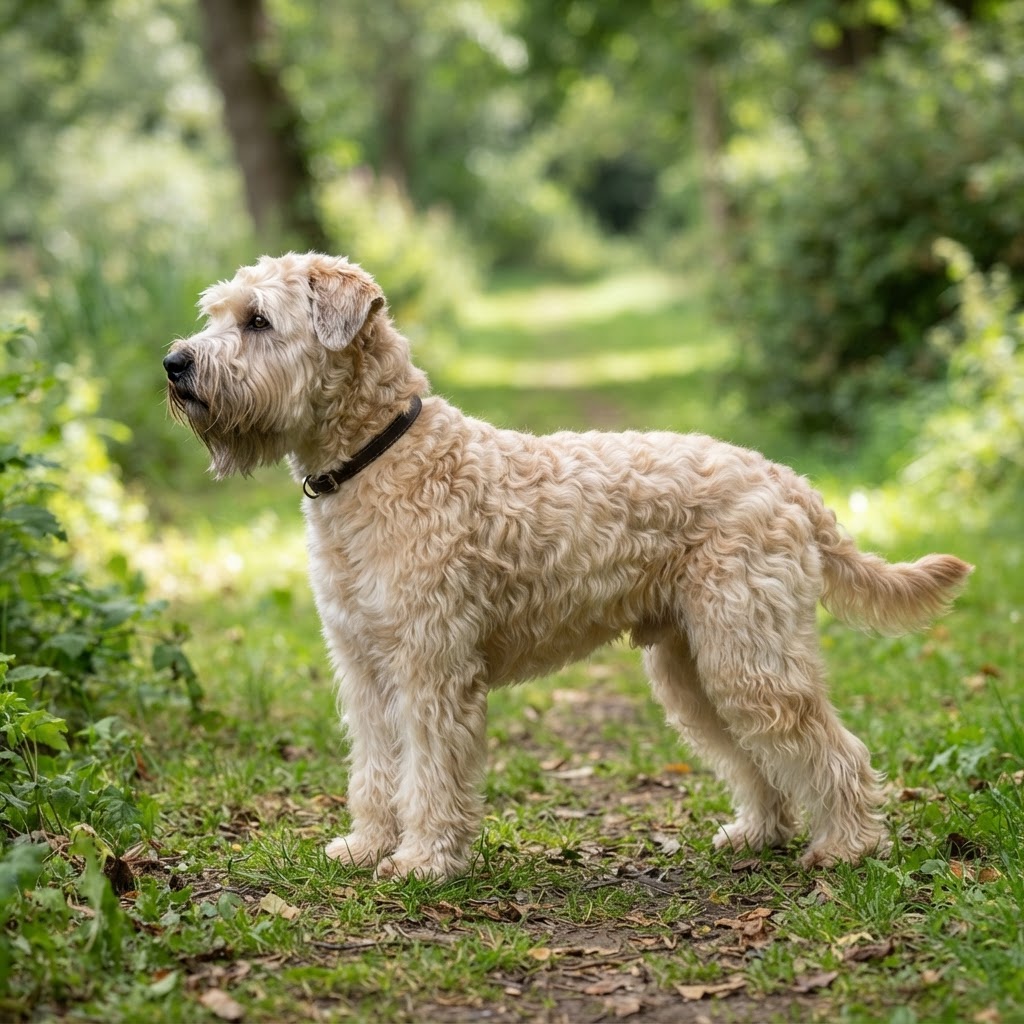
Soft Coated Wheaten Terrier
Male: 16-18 kg, Female: 14-16 kg
46-48 cm at the shoulder for males; females slightly less.
12-15 years
Ireland
About the Soft Coated Wheaten Terrier
The Soft Coated Wheaten Terrier is a medium-sized, hardy dog originating from the Irish countryside where it served as the 'poor man's' versatile farm hand. Unlike many other terriers, the Wheaten is celebrated for its more temperate and jolly disposition, often retaining a puppy-like exuberance throughout its adult life. They are distinguished by their single, non-shedding coat which flows as they move, requiring a dedicated owner who enjoys the grooming process. In a home environment, they are famously affectionate, often performing the 'Wheaten Greet'—a characteristic jump and lick to welcome their humans. They are agile and athletic, excelling in activities like obedience and agility, provided their independent terrier streak is guided with positive reinforcement. Their balance of work ethic and family devotion makes them exceptional companions for active households.
Breed Standard
Key characteristics from the breed standard
In the ring, the Wheaten should present a rectangular silhouette with a level topline and a proud, graceful carriage. The coat is the hallmark of the breed—it must be soft and wavy, appearing like a warm field of ripened grain. Movement should be free and light, exhibiting great reach and drive.
In Australia
In 1970, the first Soft Coated Wheaten Terrier was imported to Australia by Mrs. M. O’Neil, with the dog named Killary Kildare.
Bred For
An all-purpose farm dog used for herding, guarding livestock, and hunting vermin.
Temperament
Spirited, happy, steady, and affectionate; known for being less 'scrappy' than other terriers.
Health Conditions Reported in the Breed
Protein-Losing Nephropathy (PLN), Protein-Losing Enteropathy (PLE), Renal Dysplasia, , and .
Exercise Needs
Moderate to High. Requires daily walks and mental stimulation through play or training to manage their energy.
Grooming Needs
High. Their single coat does not shed but mats very easily; requires daily brushing and regular professional clipping.
Living Suitability
Well-suited to both houses with yards and apartments, provided they receive sufficient daily outdoor exercise and mental engagement.
Good with Kids
Generally very good with children, though their enthusiastic 'Wheaten Greet' might be too much for toddlers.
Good with Other Pets
Usually good with other dogs if socialised early; however, they may retain a prey drive toward smaller animals like cats or rabbits.
Trainability
Highly intelligent but can be independent and stubborn; they respond best to consistent, reward-based training techniques.
Coat & Colours
Single-coated, soft, silky, and wavy.. Any shade of wheaten, ranging from pale fawn to golden reddish-gold.
Exercise needs vary by age, fitness, health, weather and individual temperament. Consult your veterinarian for an exercise plan appropriate for your dog.
Things to Consider
Every breed has its quirks — here's what to know
Soft Coated Wheaten Terriers are more likely to be predisposed to serious conditions like Protein-Losing Nephropathy (PLN) and Protein-Losing Enteropathy (PLE), where they lose protein through their kidneys or gut. While not every dog will develop these, it is essential for owners to perform annual blood and urine screening. Their famous 'Wheaten Greet'—jumping up to say hello—is a charming but high-energy quirk that requires consistent training to manage in polite company. Grooming is a significant commitment; their soft coat acts like a magnet for burrs and dirt, and without frequent brushing, it will form painful mats close to the skin. Some Wheatens can be more likely to develop skin allergies or 'hot spots,' often triggered by environmental factors or sensitivities to standard commercial kibble; many owners find they thrive on a clean, fresh-food diet. They may also possess a typical terrier stubbornness and a moderate prey drive, so a secure yard and early socialisation are important for a harmonious home.
Feeding Guide for Your Soft Coated Wheaten Terrier
Healthy Weight
14-18 kg
Daily Feeding Amount (general starting estimate)
320-480 grams
For an adult Soft Coated Wheaten Terrier, we recommend a fresh or raw diet consisting of approximately 2-3% of their ideal body weight daily. For a 16 kg dog, this equates to roughly 320 to 480 grams of food per day, split into two meals. Because this breed can be predisposed to protein-wasting diseases, focusing on high-quality, bioavailable animal proteins and maintaining a lean body condition is vital for long-term health.
Feeding quantities are general starting estimates only. Individual needs vary with body condition, weight trends, age, health and activity. Ingredient percentages alone do not guarantee complete and balanced nutrition — consult a veterinarian for individualised dietary guidance.
Ingredient percentages alone do not guarantee complete and balanced nutrition. Seek veterinary or qualified canine nutrition guidance for individualised dietary advice. Raw feeding, specific proteins or fresh foods should not be presented as preventing, treating or managing breed health conditions without veterinary diagnosis and supervision.
Majestik's Recommended Feeding Approach
Breed Diet Notes
A high-quality, highly digestible diet. Due to breed-specific protein-wasting conditions (PLN/PLE), they benefit from carefully balanced protein sources and low-allergen ingredients.
A balanced raw diet for a Wheaten should focus on lean, high-quality proteins such as Majestik’s Kangaroo or Lamb to support muscle maintenance without excessive fat. Including fresh green vegetables can provide necessary antioxidants. Given their predisposition to digestive and kidney sensitivities, avoid high-sodium treats and fillers.
These are general breed-level notes only. The appropriate food and serving amount depend on the individual dog's age, health, body condition, activity and tolerance.
Majestik Recommendation
Majestik BARF meals follow our practical 70/10/10/10 approach: approximately 70% quality meat and protein ingredients, 10% edible bone, 10% vegetables and 10% offal. This gives customers a convenient fresh-food option without needing to source and portion every ingredient themselves.
Our Beef, Lamb and Roo BARF meals provide convenient fresh-food options, with suitable proteins chosen or rotated according to the individual dog.
Suitable for different needs
- Healthy adult: Majestik adult Beef, Lamb or Roo BARF meal.
- Puppy: Majestik Premium Puppy.
- Senior: Majestik Senior Blend.
- Working or highly active dog: Suitable Majestik adult meal with quantity adjusted to workload and body condition.
- Protein trial: One Majestik protein at a time.
Recommended Majestik BARF Meals


This is a practical starting recommendation for healthy dogs. Individual needs vary with age, health, body condition and activity.
Soft Coated Wheaten Terrier Feeding Calculator
Personalised raw and cooked feeding recommendations based on your dog's profile
Ideal — Ribs palpable without excess fat. Visible waist. Abdominal tuck present.
Have a question about your Soft Coated Wheaten Terrier? Dog Health AI
Why Majestik?
Fresh, raw pet food made with integrity in South Australia
Australian Made
Made in Two Wells, South Australia
Freshly Prepared
Real meat, organs, bone & wholefood ingredients
No Fillers
No cheap fillers or artificial preservatives
Family Owned
Locally owned and operated
Local Delivery
Delivery across Adelaide & selected areas
Secure Checkout
Secure payment via Shopify checkout
Subscribe & Save on Soft Coated Wheaten Terrier Meals
Get your Soft Coated Wheaten Terrier's fresh and raw meals delivered every two or four weeks. Small subscriptions are combined into a four-week box. Pause, skip or cancel anytime.
Breed Records & Facts
Average Litter Size
5-6 puppies
Soft Coated Wheaten Terrier Owner Feedback
Real experiences and tips from Soft Coated Wheaten Terrier owners
No reviews yet
Be the first to share your experience with this breed
Other Medium Breeds
References & Sources
Breed information verified against recognised breed authorities and veterinary evidence.