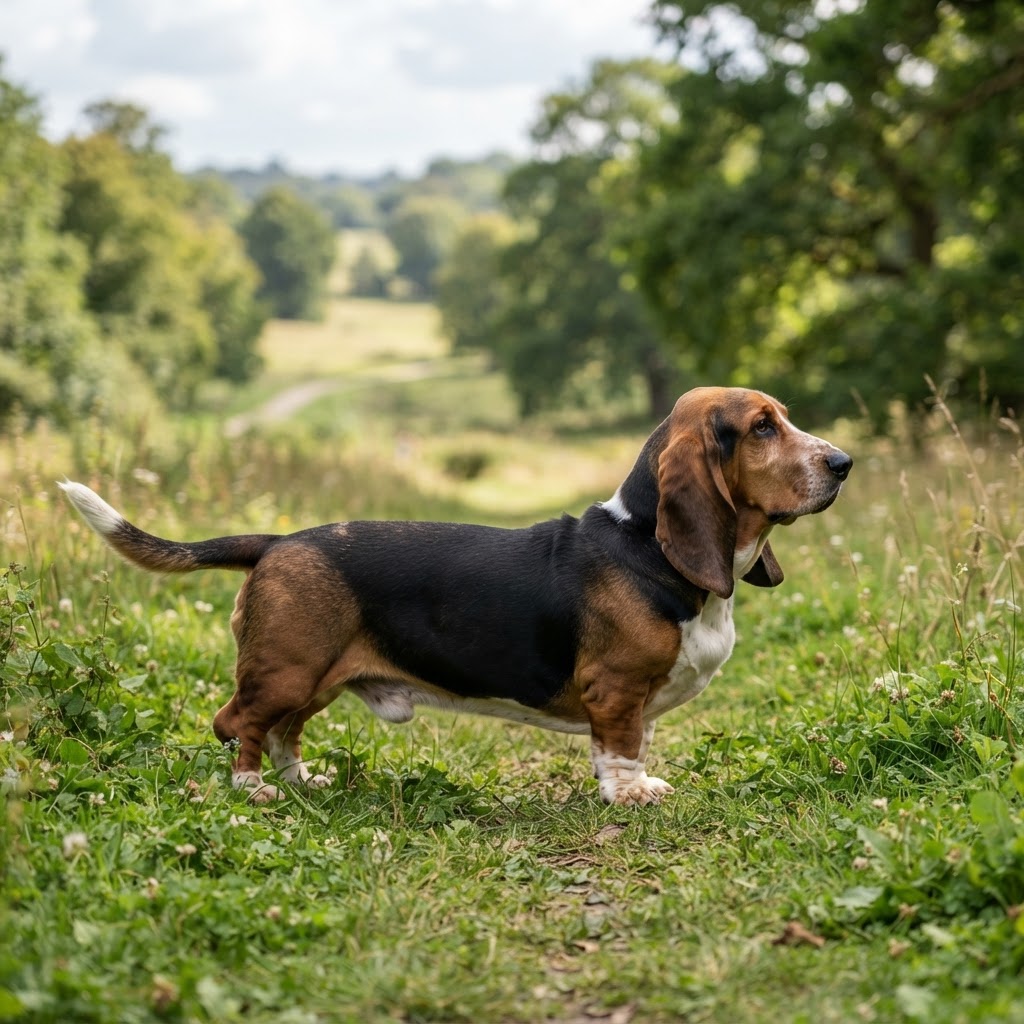
Basset Hound
Male: 25-34 kg, Female: 20-29 kg
33-38 cm at the shoulder
10-12 years
France
About the Basset Hound
The Basset Hound is a scent hound of ancient French lineage, easily identified by its heavy-boned, low-slung stature and exceptionally long, velvety ears. Despite their somewhat mournful expression, they are incredibly social and gentle dogs that thrive on companionship. Their anatomy is a masterclass in functional scent-trailing, featuring a 'dewlap' of loose skin under the chin that helps trap scents and short legs that allow them to move at a pace hunters could follow on foot. In a home environment, the Basset is known as the 'clown' of the dog world, often exhibiting a dry sense of humour and a penchant for comfortable lounging. They are pack animals at heart, meaning they generally get along well with other dogs but can suffer from loneliness if left alone for long periods. Owners must balance their placid indoor nature with their instinctive need to follow their nose, as a Basset on a scent trail is often 'selectively deaf' to recall commands.
Breed Standard
Key characteristics from the breed standard
The Basset Hound presents a silhouette of unique substance, characterized by a level topline and a tail carried gaily in a hound-like curve. In the ring, their movement must be deliberate and effortless, showing great reach in the forequarters and powerful thrust from the rear. This combination of physical extremity and dignified, unhurried temperament makes them an unforgettable presence in the Hound group.
In Australia
The Basset Hound was introduced to Australia in the late 1950s. The first Basset Hound was registered with the state kennel councils in 1957, as confirmed by The Basset Hound Club of NSW.
Bred For
Scent trailing of small game, specifically rabbits and hares, over rugged terrain.
Temperament
Tenacious, devoted, sweet-natured, and placid, yet often displaying a stubborn independence when following a scent.
Health Conditions Reported in the Breed
(), (), Otitis Externa (ear infections), , Thrombopathia, , and Obesity.
Exercise Needs
Moderate; requires daily long walks to maintain muscle tone and mental stimulation through scenting, though they are not high-speed runners.
Grooming Needs
Moderate; short coat requires weekly brushing, but heavy focus must be placed on daily ear cleaning and cleaning of skin folds.
Living Suitability
Suited to both apartments and houses with yards, provided they receive daily walks. They are largely inactive indoors but require a secure fence as they will wander if they catch a scent.
Good with Kids
Excellent with children; they are known for their high tolerance and gentle nature.
Good with Other Pets
Very good with other dogs and generally peaceful with household cats, though their prey drive may be triggered by smaller pets like rabbits.
Trainability
Moderate to low; highly intelligent but very independent. They respond best to positive reinforcement and food rewards rather than repetitive drills.
Coat & Colours
Short, smooth, and close-set; hair is firm in texture but the skin is loose and elastic.. Usually tri-colour (black, white, and tan) or bi-colour (lemon and white), but any recognised hound colour is acceptable.
Exercise needs vary by age, fitness, health, weather and individual temperament. Consult your veterinarian for an exercise plan appropriate for your dog.
Things to Consider
Every breed has its quirks — here's what to know
Basset Hounds are more likely to experience ear infections due to their long, heavy ears trapping moisture and debris; owners should be prepared for a weekly cleaning routine. They are predisposed to Intervertebral Disc Disease (IVDD), meaning jumping off high furniture should be discouraged to protect their long spines. While they are wonderfully affectionate, they are 'vocal' dogs known for a deep, resonant baying that might be a consideration for close neighbours. This breed is also prone to significant shedding and a 'houndy' odour from their oily coat, which is manageable with regular wiping. Drool is a common occurrence, especially after drinking or when food is present. Most importantly, Bassets are more likely to develop obesity, which can severely impact their joints and back health, so strict portion control is vital. They often have an independent streak that makes off-leash recall difficult once they catch a scent, but this is simply part of their charming, single-minded nature. These challenges are easily managed with a dedicated owner who appreciates their unique pace of life.
Feeding Guide for Your Basset Hound
Healthy Weight
23-32 kg
Daily Feeding Amount (general starting estimate)
550-825 grams
For an adult Basset Hound, feeding should focus on lean, fresh proteins to maintain a healthy weight. Some owners use smaller divided meals and avoid strenuous activity immediately around feeding. These steps cannot guarantee prevention of gastric dilatation-volvulus. Seek urgent veterinary care if bloat is suspected.
Feeding quantities are general starting estimates only. Individual needs vary with body condition, weight trends, age, health and activity. Ingredient percentages alone do not guarantee complete and balanced nutrition — consult a veterinarian for individualised dietary guidance.
Ingredient percentages alone do not guarantee complete and balanced nutrition. Seek veterinary or qualified canine nutrition guidance for individualised dietary advice. Raw feeding, specific proteins or fresh foods should not be presented as preventing, treating or managing breed health conditions without veterinary diagnosis and supervision.
Majestik's Recommended Feeding Approach
Breed Diet Notes
A high-quality, nutrient-dense diet specifically managed for calorie control to prevent obesity-related joint strain. Fresh, raw diets rich in lean proteins and low in inflammatory fillers are ideal.
A balanced raw diet for a Basset should focus on lean Australian proteins like Kangaroo or Grass-fed Beef to prevent weight gain. Include 10% secreting organs (liver/kidney), 10% edible bone for calcium, and a variety of leafy greens. Majestik's Kangaroo or Turkey options are excellent for this breed due to their lower fat content. Given their propensity for joint issues, adding Omega-3 fatty acids from fish oil or fresh sardines is highly beneficial.
These are general breed-level notes only. The appropriate food and serving amount depend on the individual dog's age, health, body condition, activity and tolerance.
Majestik Recommendation
Majestik BARF meals follow our practical 70/10/10/10 approach: approximately 70% quality meat and protein ingredients, 10% edible bone, 10% vegetables and 10% offal. This gives customers a convenient fresh-food option without needing to source and portion every ingredient themselves.
Our Beef, Lamb and Roo BARF meals provide convenient fresh-food options, with suitable proteins chosen or rotated according to the individual dog.
Suitable for different needs
- Healthy adult: Majestik adult Beef, Lamb or Roo BARF meal.
- Puppy: Majestik Premium Puppy.
- Senior: Majestik Senior Blend.
- Working or highly active dog: Suitable Majestik adult meal with quantity adjusted to workload and body condition.
- Protein trial: One Majestik protein at a time.
Recommended Majestik BARF Meals


This is a practical starting recommendation for healthy dogs. Individual needs vary with age, health, body condition and activity.
Basset Hound Feeding Calculator
Personalised raw and cooked feeding recommendations based on your dog's profile
Ideal — Ribs palpable without excess fat. Visible waist. Abdominal tuck present.
Have a question about your Basset Hound? Dog Health AI
Why Majestik?
Fresh, raw pet food made with integrity in South Australia
Australian Made
Made in Two Wells, South Australia
Freshly Prepared
Real meat, organs, bone & wholefood ingredients
No Fillers
No cheap fillers or artificial preservatives
Family Owned
Locally owned and operated
Local Delivery
Delivery across Adelaide & selected areas
Secure Checkout
Secure payment via Shopify checkout
Subscribe & Save on Basset Hound Meals
Get your Basset Hound's fresh and raw meals delivered every two or four weeks. Small subscriptions are combined into a four-week box. Pause, skip or cancel anytime.
Breed Records & Facts
Average Litter Size
6-8 puppies
Basset Hound Owner Feedback
Real experiences and tips from Basset Hound owners
No reviews yet
Be the first to share your experience with this breed
Other Medium Breeds
References & Sources
Breed information verified against recognised breed authorities and veterinary evidence.