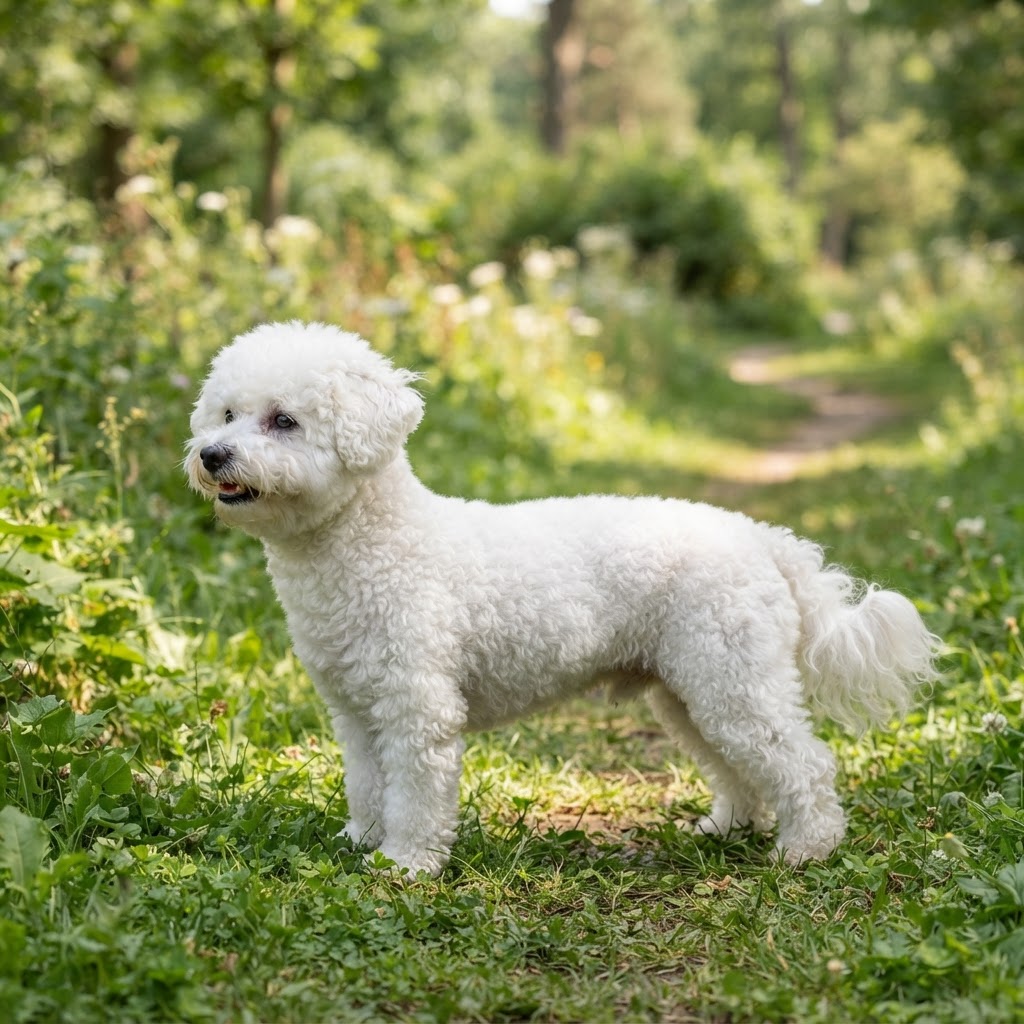
Bichon Frise
Male: 5-8 kg, Female: 5-8 kg
23-30 cm at the shoulder
12-15 years
Mediterranean region (Tenerife/Canary Islands), later developed in France
About the Bichon Frise
The Bichon Frise is a small, sturdy dog known for its distinctive 'powder puff' appearance and a merry, inquisitive disposition. Originally a favorite of French royalty, this breed has maintained its status as a premier companion dog through its resilient charm and intelligence. They possess a plume-like tail carried jauntily over the back and dark, expressive eyes that convey a constant sense of curiosity and joy. Characterized by a dense, white coat that is soft to the touch, the Bichon is often described as having a 'springy' feel. They are remarkably social animals that thrive on human interaction, making them unsuitable for households where they would be left alone for long periods. Despite their delicate appearance, they are quite hardy and agile, often performing well in obedience and agility trials.
Breed Standard
Key characteristics from the breed standard
In the show ring, the Bichon Frise is a masterpiece of balance and elegance, presenting a soft, rounded silhouette that must never appear angular. Their movement is a hallmark of the breed—an effortless, jaunty gait with a reach and drive that belies their small stature. The head should feature the 'three-dark-circle' look, where the dark eyes and nose form an equilateral triangle set against a snowy white face.
In Australia
In 1973, the first Bichon Frise was imported from the United States by Harry and Margaret Begg of the Leander kennel.
Bred For
Companion animal and lap dog, descended from the Barbet or Water Spaniel.
Temperament
Cheerful, sensitive, playful, affectionate, and gentle.
Health Conditions Reported in the Breed
, urolithiasis (bladder stones), , primary ciliary dyskinesia, and dental overcrowding.
Exercise Needs
Moderate; approximately 30-45 minutes of daily activity including walks and interactive play.
Grooming Needs
High; requires daily brushing to prevent matting and professional grooming/clipping every 4-6 weeks.
Living Suitability
Highly suited to apartment living and small homes; they require indoor living and close proximity to their owners.
Good with Kids
Generally very good with children, though supervision is recommended with very young children due to the dog's small size.
Good with Other Pets
Excellent; they are typically very social and get along well with other dogs and cats.
Trainability
Highly intelligent and eager to please, though they can be famously difficult to housebreak and may show a stubborn streak if training is inconsistent.
Coat & Colours
Fine, silky, corkscrew curls; non-shedding and hypoallergenic.. White; though cream or apricot shadings are sometimes seen on ears or body in puppies.
Exercise needs vary by age, fitness, health, weather and individual temperament. Consult your veterinarian for an exercise plan appropriate for your dog.
Things to Consider
Every breed has its quirks — here's what to know
The Bichon Frise is more likely to experience separation anxiety—they are 'velvet' dogs that may become distressed if left alone, though this can be managed with proper crate training and enrichment. They are predisposed to urolithiasis (bladder stones) and urinary tract infections; while not every Bichon will develop these, a moisture-rich fresh diet and frequent toilet breaks are excellent preventative measures. Grooming is a significant commitment; their coat can mat quickly down to the skin, requiring regular professional attention to keep them comfortable. Like many toy breeds, they are prone to dental disease and overcrowding, meaning daily tooth brushing or dental treats are highly beneficial. Owners should also be aware that housebreaking a Bichon can take longer than other breeds, requiring patience and consistent positive reinforcement. Finally, their white coats are prone to tear staining around the eyes; while often a cosmetic irritation, it requires daily cleaning to prevent skin irritation.
Feeding Guide for Your Bichon Frise
Healthy Weight
5-8 kg
Daily Feeding Amount (general starting estimate)
100-240 grams
A fresh or raw diet should consist of high-quality lean proteins like kangaroo or chicken, combined with finely ground bone and organ meat. Given their predisposition to bladder stones, ensuring high moisture content in their food is vital. For an adult Bichon, aim for 2-3% of their ideal body weight daily, split into two meals.
Feeding quantities are general starting estimates only. Individual needs vary with body condition, weight trends, age, health and activity. Ingredient percentages alone do not guarantee complete and balanced nutrition — consult a veterinarian for individualised dietary guidance.
Ingredient percentages alone do not guarantee complete and balanced nutrition. Seek veterinary or qualified canine nutrition guidance for individualised dietary advice. Raw feeding, specific proteins or fresh foods should not be presented as preventing, treating or managing breed health conditions without veterinary diagnosis and supervision.
Majestik's Recommended Feeding Approach
Breed Diet Notes
A high-quality, moisture-rich diet is ideal to support urinary health and prevent bladder stones. Fresh, low-to-moderate fat proteins are recommended to avoid weight gain and pancreatitis.
The ideal raw diet for a Bichon focuses on lean Australian proteins available from Majestik, such as Kangaroo, Lean Beef, or White Fish. Incorporating low-oxalate vegetables like zucchini and carrots can support urinary health. Appropriately selected raw meaty bones may provide chewing enrichment, but they do not replace veterinary dental care and can present choking, tooth-fracture or gastrointestinal risks.
These are general breed-level notes only. The appropriate food and serving amount depend on the individual dog's age, health, body condition, activity and tolerance.
Majestik Recommendation
Majestik BARF meals follow our practical 70/10/10/10 approach: approximately 70% quality meat and protein ingredients, 10% edible bone, 10% vegetables and 10% offal. This gives customers a convenient fresh-food option without needing to source and portion every ingredient themselves.
Our Beef, Lamb and Roo BARF meals provide convenient fresh-food options, with suitable proteins chosen or rotated according to the individual dog.
Suitable for different needs
- Healthy adult: Majestik adult Beef, Lamb or Roo BARF meal.
- Puppy: Majestik Premium Puppy.
- Senior: Majestik Senior Blend.
- Working or highly active dog: Suitable Majestik adult meal with quantity adjusted to workload and body condition.
- Protein trial: One Majestik protein at a time.
Recommended Majestik BARF Meals


This is a practical starting recommendation for healthy dogs. Individual needs vary with age, health, body condition and activity.
Bichon Frise Feeding Calculator
Personalised raw and cooked feeding recommendations based on your dog's profile
Ideal — Ribs palpable without excess fat. Visible waist. Abdominal tuck present.
Have a question about your Bichon Frise? Dog Health AI
Why Majestik?
Fresh, raw pet food made with integrity in South Australia
Australian Made
Made in Two Wells, South Australia
Freshly Prepared
Real meat, organs, bone & wholefood ingredients
No Fillers
No cheap fillers or artificial preservatives
Family Owned
Locally owned and operated
Local Delivery
Delivery across Adelaide & selected areas
Secure Checkout
Secure payment via Shopify checkout
Subscribe & Save on Bichon Frise Meals
Get your Bichon Frise's fresh and raw meals delivered every two or four weeks. Small subscriptions are combined into a four-week box. Pause, skip or cancel anytime.
Breed Records & Facts
Average Litter Size
4-6 puppies
Bichon Frise Owner Feedback
Real experiences and tips from Bichon Frise owners
No reviews yet
Be the first to share your experience with this breed
Other Small Breeds
References & Sources
Breed information verified against recognised breed authorities and veterinary evidence.