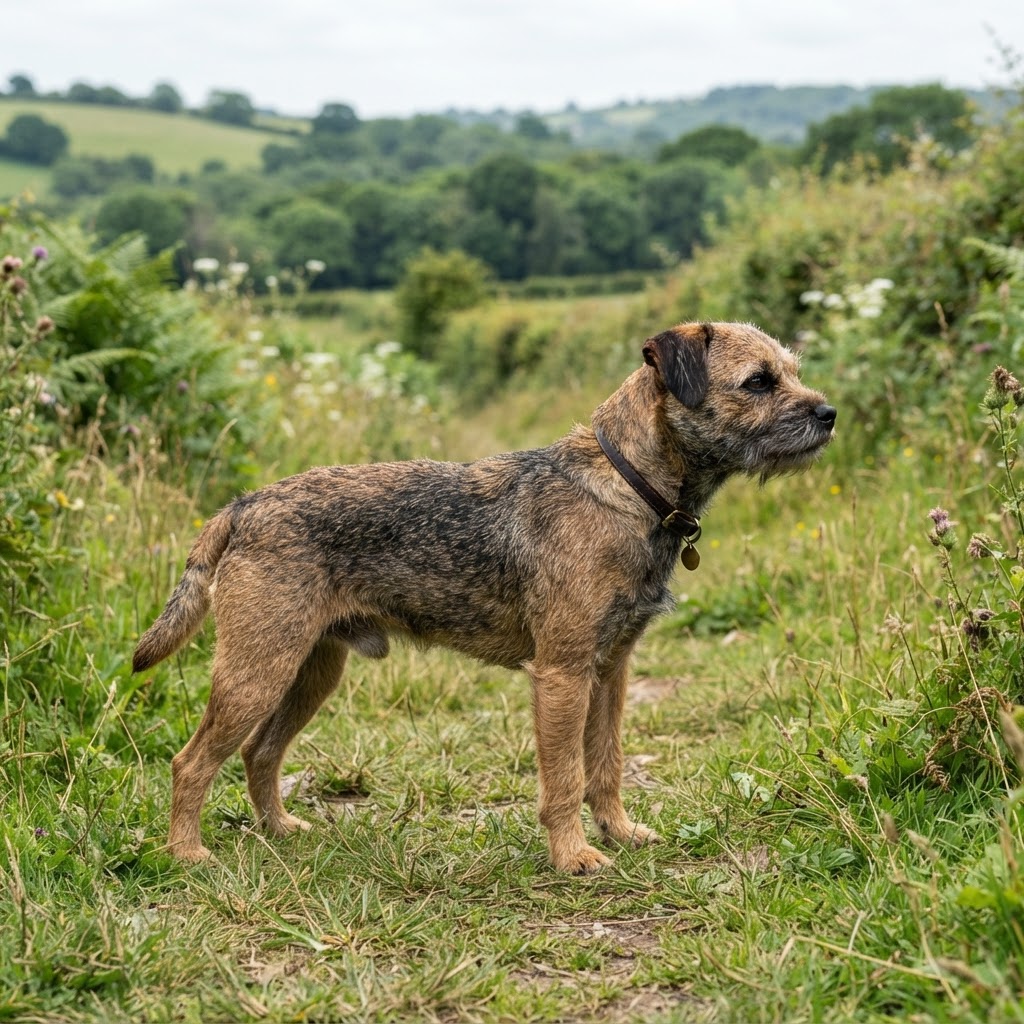
Border Terrier
Male: 5.9-7.1 kg, Female: 5.1-6.4 kg
25-28 cm at the shoulder
12-15 years
United Kingdom (the border country between Scotland and England)
About the Border Terrier
The Border Terrier is a sturdy, medium-boned working terrier originally developed in the Cheviot Hills to assist farmers and fox hunters. Unlike many terriers that were bred for solo vermin control, the Border was designed to work in harmony with hounds and humans, resulting in a breed that is notably more social and less 'scrappy' than its cousins. They are defined by their unique 'otter-like' head and a weather-resistant double coat that allowed them to endure the harsh mists and rains of the border country. In a domestic setting, the Border Terrier is a devoted companion that balances a spirited adventurousness with a surprisingly calm indoor presence. They are highly intelligent and adaptable, making them suitable for various canine sports like earthdog trials, agility, and tracking. While they possess a strong prey drive, their inherent desire to please makes them one of the more trainable members of the terrier group, provided their physical and mental needs are met with consistency and variety.
Breed Standard
Key characteristics from the breed standard
In the ring, the Border Terrier is distinguished by its 'otter head'—a broad skull and short, strong muzzle that gives it a unique, narrowed expression. Their movement should be 'capable of following a horse,' showing a free, easy stride with good reach and drive rather than the mincing steps of smaller toy breeds. A critical show quality is the 'pelt,' which must be thick and loose-fitting, allowing the dog to twist and turn in tight underground spaces.
In Australia
Reliable Australian historical records for this breed’s introduction were not located.
Bred For
To hunt foxes alongside foxhounds, specifically bred with legs long enough to follow horses but small enough to go to ground and bolt foxes from their dens.
Temperament
Affectionate, obedient, plucky, and game; known for having a softer temperament than many other terrier breeds while remaining courageous.
Health Conditions Reported in the Breed
Spongiform Leucoencephalomyelopathy (SLEM or 'Shaking Puppy Syndrome'), Canine Epileptoid Cramping Syndrome (CECS/Spike’s Disease), , , and .
Grooming Needs
Regular brushing and professional hand-stripping of the coat twice a year; clipping is generally discouraged as it alters the weather-resistant texture.
Living Suitability
Suited to both apartments and houses with yards, provided they receive significant daily exercise. They are notorious 'escape artists' and require extremely secure fencing that is buried into the ground, as they are expert diggers.
Good with Kids
Generally excellent with children; they are sturdy enough to handle play but have a more sensible temperament than many smaller breeds.
Good with Other Pets
Usually good with other dogs if socialised early; however, their high prey drive means they may never be fully trustworthy around small pets like rabbits, rats, or cats unless raised with them from a very young age.
Trainability
Highly intelligent and more eager to please than the average terrier, though they can possess an independent streak that requires positive, reward-based training techniques.
Coat & Colours
Harsh, dense, wiry outer coat with a close-fitting undercoat.. Red, wheaten, grizzle and tan, or blue and tan.
Exercise needs vary by age, fitness, health, weather and individual temperament. Consult your veterinarian for an exercise plan appropriate for your dog.
Things to Consider
Every breed has its quirks — here's what to know
Prospective owners should be aware that Border Terriers are more likely to exhibit a high prey drive—this doesn't mean they will always chase, but they are predisposed to pursuing small animals, making a leash essential in unenclosed areas. They are also prone to digging, a trait inherited from their work in dens; providing a designated 'digging pit' can help manage this instinct. Like many terriers, they may be predisposed to skin allergies and atopic dermatitis on standard commercial diets, often thriving much better on a fresh, limited-ingredient diet. Canine Epileptoid Cramping Syndrome (CECS) is a breed-specific neurological concern to monitor for, and Shaking Puppy Syndrome (SLEM) is a known genetic condition, though responsible Australian breeders now use DNA testing to mitigate this risk. Finally, their coat requires hand-stripping rather than clipping to maintain its weather-resistant properties and rich colour—clipping can lead to a soft, faded coat that traps dirt and loses its 'wire' texture.
Feeding Guide for Your Border Terrier
Healthy Weight
5.1-7.1 kg
Daily Feeding Amount (general starting estimate)
120-210 grams
For an adult Border Terrier, a fresh food diet should consist of approximately 2-3% of their ideal body weight daily. For a 6kg dog, this equates to roughly 150g of fresh food per day. We recommend lean proteins such as Majestik's Kangaroo or Beef, supplemented with seasonal vegetables and crushed bone for calcium. Because they are prone to weight gain, it is essential to monitor their body condition score and adjust portions based on their activity levels.
Feeding quantities are general starting estimates only. Individual needs vary with body condition, weight trends, age, health and activity. Ingredient percentages alone do not guarantee complete and balanced nutrition — consult a veterinarian for individualised dietary guidance.
Ingredient percentages alone do not guarantee complete and balanced nutrition. Seek veterinary or qualified canine nutrition guidance for individualised dietary advice. Raw feeding, specific proteins or fresh foods should not be presented as preventing, treating or managing breed health conditions without veterinary diagnosis and supervision.
Majestik's Recommended Feeding Approach
Breed Diet Notes
A high-protein, moderate-fat diet rich in Omega fatty acids to support their dense double coat; highly responsive to fresh, whole-food diets that avoid excessive fillers.
A balanced raw diet for a Border Terrier should focus on high-quality Australian proteins such as Majestik's Kangaroo, Beef, or Lamb. Given their predisposition to skin sensitivities, incorporating Majestik's fish-based options or adding sardines can provide essential Omega-3 fatty acids to maintain their wiry coat and skin barrier.
These are general breed-level notes only. The appropriate food and serving amount depend on the individual dog's age, health, body condition, activity and tolerance.
Majestik Recommendation
Majestik BARF meals follow our practical 70/10/10/10 approach: approximately 70% quality meat and protein ingredients, 10% edible bone, 10% vegetables and 10% offal. This gives customers a convenient fresh-food option without needing to source and portion every ingredient themselves.
Our Beef, Lamb and Roo BARF meals provide convenient fresh-food options, with suitable proteins chosen or rotated according to the individual dog.
Suitable for different needs
- Healthy adult: Majestik adult Beef, Lamb or Roo BARF meal.
- Puppy: Majestik Premium Puppy.
- Senior: Majestik Senior Blend.
- Working or highly active dog: Suitable Majestik adult meal with quantity adjusted to workload and body condition.
- Protein trial: One Majestik protein at a time.
This is a practical starting recommendation for healthy dogs. Individual needs vary with age, health, body condition and activity.
Border Terrier Feeding Calculator
Personalised raw and cooked feeding recommendations based on your dog's profile
Ideal — Ribs palpable without excess fat. Visible waist. Abdominal tuck present.
Have a question about your Border Terrier? Dog Health AI
Why Majestik?
Fresh, raw pet food made with integrity in South Australia
Australian Made
Made in Two Wells, South Australia
Freshly Prepared
Real meat, organs, bone & wholefood ingredients
No Fillers
No cheap fillers or artificial preservatives
Family Owned
Locally owned and operated
Local Delivery
Delivery across Adelaide & selected areas
Secure Checkout
Secure payment via Shopify checkout
Subscribe & Save on Border Terrier Meals
Get your Border Terrier's fresh and raw meals delivered every two or four weeks. Small subscriptions are combined into a four-week box. Pause, skip or cancel anytime.
Breed Records & Facts
Average Litter Size
2-8 puppies
Border Terrier Owner Feedback
Real experiences and tips from Border Terrier owners
Other Small Breeds
References & Sources
Breed information verified against recognised breed authorities and veterinary evidence.