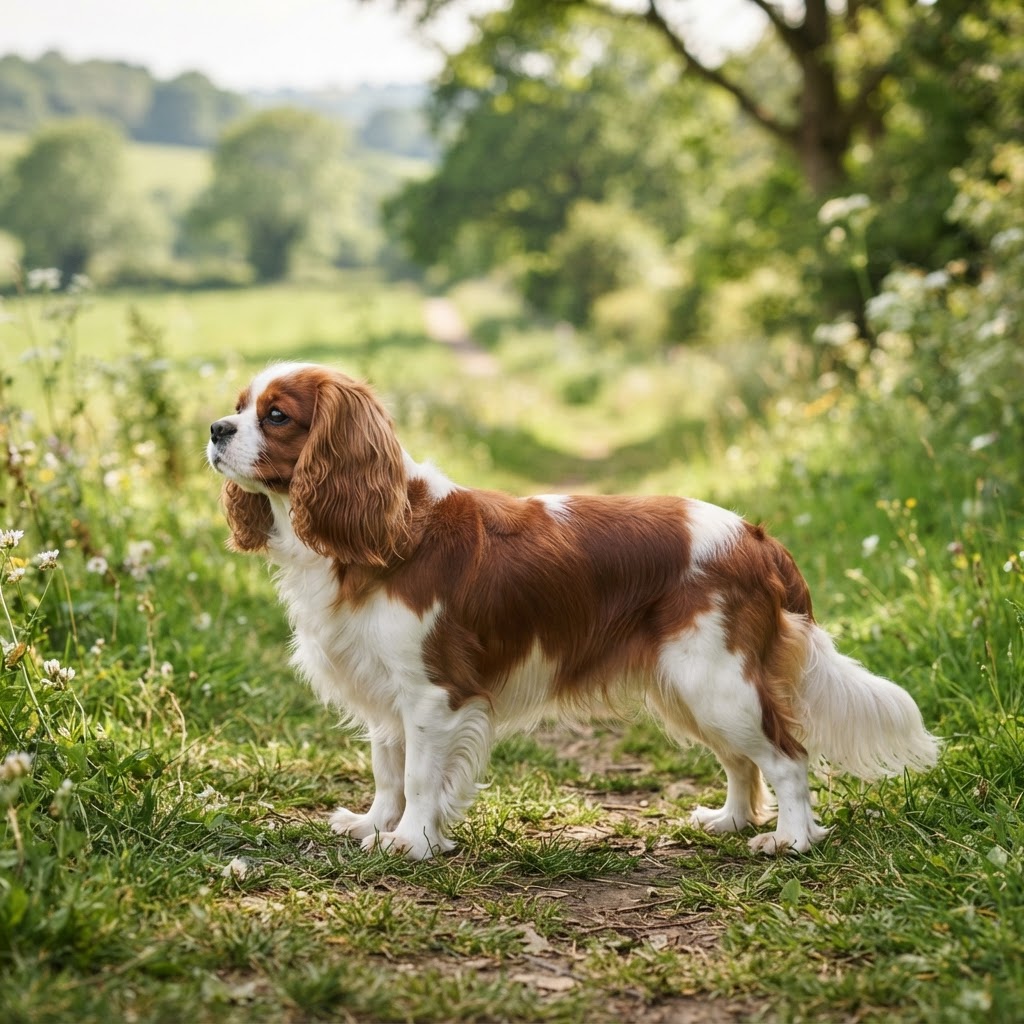
Cavalier King Charles Spaniel
5.4-8.2 kg
30-33 cm at the shoulder
9-14 years
United Kingdom
About the Cavalier King Charles Spaniel
The Cavalier King Charles Spaniel is the quintessential companion dog, blending the athletic grace of a small sporting spaniel with the gentle, affectionate nature of a lapdog. Known for their 'melting' expression and large, dark, luminous eyes, Cavaliers are remarkably adaptable, equally happy hiking through a park or curling up on a sofa. They possess a natural elegance and a 'profoundly happy' disposition, often characterized by a constantly wagging tail and an innate desire to be near their human family. Historically cherished by British royalty, particularly King Charles II, the breed was revived in the 1920s to resemble the longer-nosed spaniels seen in early 17th-century paintings. Today, they are celebrated for their non-aggressive temperament and intelligence, making them excellent candidates for therapy work and obedience. Despite their royal lineage, they retain a sporting instinct and will occasionally chase butterflies or birds, showcasing a playful spirit that remains with them well into their senior years.
Breed Standard
Key characteristics from the breed standard
In the show ring, the Cavalier is defined by its soft, soulful expression and a perfectly balanced, cobby frame. Their movement should be free and elegant, exhibiting a 'rocking horse' reach and drive that reflects their spaniel heritage. The coat must be silky and natural, never trimmed, showcasing the breed's effortless beauty. What truly sets the Cavalier apart is their 'hallmark' temperament—a radiant, sweet-natured presence that shines through their eyes, making them the gold standard for companion excellence and the ultimate 'heart' dog of the Toy group.
In Australia
The breed began appearing in Australian show rings in the early 1950s, with the first specialist club, the Cavalier King Charles Spaniel Club of New South Wales, officially forming in 1965 to promote and protect the breed standard.
Bred For
Companion dog and lapdog, developed from larger sporting spaniels to provide warmth and companionship to royalty.
Temperament
Affectionate, gentle, eager to please, fearless, and highly sociable.
Health Conditions Reported in the Breed
(), (SM), , , , and Primary Secretory Otitis Media (PSOM).
Exercise Needs
Moderate; requires approximately 45-60 minutes of daily activity, including walks and interactive play, to maintain cardiovascular health and mental stimulation.
Grooming Needs
Moderate to high; requires brushing 3-4 times weekly to prevent matting in the feathering, along with regular ear cleaning and dental care.
Living Suitability
Highly suited to apartment living and small homes, provided they receive daily walks. They are indoor dogs that thrive on human companionship and do not do well in isolation.
Good with Kids
Excellent; known for being very patient and gentle with children of all ages, though supervision is recommended with very small children due to the dog's small size.
Good with Other Pets
Excellent; generally very social and peaceful with other dogs and can live harmoniously with cats when properly introduced.
Trainability
High; they are intelligent, food-motivated, and eager to please, responding best to positive reinforcement and gentle guidance.
Coat & Colours
Long, silky, and straight with profuse feathering; no trimming is permitted for show standards.. Blenheim (chestnut and white), Tricolour (black, white, and tan), Ruby (solid red), and Black and Tan.
Exercise needs vary by age, fitness, health, weather and individual temperament. Consult your veterinarian for an exercise plan appropriate for your dog.
Things to Consider
Every breed has its quirks — here's what to know
Cavaliers are more likely to be predisposed to Mitral Valve Disease (MVD), a progressive heart condition; while not every dog will develop it, regular veterinary cardiac screening is essential from middle age. They can also be susceptible to Syringomyelia (SM), a neurological condition related to skull shape; being aware of symptoms like 'air scratching' or neck sensitivity allows for early management. Their beautiful floppy ears can trap moisture and debris, making them more prone to ear infections, so a weekly cleaning routine is recommended. They are a 'velcro' breed and may experience separation anxiety if left alone for long periods, though this can be managed with gradual training and enrichment. Many Cavaliers are highly food-motivated, which can lead to weight management challenges; keeping them lean is the best way to support their joints and heart. Additionally, their small mouths can make them more likely to develop dental disease, which a fresh raw diet containing edible bones can help mitigate. Their silky coats are moderate shedders and require regular brushing to prevent mats, especially in the fine hair behind the ears and on the legs. These traits are part of the Cavalier's devoted nature, and with proactive care, they are incredibly rewarding companions.
Feeding Guide for Your Cavalier King Charles Spaniel
Healthy Weight
5.4-8.2 kg
Daily Feeding Amount (general starting estimate)
140-250 grams
For an adult Cavalier, fresh or raw feeding should focus on lean proteins and essential fats. We recommend feeding 2-3% of their ideal body weight daily. For a standard 7kg Cavalier, this equates to approximately 140-210 grams per day, split into two meals. Adjust portions based on activity levels and body condition score to avoid weight gain, as this breed is prone to obesity which can strain the heart.
Feeding quantities are general starting estimates only. Individual needs vary with body condition, weight trends, age, health and activity. Ingredient percentages alone do not guarantee complete and balanced nutrition — consult a veterinarian for individualised dietary guidance.
Ingredient percentages alone do not guarantee complete and balanced nutrition. Seek veterinary or qualified canine nutrition guidance for individualised dietary advice. Raw feeding, specific proteins or fresh foods should not be presented as preventing, treating or managing breed health conditions without veterinary diagnosis and supervision.
Majestik's Recommended Feeding Approach
Breed Diet Notes
Supplement suitability and dosage depend on the individual dog’s diet and health. Discuss targeted supplementation with your veterinarian or qualified canine nutrition professional.
A balanced raw diet for a Cavalier should feature high-quality proteins like Majestik Kangaroo or Lean Beef to maintain a healthy weight. Including oily fish like sardines once or twice a week provides vital Omega-3s for heart support. Adding pureed leafy greens or berries can provide antioxidants, while avoiding high-starch fillers is crucial for dental health and weight management.
These are general breed-level notes only. The appropriate food and serving amount depend on the individual dog's age, health, body condition, activity and tolerance.
Majestik Recommendation
Majestik BARF meals follow our practical 70/10/10/10 approach: approximately 70% quality meat and protein ingredients, 10% edible bone, 10% vegetables and 10% offal. This gives customers a convenient fresh-food option without needing to source and portion every ingredient themselves.
Our Beef, Lamb and Roo BARF meals provide convenient fresh-food options, with suitable proteins chosen or rotated according to the individual dog.
Suitable for different needs
- Healthy adult: Majestik adult Beef, Lamb or Roo BARF meal.
- Puppy: Majestik Premium Puppy.
- Senior: Majestik Senior Blend.
- Working or highly active dog: Suitable Majestik adult meal with quantity adjusted to workload and body condition.
- Protein trial: One Majestik protein at a time.
This is a practical starting recommendation for healthy dogs. Individual needs vary with age, health, body condition and activity.
Cavalier King Charles Spaniel Feeding Calculator
Personalised raw and cooked feeding recommendations based on your dog's profile
Ideal — Ribs palpable without excess fat. Visible waist. Abdominal tuck present.
Have a question about your Cavalier King Charles Spaniel? Dog Health AI
Why Majestik?
Fresh, raw pet food made with integrity in South Australia
Australian Made
Made in Two Wells, South Australia
Freshly Prepared
Real meat, organs, bone & wholefood ingredients
No Fillers
No cheap fillers or artificial preservatives
Family Owned
Locally owned and operated
Local Delivery
Delivery across Adelaide & selected areas
Secure Checkout
Secure payment via Shopify checkout
Subscribe & Save on Cavalier King Charles Spaniel Meals
Get your Cavalier King Charles Spaniel's fresh and raw meals delivered every two or four weeks. Small subscriptions are combined into a four-week box. Pause, skip or cancel anytime.
Breed Records & Facts
Oldest Recorded
Tuppence, 19 years
Average Litter Size
2-6 puppies
Cavalier King Charles Spaniel Owner Feedback
Real experiences and tips from Cavalier King Charles Spaniel owners
Other Small Breeds
References & Sources
Breed information verified against recognised breed authorities and veterinary evidence.