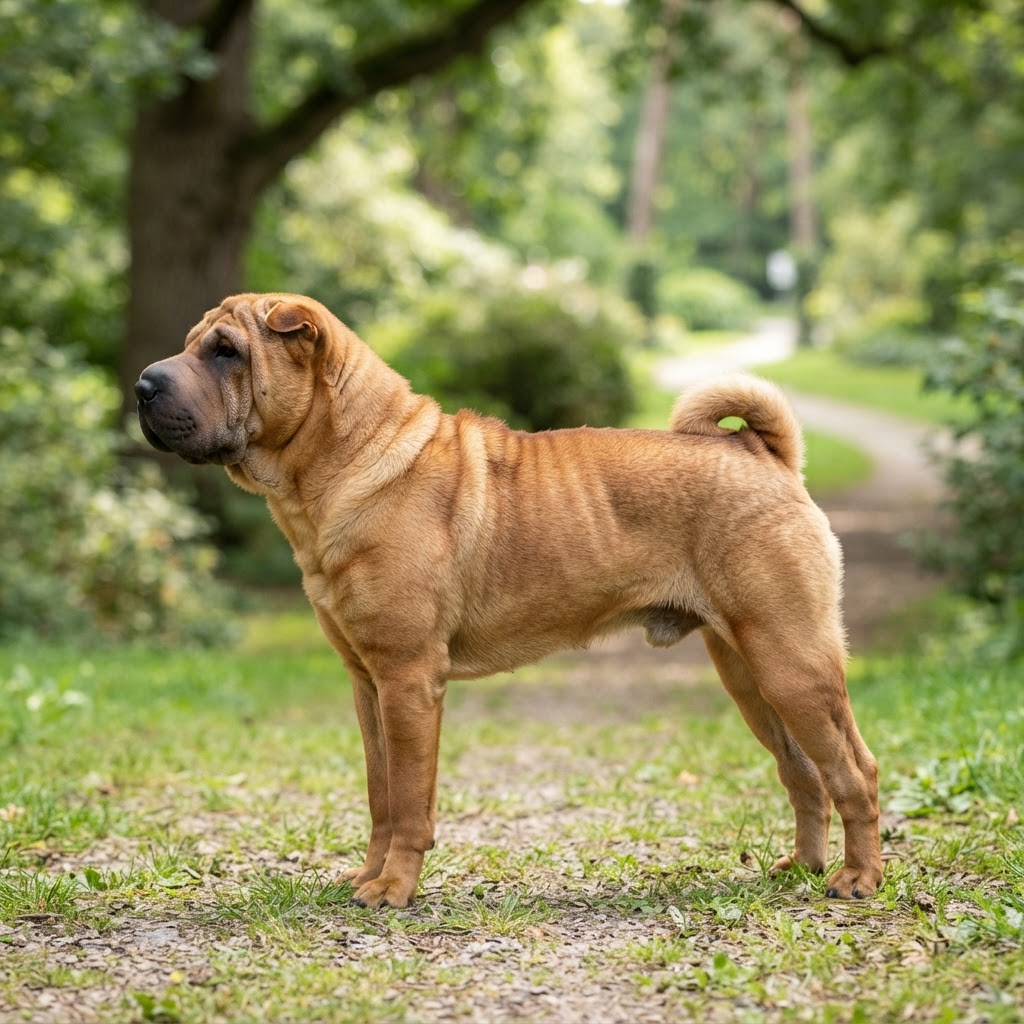
Shar Pei
Male: 25-30 kg, Female: 18-25 kg
46-51 cm at the shoulder
8-12 years
China
About the Shar Pei
The Shar-Pei is an ancient and distinctive breed easily recognised by its loose skin, 'hippopotamus' muzzle shape, and tiny, triangular ears. Originating from the Guangdong province of China, they were once the steadfast companions of farmers, serving as capable guardians and hunters. They possess a unique 'scowl' that conveys a sense of wisdom and stoicism, reflecting their deeply loyal yet independent nature. In a domestic setting, the Shar-Pei is a quiet and devoted family member. They are naturally clean dogs and often house-train earlier than other breeds. While they can be aloof or suspicious toward strangers, they are intensely bonded to their primary caregivers. Their unique physical attributes require a dedicated owner who understands the specific needs of their skin and health predispositions, but in return, they offer a level of dignified companionship that is truly singular in the canine world.
Breed Standard
Key characteristics from the breed standard
The Shar-Pei presents a silhouette unlike any other in the ring, defined by a 'square' profile and a high-set, tapering tail that curls over the back. Their movement is free and balanced, characterized by a reach and drive that denotes their working heritage. The breed standard emphasizes the unique 'scowl'—a product of the forehead wrinkles—and the tiny, thick ears that lie flat against the skull.
In Australia
The first Shar Pei arrived in Australia in April 1981, when Mrs J. Souter of Ahowia Kennels imported the bitch Heathmount No No Nanette from the United Kingdom, as recorded by the Shar Pei Club of NSW.
Bred For
Versatile farm dog used for guarding, hunting, and herding.
Temperament
Independent, loyal, reserved, suspicious of strangers, and calm within the home.
Health Conditions Reported in the Breed
Familial Shar-Pei Fever (FSF), Amyloidosis, , , , Otitis Externa (chronic ear infections), and .
Exercise Needs
Moderate daily exercise, including walks and mental stimulation; they are not high-intensity athletes but require regular activity to maintain weight.
Grooming Needs
Minimal brushing but intensive skin care; requires regular inspection and cleaning of skin folds and narrow ear canals.
Living Suitability
Suited to both apartment living and houses with yards, provided they receive daily walks. They are generally inactive indoors.
Good with Kids
Good with older, respectful children; may be less tolerant of erratic behaviour from very young toddlers.
Good with Other Pets
Can be dominant with other dogs of the same sex; early socialisation is essential for cohabitating with other pets.
Trainability
Highly intelligent but independent and stubborn; requires firm, consistent, and positive reinforcement training from a young age.
Coat & Colours
Extremely harsh, straight, and bristly (Horse-coat or Brush-coat), lacking an undercoat.. All solid colours except white (e.g., black, red, fawn, cream, blue, and apricot).
Exercise needs vary by age, fitness, health, weather and individual temperament. Consult your veterinarian for an exercise plan appropriate for your dog.
Things to Consider
Every breed has its quirks — here's what to know
Prospective owners should be aware that Shar-Pei are more likely to experience Familial Shar-Pei Fever (FSF), an inflammatory condition—this doesn't mean every dog will have it, but monitoring for unexplained fevers and joint swelling is vital. Their deep skin folds, while iconic, are predisposed to yeast and bacterial infections; they require regular (sometimes daily) checking and drying to prevent dermatitis. Their narrow ear canals also make them more prone to chronic ear infections, necessitating regular cleaning. Many Shar-Pei require 'eye tacking' as puppies or corrective surgery later in life for Entropion (inward-turning eyelids) to prevent corneal damage. In terms of temperament, they are famously independent and can be stubborn, meaning they need a confident leader who uses positive reinforcement. They are also more likely to develop digestive sensitivities and skin allergies on standard commercial kibbles containing grains or poultry by-products; many thrive on a Majestik fresh, single-protein diet. Finally, they can be protective and reserved, requiring diligent socialisation to ensure they remain well-adjusted around strangers and other dogs.
Feeding Guide for Your Shar Pei
Healthy Weight
18-30 kg
Daily Feeding Amount (general starting estimate)
500-750 grams
For an adult Shar-Pei, we recommend a fresh or raw diet consisting of approximately 2-3% of their ideal body weight daily. For a 25kg dog, this equates to 500g to 750g per day, split into two meals. Focus on high-quality proteins like Kangaroo or Beef to support skin health.
Feeding quantities are general starting estimates only. Individual needs vary with body condition, weight trends, age, health and activity. Ingredient percentages alone do not guarantee complete and balanced nutrition — consult a veterinarian for individualised dietary guidance.
Ingredient percentages alone do not guarantee complete and balanced nutrition. Seek veterinary or qualified canine nutrition guidance for individualised dietary advice. Raw feeding, specific proteins or fresh foods should not be presented as preventing, treating or managing breed health conditions without veterinary diagnosis and supervision.
Majestik's Recommended Feeding Approach
Breed Diet Notes
A high-quality, anti-inflammatory diet. Many Shar Pei thrive on fresh or raw diets that avoid common allergens and fillers which can exacerbate skin issues.
A balanced raw diet for a Shar-Pei should focus on novel or clean proteins such as Majestik's Kangaroo or Grass-Fed Beef to mitigate skin sensitivities. Inclusion of omega-3 fatty acids from fish or hemp oil is highly recommended to support the skin barrier. Avoid high-carb fillers that can fuel yeast growth in skin folds.
These are general breed-level notes only. The appropriate food and serving amount depend on the individual dog's age, health, body condition, activity and tolerance.
Majestik Recommendation
Majestik BARF meals follow our practical 70/10/10/10 approach: approximately 70% quality meat and protein ingredients, 10% edible bone, 10% vegetables and 10% offal. This gives customers a convenient fresh-food option without needing to source and portion every ingredient themselves.
Our Beef, Lamb and Roo BARF meals provide convenient fresh-food options, with suitable proteins chosen or rotated according to the individual dog.
Suitable for different needs
- Healthy adult: Majestik adult Beef, Lamb or Roo BARF meal.
- Puppy: Majestik Premium Puppy.
- Senior: Majestik Senior Blend.
- Working or highly active dog: Suitable Majestik adult meal with quantity adjusted to workload and body condition.
- Protein trial: One Majestik protein at a time.
Recommended Majestik BARF Meals


This is a practical starting recommendation for healthy dogs. Individual needs vary with age, health, body condition and activity.
Shar Pei Feeding Calculator
Personalised raw and cooked feeding recommendations based on your dog's profile
Ideal — Ribs palpable without excess fat. Visible waist. Abdominal tuck present.
Have a question about your Shar Pei? Dog Health AI
Why Majestik?
Fresh, raw pet food made with integrity in South Australia
Australian Made
Made in Two Wells, South Australia
Freshly Prepared
Real meat, organs, bone & wholefood ingredients
No Fillers
No cheap fillers or artificial preservatives
Family Owned
Locally owned and operated
Local Delivery
Delivery across Adelaide & selected areas
Secure Checkout
Secure payment via Shopify checkout
Subscribe & Save on Shar Pei Meals
Get your Shar Pei's fresh and raw meals delivered every two or four weeks. Small subscriptions are combined into a four-week box. Pause, skip or cancel anytime.
Breed Records & Facts
Average Litter Size
4-6 puppies
Shar Pei Owner Feedback
Real experiences and tips from Shar Pei owners
No reviews yet
Be the first to share your experience with this breed
Other Medium Breeds
References & Sources
Breed information verified against recognised breed authorities and veterinary evidence.