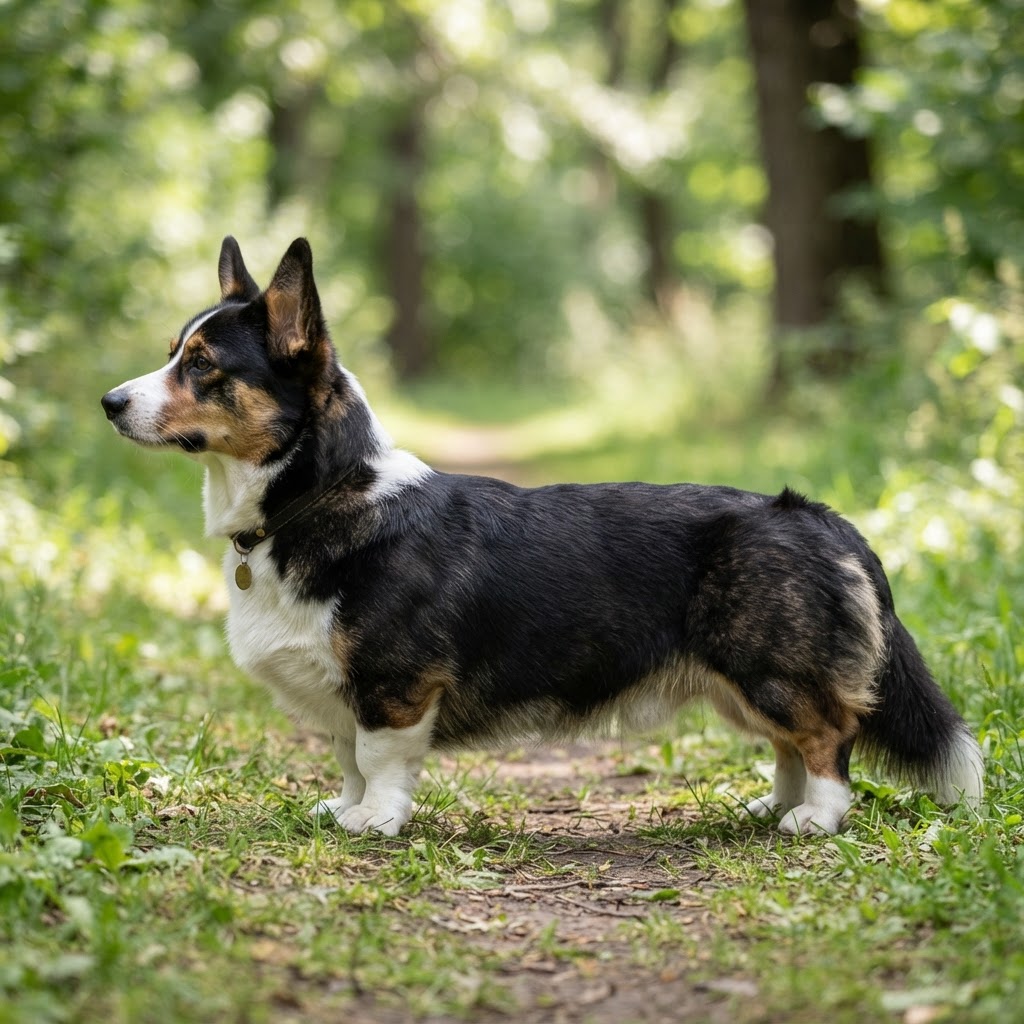
Welsh Corgi (Cardigan)
Male: 13.6-17.2 kg, Female: 11.3-15.4 kg
25-33 cm at the shoulder
12-15 years
Wales (Cardiganshire)
About the Welsh Corgi (Cardigan)
The Welsh Corgi (Cardigan) is one of the oldest Herding breeds, distinguished from its Pembroke cousin by its long, fox-like tail and slightly larger, more rounded ears. Originally developed in the rugged terrain of Cardiganshire, Wales, these 'yard-long dogs' were indispensable to farmers, using their low stature to nip at the heels of cattle while avoiding dangerous kicks. Unlike many herding breeds that require vast acreage, the Cardigan is remarkably adaptable, possessing a 'built-in off switch' that makes them excellent house companions. Physically, the Cardigan is a masterpiece of functional evolution, featuring a long body, short legs, and a surprisingly deep chest that houses a large heart and lungs for stamina. Their temperament is characterized by a deep devotion to their family, often acting as a watchful guardian. While they are highly intelligent and capable of advanced training, they retain a level of independence typical of dogs bred to work solo in the fields. They are sturdy, sensible dogs that provide the presence of a 'big dog in a small package'.
Breed Standard
Key characteristics from the breed standard
In the show ring, the Cardigan is defined by its powerful, low-slung silhouette and the unique 'wrap-around' front where the forearms curve slightly around the deep brisket. Their movement is a hallmark of the breed; it should be free and smooth, covering ground with minimal effort, showcasing great reach and drive. The fox-like brush tail is a vital distinguishing feature, carried low or slightly above the back line when moving. They possess a steadfast, 'work-ready' expression and a structural sturdiness that suggests they could still move a herd of cattle at a moment's notice, all while maintaining a dignified and composed ring presence.
In Australia
Following the formal separation of the Cardigan and Pembroke as distinct breeds by The Kennel Club (UK) in 1934, the Cardigan Welsh Corgi arrived in Australia in 1948, with the first documented import being a dog named Westfield Tydfil as noted by the Cardigan Welsh Corgi Association of NSW.
Bred For
Droving and herding cattle, farm guarding, and vermin hunting.
Temperament
Loyal, intelligent, alert, and affectionate, yet more reserved with strangers than the Pembroke.
Health Conditions Reported in the Breed
(), (), , and ().
Exercise Needs
Moderate daily activity including 45-60 minutes of walking, combined with mental stimulation such as herding trials or puzzle games.
Grooming Needs
Moderate; requires weekly brushing to manage the thick double coat, increasing to daily during seasonal shedding periods.
Living Suitability
Highly adaptable; suitable for apartment living if exercised daily, but thrives with a small yard. They are indoor dogs that require proximity to their family.
Good with Kids
Excellent with children, particularly those who respect their space. Their herding instinct may lead to occasional heel-nipping with very small, fast-moving children.
Good with Other Pets
Generally good with other household pets and dogs, though they can be slightly territorial or 'bossy' due to their herding background.
Trainability
Highly intelligent and eager to please, though they can possess a stubborn streak. They respond best to positive reinforcement and variety in training routines.
Coat & Colours
Double coat: short or medium length, hard-textured outer coat with a dense undercoat.. Any color, with or without white markings; common colors include brindle, blue merle, black, red, and sable.
Exercise needs vary by age, fitness, health, weather and individual temperament. Consult your veterinarian for an exercise plan appropriate for your dog.
Things to Consider
Every breed has its quirks — here's what to know
The Cardigan Welsh Corgi is predisposed to Intervertebral Disc Disease (IVDD) due to its long back and short legs; this means owners should be prepared to use ramps for furniture and avoid high-impact jumping to protect their spine. They are more likely to experience weight management challenges, as even a small amount of excess fat can significantly impact their joint health and spinal integrity—Majestik’s lean kangaroo options are excellent for keeping them trim. This breed is a 'frequent barker' by nature, serving as an alert guardian, so consistent training is needed if living in close quarters with neighbors. You will also encounter 'Corgi glitter'—heavy seasonal shedding from their dense double coat that requires frequent vacuuming and regular brushing. Like many herding breeds, they can be predisposed to minor skin irritations or hot spots if their thick coat isn't dried thoroughly after swimming or bathing. While they are highly intelligent, they can be more likely to show a stubborn independent streak during training, which is easily managed with patience and high-value rewards. These predispositions do not mean every Cardigan will face these issues, but being aware helps in providing the best preventive care.
Feeding Guide for Your Welsh Corgi (Cardigan)
Healthy Weight
11-17 kg
Daily Feeding Amount (general starting estimate)
280-420 grams
For an adult Cardigan, feed a fresh/raw diet calculated at 2-3% of their ideal body weight. Given their prone nature to weight gain, start at 2.5% and adjust based on activity level. Focus on lean proteins like kangaroo or beef to maintain a slim profile.
Feeding quantities are general starting estimates only. Individual needs vary with body condition, weight trends, age, health and activity. Ingredient percentages alone do not guarantee complete and balanced nutrition — consult a veterinarian for individualised dietary guidance.
Ingredient percentages alone do not guarantee complete and balanced nutrition. Seek veterinary or qualified canine nutrition guidance for individualised dietary advice. Raw feeding, specific proteins or fresh foods should not be presented as preventing, treating or managing breed health conditions without veterinary diagnosis and supervision.
Majestik's Recommended Feeding Approach
Breed Diet Notes
A high-protein, calorie-controlled diet to prevent obesity, which is critical for protecting the spine. Fresh, raw diets with high-quality proteins are highly beneficial.
Protein sources available from Majestik, such as Kangaroo, are ideal for this breed because it is exceptionally lean, helping to mitigate the risk of obesity which puts pressure on their long spines. Beef and Lamb provide essential fats for coat health, while White Fish can be added for Omega-3 fatty acids to support joint health. Include fiber-rich vegetables like steamed spinach or pumpkin to aid digestion and keep the dog feeling full without excess calories.
These are general breed-level notes only. The appropriate food and serving amount depend on the individual dog's age, health, body condition, activity and tolerance.
Majestik Recommendation
Majestik BARF meals follow our practical 70/10/10/10 approach: approximately 70% quality meat and protein ingredients, 10% edible bone, 10% vegetables and 10% offal. This gives customers a convenient fresh-food option without needing to source and portion every ingredient themselves.
Our Beef, Lamb and Roo BARF meals provide convenient fresh-food options, with suitable proteins chosen or rotated according to the individual dog.
Suitable for different needs
- Healthy adult: Majestik adult Beef, Lamb or Roo BARF meal.
- Puppy: Majestik Premium Puppy.
- Senior: Majestik Senior Blend.
- Working or highly active dog: Suitable Majestik adult meal with quantity adjusted to workload and body condition.
- Protein trial: One Majestik protein at a time.
Recommended Majestik BARF Meals


This is a practical starting recommendation for healthy dogs. Individual needs vary with age, health, body condition and activity.
Welsh Corgi (Cardigan) Feeding Calculator
Personalised raw and cooked feeding recommendations based on your dog's profile
Ideal — Ribs palpable without excess fat. Visible waist. Abdominal tuck present.
Have a question about your Welsh Corgi (Cardigan)? Dog Health AI
Why Majestik?
Fresh, raw pet food made with integrity in South Australia
Australian Made
Made in Two Wells, South Australia
Freshly Prepared
Real meat, organs, bone & wholefood ingredients
No Fillers
No cheap fillers or artificial preservatives
Family Owned
Locally owned and operated
Local Delivery
Delivery across Adelaide & selected areas
Secure Checkout
Secure payment via Shopify checkout
Subscribe & Save on Welsh Corgi (Cardigan) Meals
Get your Welsh Corgi (Cardigan)'s fresh and raw meals delivered every two or four weeks. Small subscriptions are combined into a four-week box. Pause, skip or cancel anytime.
Breed Records & Facts
Average Litter Size
4-6 puppies
Welsh Corgi (Cardigan) Owner Feedback
Real experiences and tips from Welsh Corgi (Cardigan) owners
No reviews yet
Be the first to share your experience with this breed
Other Small Breeds
References & Sources
Breed information verified against recognised breed authorities and veterinary evidence.