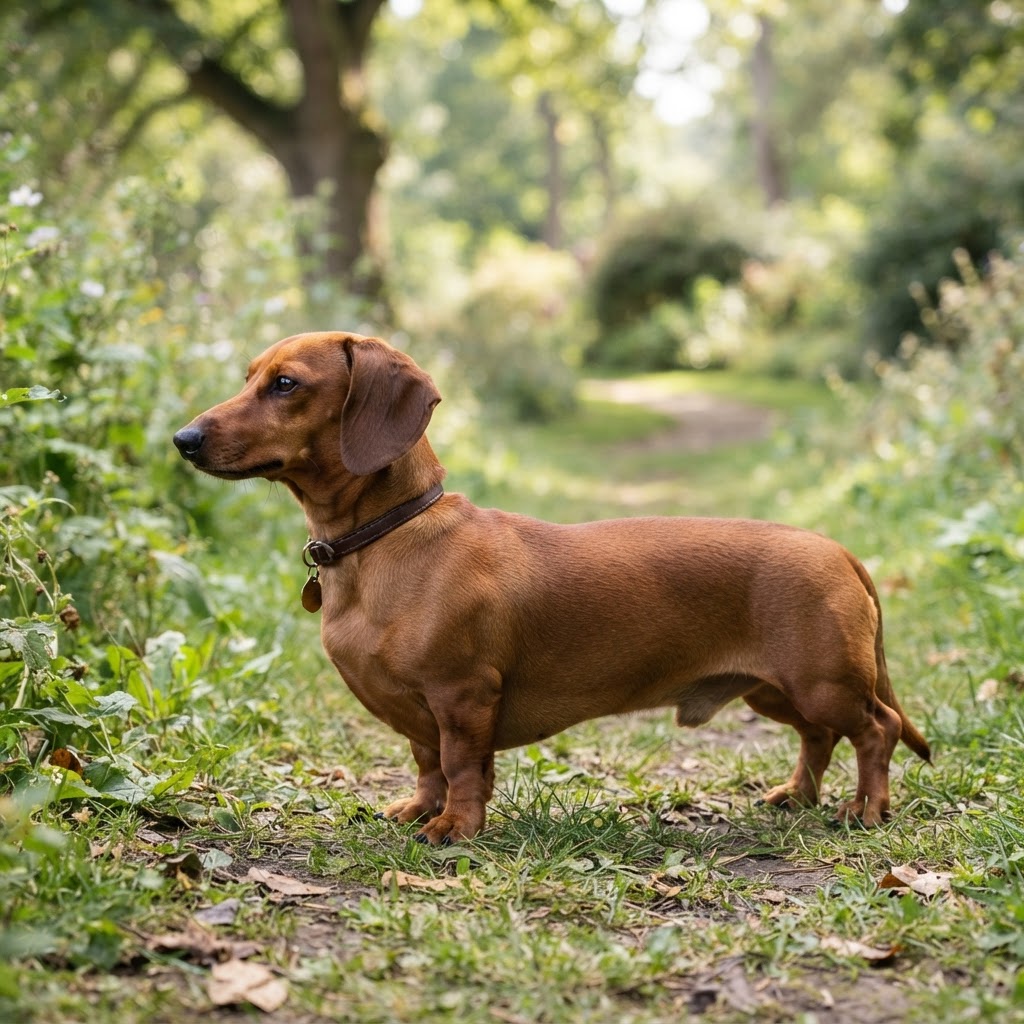
Dachshund
Standard: 9-12 kg; Miniature: 4.5-5 kg.
Standard: 20-23 cm; Miniature: 13-15 cm at the shoulder.
12-16 years
Germany
About the Dachshund
The Dachshund, affectionately known as the 'sausage dog,' is a uniquely proportioned hound of German origin. Characterized by its long body and short, sturdy legs, this breed was engineered for subterranean hunting, possessing a deep chest for lung capacity and large, paddle-shaped paws for efficient digging. Despite their small stature, they are fearless and independent, often exhibiting a tenacious spirit that reflects their history of facing formidable prey like badgers. In a domestic setting, Dachshunds are deeply loyal and form strong bonds with their families. They are highly alert and make excellent watchdogs, though their hound heritage means they possess a loud, persistent bark. Their intelligence is high, but they are notoriously independent thinkers, often requiring patient, positive-reinforcement training. Whether smooth, long, or wire-coated, they are charismatic companions that thrive on inclusion in family activities.
Breed Standard
Key characteristics from the breed standard
The Dachshund's silhouette is a masterclass in functional anatomy, featuring a long, level topline and a prominent breastbone that leads into a well-sprung ribcage. In the show ring, they must display a 'low-to-the-ground' carriage without appearing clumsy, moving with a fluid, reaching stride that covers ground effortlessly. Their expression is one of keen intelligence and bold defiance, which, when combined with their regal head carriage and symmetrical proportions, creates an aura of dignified bravery that is entirely unique to this subterranean specialist.
In Australia
The Dachshund was present in Australia in the late 19th century, with specimens recorded in historical publications as early as 1897 according to Walter Beilby in The Dog in Australasia, 1897. The Dachshund Club of New South Wales formed in 1939, and it is believed to promote and encourage the breeding and exhibition of Dachshunds.
Bred For
Originally bred to scent, chase, and flush out badgers (Standard size) and rabbits (Miniature size) from their underground dens.
Temperament
Clever, courageous, stubborn, lively, and devoted, often described as having a 'big dog' personality in a small body.
Health Conditions Reported in the Breed
(), (), obesity, , and dental overcrowding in miniatures.
Exercise Needs
Moderate; requires daily walks of 30-45 minutes but must avoid high-impact activities like jumping off furniture or climbing steep stairs to protect the spine.
Grooming Needs
Varies by coat type: Smooths require weekly brushing; Longhairs need daily brushing to prevent mats; Wirehairs require regular brushing and professional stripping twice a year.
Living Suitability
Excellent for apartment living due to their size, provided they have access to ramps for furniture and are not required to navigate frequent stairs.
Good with Kids
Good with older, respectful children; caution is required with toddlers to prevent accidental injury to the dog's sensitive spine.
Good with Other Pets
Generally good with other dogs; may have a high prey drive toward small pets like rabbits or guinea pigs.
Trainability
Moderate; intelligent but can be stubborn and independent, requiring consistent and creative training methods.
Coat & Colours
Three varieties: Smooth (short and dense), Long-haired (silky and wavy), and Wire-haired (rough with a beard and eyebrows).. Red, Black and Tan, Chocolate and Tan, Dapple (merle), Brindle, and Cream.
Exercise needs vary by age, fitness, health, weather and individual temperament. Consult your veterinarian for an exercise plan appropriate for your dog.
Things to Consider
Every breed has its quirks — here's what to know
The most significant consideration for a Dachshund owner is the predisposition to Intervertebral Disc Disease (IVDD). About one in four Dachshunds may experience spinal issues, so utilizing ramps and discouraging jumping is vital. They are also prone to weight management challenges; even a small amount of excess weight puts dangerous pressure on their vertebrae. Many Dachshunds are more likely to be vocal, using their loud hound bark to alert you to every passerby, which can be managed with consistent training. Their independent streak can make them somewhat stubborn during house training, but their devoted nature makes the effort worthwhile. Additionally, their floppy ears can be predisposed to moisture-trapping and infections, requiring regular cleaning, while their small mouths make them more likely to develop dental disease, highlighting the importance of raw meaty bones or regular dental care. This breed often experiences separation anxiety if left alone for long periods, but they thrive in homes where they are treated as an integral part of the pack.
Feeding Guide for Your Dachshund
Healthy Weight
Standard: 9-12 kg; Miniature: 4.5-5 kg
Daily Feeding Amount (general starting estimate)
Standard (10kg): 250-300g; Miniature (5kg): 125-150g
For a standard Dachshund (approx. 10kg), feed approximately 250-300g of fresh food daily. For a miniature (approx. 5kg), feed 125-150g. Adjust based on activity levels and body condition to ensure the ribs are easily felt but not seen.
Feeding quantities are general starting estimates only. Individual needs vary with body condition, weight trends, age, health and activity. Ingredient percentages alone do not guarantee complete and balanced nutrition — consult a veterinarian for individualised dietary guidance.
Ingredient percentages alone do not guarantee complete and balanced nutrition. Seek veterinary or qualified canine nutrition guidance for individualised dietary advice. Raw feeding, specific proteins or fresh foods should not be presented as preventing, treating or managing breed health conditions without veterinary diagnosis and supervision.
Majestik's Recommended Feeding Approach
Breed Diet Notes
A high-protein, low-fat diet is essential for maintaining lean muscle mass and preventing obesity, which is the primary contributor to spinal stress.
A lean raw diet is paramount for the Dachshund's back health. Majestik's Kangaroo or Lean Beef options are ideal protein sources to maintain a slim profile. Avoid high-calorie fillers. Including omega-3 fatty acids from fish can support joint health and coat shine, especially for Long-haired and Wire-haired varieties.
These are general breed-level notes only. The appropriate food and serving amount depend on the individual dog's age, health, body condition, activity and tolerance.
Majestik Recommendation
Majestik BARF meals follow our practical 70/10/10/10 approach: approximately 70% quality meat and protein ingredients, 10% edible bone, 10% vegetables and 10% offal. This gives customers a convenient fresh-food option without needing to source and portion every ingredient themselves.
Our Beef, Lamb and Roo BARF meals provide convenient fresh-food options, with suitable proteins chosen or rotated according to the individual dog.
Suitable for different needs
- Healthy adult: Majestik adult Beef, Lamb or Roo BARF meal.
- Puppy: Majestik Premium Puppy.
- Senior: Majestik Senior Blend.
- Working or highly active dog: Suitable Majestik adult meal with quantity adjusted to workload and body condition.
- Protein trial: One Majestik protein at a time.
Recommended Majestik BARF Meals


This is a practical starting recommendation for healthy dogs. Individual needs vary with age, health, body condition and activity.
Dachshund Feeding Calculator
Personalised raw and cooked feeding recommendations based on your dog's profile
Ideal — Ribs palpable without excess fat. Visible waist. Abdominal tuck present.
Have a question about your Dachshund? Dog Health AI
Why Majestik?
Fresh, raw pet food made with integrity in South Australia
Australian Made
Made in Two Wells, South Australia
Freshly Prepared
Real meat, organs, bone & wholefood ingredients
No Fillers
No cheap fillers or artificial preservatives
Family Owned
Locally owned and operated
Local Delivery
Delivery across Adelaide & selected areas
Secure Checkout
Secure payment via Shopify checkout
Subscribe & Save on Dachshund Meals
Get your Dachshund's fresh and raw meals delivered every two or four weeks. Small subscriptions are combined into a four-week box. Pause, skip or cancel anytime.
Breed Records & Facts
Oldest Recorded
21 years (Rocky)
Average Litter Size
4-8 puppies
Dachshund Owner Feedback
Real experiences and tips from Dachshund owners
No reviews yet
Be the first to share your experience with this breed
Other Small Breeds
References & Sources
Breed information verified against recognised breed authorities and veterinary evidence.