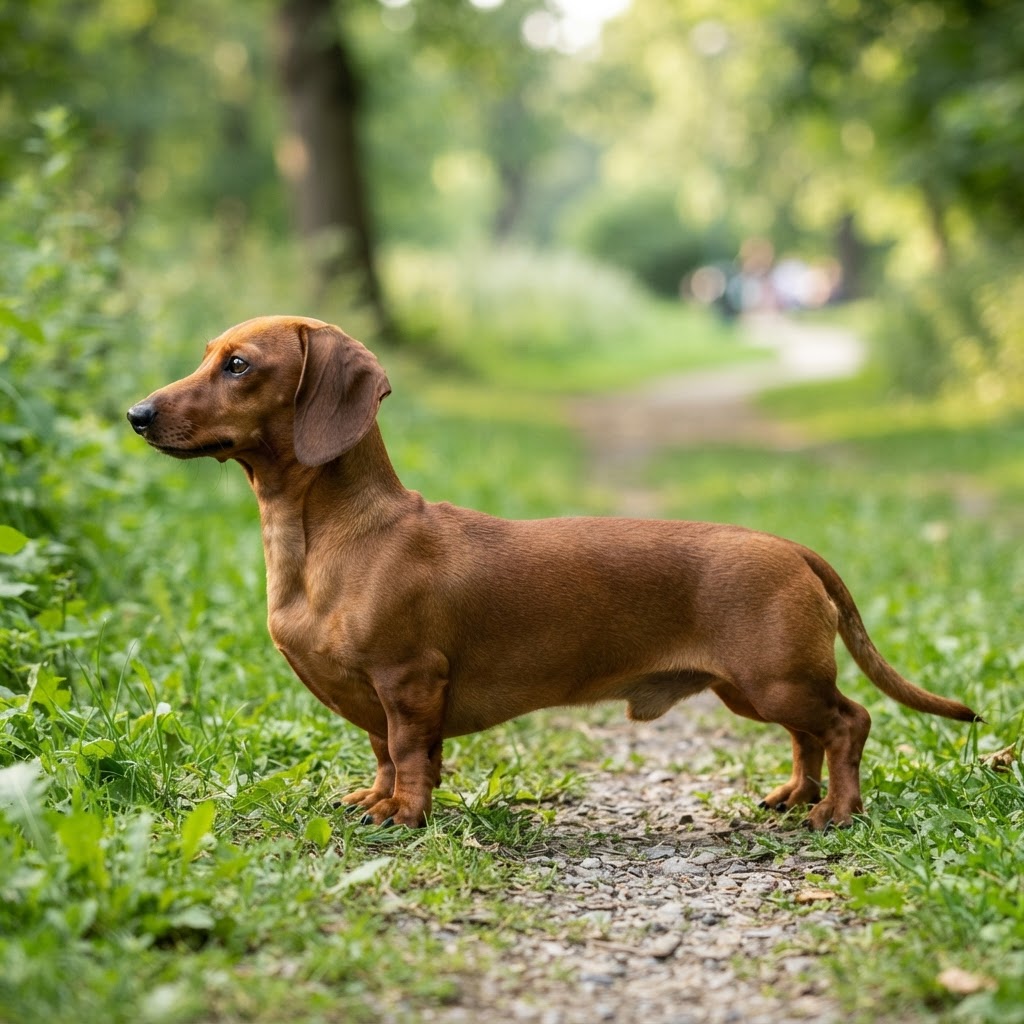
Dachshund (Miniature)
Male: 4.5-5.0 kg, Female: 4.5-5.0 kg
13-18 cm at the shoulder
12-16 years
Germany
About the Dachshund (Miniature)
The Miniature Dachshund is a distinctive, low-slung hound with a long body and short, sturdy legs, originally bred in Germany to navigate tight underground burrows. Despite their diminutive size, they possess an incredible amount of character and a loud, deep bark that belies their stature. They are highly intelligent but possess a characteristic independence that stems from their history as solitary hunters who had to make decisions deep in the earth without human guidance. In a modern Australian home, they are affectionate and deeply devoted companions who prefer to be at the center of family life. They are remarkably adaptable, fitting as easily into a city apartment as a country house, provided they are given adequate mental stimulation and gentle exercise. Their unique silhouette requires mindful management, particularly regarding weight and spinal care, but their spirited personality and 'clown-like' antics make them one of the most beloved breeds globally.
Breed Standard
Key characteristics from the breed standard
In the show ring, the Miniature Dachshund should present an elastic, free-flowing stride that covers significant ground despite their short limbs. The topline must remain strong and level during movement, never dipping or roaching. A high-quality coat, regardless of variety, should show a healthy luster, and the head should be long and tapering with an intelligent, alert expression.
In Australia
Dachshunds were present in Australia by the late 19th century, with the breed first appearing in the Melbourne show-ring in 1886. The first Australian club for the breed, the Dachshund Club of NSW, was formed in 1939. During the mid-20th century, the Miniature variety gained distinct registration status in Australia. This variety also gained distinct popularity in Australia during the mid-20th century, particularly following the Second World War, and was primarily utilized as a companion animal.
Bred For
Originally developed to hunt rabbits and other small burrow-dwelling animals that were too small for the Standard Dachshund to pursue.
Temperament
Clever, courageous, and loyal with a bold, sometimes stubborn streak; they are famously big dogs in small bodies.
Health Conditions Reported in the Breed
(), (), , obesity-related complications, and dental crowding.
Exercise Needs
Moderate; approximately 45-60 minutes of daily walking, though activity should be low-impact to protect the spine.
Grooming Needs
Varies by coat: Smooths need weekly brushing, Longhairs need daily brushing to prevent mats, and Wirehairs require regular stripping.
Living Suitability
Excellent for apartment living or small yards; they are indoor dogs that require protection from extreme heat and cold.
Good with Kids
Good with older, respectful children; can be wary of toddlers who may accidentally mishandle their sensitive backs.
Good with Other Pets
Generally good with other dogs, though they may display 'big dog' syndrome; high prey drive means caution with small pocket pets.
Trainability
Moderate; they are intelligent but can be independent and stubborn, requiring consistent, positive reinforcement-based training.
Coat & Colours
Three varieties: Smooth (short/dense), Longhaired (soft/wavy), and Wirehaired (rough/thick with beard).. Red, Cream, Black and Tan, Chocolate and Tan, Blue and Tan, Isabella and Tan; patterns include Dapple, Piebald, and Brindle.
Exercise needs vary by age, fitness, health, weather and individual temperament. Consult your veterinarian for an exercise plan appropriate for your dog.
Things to Consider
Every breed has its quirks — here's what to know
The most critical challenge is the risk of Intervertebral Disc Disease (IVDD); approximately 1 in 4 Dachshunds may be predisposed to spinal issues, making it vital to use ramps and avoid high jumping. This doesn't mean they are fragile, but they require a 'back-conscious' lifestyle. Many are prone to excessive barking and have a strong prey drive, meaning they may chase the neighborhood cat or dig in the garden if left bored. Miniature Dachshunds can be more likely to develop dental disease due to their small, crowded mouths, so regular teeth cleaning is a must. Some can also be predisposed to separation anxiety, as they are very 'people-oriented.' Dietary sensitivities can occur on standard kibbles, with many owners finding their dogs' skin and digestion thrive much better on a grain-free, fresh raw diet. They are also world-class beggars; their 'puppy dog eyes' are a breed trait, but keeping them lean is the kindest thing you can do for their long-term health.
Feeding Guide for Your Dachshund (Miniature)
Healthy Weight
4.5-5.0 kg
Daily Feeding Amount (general starting estimate)
90-150 grams
For a healthy Miniature Dachshund weighing 4.5-5.0 kg, a fresh/raw diet should consist of high-quality proteins like kangaroo or lean beef. Feed approximately 2-3% of their body weight daily, split into two meals. This equates to roughly 90g to 150g per day depending on activity level. Avoid high-filler diets that contribute to weight gain, as even a small amount of excess fat puts dangerous pressure on their elongated spine.
Feeding quantities are general starting estimates only. Individual needs vary with body condition, weight trends, age, health and activity. Ingredient percentages alone do not guarantee complete and balanced nutrition — consult a veterinarian for individualised dietary guidance.
Ingredient percentages alone do not guarantee complete and balanced nutrition. Seek veterinary or qualified canine nutrition guidance for individualised dietary advice. Raw feeding, specific proteins or fresh foods should not be presented as preventing, treating or managing breed health conditions without veterinary diagnosis and supervision.
Majestik's Recommended Feeding Approach
Breed Diet Notes
Fresh or raw feeding should not be presented as preventing or treating a medical condition. Discuss diagnosis and dietary management with your veterinarian.
A Miniature Dachshund thrives on a varied protein rotation available from Majestik Pet Food, such as Kangaroo (excellent for weight management), Beef, and Lamb. Inclusion of low-glycemic vegetables like spinach or broccoli provides essential fibre without excessive calories. Given their susceptibility to dental issues, occasionally offering small, soft raw bones or using a natural dental supplement is beneficial.
These are general breed-level notes only. The appropriate food and serving amount depend on the individual dog's age, health, body condition, activity and tolerance.
Majestik Recommendation
Majestik BARF meals follow our practical 70/10/10/10 approach: approximately 70% quality meat and protein ingredients, 10% edible bone, 10% vegetables and 10% offal. This gives customers a convenient fresh-food option without needing to source and portion every ingredient themselves.
Our Beef, Lamb and Roo BARF meals provide convenient fresh-food options, with suitable proteins chosen or rotated according to the individual dog.
Suitable for different needs
- Healthy adult: Majestik adult Beef, Lamb or Roo BARF meal.
- Puppy: Majestik Premium Puppy.
- Senior: Majestik Senior Blend.
- Working or highly active dog: Suitable Majestik adult meal with quantity adjusted to workload and body condition.
- Protein trial: One Majestik protein at a time.
Recommended Majestik BARF Meals


This is a practical starting recommendation for healthy dogs. Individual needs vary with age, health, body condition and activity.
Dachshund (Miniature) Feeding Calculator
Personalised raw and cooked feeding recommendations based on your dog's profile
Ideal — Ribs palpable without excess fat. Visible waist. Abdominal tuck present.
Have a question about your Dachshund (Miniature)? Dog Health AI
Why Majestik?
Fresh, raw pet food made with integrity in South Australia
Australian Made
Made in Two Wells, South Australia
Freshly Prepared
Real meat, organs, bone & wholefood ingredients
No Fillers
No cheap fillers or artificial preservatives
Family Owned
Locally owned and operated
Local Delivery
Delivery across Adelaide & selected areas
Secure Checkout
Secure payment via Shopify checkout
Subscribe & Save on Dachshund (Miniature) Meals
Get your Dachshund (Miniature)'s fresh and raw meals delivered every two or four weeks. Small subscriptions are combined into a four-week box. Pause, skip or cancel anytime.
Breed Records & Facts
Oldest Recorded
21 years (Chanel)
Average Litter Size
3-4 puppies
Dachshund (Miniature) Owner Feedback
Real experiences and tips from Dachshund (Miniature) owners
No reviews yet
Be the first to share your experience with this breed
Other Small Breeds
References & Sources
Breed information verified against recognised breed authorities and veterinary evidence.