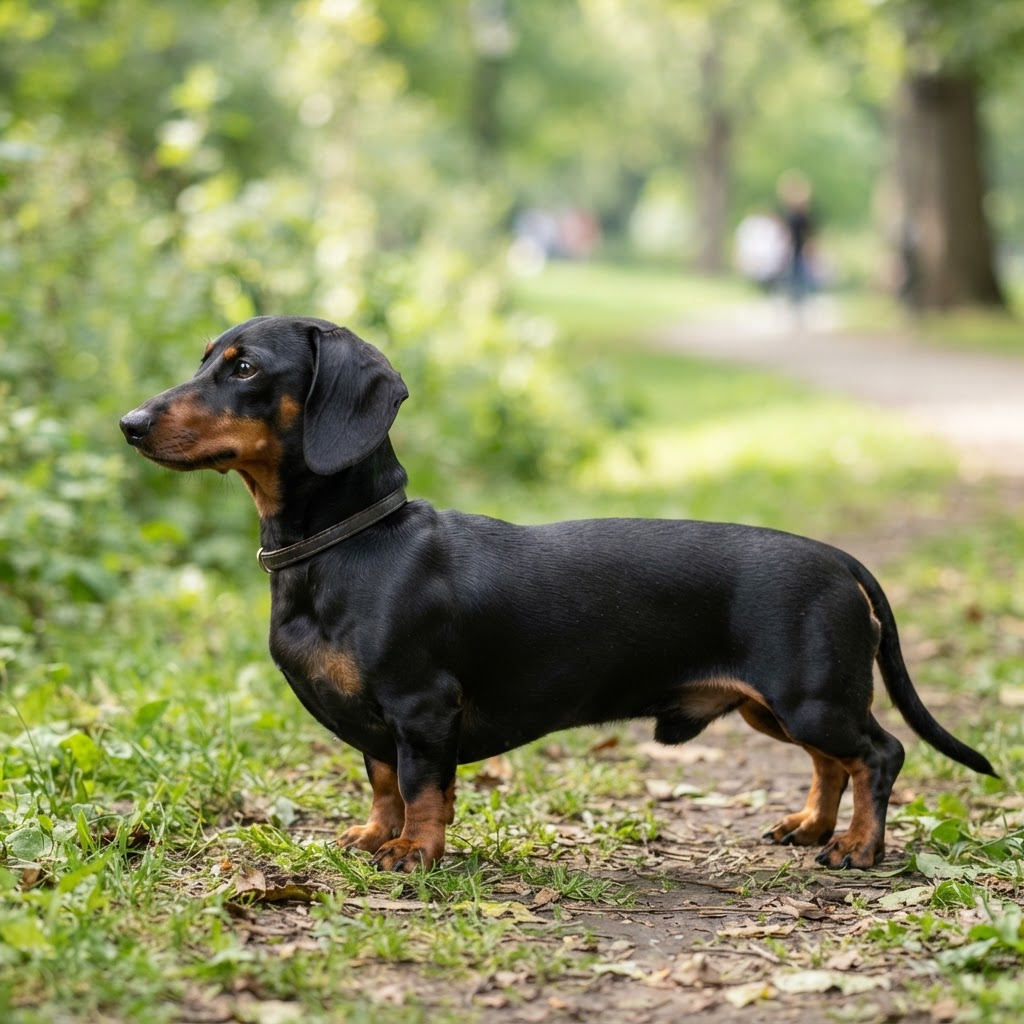
Dachshund (Standard)
9-12 kg
20-25 cm at the shoulder
12-16 years
Germany
About the Dachshund (Standard)
The Standard Dachshund is a quintessential 'earth dog' characterized by its elongated body and short, sturdy legs, a morphology specifically evolved for navigating underground tunnels. Despite their low stature, they possess a deep chest providing ample lung capacity for endurance and a surprisingly loud, resonant bark used to alert hunters from beneath the ground. They are members of the Hound group, blending the scenting ability of a bloodhound with the tenacity of a terrier. In a domestic setting, the Dachshund is a devoted companion known for its 'big dog' personality trapped in a small frame. They are deeply loyal to their families but can be wary of strangers and exhibit a stubborn streak that reflects their independent hunting heritage. Their unique silhouette requires specific lifestyle considerations, particularly regarding spinal health, but their spirited nature and affectionate disposition make them one of the most popular breeds globally.
Breed Standard
Key characteristics from the breed standard
In the show ring, the Dachshund must display a proud carriage with a head held high and an intelligent, alert expression. The topline should be as straight as possible, flowing into a slightly arched loin. Movement is the breed's 'litmus test'—it should be fluid, smooth, and ground-covering, with the legs reaching well forward without lifting too high. No other breed captures this specific paradox of aristocratic beauty and rugged functionalism.
In Australia
The Dachshund was present in Australia in the late 19th century, with specimens recorded in Walter Beilby's 'The Dog in Australasia' in 1897. The first breed-specific organisation for the breed in Australia was the Dachshund Club of New South Wales, which was officially formed in 1939. This club was established to promote the breed and standardise breeding practices according to official breed standards.
Bred For
Originally developed to scent, chase, and flush out badgers and other burrow-dwelling animals.
Temperament
Clever, lively, courageous to the point of rashness, and persevering; possesses a keen sense of smell and a loyal, independent nature.
Health Conditions Reported in the Breed
(), obesity, (), , and .
Exercise Needs
Moderate; approximately 45–60 minutes of daily walking on flat terrain is recommended to maintain muscle tone without overstressing the spine.
Grooming Needs
Varies by coat: Smooths require weekly brushing; Longhairs need daily brushing to prevent mats; Wirehairs require regular stripping and beard maintenance.
Living Suitability
Well-suited to apartment living or small yards, provided they are not required to navigate frequent stairs which can damage their spines.
Good with Kids
Generally good with older, respectful children; supervision is required to ensure children do not pick them up incorrectly or cause back strain.
Good with Other Pets
Usually good with other dogs, though they may display a high prey drive toward small pets like rabbits or guinea pigs due to their hunting history.
Trainability
Highly intelligent but famously independent and stubborn; they respond best to consistent, positive reinforcement and may take longer to house-train.
Coat & Colours
Three varieties: Smooth (short, dense), Long-haired (silky, wavy), and Wire-haired (harsh, thick with undercoat).. Red, black and tan, dapple (merle), chocolate and tan, cream, and wild boar (common in Wirehairs).
Exercise needs vary by age, fitness, health, weather and individual temperament. Consult your veterinarian for an exercise plan appropriate for your dog.
Things to Consider
Every breed has its quirks — here's what to know
The most significant consideration for a Dachshund owner is Intervertebral Disc Disease (IVDD); their long spines are predisposed to herniated discs, meaning jumping off furniture or using stairs should be strictly managed with ramps. They can be more likely to develop dental disease due to their long, narrow jaws, so raw meaty bones or regular cleaning are vital. Many Dachshunds are predisposed to being very vocal, often alerting you to every passerby with a bark much larger than their size. They can also be quite independent or 'stubborn' during training—this is just their hunting brain at work, so patience and high-value treats are your best friends. Lastly, they are prone to obesity, and even half a kilogram of extra weight can significantly increase the risk of spinal injury; keeping them lean is the kindest thing an owner can do. These quirks are simply part of the 'wiener dog' charm, and with a bit of environmental management like ramps and a firm hand in training, they are incredibly rewarding companions.
Feeding Guide for Your Dachshund (Standard)
Healthy Weight
9-12 kg
Daily Feeding Amount (general starting estimate)
200-360 grams
Standard Dachshunds thrive on a fresh, raw diet that prioritizes lean proteins to avoid unnecessary weight gain. For an adult dog at a healthy weight of 10kg, we recommend approximately 200g to 300g of fresh food daily (2-3% of body weight), adjusted for activity levels.
Feeding quantities are general starting estimates only. Individual needs vary with body condition, weight trends, age, health and activity. Ingredient percentages alone do not guarantee complete and balanced nutrition — consult a veterinarian for individualised dietary guidance.
Ingredient percentages alone do not guarantee complete and balanced nutrition. Seek veterinary or qualified canine nutrition guidance for individualised dietary advice. Raw feeding, specific proteins or fresh foods should not be presented as preventing, treating or managing breed health conditions without veterinary diagnosis and supervision.
Majestik's Recommended Feeding Approach
Breed Diet Notes
A high-protein, calorie-controlled diet is essential to maintain lean muscle mass and prevent obesity, which is the primary risk factor for spinal stress.
The ideal diet for a Standard Dachshund focuses on weight management and joint support. We recommend Majestik's lean Kangaroo or Beef as primary protein sources to maintain a lean physique. Inclusion of omega-3 fatty acids from fish or green-lipped mussel is highly beneficial for anti-inflammatory support of the intervertebral discs.
These are general breed-level notes only. The appropriate food and serving amount depend on the individual dog's age, health, body condition, activity and tolerance.
Majestik Recommendation
Majestik BARF meals follow our practical 70/10/10/10 approach: approximately 70% quality meat and protein ingredients, 10% edible bone, 10% vegetables and 10% offal. This gives customers a convenient fresh-food option without needing to source and portion every ingredient themselves.
Our Beef, Lamb and Roo BARF meals provide convenient fresh-food options, with suitable proteins chosen or rotated according to the individual dog.
Suitable for different needs
- Healthy adult: Majestik adult Beef, Lamb or Roo BARF meal.
- Puppy: Majestik Premium Puppy.
- Senior: Majestik Senior Blend.
- Working or highly active dog: Suitable Majestik adult meal with quantity adjusted to workload and body condition.
- Protein trial: One Majestik protein at a time.
Recommended Majestik BARF Meals


This is a practical starting recommendation for healthy dogs. Individual needs vary with age, health, body condition and activity.
Dachshund (Standard) Feeding Calculator
Personalised raw and cooked feeding recommendations based on your dog's profile
Ideal — Ribs palpable without excess fat. Visible waist. Abdominal tuck present.
Have a question about your Dachshund (Standard)? Dog Health AI
Why Majestik?
Fresh, raw pet food made with integrity in South Australia
Australian Made
Made in Two Wells, South Australia
Freshly Prepared
Real meat, organs, bone & wholefood ingredients
No Fillers
No cheap fillers or artificial preservatives
Family Owned
Locally owned and operated
Local Delivery
Delivery across Adelaide & selected areas
Secure Checkout
Secure payment via Shopify checkout
Subscribe & Save on Dachshund (Standard) Meals
Get your Dachshund (Standard)'s fresh and raw meals delivered every two or four weeks. Small subscriptions are combined into a four-week box. Pause, skip or cancel anytime.
Breed Records & Facts
Oldest Recorded
Chanel, a Dachshund who reached 21 years of age.
Average Litter Size
4-8 puppies
Dachshund (Standard) Owner Feedback
Real experiences and tips from Dachshund (Standard) owners
No reviews yet
Be the first to share your experience with this breed
Other Small Breeds
References & Sources
Breed information verified against recognised breed authorities and veterinary evidence.