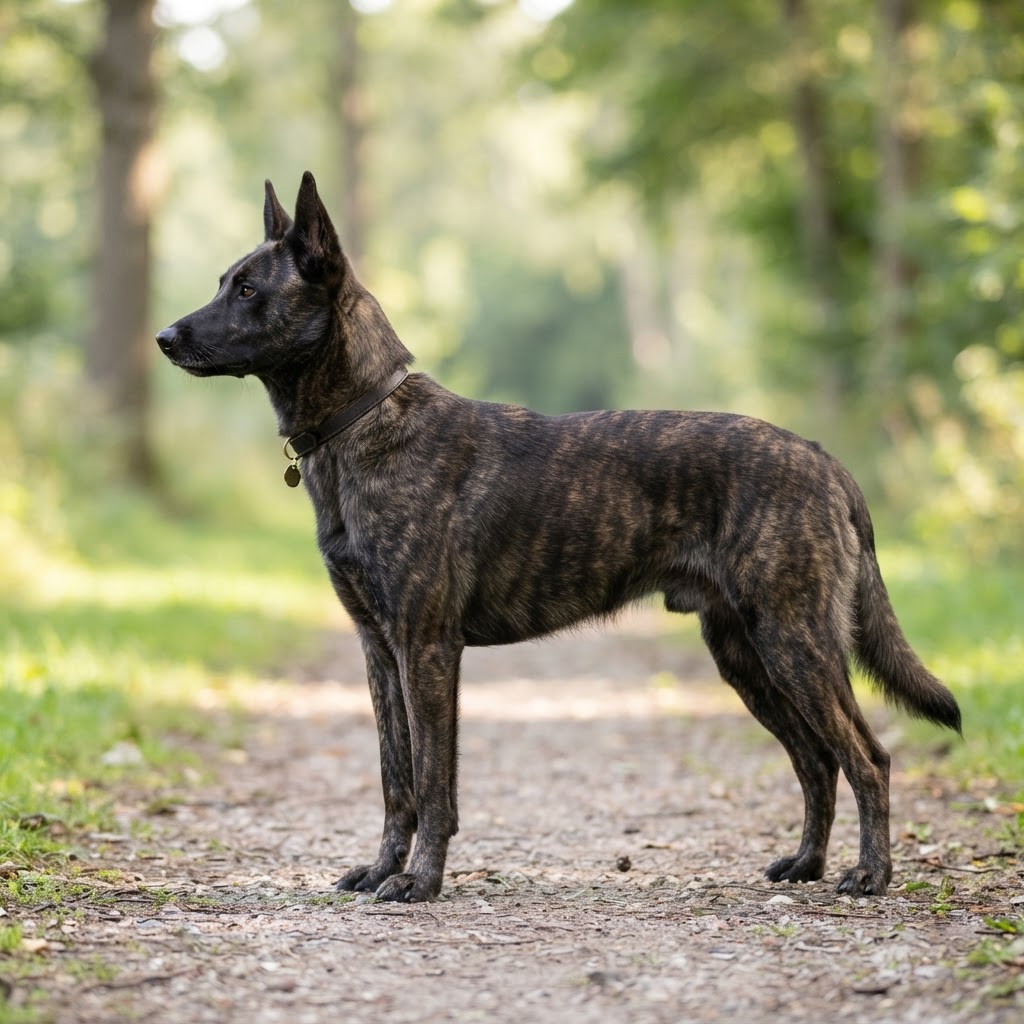
Dutch Shepherd Dog
Male: 28-32 kg, Female: 23-28 kg
Male: 57-62 cm, Female: 55-60 cm at the shoulder
12-15 years
Netherlands
About the Dutch Shepherd Dog
The Dutch Shepherd is a versatile, athletic working dog that originated in the Netherlands. Distinguishable from its German and Belgian cousins by its striking brindle coat, it was developed to be an adaptable farm hand. Unlike many modern breeds, the Dutch Shepherd has retained its rugged working ability and high intelligence, making it a favorite for search and rescue, police work, and competitive dog sports. Physically, the breed is well-muscled and symmetrical, built for endurance and agility rather than bulk. They are known for their unwavering loyalty to their family and an innate ability to distinguish between a friend and a threat. Because of their high drive and sharp mind, they thrive when given a 'job' to do and require an owner who understands the nuances of working-dog behavior.
Breed Standard
Key characteristics from the breed standard
In the show ring, the Dutch Shepherd is celebrated for its 'no-nonsense' utility and powerful, effortless gait. The brindle pattern—whether silver or golden—must be clearly defined, creating a depth of coat that is unique to this breed. Unlike the more exaggerated slopes seen in some working breeds, the Dutch Shepherd maintains a level topline and a sturdy, square-ish silhouette that denotes functional agility. Their expression is one of extreme alertness; a 'keen' look that suggests they are always evaluating their surroundings.
Bred For
Originally bred as an all-purpose farm dog for herding sheep, guarding property, and pulling carts.
Temperament
Intelligent, alert, loyal, reliable, and highly observant with a strong work ethic.
Health Conditions Reported in the Breed
Hip and , Goniodysplasia (specifically in the rough-haired variety), and ().
Grooming Needs
Varies by coat type: Short-haired needs occasional brushing; Long-haired requires weekly grooming; Rough-haired needs professional plucking twice a year.
Living Suitability
Not recommended for apartments. They thrive in homes with a large, secure yard or acreage where they can burn off energy.
Good with Kids
Generally good with children in their own family, especially when raised together, but their high energy and herding instincts mean they are best suited for older, dog-savvy children.
Good with Other Pets
Can coexist well with other dogs if socialized early; however, they may have a high prey drive toward smaller animals like cats or rabbits.
Trainability
Highly intelligent and eager to work, but requires a firm, consistent, and creative trainer to prevent boredom and independent behavior.
Coat & Colours
Three varieties: Short-haired (with woolly undercoat), Long-haired (straight, harsh), and Rough-haired (thick, tousled, woolly undercoat).. Brindle (golden or silver) is the only permitted color pattern in the breed standard.
Exercise needs vary by age, fitness, health, weather and individual temperament. Consult your veterinarian for an exercise plan appropriate for your dog.
Things to Consider
Every breed has its quirks — here's what to know
Dutch Shepherds are prone to hip and elbow dysplasia, so keeping them at a lean weight is crucial to protect their joints. This doesn't mean every dog will have issues, but it is a predisposition to monitor. They are also more likely to experience separation anxiety if left alone for long periods without mental engagement, as they are deeply bonded to their 'pack.' Their high prey drive is a characteristic of their working heritage; they may be prone to chasing moving objects like cyclists or small animals, which requires diligent training and secure fencing. Like many shepherd breeds, they can be more likely to have a sensitive digestive system, often reacting to fillers or high-carb commercial kibble with gas or loose stools. Many owners find they thrive on a fresh, species-appropriate diet that avoids common allergens. They are moderate shedders, particularly during seasonal changes, requiring consistent brushing to manage the undercoat blow.
Feeding Guide for Your Dutch Shepherd Dog
Healthy Weight
23-32 kg
Daily Feeding Amount (general starting estimate)
600-950 grams
For an adult Dutch Shepherd, a fresh or raw diet should consist of approximately 2-3% of their ideal body weight daily. For a 30kg dog, this equates to 600g to 900g per day, adjusted based on activity level and metabolism. Focus on high-quality animal proteins, crushed bone, and organ meats.
Feeding quantities are general starting estimates only. Individual needs vary with body condition, weight trends, age, health and activity. Ingredient percentages alone do not guarantee complete and balanced nutrition — consult a veterinarian for individualised dietary guidance.
Ingredient percentages alone do not guarantee complete and balanced nutrition. Seek veterinary or qualified canine nutrition guidance for individualised dietary advice. Raw feeding, specific proteins or fresh foods should not be presented as preventing, treating or managing breed health conditions without veterinary diagnosis and supervision.
Majestik's Recommended Feeding Approach
Breed Diet Notes
A high-protein, nutrient-dense diet suited for high-energy working breeds, with a focus on lean proteins and essential fatty acids for joint and coat health.
The ideal raw diet for a Dutch Shepherd centers on lean, high-performance proteins available from Majestik Pet Food, such as Kangaroo or Beef. Given their susceptibility to joint issues, including green-lipped mussel or fish oil for Omega-3 fatty acids is highly recommended. For the rough-haired variety, ensuring adequate zinc and biotin through fresh organ meats helps maintain the unique coat texture.
These are general breed-level notes only. The appropriate food and serving amount depend on the individual dog's age, health, body condition, activity and tolerance.
Majestik Recommendation
Majestik BARF meals follow our practical 70/10/10/10 approach: approximately 70% quality meat and protein ingredients, 10% edible bone, 10% vegetables and 10% offal. This gives customers a convenient fresh-food option without needing to source and portion every ingredient themselves.
Our Beef, Lamb and Roo BARF meals provide convenient fresh-food options, with suitable proteins chosen or rotated according to the individual dog.
Suitable for different needs
- Healthy adult: Majestik adult Beef, Lamb or Roo BARF meal.
- Puppy: Majestik Premium Puppy.
- Senior: Majestik Senior Blend.
- Working or highly active dog: Suitable Majestik adult meal with quantity adjusted to workload and body condition.
- Protein trial: One Majestik protein at a time.
Recommended Majestik BARF Meals


This is a practical starting recommendation for healthy dogs. Individual needs vary with age, health, body condition and activity.
Dutch Shepherd Dog Feeding Calculator
Personalised raw and cooked feeding recommendations based on your dog's profile
Ideal — Ribs palpable without excess fat. Visible waist. Abdominal tuck present.
Have a question about your Dutch Shepherd Dog? Dog Health AI
Why Majestik?
Fresh, raw pet food made with integrity in South Australia
Australian Made
Made in Two Wells, South Australia
Freshly Prepared
Real meat, organs, bone & wholefood ingredients
No Fillers
No cheap fillers or artificial preservatives
Family Owned
Locally owned and operated
Local Delivery
Delivery across Adelaide & selected areas
Secure Checkout
Secure payment via Shopify checkout
Subscribe & Save on Dutch Shepherd Dog Meals
Get your Dutch Shepherd Dog's fresh and raw meals delivered every two or four weeks. Small subscriptions are combined into a four-week box. Pause, skip or cancel anytime.
Breed Records & Facts
Average Litter Size
6-10 puppies
Dutch Shepherd Dog Owner Feedback
Real experiences and tips from Dutch Shepherd Dog owners
No reviews yet
Be the first to share your experience with this breed
Other Medium Breeds
References & Sources
Breed information verified against recognised breed authorities and veterinary evidence.