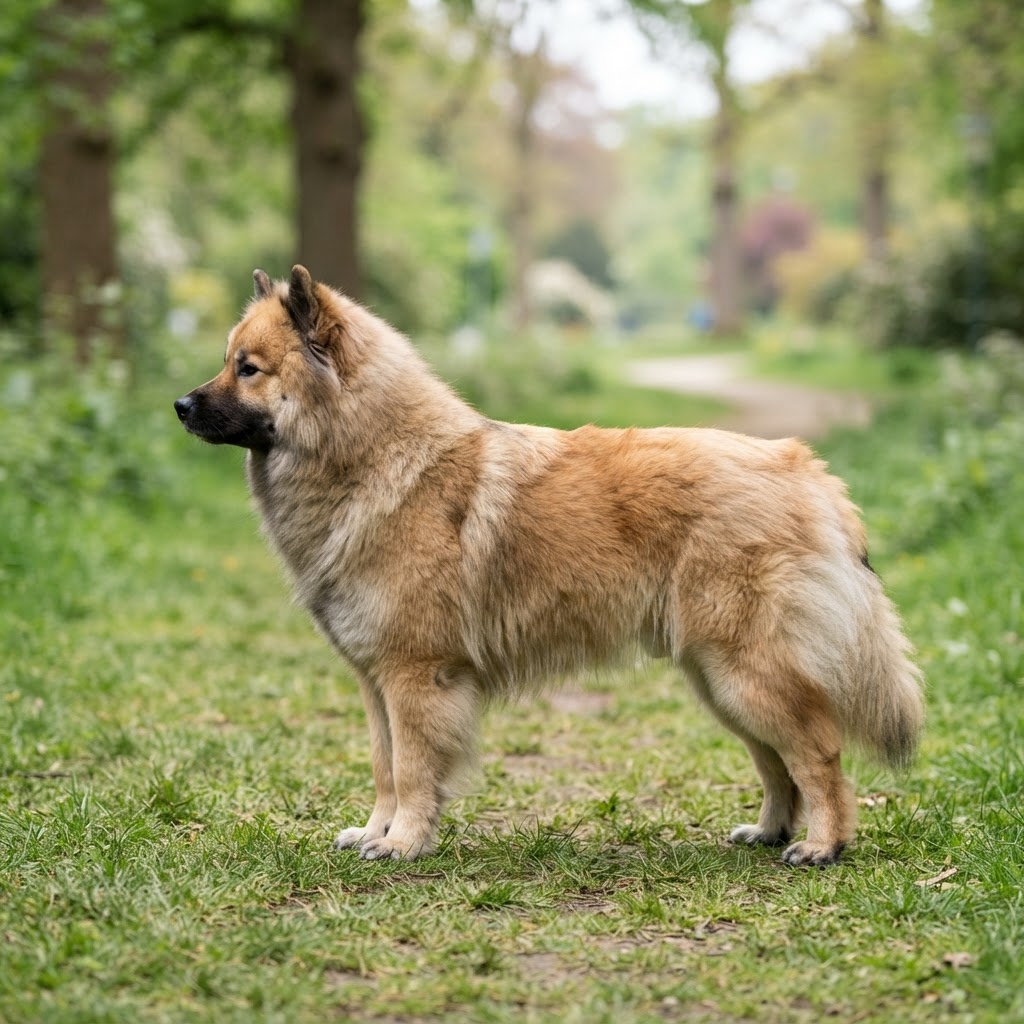
Eurasier
Male: 23-32 kg, Female: 18-26 kg
Male: 52-60 cm, Female: 48-56 cm
12-15 years
Weinheim, Germany
About the Eurasier
The Eurasier is a relatively modern breed, originating in Germany in the 1960s through the efforts of Julius Wipfel, who sought to create a dog with the social intelligence and adaptability of the Wolfspitz and the dignified, loyal nature of the Chow Chow. Later, the introduction of Samoyed blood added a touch of elegance and a friendlier disposition, resulting in a medium-sized spitz-type dog that is aesthetically striking and temperamentally ideal for domestic life. Physically, the Eurasier is well-balanced and sturdy, characterized by its plush double coat and a tail carried over the back. Unlike many other spitz breeds, they were never intended for hunting or guarding, which is reflected in their low prey drive and lack of unprovoked aggression. They are 'social' dogs in the sense that they crave constant human presence and are known for their remarkable sensitivity to the emotions of their owners, making them exceptional companions for those who can include them in all aspects of daily life.
Breed Standard
Key characteristics from the breed standard
In the show ring, the Eurasier stands out with its harmonious proportions and dignified, 'aloof' spitz silhouette. Judges look for a coat that is thick but not so long it obscures the body's outline, and a tongue that can be pink, blue-black, or spotted. Their movement should be ground-covering and easy, showing a balanced reach and drive.
In Australia
The Eurasier is officially recognized by Dogs Australia, which was formerly known as the Australian National Kennel Council.
Bred For
Developed specifically as a family companion dog, combining the best traits of the Wolfspitz, Chow Chow, and later the Samoyed.
Temperament
Confident, calm, and even-tempered; typically reserved toward strangers without being aggressive; deeply bonded to their family.
Health Conditions Reported in the Breed
, , , and ophthalmic conditions such as , , and .
Exercise Needs
Daily walks and mental stimulation are required, totalling approximately 60-90 minutes; they enjoy varied activities but do not have an extreme 'working' drive.
Grooming Needs
Regular brushing (once or twice weekly) is required to maintain the double coat, increasing to daily during seasonal shedding periods; minimal bathing is needed as the coat is somewhat self-cleaning.
Living Suitability
They can adapt to apartment living if sufficiently exercised, but they thrive best in a home with a small to medium-sized yard. Their primary requirement is being indoors with their family.
Good with Kids
Generally excellent with children, particularly those within their own family, showing great patience and a gentle nature.
Good with Other Pets
Usually good with other household pets if socialized early; they tend to be indifferent rather than aggressive toward other dogs.
Trainability
Highly intelligent and quick to learn, but they are sensitive to harsh corrections; they respond best to positive reinforcement and a calm, consistent approach.
Coat & Colours
Thick undercoat with a medium-long, loose-lying guard hair over the whole body; short hair on the muzzle and face.. All colors and color combinations are permitted except for pure white, white patches, or liver color.
Exercise needs vary by age, fitness, health, weather and individual temperament. Consult your veterinarian for an exercise plan appropriate for your dog.
Things to Consider
Every breed has its quirks — here's what to know
Prospective owners should be aware that Eurasiers are predisposed to seasonal 'coat blows' where they shed their undercoat in large quantities; this doesn't mean they are difficult to keep, but it does require extra vacuuming and grooming during these periods. They are also prone to separation anxiety because they are so deeply bonded to their humans; they are more likely to thrive in homes where they aren't left alone for long stretches. While generally healthy, they can be susceptible to joint issues like hip dysplasia and patellar luxation, so maintaining a lean weight with a fresh food diet is a great preventative measure. Some Eurasiers may also develop eye irritations like distichiasis (extra eyelashes), which can require veterinary monitoring. Finally, their natural reserve with strangers is a hallmark of the breed—this isn't shyness, but rather a preference for 'evaluating' new people before offering their trust, a quirk that many owners find quite endearing.
Feeding Guide for Your Eurasier
Healthy Weight
18-32 kg
Daily Feeding Amount (general starting estimate)
500-800 grams
For a healthy adult Eurasier, a fresh or raw diet should consist of approximately 2-3% of their ideal body weight daily. For an average 25kg dog, this equates to 500g to 750g per day. This should be divided into two meals to support steady digestion and energy levels.
Feeding quantities are general starting estimates only. Individual needs vary with body condition, weight trends, age, health and activity. Ingredient percentages alone do not guarantee complete and balanced nutrition — consult a veterinarian for individualised dietary guidance.
Ingredient percentages alone do not guarantee complete and balanced nutrition. Seek veterinary or qualified canine nutrition guidance for individualised dietary advice. Raw feeding, specific proteins or fresh foods should not be presented as preventing, treating or managing breed health conditions without veterinary diagnosis and supervision.
Majestik's Recommended Feeding Approach
Breed Diet Notes
A high-quality, nutrient-dense diet rich in lean proteins and omega-3 fatty acids to support their thick double coat and maintain joint health.
The ideal diet for a Eurasier focuses on high-quality Australian proteins like Kangaroo and Beef for lean muscle maintenance, and Lamb for healthy fats that nourish their thick coat. Adding steamed green vegetables or blueberries can provide antioxidants. Because they can be prone to hypothyroidism, ensuring a diet rich in natural iodine sources like kelp is beneficial.
These are general breed-level notes only. The appropriate food and serving amount depend on the individual dog's age, health, body condition, activity and tolerance.
Majestik Recommendation
Majestik BARF meals follow our practical 70/10/10/10 approach: approximately 70% quality meat and protein ingredients, 10% edible bone, 10% vegetables and 10% offal. This gives customers a convenient fresh-food option without needing to source and portion every ingredient themselves.
Our Beef, Lamb and Roo BARF meals provide convenient fresh-food options, with suitable proteins chosen or rotated according to the individual dog.
Suitable for different needs
- Healthy adult: Majestik adult Beef, Lamb or Roo BARF meal.
- Puppy: Majestik Premium Puppy.
- Senior: Majestik Senior Blend.
- Working or highly active dog: Suitable Majestik adult meal with quantity adjusted to workload and body condition.
- Protein trial: One Majestik protein at a time.
Recommended Majestik BARF Meals


This is a practical starting recommendation for healthy dogs. Individual needs vary with age, health, body condition and activity.
Eurasier Feeding Calculator
Personalised raw and cooked feeding recommendations based on your dog's profile
Ideal — Ribs palpable without excess fat. Visible waist. Abdominal tuck present.
Have a question about your Eurasier? Dog Health AI
Why Majestik?
Fresh, raw pet food made with integrity in South Australia
Australian Made
Made in Two Wells, South Australia
Freshly Prepared
Real meat, organs, bone & wholefood ingredients
No Fillers
No cheap fillers or artificial preservatives
Family Owned
Locally owned and operated
Local Delivery
Delivery across Adelaide & selected areas
Secure Checkout
Secure payment via Shopify checkout
Subscribe & Save on Eurasier Meals
Get your Eurasier's fresh and raw meals delivered every two or four weeks. Small subscriptions are combined into a four-week box. Pause, skip or cancel anytime.
Breed Records & Facts
Average Litter Size
4-8 puppies
Eurasier Owner Feedback
Real experiences and tips from Eurasier owners
No reviews yet
Be the first to share your experience with this breed
Other Medium Breeds
References & Sources
Breed information verified against recognised breed authorities and veterinary evidence.