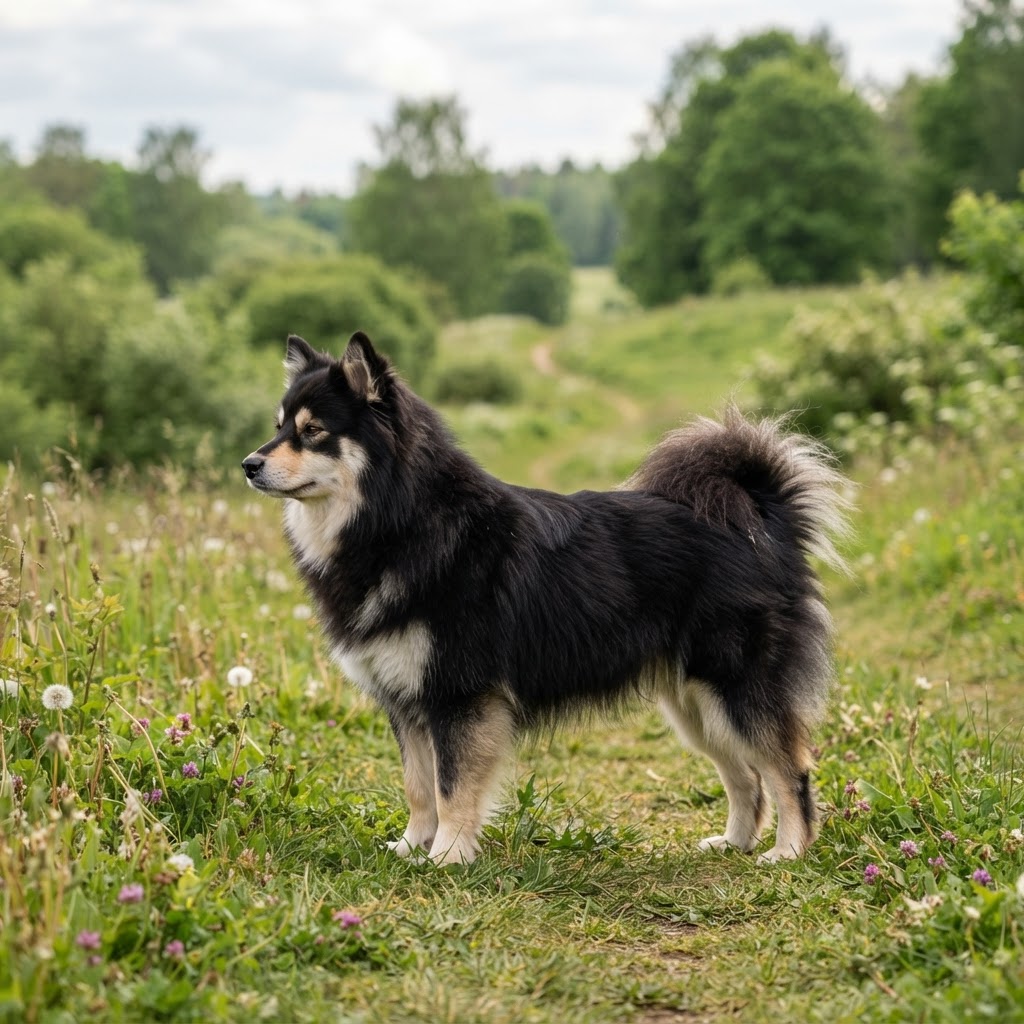
Finnish Lapphund
Male: 18-24 kg, Female: 15-20 kg
Male: 46-52 cm, Female: 41-47 cm at the shoulder
12-15 years
Finland (Lapland)
About the Finnish Lapphund
The Finnish Lapphund, or 'Lappie', is a medium-sized herder of Nordic type, possessing a thick, magnificent double coat that reflects its origins in the sub-arctic Lapland. Built for endurance rather than speed, they are sturdy and agile dogs with a distinctive 'Lappie smile' and a sweet, expressive face. Their history as reindeer herders has gifted them with a unique 'startle reflex' to avoid being kicked by livestock, combined with a gentle, companionable nature that makes them excellent family members. In the home, they are famously versatile—capable of being calm indoors while remaining alert and ready for outdoor activities. They are highly intelligent and independent thinkers, often described as 'soft' dogs that respond best to positive reinforcement. Their thick coat provides excellent insulation against the Australian sun, provided they have access to shade and water, making them surprisingly adaptable to various climates despite their Arctic heritage.
Breed Standard
Key characteristics from the breed standard
In the ring, the Finnish Lapphund should present a powerful but graceful silhouette, characterized by a profuse coat that stands off the body. The movement is effortless and ground-covering, showing the agility required for herding. Judges look for the 'sweet expression'—almond-shaped eyes and a soft, intelligent gaze—combined with a tail that curves over the back when in motion.
In Australia
The Finnish Lapphund was officially recognized by the Australian National Kennel Council (ANKC) on January 1, 1995. The first Finnish Lapphunds were imported into Australia in 1995, and the first Australian Finnish Lapphund litter was born on April 25, 1995. Currently, the Finnish Lapphund is officially recognized by the Australian National Kennel Council (ANKC).
Bred For
Originally developed by the semi-nomadic Sami people for herding and guarding reindeer in the Arctic regions.
Temperament
Intelligent, brave, calm, and sociable. They are known for being very submissive yet courageous, with a strong desire to be around people.
Health Conditions Reported in the Breed
Hip and , (prcd-), hereditary , and Pompe’s Disease (Glycogen Storage Disease type II).
Exercise Needs
Moderate to high.
Grooming Needs
High during seasonal shedding. They require thorough brushing at least twice a week, increasing to daily when they 'blow' their undercoat. No clipping is required as their coat protects against both heat and cold.
Living Suitability
Suited to houses with a medium to large yard. While they can adapt to smaller spaces if exercised heavily, their tendency to bark and their need for outdoor stimulation usually make them less ideal for apartment living.
Good with Kids
Excellent. They are known for being patient and gentle with children of all ages, though supervision is always recommended.
Good with Other Pets
Generally very good with other dogs and can coexist peacefully with cats if socialised early, though their herding instinct may lead them to 'nudge' smaller pets.
Trainability
High intelligence but can be independent. They are quick learners and eager to please but may require variety in training to prevent boredom.
Coat & Colours
Profuse double coat with a long, straight, coarse outer coat and a soft, dense undercoat.. All colours are permitted, though a single colour must predominate. Common colours include black, tan, brown, wolf-sable, and cream, often with distinct markings on the face and chest.
Exercise needs vary by age, fitness, health, weather and individual temperament. Consult your veterinarian for an exercise plan appropriate for your dog.
Things to Consider
Every breed has its quirks — here's what to know
Prospective owners should be aware that Finnish Lapphunds are 'vocal herders'—they were bred to use their voice to move reindeer, which means they are more likely to bark at passersby or strange noises. This doesn't mean they are aggressive, but it is a trait that requires consistent management. Their magnificent double coat is a source of heavy shedding, particularly during the biannual 'coat blow' where they lose their undercoat in large clumps—regular grooming is a non-negotiable part of their care. In the Australian heat, they are more likely to experience heat stress if over-exercised during the day; they thrive when kept in air-conditioning or cool shade during summer peaks. While generally healthy, they are predisposed to certain eye and joint conditions—choosing a breeder who conducts PRA and hip scoring is essential. They also have a 'startle reflex' that can make them sensitive to sudden loud noises, which is simply a vestige of their reindeer-herding heritage. Many Lappies are also predisposed to weight gain on standard high-carbohydrate commercial diets, so monitoring their waistline and providing fresh, lean proteins is a proactive way to prevent joint strain and metabolic issues.
Feeding Guide for Your Finnish Lapphund
Healthy Weight
15-24 kg
Daily Feeding Amount (general starting estimate)
375-720 grams
A fresh, raw diet should consist of approximately 2-3% of the dog's ideal adult body weight daily. For a Finnish Lapphund, this equates to roughly 375g to 600g per day, split into two meals. Adjust based on activity levels and metabolism.
Feeding quantities are general starting estimates only. Individual needs vary with body condition, weight trends, age, health and activity. Ingredient percentages alone do not guarantee complete and balanced nutrition — consult a veterinarian for individualised dietary guidance.
Ingredient percentages alone do not guarantee complete and balanced nutrition. Seek veterinary or qualified canine nutrition guidance for individualised dietary advice. Raw feeding, specific proteins or fresh foods should not be presented as preventing, treating or managing breed health conditions without veterinary diagnosis and supervision.
Majestik's Recommended Feeding Approach
Breed Diet Notes
High-quality, nutrient-dense diet rich in proteins and omega fatty acids to support coat health. A fresh, raw-food diet is often ideal for maintaining their moderate energy levels without excessive weight gain.
An ideal Majestik raw diet for a Lappie should focus on lean, high-quality proteins like Kangaroo or Beef to maintain muscle mass without excess fat. Include 10% organ meat (liver/kidney) and 10% edible bone for calcium. Given their thick coats, adding fish or omega-3 supplements is highly beneficial. Majestik’s ‘Kangaroo & Beef’ or ‘Lamb & Fish’ blends provide the perfect balance of zinc and essential fatty acids to keep their dense double coats lustrous and skin healthy in the South Australian climate.
These are general breed-level notes only. The appropriate food and serving amount depend on the individual dog's age, health, body condition, activity and tolerance.
Majestik Recommendation
Majestik BARF meals follow our practical 70/10/10/10 approach: approximately 70% quality meat and protein ingredients, 10% edible bone, 10% vegetables and 10% offal. This gives customers a convenient fresh-food option without needing to source and portion every ingredient themselves.
Our Beef, Lamb and Roo BARF meals provide convenient fresh-food options, with suitable proteins chosen or rotated according to the individual dog.
Suitable for different needs
- Healthy adult: Majestik adult Beef, Lamb or Roo BARF meal.
- Puppy: Majestik Premium Puppy.
- Senior: Majestik Senior Blend.
- Working or highly active dog: Suitable Majestik adult meal with quantity adjusted to workload and body condition.
- Protein trial: One Majestik protein at a time.
Recommended Majestik BARF Meals


This is a practical starting recommendation for healthy dogs. Individual needs vary with age, health, body condition and activity.
Finnish Lapphund Feeding Calculator
Personalised raw and cooked feeding recommendations based on your dog's profile
Ideal — Ribs palpable without excess fat. Visible waist. Abdominal tuck present.
Have a question about your Finnish Lapphund? Dog Health AI
Why Majestik?
Fresh, raw pet food made with integrity in South Australia
Australian Made
Made in Two Wells, South Australia
Freshly Prepared
Real meat, organs, bone & wholefood ingredients
No Fillers
No cheap fillers or artificial preservatives
Family Owned
Locally owned and operated
Local Delivery
Delivery across Adelaide & selected areas
Secure Checkout
Secure payment via Shopify checkout
Subscribe & Save on Finnish Lapphund Meals
Get your Finnish Lapphund's fresh and raw meals delivered every two or four weeks. Small subscriptions are combined into a four-week box. Pause, skip or cancel anytime.
Breed Records & Facts
Average Litter Size
4-6 puppies
Finnish Lapphund Owner Feedback
Real experiences and tips from Finnish Lapphund owners
No reviews yet
Be the first to share your experience with this breed
Other Medium Breeds
References & Sources
Breed information verified against recognised breed authorities and veterinary evidence.