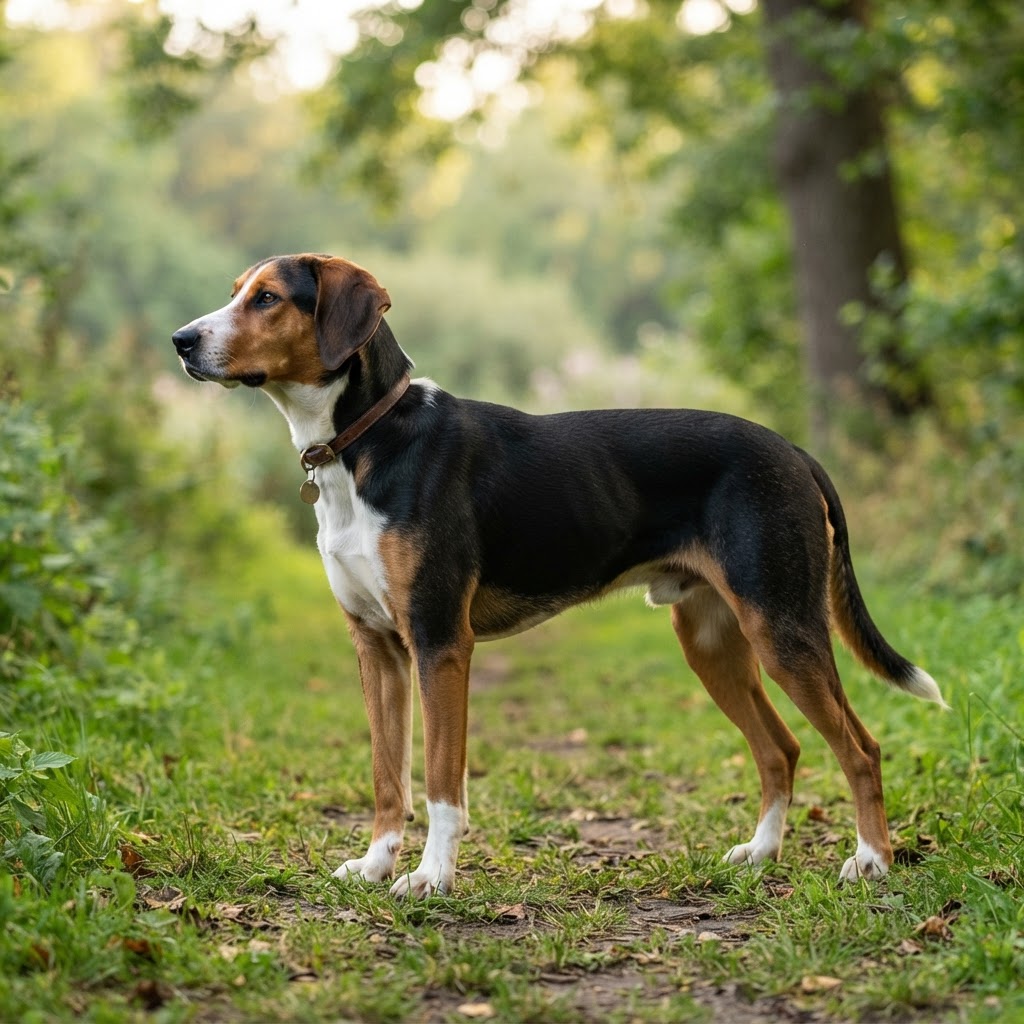
Hamiltonstovare
Male: 23-27 kg, Female: 22-25 kg
53-61 cm for males, 49-57 cm for females
10-13 years
Sweden
About the Hamiltonstovare
The Hamiltonstovare, also known as the Hamilton Hound, is an elegant and powerful scent hound developed in the late 19th century by Count Adolf Hamilton. Renowned for its stamina and ability to navigate the rugged Swedish terrain, this breed is a hardy worker with a strikingly handsome tri-colour appearance. Unlike many hounds that work in packs, the Hamilton was bred to hunt individually or in pairs, leading to a dog that is exceptionally focused and somewhat more independent than its pack-hunting cousins. In a home environment, the Hamiltonstovare is known for its sweet and patient nature. While they are energetic and focused outdoors, they are generally calm and affectionate companions indoors. They possess a distinctive 'hound' personality—loyal and friendly, yet possessed of a legendary stubbornness when a scent catches their nose. This is a breed that requires a dedicated owner who understands the drive of a scent hound and can provide the mental and physical outlets they crave.
Breed Standard
Key characteristics from the breed standard
The Hamiltonstovare stands out in the ring with a majestic, rectangular silhouette that exudes both strength and agility. Their tri-colour coat must show clear, vivid demarcations, with the black mantle providing a sharp contrast against the rich tan and crisp white markings. Judges look for a head that is long and clean-cut, with a slight but distinct stop. What truly distinguishes the Hamilton is its effortless, ground-covering reach and drive; their movement should be powerful and harmonious, reflecting their heritage as a tireless hunter. They possess a noble, quiet confidence in the ring that makes them an aristocrat among hounds.
Bred For
Scent hunting of hare and fox, typically working alone rather than in a pack.
Temperament
Even-tempered, friendly, courageous, and intelligent with a strong hunting instinct.
Health Conditions Reported in the Breed
, , and () due to their deep-chested conformation. They may also be prone to ear infections and occasional skin allergies.
Grooming Needs
Minimal; requires weekly brushing to remove dead hair and regular ear cleaning to prevent infections.
Living Suitability
Suited to homes with a large, securely fenced yard or acreage.
Good with Kids
Generally good with children, particularly older children who respect the dog's space; their size and energy may be overwhelming for toddlers.
Good with Other Pets
Usually good with other dogs; however, they have a very high prey drive and may not be suitable for households with cats or small pocket pets.
Trainability
Highly intelligent but independent and easily distracted by scents; requires consistent, reward-based training and patience.
Coat & Colours
Short, harsh, and weather-resistant double coat.. Tricolour: Black, white, and tan. Typically a black mantle, tan on the head and legs, and white markings on the blaze, neck, chest, tail tip, and feet.
Exercise needs vary by age, fitness, health, weather and individual temperament. Consult your veterinarian for an exercise plan appropriate for your dog.
Things to Consider
Every breed has its quirks — here's what to know
Prospective owners should be aware that the Hamiltonstovare is a scent hound first and foremost; their high prey drive means they can never be fully trusted off-lead in unsecured areas, as a single scent can override all training. They are predisposed to Gastric Dilatation-Volvulus (Bloat), which is a serious condition requiring immediate veterinary attention—owners should learn the signs and avoid vigorous exercise before and after meals. Their pendant ears are more likely to trap moisture and debris, making them prone to yeast or bacterial ear infections; a weekly cleaning routine is recommended. Like many hounds, they may have a distinctive 'houndy' odour and will shed moderately year-round. While they are incredibly loyal, their independent streak can make them appear stubborn during training, but they respond beautifully to positive reinforcement and high-value rewards. They also possess a melodic 'bay' rather than a standard bark, which is a lovely trait but may not be appreciated by close neighbours.
Feeding Guide for Your Hamiltonstovare
Healthy Weight
23-27 kg
Daily Feeding Amount (general starting estimate)
500-750 grams
For an adult Hamiltonstovare, a fresh or raw diet should be fed at approximately 2-3% of their ideal body weight daily. For a 25 kg dog, this equates to 500g to 750g per day, split into two meals to help mitigate the risk of bloat. This should include a balance of muscle meat, bone, and organ meat.
Feeding quantities are general starting estimates only. Individual needs vary with body condition, weight trends, age, health and activity. Ingredient percentages alone do not guarantee complete and balanced nutrition — consult a veterinarian for individualised dietary guidance.
Ingredient percentages alone do not guarantee complete and balanced nutrition. Seek veterinary or qualified canine nutrition guidance for individualised dietary advice. Raw feeding, specific proteins or fresh foods should not be presented as preventing, treating or managing breed health conditions without veterinary diagnosis and supervision.
Majestik's Recommended Feeding Approach
Breed Diet Notes
A high-protein, nutrient-dense diet rich in healthy fats to support their energy levels, with a focus on high-quality animal proteins and minimal fillers to maintain a lean physique.
A balanced raw diet for a Hamiltonstovare should prioritize high-quality Australian proteins such as Majestik's Beef, Lamb, or Kangaroo. Kangaroo is particularly beneficial for its lean profile, helping to maintain the breed's athletic frame. Given their susceptibility to bloat, meals should be served in shallow bowls or slow feeders. Fresh seasonal vegetables like spinach or carrots can provide essential fibre and antioxidants to support their immune system.
These are general breed-level notes only. The appropriate food and serving amount depend on the individual dog's age, health, body condition, activity and tolerance.
Majestik Recommendation
Majestik BARF meals follow our practical 70/10/10/10 approach: approximately 70% quality meat and protein ingredients, 10% edible bone, 10% vegetables and 10% offal. This gives customers a convenient fresh-food option without needing to source and portion every ingredient themselves.
Our Beef, Lamb and Roo BARF meals provide convenient fresh-food options, with suitable proteins chosen or rotated according to the individual dog.
Suitable for different needs
- Healthy adult: Majestik adult Beef, Lamb or Roo BARF meal.
- Puppy: Majestik Premium Puppy.
- Senior: Majestik Senior Blend.
- Working or highly active dog: Suitable Majestik adult meal with quantity adjusted to workload and body condition.
- Protein trial: One Majestik protein at a time.
Recommended Majestik BARF Meals


This is a practical starting recommendation for healthy dogs. Individual needs vary with age, health, body condition and activity.
Hamiltonstovare Feeding Calculator
Personalised raw and cooked feeding recommendations based on your dog's profile
Ideal — Ribs palpable without excess fat. Visible waist. Abdominal tuck present.
Have a question about your Hamiltonstovare? Dog Health AI
Why Majestik?
Fresh, raw pet food made with integrity in South Australia
Australian Made
Made in Two Wells, South Australia
Freshly Prepared
Real meat, organs, bone & wholefood ingredients
No Fillers
No cheap fillers or artificial preservatives
Family Owned
Locally owned and operated
Local Delivery
Delivery across Adelaide & selected areas
Secure Checkout
Secure payment via Shopify checkout
Subscribe & Save on Hamiltonstovare Meals
Get your Hamiltonstovare's fresh and raw meals delivered every two or four weeks. Small subscriptions are combined into a four-week box. Pause, skip or cancel anytime.
Breed Records & Facts
Average Litter Size
4-8 puppies
Hamiltonstovare Owner Feedback
Real experiences and tips from Hamiltonstovare owners
No reviews yet
Be the first to share your experience with this breed
Other Medium Breeds
References & Sources
Breed information verified against recognised breed authorities and veterinary evidence.