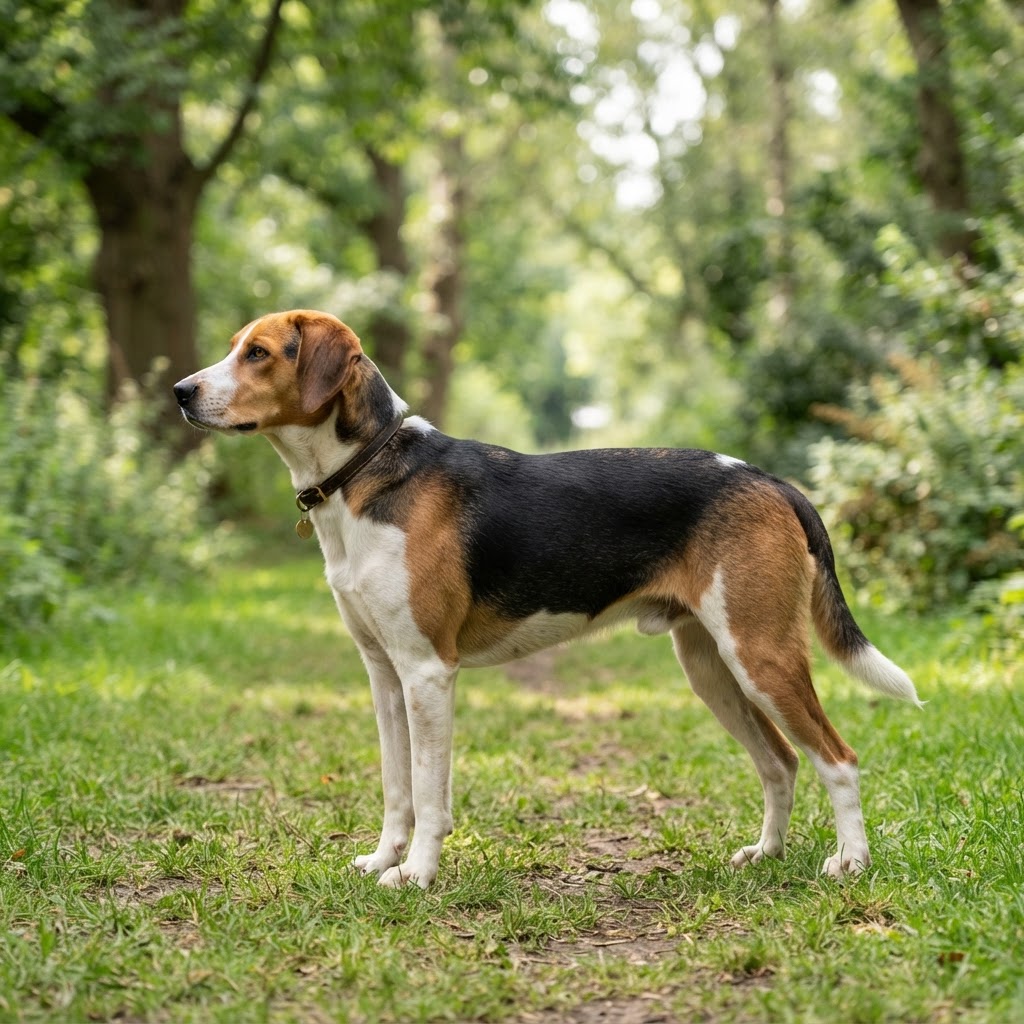
Harrier
18-27 kg
48-55 cm at the shoulder
10-15 years
United Kingdom (England)
About the Harrier
The Harrier is a classic English scent hound, standing as a medium-sized relative between the smaller Beagle and the larger English Foxhound. Originally developed to hunt hares, the breed is characterized by its remarkable stamina and endurance. Unlike sighthounds that rely on speed, the Harrier is built to track quarry over long distances at a steady pace, possessing a keen nose and a melodic 'baying' voice. They are pack animals by nature, which typically makes them exceptionally social and friendly toward other dogs. In a home environment, Harriers are affectionate and cheerful companions, though they retain a strong independent streak typical of hounds. They are not 'off-leash' dogs in open spaces, as a scent will almost always override a recall command. They require an active lifestyle and thrive when given a job to do or a trail to follow. For the right owner who can provide the necessary physical and mental outlets, the Harrier is a hardy, low-maintenance, and loyal addition to the family.
Breed Standard
Key characteristics from the breed standard
The Harrier in the show ring must exhibit a silhouette of perfect balance and utility, featuring a level topline and a well-sprung ribcage that denotes heart and lung room for endurance. Their movement is their hallmark; it should be free, covering ground with an effortless, rhythmic stride that shows no signs of pitching or rolling. The breed standard calls for 'cat-like' feet—compact and well-knuckled—which are essential for the rugged terrain they were bred to traverse.
In Australia
Harriers were introduced to Australia in the mid-19th century for hunting purposes and were used by the club during the colonial era. The Melbourne Hunt Club was established in 1853 and is recorded as using Harrier packs for traditional hare hunting.
Bred For
Hunting hares by scent, designed to be followed by hunters on foot or horseback.
Temperament
Outgoing, friendly, pack-oriented, independent, and stubborn.
Health Conditions Reported in the Breed
, ear infections (otitis externa), primary ciliary dyskinesia (PCD), and ().
Grooming Needs
Low; weekly brushing and regular ear cleaning are sufficient.
Living Suitability
Not suited for apartments. Requires a large, securely fenced yard. They are scent-driven and will wander if given the opportunity, necessitating high-quality fencing.
Good with Kids
Excellent with children of all ages due to their sturdy build and tolerant, playful nature.
Good with Other Pets
Very good with other dogs; should be socialized carefully with small pets like cats or rabbits due to high prey drive.
Trainability
Moderate; intelligent but highly independent. They require consistent, positive reinforcement and are easily distracted by environmental scents.
Coat & Colours
Short, dense, hard, and glossy.. All recognized hound colors, typically tri-color (black, white, and tan), lemon and white, or red and white.
Exercise needs vary by age, fitness, health, weather and individual temperament. Consult your veterinarian for an exercise plan appropriate for your dog.
Things to Consider
Every breed has its quirks — here's what to know
Prospective Harrier owners should be prepared for their powerful scent drive; once they pick up a trail, they are often 'selectively deaf' to commands, so a secure yard is a must. They are more likely to exhibit baying and howling, which is a melodic part of their heritage but may be a challenge for close neighbors. Their pendulous ears make them more predisposed to ear infections, requiring weekly checks and cleaning to stay ahead of moisture buildup. As a deep-chested breed, they are more likely to experience gastric dilatation-volvulus (bloat); owners should avoid vigorous exercise for an hour before and after meals. While they are generally healthy, they are predisposed to hip dysplasia, so keeping them at a lean weight on a fresh diet like Majestik's is highly beneficial. They are social pack animals, meaning they are more likely to suffer from boredom or separation anxiety if left alone for very long periods without companionship.
Feeding Guide for Your Harrier
Healthy Weight
18-27 kg
Daily Feeding Amount (general starting estimate)
440-660 grams
Adult Harriers should be fed approximately 2-3% of their target body weight in fresh food daily. For a 22 kg adult, this is roughly 440g to 660g per day. Portions should be adjusted based on activity level, ensuring they remain lean to protect their joints.
Feeding quantities are general starting estimates only. Individual needs vary with body condition, weight trends, age, health and activity. Ingredient percentages alone do not guarantee complete and balanced nutrition — consult a veterinarian for individualised dietary guidance.
Ingredient percentages alone do not guarantee complete and balanced nutrition. Seek veterinary or qualified canine nutrition guidance for individualised dietary advice. Raw feeding, specific proteins or fresh foods should not be presented as preventing, treating or managing breed health conditions without veterinary diagnosis and supervision.
Majestik's Recommended Feeding Approach
Breed Diet Notes
High-protein, nutrient-dense fresh or raw diet to support high energy levels and maintain lean muscle mass.
A high-stamina breed like the Harrier thrives on a protein-forward raw diet. Majestik's Kangaroo offers a lean, high-protein base that supports muscle maintenance without unnecessary fat. Beef and Lamb can be rotated to provide essential fatty acids. Including small amounts of pureed green vegetables provides essential fiber. Due to their deep-chested structure, it is recommended to feed two smaller meals a day to help manage digestion.
These are general breed-level notes only. The appropriate food and serving amount depend on the individual dog's age, health, body condition, activity and tolerance.
Majestik Recommendation
Majestik BARF meals follow our practical 70/10/10/10 approach: approximately 70% quality meat and protein ingredients, 10% edible bone, 10% vegetables and 10% offal. This gives customers a convenient fresh-food option without needing to source and portion every ingredient themselves.
Our Beef, Lamb and Roo BARF meals provide convenient fresh-food options, with suitable proteins chosen or rotated according to the individual dog.
Suitable for different needs
- Healthy adult: Majestik adult Beef, Lamb or Roo BARF meal.
- Puppy: Majestik Premium Puppy.
- Senior: Majestik Senior Blend.
- Working or highly active dog: Suitable Majestik adult meal with quantity adjusted to workload and body condition.
- Protein trial: One Majestik protein at a time.
Recommended Majestik BARF Meals


This is a practical starting recommendation for healthy dogs. Individual needs vary with age, health, body condition and activity.
Harrier Feeding Calculator
Personalised raw and cooked feeding recommendations based on your dog's profile
Ideal — Ribs palpable without excess fat. Visible waist. Abdominal tuck present.
Have a question about your Harrier? Dog Health AI
Why Majestik?
Fresh, raw pet food made with integrity in South Australia
Australian Made
Made in Two Wells, South Australia
Freshly Prepared
Real meat, organs, bone & wholefood ingredients
No Fillers
No cheap fillers or artificial preservatives
Family Owned
Locally owned and operated
Local Delivery
Delivery across Adelaide & selected areas
Secure Checkout
Secure payment via Shopify checkout
Subscribe & Save on Harrier Meals
Get your Harrier's fresh and raw meals delivered every two or four weeks. Small subscriptions are combined into a four-week box. Pause, skip or cancel anytime.
Breed Records & Facts
Average Litter Size
5-7 puppies
Harrier Owner Feedback
Real experiences and tips from Harrier owners
No reviews yet
Be the first to share your experience with this breed
Other Medium Breeds
References & Sources
Breed information verified against recognised breed authorities and veterinary evidence.