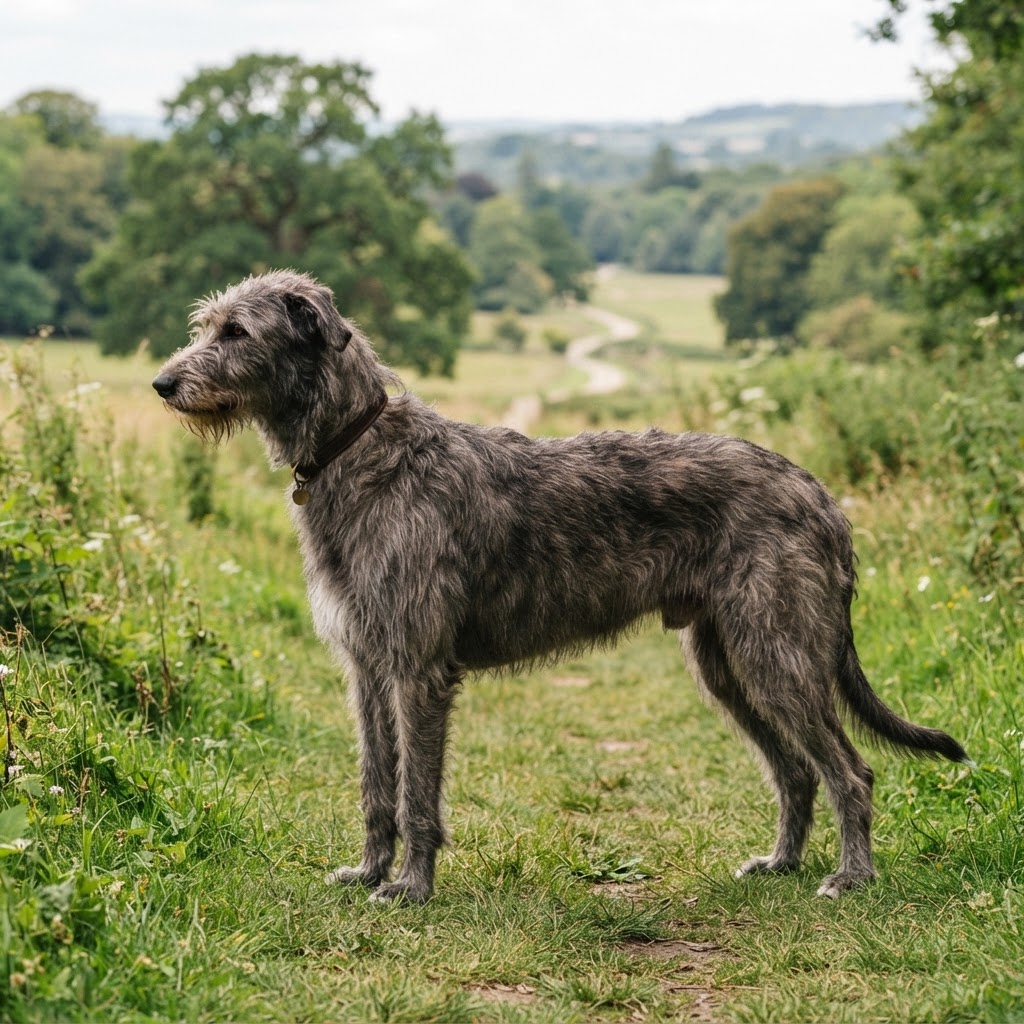
Irish Wolfhound
Male: minimum 54.5 kg, Female: minimum 40.5 kg
Male: minimum 79 cm, Female: minimum 71 cm
6-10 years
Ireland
About the Irish Wolfhound
The Irish Wolfhound is the tallest of all dog breeds, possessing a commanding presence that blends power with elegance. Despite their formidable size and history as apex hunters, they are remarkably gentle giants known for their deep devotion to their families. They are sighthounds, characterized by a long, muscular build and a rough, weather-resistant coat that protected them during the hunt in the Irish landscape. In a domestic setting, the Wolfhound is often described as a 'velcro dog' that prefers to be in the same room as its owners. They are not suited to outdoor-only living, as they crave human companionship. While they are generally quiet and peaceful, their sheer size requires an owner who can accommodate their physical needs, including large living spaces and a vehicle capable of transporting a giant breed safely.
Breed Standard
Key characteristics from the breed standard
In the ring, the Irish Wolfhound must exude a combination of great size and commanding appearance with a graceful, easy, and active movement. They should possess a long and level head, a long and arching neck, and a deep chest that allows for significant lung capacity. Their movement is a particular highlight; they should cover ground with a light, springy trot that belies their massive frame.
In Australia
The Irish Wolfhound was present in Australia in the late 19th and early 20th centuries, primarily used for hunting, as documented by the Irish Wolfhound Club of NSW.
Bred For
Originally bred to hunt wolves and the giant Irish elk, as well as serving as guardians of property and companions to nobility.
Temperament
Renowned for being 'lambs at home, lions in the chase,' they are gentle, dignified, loyal, and exceptionally calm indoors.
Health Conditions Reported in the Breed
(), (), Osteorcoma (bone cancer), Hip and , and ().
Exercise Needs
Moderate daily exercise is required; an hour of walking or free roaming in a fenced area is usually sufficient, as they are surprisingly low-energy indoors.
Grooming Needs
Low to moderate; their wiry coat requires regular brushing and occasional hand-stripping to remove dead hair and maintain texture.
Living Suitability
Requires a home with significant indoor floor space and a large, securely fenced yard. They are can adapt to apartment living living or homes with narrow hallways and steep stairs.
Good with Kids
Generally excellent and patient with children; however, because of their immense size, they can accidentally knock over small children, so supervision is always recommended.
Good with Other Pets
Usually friendly with other dogs, but their high prey drive means they may chase smaller animals or cats unless raised with them from a very young age.
Trainability
Highly intelligent but independent thinkers; they respond best to positive reinforcement and short, engaging training sessions rather than repetitive drills.
Coat & Colours
Rough, hard, and wiry; especially long and wiry over the eyes and under the jaw.. Grey, brindle, red, black, pure white, fawn, or any color that appears in the Deerhound.
Exercise needs vary by age, fitness, health, weather and individual temperament. Consult your veterinarian for an exercise plan appropriate for your dog.
Things to Consider
Every breed has its quirks — here's what to know
The most significant consideration for an Irish Wolfhound is their predisposition to Bloat (GDV), a life-threatening emergency; owners should avoid exercise for an hour before and after meals and consider a gastropexy. They are also prone to Dilated Cardiomyopathy and bone cancer, which contributes to their shorter-than-average lifespan—this is a breed that brings immense joy but requires a heart prepared for a shorter journey together. Their 'happy tail' is a literal force of nature that can clear coffee tables and cause tail-tip injuries if repeatedly hit against walls. Being sighthounds, their prey drive is instinctive; they may be perfectly calm until they see a rabbit or a neighbor's cat, at which point they can be difficult to restrain. Lastly, they are sensitive to anesthesia, a trait common in sighthounds that requires a vet familiar with the breed's specific needs.
Feeding Guide for Your Irish Wolfhound
Healthy Weight
50-72 kg
Daily Feeding Amount (general starting estimate)
1200-1800g
For an adult Irish Wolfhound, feed approximately 2% to 3% of their ideal body weight in fresh food daily. This should be split into at least two meals to minimize the risk of bloat. For a 60kg dog, this equates to roughly 1,200g to 1,800g per day, adjusted based on individual metabolism and activity levels.
Feeding quantities are general starting estimates only. Individual needs vary with body condition, weight trends, age, health and activity. Ingredient percentages alone do not guarantee complete and balanced nutrition — consult a veterinarian for individualised dietary guidance.
Ingredient percentages alone do not guarantee complete and balanced nutrition. Seek veterinary or qualified canine nutrition guidance for individualised dietary advice. Raw feeding, specific proteins or fresh foods should not be presented as preventing, treating or managing breed health conditions without veterinary diagnosis and supervision.
Majestik's Recommended Feeding Approach
Breed Diet Notes
A high-quality diet rich in lean proteins with controlled calcium-to-phosphorus ratios is vital, especially during their rapid puppy growth phase to prevent skeletal deformities.
A balanced raw diet for an Irish Wolfhound should focus on high-quality proteins such as Majestik’s Beef, Lamb, or Kangaroo. Including leafy greens and omega-3 fatty acids from fish can support joint and heart health. Given their predisposition to DCM, ensuring adequate natural taurine from heart meat is a beneficial consideration.
These are general breed-level notes only. The appropriate food and serving amount depend on the individual dog's age, health, body condition, activity and tolerance.
Majestik Recommendation
Majestik BARF meals follow our practical 70/10/10/10 approach: approximately 70% quality meat and protein ingredients, 10% edible bone, 10% vegetables and 10% offal. This gives customers a convenient fresh-food option without needing to source and portion every ingredient themselves.
Our Beef, Lamb and Roo BARF meals provide convenient fresh-food options, with suitable proteins chosen or rotated according to the individual dog.
Suitable for different needs
- Healthy adult: Majestik adult Beef, Lamb or Roo BARF meal.
- Puppy: Majestik Premium Puppy.
- Senior: Majestik Senior Blend.
- Working or highly active dog: Suitable Majestik adult meal with quantity adjusted to workload and body condition.
- Protein trial: One Majestik protein at a time.
Recommended Majestik BARF Meals


This is a practical starting recommendation for healthy dogs. Individual needs vary with age, health, body condition and activity.
Irish Wolfhound Feeding Calculator
Personalised raw and cooked feeding recommendations based on your dog's profile
Ideal — Ribs palpable without excess fat. Visible waist. Abdominal tuck present.
Have a question about your Irish Wolfhound? Dog Health AI
Why Majestik?
Fresh, raw pet food made with integrity in South Australia
Australian Made
Made in Two Wells, South Australia
Freshly Prepared
Real meat, organs, bone & wholefood ingredients
No Fillers
No cheap fillers or artificial preservatives
Family Owned
Locally owned and operated
Local Delivery
Delivery across Adelaide & selected areas
Secure Checkout
Secure payment via Shopify checkout
Subscribe & Save on Irish Wolfhound Meals
Get your Irish Wolfhound's fresh and raw meals delivered every two or four weeks. Small subscriptions are combined into a four-week box. Pause, skip or cancel anytime.
Breed Records & Facts
Average Litter Size
6-10 puppies
Irish Wolfhound Owner Feedback
Real experiences and tips from Irish Wolfhound owners
No reviews yet
Be the first to share your experience with this breed
Other Giant Breeds
References & Sources
Breed information verified against recognised breed authorities and veterinary evidence.