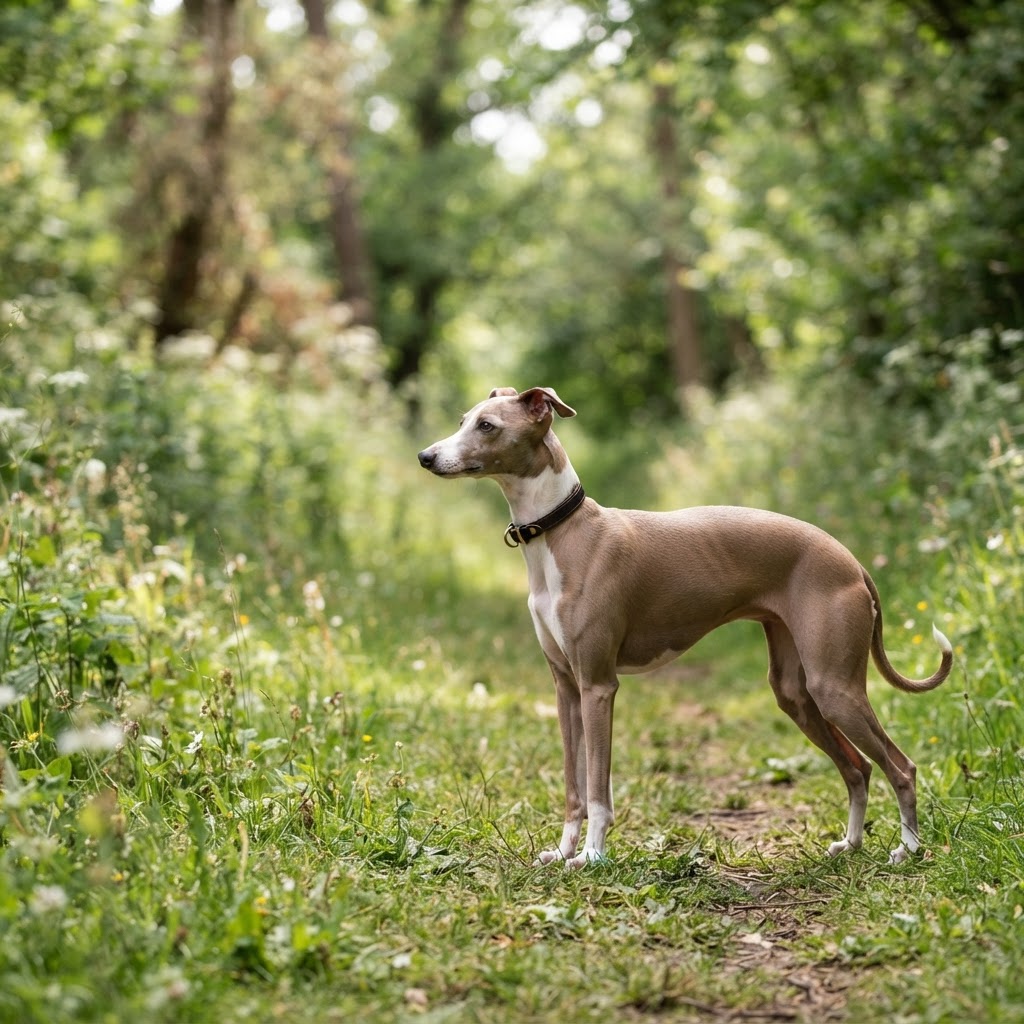
Italian Greyhound
3.6-5.0 kg
32-38 cm at the shoulder
12-15 years
Mediterranean (Italy, Greece, Turkey, and Egypt)
About the Italian Greyhound
The Italian Greyhound, or 'Iggy', is a miniature version of the classic Greyhound, combining the sleek, aerodynamic lines of a sighthound with the diminutive size of a toy breed. Known for their aristocratic history and grace, they have been the preferred companions of European royalty for centuries. Despite their delicate appearance, they are agile and capable of impressive speeds, though they are most famous for their 'velcro' nature and desire to be physically close to their owners. In a home environment, they are charming and quiet, making them excellent indoor companions. They possess a high-stepping gait and a sensitive soul, often mirroring the emotions of their household. While they are playful and enjoy a game of chase, they are equally content burrowing under blankets for a long nap. Their fine, short coat makes them exceptionally clean and low-odour, fitting perfectly into a sophisticated lifestyle.
Breed Standard
Key characteristics from the breed standard
In the show ring, the Italian Greyhound displays a high-stepping, free, and springy action that is utterly distinctive. Judges look for a sinuous silhouette defined by a deep chest and a curved tuck-up, mirroring aerodynamic perfection in a miniature frame. Their presence is one of aristocratic refinement—a blend of fragile beauty and surprising athletic prowess.
In Australia
Italian Greyhounds are believed to have arrived in Australia during the colonial period, where they were kept as pets and show dogs by European residents. The breed has been present in Australia since at least 1864, when they were recorded as being exhibited at the first dog show in Melbourne.
Bred For
Companion animal and small game hunter (rabbits and hares)
Temperament
Affectionate, sensitive, playful, alert, and intelligent
Health Conditions Reported in the Breed
More likely to be predisposed to leg fractures (specifically radius and ulna), , (), , , and autoimmune conditions like vitreous degeneration.
Exercise Needs
Moderate; they enjoy short bursts of high-speed running (zoomies) followed by long periods of rest. Daily walks of 30-45 minutes are usually sufficient.
Grooming Needs
Minimal; their short coat requires only occasional brushing and regular dental care due to their predisposition to tooth decay.
Living Suitability
Excellent for apartment living due to their size and quiet nature; they do well in small homes but require a securely fenced area for short sprints.
Good with Kids
Better suited to older, gentle children who understand the breed's physical fragility; not recommended for very young toddlers.
Good with Other Pets
Generally good with other dogs, especially other sighthounds; caution should be used with very large, boisterous dogs due to the risk of accidental injury.
Trainability
Intelligent and eager to please but sensitive; they respond best to positive reinforcement and can be independent or easily distracted by prey.
Coat & Colours
Short, fine, and satin-like in texture. Black, blue, cream, fawn, red, white, and various shades of these, sometimes with white markings on the chest and feet.
Exercise needs vary by age, fitness, health, weather and individual temperament. Consult your veterinarian for an exercise plan appropriate for your dog.
Things to Consider
Every breed has its quirks — here's what to know
Because they are so finely boned, Italian Greyhounds are more predisposed to leg fractures, particularly in their youth; a jump from a couch can lead to a vet visit, so providing ramps or soft landings is a wise move for their safety. Their slender build means they are very sensitive to the cold and will likely need a stylish wardrobe of coats for those chilly South Australian mornings. This breed is also known for being a challenge to house-train, often requiring extra patience and consistency, but their deep desire for your affection makes the effort worthwhile. Additionally, they are more likely to develop dental disease early in life, so a routine of fresh dental bones and oral care is essential. They are 'velcro dogs' who may experience separation anxiety if left alone for long periods, reflecting their immense devotion. While they are sighthounds with a high prey drive, they can absolutely thrive in a domestic setting with secure fencing and plenty of indoor snuggle time.
Feeding Guide for Your Italian Greyhound
Healthy Weight
3.5-5.0 kg
Daily Feeding Amount (general starting estimate)
70-150 grams
For this breed, a fresh or raw diet should focus on high digestibility and bone-supporting nutrients. Based on an average weight of 3.5kg to 5kg, an adult Italian Greyhound requires approximately 70g to 150g of fresh food daily (2-3% of body weight). Appropriately selected raw meaty bones may provide chewing enrichment, but they do not replace veterinary dental care and can present choking, tooth-fracture or gastrointestinal risks.
Feeding quantities are general starting estimates only. Individual needs vary with body condition, weight trends, age, health and activity. Ingredient percentages alone do not guarantee complete and balanced nutrition — consult a veterinarian for individualised dietary guidance.
Ingredient percentages alone do not guarantee complete and balanced nutrition. Seek veterinary or qualified canine nutrition guidance for individualised dietary advice. Raw feeding, specific proteins or fresh foods should not be presented as preventing, treating or managing breed health conditions without veterinary diagnosis and supervision.
Majestik's Recommended Feeding Approach
Breed Diet Notes
A high-quality, protein-rich diet focusing on lean muscle meats and essential fatty acids to support bone density and skin health.
A balanced raw diet for an Italian Greyhound should prioritize lean proteins like Majestik Kangaroo or Beef to maintain muscle without excess weight. Including fish oils or Majestik's fresh sardines can support their skin and coat. Given their small mouths, protein sources should be finely ground or chopped into manageable pieces, with small raw bones like chicken wing tips or necks provided to combat their predisposition to periodontal issues.
These are general breed-level notes only. The appropriate food and serving amount depend on the individual dog's age, health, body condition, activity and tolerance.
Majestik Recommendation
Majestik BARF meals follow our practical 70/10/10/10 approach: approximately 70% quality meat and protein ingredients, 10% edible bone, 10% vegetables and 10% offal. This gives customers a convenient fresh-food option without needing to source and portion every ingredient themselves.
Our Beef, Lamb and Roo BARF meals provide convenient fresh-food options, with suitable proteins chosen or rotated according to the individual dog.
Suitable for different needs
- Healthy adult: Majestik adult Beef, Lamb or Roo BARF meal.
- Puppy: Majestik Premium Puppy.
- Senior: Majestik Senior Blend.
- Working or highly active dog: Suitable Majestik adult meal with quantity adjusted to workload and body condition.
- Protein trial: One Majestik protein at a time.
This is a practical starting recommendation for healthy dogs. Individual needs vary with age, health, body condition and activity.
Italian Greyhound Feeding Calculator
Personalised raw and cooked feeding recommendations based on your dog's profile
Ideal — Ribs palpable without excess fat. Visible waist. Abdominal tuck present.
Have a question about your Italian Greyhound? Dog Health AI
Why Majestik?
Fresh, raw pet food made with integrity in South Australia
Australian Made
Made in Two Wells, South Australia
Freshly Prepared
Real meat, organs, bone & wholefood ingredients
No Fillers
No cheap fillers or artificial preservatives
Family Owned
Locally owned and operated
Local Delivery
Delivery across Adelaide & selected areas
Secure Checkout
Secure payment via Shopify checkout
Subscribe & Save on Italian Greyhound Meals
Get your Italian Greyhound's fresh and raw meals delivered every two or four weeks. Small subscriptions are combined into a four-week box. Pause, skip or cancel anytime.
Breed Records & Facts
Average Litter Size
2-4 puppies
Italian Greyhound Owner Feedback
Real experiences and tips from Italian Greyhound owners
No reviews yet
Be the first to share your experience with this breed
Other Toy Breeds
References & Sources
Breed information verified against recognised breed authorities and veterinary evidence.
