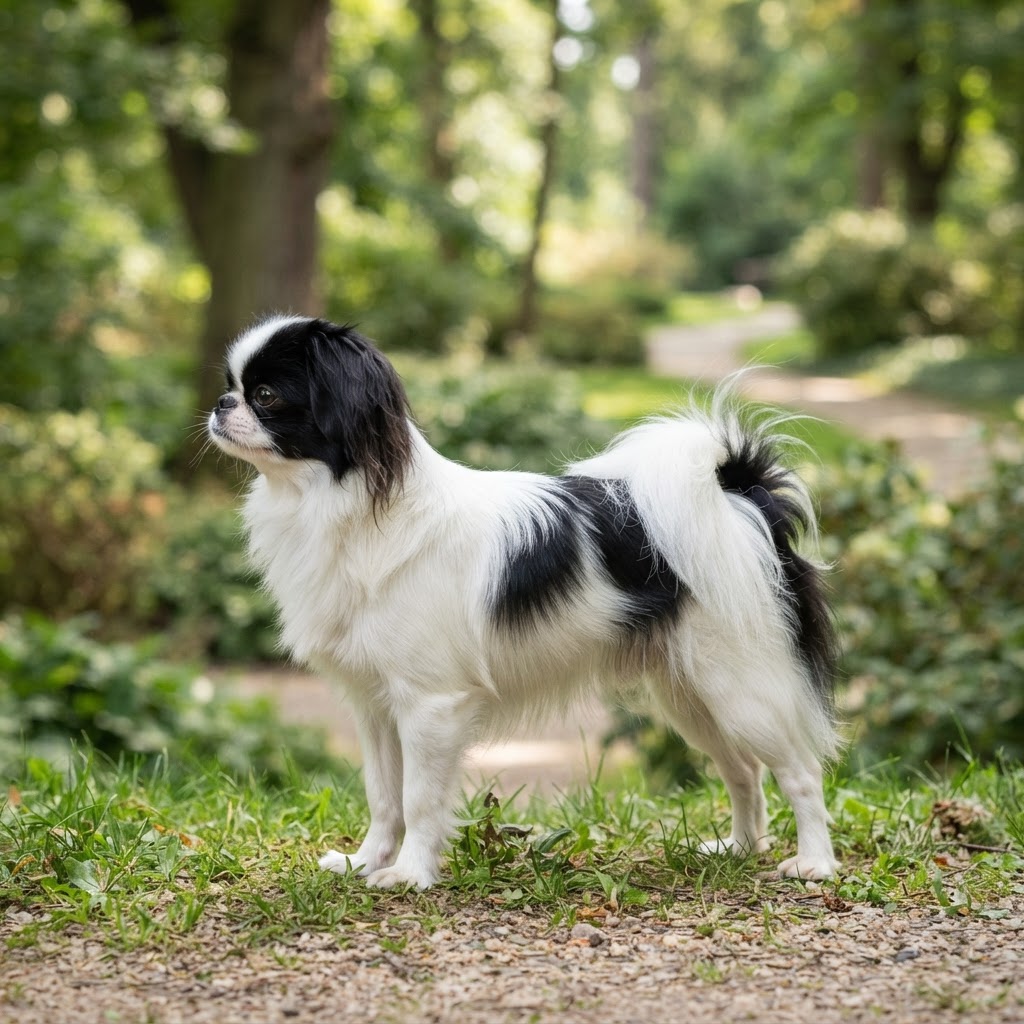
Japanese Chin
Male: 2-5 kg, Female: 2-5 kg
20-27 cm at the shoulder
10-14 years
Japan (originally from China)
About the Japanese Chin
The Japanese Chin is a breed of ancient lineage, distinct for its aristocratic 'oriental' expression and cat-like grace. Originally developed as a lapdog for Japanese nobility, they possess a refined, high-stepping gait and a remarkably calm, affectionate disposition. Unlike many toy breeds, they are known for their quiet nature, often 'chatting' with a unique soft warble rather than barking excessively. Physically, they are characterized by a large, broad head, wide-set dark eyes, and a profuse, silky coat that gives them a distinctively royal appearance. Despite their delicate look, they are sturdy enough for indoor play but thrive best as constant companions to their owners. Their personality is often described as feline; they enjoy climbing to high vantage points and are meticulous self-groomers. In a home environment, they are sensitive and intuitive, often mirroring the mood of their owners. They are best suited for indoor living and require owners who can provide consistent grooming and attentive care to their specific health needs.
Breed Standard
Key characteristics from the breed standard
In the show ring, the Japanese Chin is distinguished by its 'look of astonishment,' created by large, dark, wide-set eyes showing white in the inner corners. Their movement is a hallmark of the breed—a stylish, high-stepping gait that conveys an air of supreme elegance. The coat should be abundant and silky, with a magnificent mane covering the neck and chest, and a tail that flows like a chrysanthemum over the back.
In Australia
The Japanese Chin was established in Australia by the late 19th century, with documented presence continuing into the early 20th century according to Dogs Australia. Records from Dogs Australia also indicate the Japanese Chin was exhibited in major Australian agricultural shows as early as the late 19th century.
Bred For
Companion and lap dog for royalty and nobility
Temperament
Charming, noble, cat-like, affectionate, and intelligent
Health Conditions Reported in the Breed
, (), (), corneal ulcers, , and dental overcrowding.
Exercise Needs
Low to Moderate; 20-30 minutes of daily walking supplemented by indoor play is sufficient.
Grooming Needs
High; daily brushing of the silky single coat is required to prevent matting, alongside regular cleaning of eye folds and ears.
Living Suitability
Excellent for apartment living; they are quiet indoors and do not require a large yard.
Good with Kids
Better suited for homes with older, respectful children due to their small size and fragility.
Good with Other Pets
Generally excellent with other dogs and cats, though their small size makes them vulnerable to larger, rambunctious pets.
Trainability
Moderately easy; they are intelligent but possess a cat-like independence and may be stubborn if training is not kept engaging and positive.
Coat & Colours
Single coat, long, straight, and silky without an undercoat. White with black markings or white with red (ranging from lemon to sable/brilliant red) markings.
Exercise needs vary by age, fitness, health, weather and individual temperament. Consult your veterinarian for an exercise plan appropriate for your dog.
Things to Consider
Every breed has its quirks — here's what to know
The Japanese Chin is a brachycephalic breed, meaning they are more likely to experience breathing difficulties and heat intolerance—owners must be careful to keep them cool in Australian summers and avoid strenuous exercise in humidity. Like many toy breeds, they are prone to dental overcrowding and periodontal disease; a fresh food diet can help, but regular dental checks are essential. Their large, prominent eyes are more likely to suffer from scratches or corneal ulcers, so care should be taken around sharp foliage or rambunctious pets. They can be prone to separation anxiety if left alone for long periods, as they thrive on human companionship. Additionally, some Chins are predisposed to digestive sensitivities and may be picky eaters; they often thrive on a limited-ingredient fresh diet like those from Majestik, which avoids the fillers found in standard kibble. These traits are breed predispositions rather than certainties, and most Chins live long, healthy lives with appropriate environmental and dietary management.
Feeding Guide for Your Japanese Chin
Healthy Weight
2-5 kg
Daily Feeding Amount (general starting estimate)
40-150 grams per day
Adult Japanese Chins typically require 2-3% of their ideal body weight in fresh food daily. For a 3.5kg dog, this equates to roughly 70-105 grams per day, ideally divided into two smaller meals to support their metabolism.
Feeding quantities are general starting estimates only. Individual needs vary with body condition, weight trends, age, health and activity. Ingredient percentages alone do not guarantee complete and balanced nutrition — consult a veterinarian for individualised dietary guidance.
Ingredient percentages alone do not guarantee complete and balanced nutrition. Seek veterinary or qualified canine nutrition guidance for individualised dietary advice. Raw feeding, specific proteins or fresh foods should not be presented as preventing, treating or managing breed health conditions without veterinary diagnosis and supervision.
Majestik's Recommended Feeding Approach
Breed Diet Notes
A high-quality fresh or raw diet rich in lean proteins and Omega-3 fatty acids is ideal. Due to their small mouths and potential for dental issues, fresh food is often easier to consume and digest than hard kibble.
An ideal raw diet for a Japanese Chin should focus on high-quality, easily digestible proteins available from Majestik, such as Kangaroo or Chicken, which provide lean energy without excessive fat. Including a small amount of pureed leafy greens or berries can provide antioxidants, while fish oils support their long, silky coat. Because they are prone to dental issues, fresh raw food is a superior choice to help minimize the plaque buildup often associated with high-carbohydrate commercial diets.
These are general breed-level notes only. The appropriate food and serving amount depend on the individual dog's age, health, body condition, activity and tolerance.
Majestik Recommendation
Majestik BARF meals follow our practical 70/10/10/10 approach: approximately 70% quality meat and protein ingredients, 10% edible bone, 10% vegetables and 10% offal. This gives customers a convenient fresh-food option without needing to source and portion every ingredient themselves.
Our Beef, Lamb and Roo BARF meals provide convenient fresh-food options, with suitable proteins chosen or rotated according to the individual dog.
Suitable for different needs
- Healthy adult: Majestik adult Beef, Lamb or Roo BARF meal.
- Puppy: Majestik Premium Puppy.
- Senior: Majestik Senior Blend.
- Working or highly active dog: Suitable Majestik adult meal with quantity adjusted to workload and body condition.
- Protein trial: One Majestik protein at a time.
Recommended Majestik BARF Meals


This is a practical starting recommendation for healthy dogs. Individual needs vary with age, health, body condition and activity.
Japanese Chin Feeding Calculator
Personalised raw and cooked feeding recommendations based on your dog's profile
Ideal — Ribs palpable without excess fat. Visible waist. Abdominal tuck present.
Have a question about your Japanese Chin? Dog Health AI
Why Majestik?
Fresh, raw pet food made with integrity in South Australia
Australian Made
Made in Two Wells, South Australia
Freshly Prepared
Real meat, organs, bone & wholefood ingredients
No Fillers
No cheap fillers or artificial preservatives
Family Owned
Locally owned and operated
Local Delivery
Delivery across Adelaide & selected areas
Secure Checkout
Secure payment via Shopify checkout
Subscribe & Save on Japanese Chin Meals
Get your Japanese Chin's fresh and raw meals delivered every two or four weeks. Small subscriptions are combined into a four-week box. Pause, skip or cancel anytime.
Breed Records & Facts
Average Litter Size
1-3 puppies
Japanese Chin Owner Feedback
Real experiences and tips from Japanese Chin owners
No reviews yet
Be the first to share your experience with this breed
Other Toy Breeds
References & Sources
Breed information verified against recognised breed authorities and veterinary evidence.