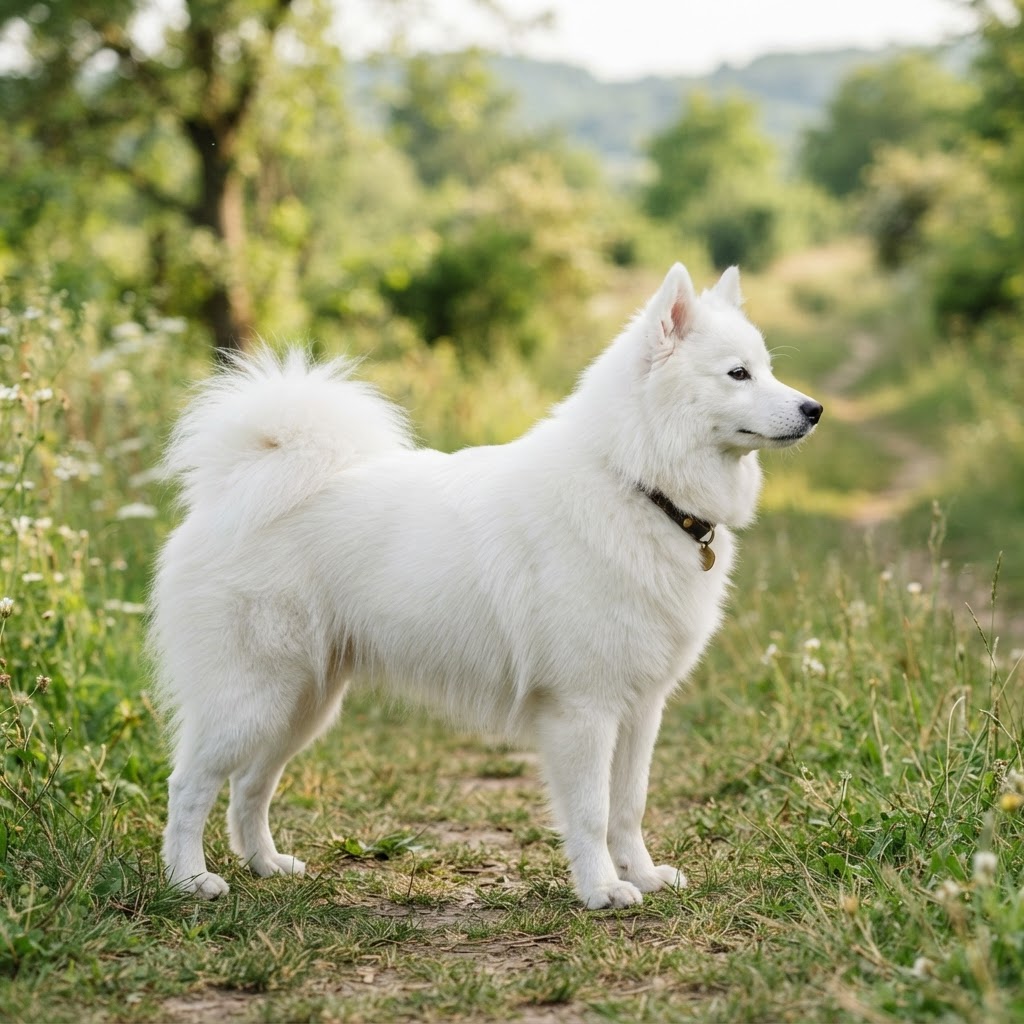
Japanese Spitz
Male: 6-10 kg, Female: 5-8 kg
30-38 cm at the shoulder
12-14 years
Japan
About the Japanese Spitz
The Japanese Spitz is a breath-taking companion dog, originally developed in Japan during the 1920s and 30s by crossbreeding various white Spitz-type dogs imported from across the globe, including the large white German Spitz. Despite their arctic appearance, they were bred specifically for life as a devoted household companion. Their most distinguishing feature is their profuse, snow-white double coat, which stands off the body and creates a majestic, cloud-like silhouette, complemented by a plume-like tail carried over the back. Their dark, almond-shaped eyes and black nose provide a striking contrast against their pristine fur, resulting in a keen, fox-like expression. Internationally recognized for their intelligence and 'big dog' personality in a small frame, they are as sturdy as they are beautiful. In the modern Australian home, the Japanese Spitz is a versatile and adaptable family member. They are equally happy living in a suburban house with a yard or a well-managed apartment, provided they are included in daily family activities. Their playful nature remains with them well into their senior years, and their natural desire to please makes them highly capable in obedience and agility. While they are wary of strangers, they form unbreakable bonds with their owners, offering a unique blend of elegance, vigilance, and unwavering devotion.
Breed Standard
Key characteristics from the breed standard
In the show ring, the Japanese Spitz is a portrait of snowy elegance and symmetrical balance. The breed standard emphasizes a profuse, straight, off-standing outer coat and a dense, soft undercoat, which must be pure white without any hint of yellowing. Judges look for the 'Spitz expression'—an alert, intelligent look created by dark almond eyes with black rims and a small, black nose. Their movement is light, nimble, and energetic, conveying a sense of pride and stamina. Unlike many other ornamental breeds, the Japanese Spitz possesses a structural soundness and a vibrant, 'can-do' attitude that makes them as functional in agility as they are flawless on the grooming table. They carry themselves with a natural charisma that demands attention, embodying the perfect harmony of aesthetic glamour and functional intelligence.
In Australia
The Japanese Spitz was first introduced to Australia in 1979, with the breed's introduction continuing into 1980. The first registered imports arrived from the United Kingdom, and the first registered imports also arrived from Sweden, as documented by the Japanese Spitz Club of NSW.
Bred For
Companion dog and family pet
Temperament
The Japanese Spitz is characterized by its intelligent, cheerful, and courageous nature. They are exceptionally loyal to their families, possessing a keen sense of alertness that makes them excellent 'alarm' dogs without being aggressive. They are known for their spirited disposition and deep affection for human companionship.
Health Conditions Reported in the Breed
The breed is generally robust but can be predisposed to (kneecap dislocation) and (abnormal eyelash growth). They are also prone to tear staining and may develop skin sensitivities if their dietary and grooming needs are not met.
Exercise Needs
Moderate daily activity is required, typically consisting of a 30-to-45-minute walk supplemented by interactive play sessions. They are active indoors but thrive when given the opportunity to explore outside in a secure environment.
Grooming Needs
High grooming requirements during shedding seasons. They possess a thick double coat that requires brushing at least two to three times a week to prevent matting and manage shedding. Their coat is remarkably dirt-repellent, so frequent bathing is often unnecessary.
Living Suitability
Highly suited to both apartment living and houses with small yards. They are indoor dogs that require close proximity to their owners but need regular outdoor exercise to stay mentally and physically fit.
Good with Kids
Generally excellent with children, particularly those who are taught to handle small dogs gently. Their playful and sturdy nature makes them great companions for active families.
Good with Other Pets
Typically very good with other dogs and household pets, especially when socialized from a young age. They possess a relatively low prey drive compared to other Spitz breeds.
Trainability
Highly intelligent and eager to please, making them easier to train than many other Spitz breeds. They respond best to positive reinforcement and can excel in trick training and canine sports.
Coat & Colours
Stand-off double coat; long, straight outer coat with a soft, dense undercoat.. Pure White
Exercise needs vary by age, fitness, health, weather and individual temperament. Consult your veterinarian for an exercise plan appropriate for your dog.
Things to Consider
Every breed has its quirks — here's what to know
The Japanese Spitz is a joyous companion, though there are several breed-specific traits to consider. They are more likely to be 'alarm barkers,' meaning they will vocally alert you to any movement outside the home; while this makes them great watchdogs, consistent training is needed to manage excessive noise. Their magnificent coat undergoes a heavy seasonal 'blow' where they lose a significant amount of undercoat, which requires daily brushing and may be a consideration for house-proud owners. Physically, they can be predisposed to Patellar Luxation (sliding kneecaps), so keeping them at a lean weight and avoiding excessive jumping from heights is a wise precaution. Like many white-coated breeds, some individuals may develop tear staining or skin sensitivities on standard commercial diets; many owners find that transitioning to a fresh, species-appropriate diet like Majestik Pet Food significantly improves these conditions. They also have a thick coat that makes them more likely to experience heat sensitivity during harsh Australian summers, so they must always have access to shade and cool indoor spaces. These traits are manageable predispositions, and with the right care, the Japanese Spitz is a hardy and delightful life companion.
Feeding Guide for Your Japanese Spitz
Healthy Weight
5-10 kg
Daily Feeding Amount (general starting estimate)
125-250 grams per day
For a Japanese Spitz, a fresh food diet should focus on lean proteins and healthy fats to support their energy and coat. A daily intake of 2-3% of their ideal adult body weight is recommended. For an average 8kg dog, this equates to approximately 160-240 grams of fresh food per day, split into two meals.
Feeding quantities are general starting estimates only. Individual needs vary with body condition, weight trends, age, health and activity. Ingredient percentages alone do not guarantee complete and balanced nutrition — consult a veterinarian for individualised dietary guidance.
Ingredient percentages alone do not guarantee complete and balanced nutrition. Seek veterinary or qualified canine nutrition guidance for individualised dietary advice. Raw feeding, specific proteins or fresh foods should not be presented as preventing, treating or managing breed health conditions without veterinary diagnosis and supervision.
Majestik's Recommended Feeding Approach
Breed Diet Notes
A high-quality diet rich in lean proteins and Omega-3 fatty acids is ideal. Fresh and raw diets are highly beneficial for maintaining their signature white coat and preventing skin-related allergies. Avoiding fillers like corn or wheat can help reduce the incidence of tear staining.
An ideal raw diet for a Japanese Spitz should feature lean Australian proteins like Kangaroo and Grass-Fed Beef to maintain a healthy weight. At Majestik Pet Food, we recommend incorporating our Salmon or white fish blends to provide the essential Omega-3 and Omega-6 fatty acids required for that iconic white glow. The diet should consist of roughly 70% muscle meat, 10% edible bone for dental health, 10% organ meats (such as liver and kidney) for vital minerals, and 10% blended seasonal vegetables to provide fiber and antioxidants. Because this breed can be prone to tear staining, a raw diet free from artificial colors, preservatives, and high-carb fillers is particularly advantageous.
These are general breed-level notes only. The appropriate food and serving amount depend on the individual dog's age, health, body condition, activity and tolerance.
Majestik Recommendation
Majestik BARF meals follow our practical 70/10/10/10 approach: approximately 70% quality meat and protein ingredients, 10% edible bone, 10% vegetables and 10% offal. This gives customers a convenient fresh-food option without needing to source and portion every ingredient themselves.
Our Beef, Lamb and Roo BARF meals provide convenient fresh-food options, with suitable proteins chosen or rotated according to the individual dog.
Suitable for different needs
- Healthy adult: Majestik adult Beef, Lamb or Roo BARF meal.
- Puppy: Majestik Premium Puppy.
- Senior: Majestik Senior Blend.
- Working or highly active dog: Suitable Majestik adult meal with quantity adjusted to workload and body condition.
- Protein trial: One Majestik protein at a time.
This is a practical starting recommendation for healthy dogs. Individual needs vary with age, health, body condition and activity.
Japanese Spitz Feeding Calculator
Personalised raw and cooked feeding recommendations based on your dog's profile
Ideal — Ribs palpable without excess fat. Visible waist. Abdominal tuck present.
Have a question about your Japanese Spitz? Dog Health AI
Why Majestik?
Fresh, raw pet food made with integrity in South Australia
Australian Made
Made in Two Wells, South Australia
Freshly Prepared
Real meat, organs, bone & wholefood ingredients
No Fillers
No cheap fillers or artificial preservatives
Family Owned
Locally owned and operated
Local Delivery
Delivery across Adelaide & selected areas
Secure Checkout
Secure payment via Shopify checkout
Subscribe & Save on Japanese Spitz Meals
Get your Japanese Spitz's fresh and raw meals delivered every two or four weeks. Small subscriptions are combined into a four-week box. Pause, skip or cancel anytime.
Breed Records & Facts
Average Litter Size
3-5 puppies
Japanese Spitz Owner Feedback
Real experiences and tips from Japanese Spitz owners
Other Small Breeds
References & Sources
Breed information verified against recognised breed authorities and veterinary evidence.
