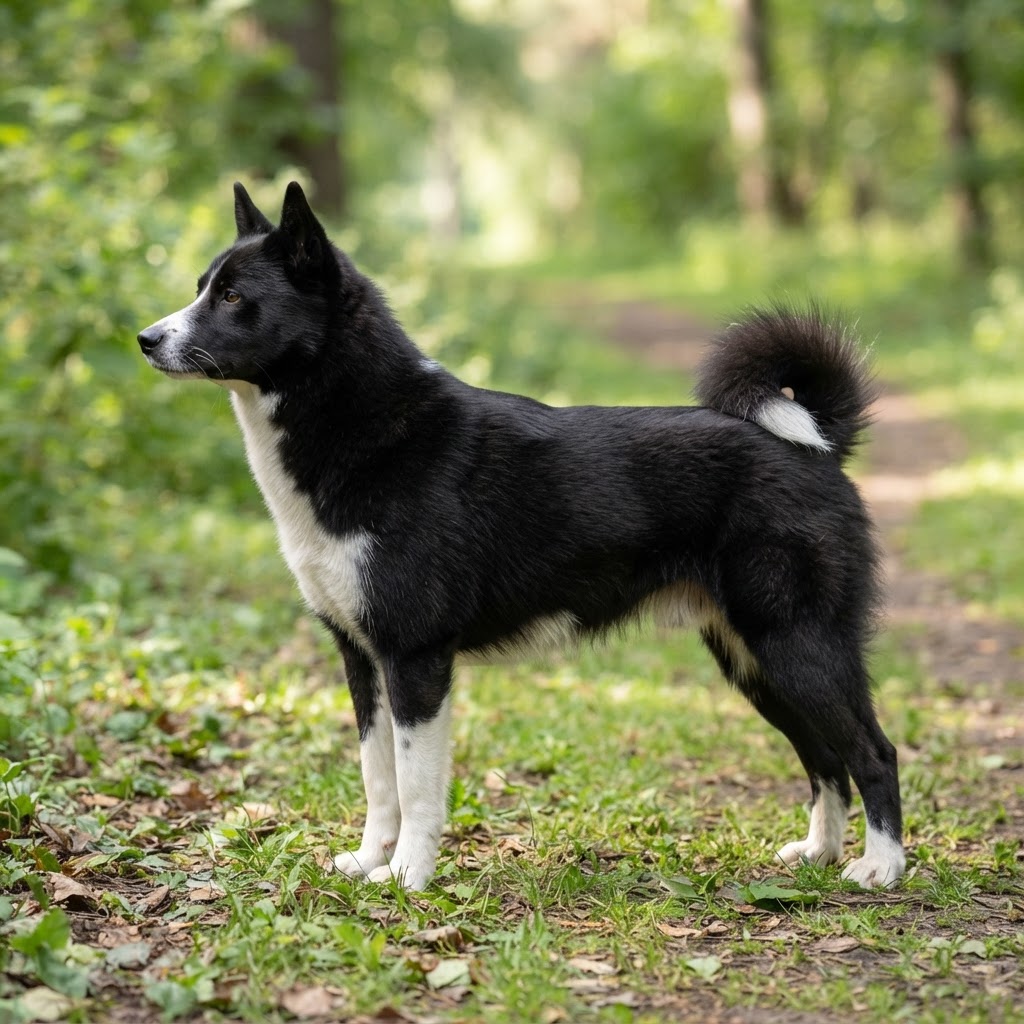
Karelian Bear Dog
Male: 25-28 kg, Female: 17-20 kg
Male: 54-60 cm, Female: 49-55 cm at the shoulder
10-12 years
Finland
About the Karelian Bear Dog
The Karelian Bear Dog (Karjalankarhukoira) is a robust and powerful Spitz-type dog originating from the Karelia region. Historically used by hunters to corner aggressive game, they possess an innate courage and an 'eagle-eyed' alertness. Physically, they are slightly longer than they are tall, featuring a bushy tail that curls over the back and a distinctive black-and-white coat that provided visibility in the dense, dark forests of Northern Europe. In a domestic setting, the Karelian Bear Dog is a devoted companion to its family but retains a primitive, independent streak. They are not typical 'dog park' dogs, as their history as a solitary hunter makes them naturally protective and often intolerant of strange canines. They require an owner who understands the Spitz temperament and can provide the structured environment and significant physical outlets this working breed demands to remain balanced and happy.
Breed Standard
Key characteristics from the breed standard
In the show ring, the Karelian Bear Dog must display a sturdy, well-boned frame without appearing heavy. Their movement is light and effortless, showing great endurance. Judges look for a clean, sharp contrast in the black-and-white coat markings and a keen, energetic expression in their dark, small eyes. What sets this breed apart is their 'fearless' carriage—they possess a primitive, dignified aura that suggests they are ready to face a predator ten times their size at a moment's notice.
Bred For
Hunting large and dangerous game, such as bears, moose, and wild boar, by tracking and baying to hold the animal in place.
Temperament
Brave, independent, alert, and persistent. They are known for being loyal to their owners but can be reserved or aggressive toward other dogs.
Health Conditions Reported in the Breed
Generally a very hardy breed, but predispositions include , , and ().
Exercise Needs
Extremely high. This breed requires intense daily physical activity and mental stimulation, such as long hikes, running, or tracking work.
Grooming Needs
Moderate. Their thick double coat requires weekly brushing, increasing to daily during seasonal shedding periods (blowing coat).
Living Suitability
Not suited for apartment living or small backyards. They require a large, securely fenced yard or acreage where they can roam and work. They thrive in cooler climates.
Good with Kids
Good with older, respectful children within their own family, but their high energy and strength may be overwhelming for toddlers.
Good with Other Pets
Often aggressive toward other dogs and has a very high prey drive; generally not recommended for households with cats or small animals.
Trainability
Highly intelligent but very independent and headstrong. They require consistent, firm, and patient training from an experienced handler.
Coat & Colours
Double coat with a straight, harsh outer coat and a soft, dense, insulating undercoat.. Black with white markings; the black may be slightly brownish.
Exercise needs vary by age, fitness, health, weather and individual temperament. Consult your veterinarian for an exercise plan appropriate for your dog.
Things to Consider
Every breed has its quirks — here's what to know
Prospective owners should be aware that Karelian Bear Dogs are more likely to display dog-to-dog aggression; while not every dog will, it is a known breed trait that requires careful management and socialization. Their high prey drive means they are predisposed to chasing livestock or wildlife, so a secure, high fence is essential. They are vocal dogs that use a loud baying bark to communicate, which may not suit close-knit suburban neighborhoods. Like many Spitz breeds, they can be more likely to experience seasonal 'coat blow' where they shed their entire undercoat, requiring intensive grooming for several weeks. Some individuals may be predisposed to hip and elbow dysplasia—while not a certainty, purchasing from health-tested parents is vital to minimize risk. They are also known for their independent nature, often preferring to make their own decisions rather than blindly obeying commands, which requires a patient and experienced approach to training.
Feeding Guide for Your Karelian Bear Dog
Healthy Weight
17-28 kg
Daily Feeding Amount (general starting estimate)
425-840 grams
For an adult Karelian Bear Dog, a raw diet should consist of approximately 2-3% of their ideal body weight daily. For a 25kg male, this equates to 500-750 grams per day. High-energy individuals may require slightly more during peak winter months or high-activity periods.
Feeding quantities are general starting estimates only. Individual needs vary with body condition, weight trends, age, health and activity. Ingredient percentages alone do not guarantee complete and balanced nutrition — consult a veterinarian for individualised dietary guidance.
Ingredient percentages alone do not guarantee complete and balanced nutrition. Seek veterinary or qualified canine nutrition guidance for individualised dietary advice. Raw feeding, specific proteins or fresh foods should not be presented as preventing, treating or managing breed health conditions without veterinary diagnosis and supervision.
Majestik's Recommended Feeding Approach
Breed Diet Notes
A high-protein, nutrient-dense diet suited for high-energy working dogs. They thrive on fresh, raw diets rich in quality animal proteins and healthy fats.
The ideal Majestik raw diet for a Karelian Bear Dog focuses on high-performance proteins like Kangaroo and Beef to support lean muscle mass. A rotating menu of Majestik’s Beef and Kangaroo blends provides the necessary zinc and iron for skin health, while adding Sardines or Fish Oil supports their dense double coat. Include raw meaty bones like lamb necks or kangaroo tails for dental health and mental stimulation, and ensure organ content is strictly maintained at 10% to provide essential fat-soluble vitamins.
These are general breed-level notes only. The appropriate food and serving amount depend on the individual dog's age, health, body condition, activity and tolerance.
Majestik Recommendation
Majestik BARF meals follow our practical 70/10/10/10 approach: approximately 70% quality meat and protein ingredients, 10% edible bone, 10% vegetables and 10% offal. This gives customers a convenient fresh-food option without needing to source and portion every ingredient themselves.
Our Beef, Lamb and Roo BARF meals provide convenient fresh-food options, with suitable proteins chosen or rotated according to the individual dog.
Suitable for different needs
- Healthy adult: Majestik adult Beef, Lamb or Roo BARF meal.
- Puppy: Majestik Premium Puppy.
- Senior: Majestik Senior Blend.
- Working or highly active dog: Suitable Majestik adult meal with quantity adjusted to workload and body condition.
- Protein trial: One Majestik protein at a time.
This is a practical starting recommendation for healthy dogs. Individual needs vary with age, health, body condition and activity.
Karelian Bear Dog Feeding Calculator
Personalised raw and cooked feeding recommendations based on your dog's profile
Ideal — Ribs palpable without excess fat. Visible waist. Abdominal tuck present.
Have a question about your Karelian Bear Dog? Dog Health AI
Why Majestik?
Fresh, raw pet food made with integrity in South Australia
Australian Made
Made in Two Wells, South Australia
Freshly Prepared
Real meat, organs, bone & wholefood ingredients
No Fillers
No cheap fillers or artificial preservatives
Family Owned
Locally owned and operated
Local Delivery
Delivery across Adelaide & selected areas
Secure Checkout
Secure payment via Shopify checkout
Subscribe & Save on Karelian Bear Dog Meals
Get your Karelian Bear Dog's fresh and raw meals delivered every two or four weeks. Small subscriptions are combined into a four-week box. Pause, skip or cancel anytime.
Breed Records & Facts
Average Litter Size
4-8 puppies
Karelian Bear Dog Owner Feedback
Real experiences and tips from Karelian Bear Dog owners
No reviews yet
Be the first to share your experience with this breed
Other Medium Breeds
References & Sources
Breed information verified against recognised breed authorities and veterinary evidence.
