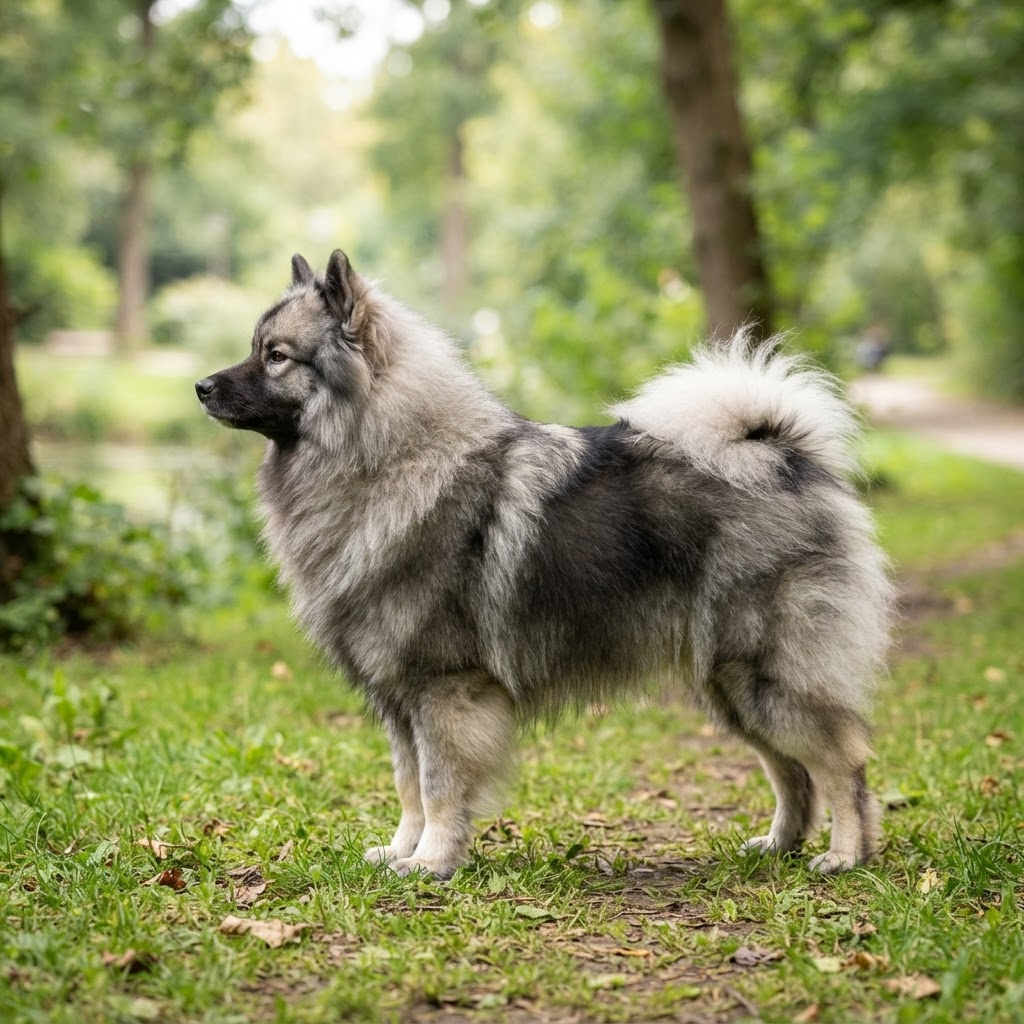
Keeshond
Male: 18-20 kg; Female: 14-16 kg
Male: approximately 46 cm; Female: approximately 43 cm
12-15 years
The Netherlands
About the Keeshond
The Keeshond is a striking, medium-sized dog known for its handsome 'fox-like' face and magnificent stand-off coat. Originating in the Netherlands, they were historically the companions and guardians of Dutch canal barges. This history as a 'people's dog' has left them with a deeply social nature; they thrive on human companionship and are often referred to as the 'Smiling Dutchman' due to their cheerful expression and curled lip. Unlike many other breeds in the Non-Sporting group, the Keeshond was never intended to hunt or kill, resulting in a temperament that is naturally gentle and deviod of aggression. Physically, the breed is defined by its sturdy, square profile and its unique wolf-sable coloration. One of their most distinctive features is the 'spectacles'—delicate dark lines running from the outer corner of each eye toward the ear, coupled with expressive eyebrows. They carry a richly plumed tail curled tightly over the back and possess a thick mane or 'ruff' around the neck. As an intelligent and alert breed, they remain excellent watchdogs, though they are more likely to greet a guest with a wagging tail once their presence has been announced.
Breed Standard
Key characteristics from the breed standard
In the show ring, the Keeshond is a marvel of symmetry and coat texture. The breed standard calls for a short, compact body with a coat that must never appear silky or wavy, but rather stand off the body in a profuse, harsh display. Their movement is clean and brisk, showing a unique 'stepping' action that is distinct from the reach and drive of herding breeds. The 'spectacles' must be clearly defined, contributing to the breed's hallmark intelligent expression.
In Australia
The Keeshond was introduced to Australia in 1949 by Mrs. C. Bourne, who imported four foundation dogs from England, according to Dogs NSW.
Bred For
Watchdog and companion on Dutch canal boats (barges)
Temperament
Outgoing, alert, intelligent, and deeply affectionate
Health Conditions Reported in the Breed
Primary Hyperparathyroidism (PHPT), , , , , and skin allergies
Exercise Needs
Daily walks of 30-60 minutes combined with mental stimulation and play; they enjoy moderate activity and family involvement
Grooming Needs
Extensive; requires thorough brushing at least twice weekly to manage the double coat and prevent matting, increasing to daily during seasonal shedding
Living Suitability
Highly adaptable; they can thrive in apartments if walked daily but enjoy a secure yard. They are sensitive to heat due to their coat and must have access to climate-controlled indoor spaces.
Good with Kids
Excellent; known for being patient and sturdy enough for supervised play with children of all ages
Good with Other Pets
Generally very good with other dogs and household pets; they have a low prey drive and usually coexist peacefully with cats
Trainability
High; they are very intelligent and quick to learn, though they can be independent. They respond best to positive reinforcement and variety in training.
Coat & Colours
Dense, harsh, straight stand-off outer coat with a thick, downy undercoat. Wolf-sable (mixture of grey, black, and cream) with distinct 'spectacle' markings around the eyes
Exercise needs vary by age, fitness, health, weather and individual temperament. Consult your veterinarian for an exercise plan appropriate for your dog.
Things to Consider
Every breed has its quirks — here's what to know
Prospective Keeshond owners should be prepared for their role as 'alarm dogs.' They are predisposed to frequent barking to announce visitors or unusual noises—this is a breed trait that can be managed with training, but rarely eliminated. Their magnificent double coat is a significant commitment; they are prone to heavy seasonal shedding (blowing coat) and can develop painful mats if not brushed to the skin at least twice a week. Regarding health, the breed is more likely to develop Primary Hyperparathyroidism (PHPT), a genetic condition affecting the parathyroid glands; however, responsible breeders now use DNA testing to virtually eliminate this risk in puppies. They can also be susceptible to skin allergies and 'hot spots' if the coat remains damp or isn't groomed properly. Like many social breeds, some Keeshonds are predisposed to separation anxiety if left alone for long periods without company. While they are sensitive to high temperatures and can easily overheat, they are remarkably resilient and affectionate companions when their grooming and social needs are met.
Feeding Guide for Your Keeshond
Healthy Weight
14-20 kg
Daily Feeding Amount (general starting estimate)
350-600 grams
For a Keeshond, a fresh or raw diet should focus on weight management and skin support. Based on an average adult weight of 15-18kg, they typically require 375g to 540g of fresh food daily, split into two meals. Because they can be 'easy keepers' prone to weight gain, lean proteins such as Kangaroo or White Fish are excellent choices. Owners should monitor body condition closely, as their thick coat can easily hide weight gain; the 'rib test' is essential during grooming sessions.
Feeding quantities are general starting estimates only. Individual needs vary with body condition, weight trends, age, health and activity. Ingredient percentages alone do not guarantee complete and balanced nutrition — consult a veterinarian for individualised dietary guidance.
Ingredient percentages alone do not guarantee complete and balanced nutrition. Seek veterinary or qualified canine nutrition guidance for individualised dietary advice. Raw feeding, specific proteins or fresh foods should not be presented as preventing, treating or managing breed health conditions without veterinary diagnosis and supervision.
Majestik's Recommended Feeding Approach
Breed Diet Notes
High-quality diet rich in lean proteins and omega fatty acids; highly compatible with fresh, raw feeding to support skin and coat health
A balanced raw diet for a Keeshond should consist of 80% lean muscle meat, 10% edible bone, and 10% organ meat. Protein sources available from Majestik such as Kangaroo, Lean Beef, and Chicken are ideal. Including oily fish (like sardines) provides essential Omega-3 fatty acids to support their dense double coat and skin health. Added pureed vegetables like spinach or kelp provide antioxidants. Given their predisposition to PHPT and joint issues, maintaining a lean body condition through portion control (2-3% of body weight) is the most critical dietary factor.
These are general breed-level notes only. The appropriate food and serving amount depend on the individual dog's age, health, body condition, activity and tolerance.
Majestik Recommendation
Majestik BARF meals follow our practical 70/10/10/10 approach: approximately 70% quality meat and protein ingredients, 10% edible bone, 10% vegetables and 10% offal. This gives customers a convenient fresh-food option without needing to source and portion every ingredient themselves.
Our Beef, Lamb and Roo BARF meals provide convenient fresh-food options, with suitable proteins chosen or rotated according to the individual dog.
Suitable for different needs
- Healthy adult: Majestik adult Beef, Lamb or Roo BARF meal.
- Puppy: Majestik Premium Puppy.
- Senior: Majestik Senior Blend.
- Working or highly active dog: Suitable Majestik adult meal with quantity adjusted to workload and body condition.
- Protein trial: One Majestik protein at a time.
Recommended Majestik BARF Meals


This is a practical starting recommendation for healthy dogs. Individual needs vary with age, health, body condition and activity.
Keeshond Feeding Calculator
Personalised raw and cooked feeding recommendations based on your dog's profile
Ideal — Ribs palpable without excess fat. Visible waist. Abdominal tuck present.
Have a question about your Keeshond? Dog Health AI
Why Majestik?
Fresh, raw pet food made with integrity in South Australia
Australian Made
Made in Two Wells, South Australia
Freshly Prepared
Real meat, organs, bone & wholefood ingredients
No Fillers
No cheap fillers or artificial preservatives
Family Owned
Locally owned and operated
Local Delivery
Delivery across Adelaide & selected areas
Secure Checkout
Secure payment via Shopify checkout
Subscribe & Save on Keeshond Meals
Get your Keeshond's fresh and raw meals delivered every two or four weeks. Small subscriptions are combined into a four-week box. Pause, skip or cancel anytime.
Breed Records & Facts
Average Litter Size
3-8 puppies
Keeshond Owner Feedback
Real experiences and tips from Keeshond owners
No reviews yet
Be the first to share your experience with this breed
Other Medium Breeds
References & Sources
Breed information verified against recognised breed authorities and veterinary evidence.