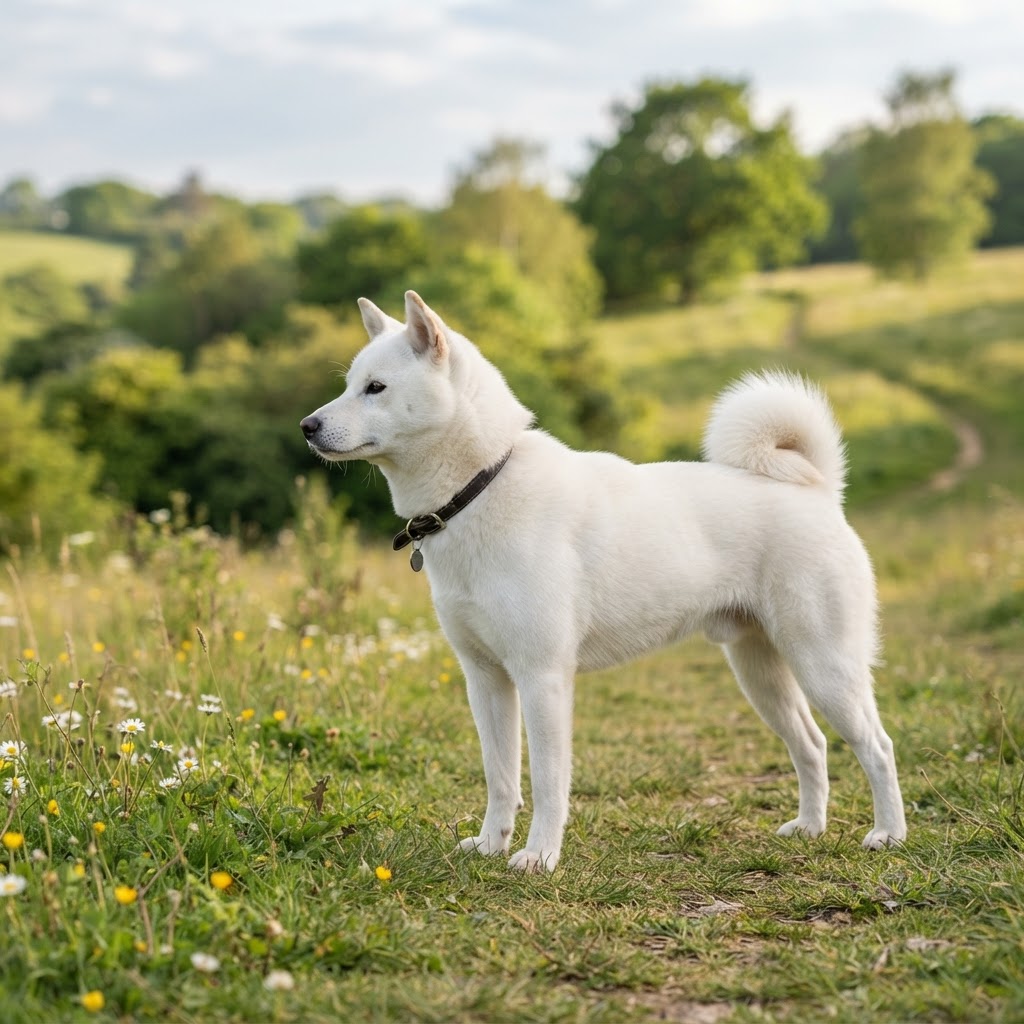
Kishu Ken
Male: 19-27 kg; Female: 14-20 kg
Male: 52 cm; Female: 46 cm (with a tolerance of +/- 3 cm)
11-13 years
Japan (Kishu region, Wakayama and Mie Prefectures)
About the Kishu Ken
The Kishu Ken is a primitive Japanese hunting breed of remarkable endurance and noble character. Originating from the rugged mountains of the Kishu region, these dogs were specifically bred for their tenacity and ability to track boar and deer in challenging terrain. They are known as 'silent hunters,' moving with a quiet efficiency that remains a hallmark of the breed today. In the home, the Kishu is a devoted and calm companion, often forming an intense bond with their primary caregiver while maintaining a polite but reserved distance from strangers. Physically, the Kishu Ken presents a picture of strength and balance. They possess a sturdy, well-knit frame with a broad head and distinctive prick ears that sit slightly forward. Their wedge-shaped head and deep-set, triangular eyes give them an expression of keen intelligence and unwavering focus. While they are docile within their family unit, their independent nature and high prey drive require an owner who understands the nuances of working with primitive spitz-type breeds.
Breed Standard
Key characteristics from the breed standard
In the show ring, the Kishu Ken is distinguished by its 'noble dignity' and a silhouette that conveys both power and agility. The breed standard emphasizes a well-developed, sturdy bone structure and a clean-cut musculature that is never bulky. Their movement should be light, quick, and elastic, reflecting their heritage as mountain hunters.
Bred For
Hunting large game, specifically wild boar and deer, in the mountainous regions of Japan.
Temperament
Dignified, loyal, docile with its family, and highly alert with a strong hunting instinct.
Health Conditions Reported in the Breed
and (eyelids folding inward) are the primary breed-specific concerns, alongside general risks of .
Exercise Needs
Extensive daily activity is required, ideally 60-90 minutes of vigorous exercise such as hiking, jogging, or structured play in a secure area.
Grooming Needs
Moderate; the thick double coat requires weekly brushing, increasing to daily during seasonal shedding periods when they 'blow' their undercoat.
Living Suitability
Not suited for apartment living; they thrive best in a home with a large, securely fenced yard or acreage where they can satisfy their curiosity and movement needs.
Good with Kids
Good with older, respectful children who understand how to interact with a dignified, independent dog.
Good with Other Pets
Generally good with other dogs if socialized early; however, their very high prey drive makes them unsuitable for homes with small animals like cats or rabbits.
Trainability
Highly intelligent but possesses a strong independent streak; they respond best to consistent, positive-reinforcement training rather than repetitive or harsh methods.
Coat & Colours
Short, straight, and harsh outer coat with a soft, dense undercoat.. Solid white is the most common; red and sesame are also recognized standard colors.
Exercise needs vary by age, fitness, health, weather and individual temperament. Consult your veterinarian for an exercise plan appropriate for your dog.
Things to Consider
Every breed has its quirks — here's what to know
Prospective Kishu Ken owners should be aware of their 'silent hunter' nature; they rarely bark to alert you, meaning they can be quietly mischievous or track prey without warning. Their high prey drive is a significant consideration, as they are more likely to pursue small animals instinctively. The breed is predisposed to Hypothyroidism, which can lead to lethargy and skin issues—this doesn't mean every Kishu will develop it, but regular veterinary screening is wise. Some Kishu may also be prone to Entropion, where the eyelids roll inward; while this might require surgical correction, many dogs live perfectly healthy lives with early intervention. Being a primitive breed, they are more likely to develop digestive sensitivities or skin reactions to high-carb commercial diets filled with grains and additives—many thrive significantly better on a fresh, raw diet tailored to their specific protein needs. Finally, their independence means they aren't always 'eager-to-please' in a traditional sense, but this just makes the deep, earned bond they share with their owner all the more rewarding.
Feeding Guide for Your Kishu Ken
Healthy Weight
14-27 kg
Daily Feeding Amount (general starting estimate)
280-810 grams
For a Kishu Ken, a fresh food diet should focus on lean, high-quality proteins to maintain their muscular condition. An adult Kishu weighing 20kg typically requires between 400g and 600g of fresh food daily, split into two meals. Puppies and highly active hunting dogs may require up to 4% of their body weight.
Feeding quantities are general starting estimates only. Individual needs vary with body condition, weight trends, age, health and activity. Ingredient percentages alone do not guarantee complete and balanced nutrition — consult a veterinarian for individualised dietary guidance.
Ingredient percentages alone do not guarantee complete and balanced nutrition. Seek veterinary or qualified canine nutrition guidance for individualised dietary advice. Raw feeding, specific proteins or fresh foods should not be presented as preventing, treating or managing breed health conditions without veterinary diagnosis and supervision.
Majestik's Recommended Feeding Approach
Breed Diet Notes
A high-protein, nutrient-dense diet consisting of fresh, lean meats and healthy fats to support its high activity levels and primitive metabolic needs.
The ideal Majestik raw diet for a Kishu Ken focuses on lean Australian proteins like Kangaroo and Beef to support lean muscle mass without excessive weight gain. Adding small amounts of leafy green vegetables and omega-3 fatty acids from fish oil or fresh fish will support their skin and coat health, which is vital for this double-coated breed.
These are general breed-level notes only. The appropriate food and serving amount depend on the individual dog's age, health, body condition, activity and tolerance.
Majestik Recommendation
Majestik BARF meals follow our practical 70/10/10/10 approach: approximately 70% quality meat and protein ingredients, 10% edible bone, 10% vegetables and 10% offal. This gives customers a convenient fresh-food option without needing to source and portion every ingredient themselves.
Our Beef, Lamb and Roo BARF meals provide convenient fresh-food options, with suitable proteins chosen or rotated according to the individual dog.
Suitable for different needs
- Healthy adult: Majestik adult Beef, Lamb or Roo BARF meal.
- Puppy: Majestik Premium Puppy.
- Senior: Majestik Senior Blend.
- Working or highly active dog: Suitable Majestik adult meal with quantity adjusted to workload and body condition.
- Protein trial: One Majestik protein at a time.
This is a practical starting recommendation for healthy dogs. Individual needs vary with age, health, body condition and activity.
Kishu Ken Feeding Calculator
Personalised raw and cooked feeding recommendations based on your dog's profile
Ideal — Ribs palpable without excess fat. Visible waist. Abdominal tuck present.
Have a question about your Kishu Ken? Dog Health AI
Why Majestik?
Fresh, raw pet food made with integrity in South Australia
Australian Made
Made in Two Wells, South Australia
Freshly Prepared
Real meat, organs, bone & wholefood ingredients
No Fillers
No cheap fillers or artificial preservatives
Family Owned
Locally owned and operated
Local Delivery
Delivery across Adelaide & selected areas
Secure Checkout
Secure payment via Shopify checkout
Subscribe & Save on Kishu Ken Meals
Get your Kishu Ken's fresh and raw meals delivered every two or four weeks. Small subscriptions are combined into a four-week box. Pause, skip or cancel anytime.
Breed Records & Facts
Average Litter Size
3-5 puppies
Kishu Ken Owner Feedback
Real experiences and tips from Kishu Ken owners
Other Medium Breeds
References & Sources
Breed information verified against recognised breed authorities and veterinary evidence.